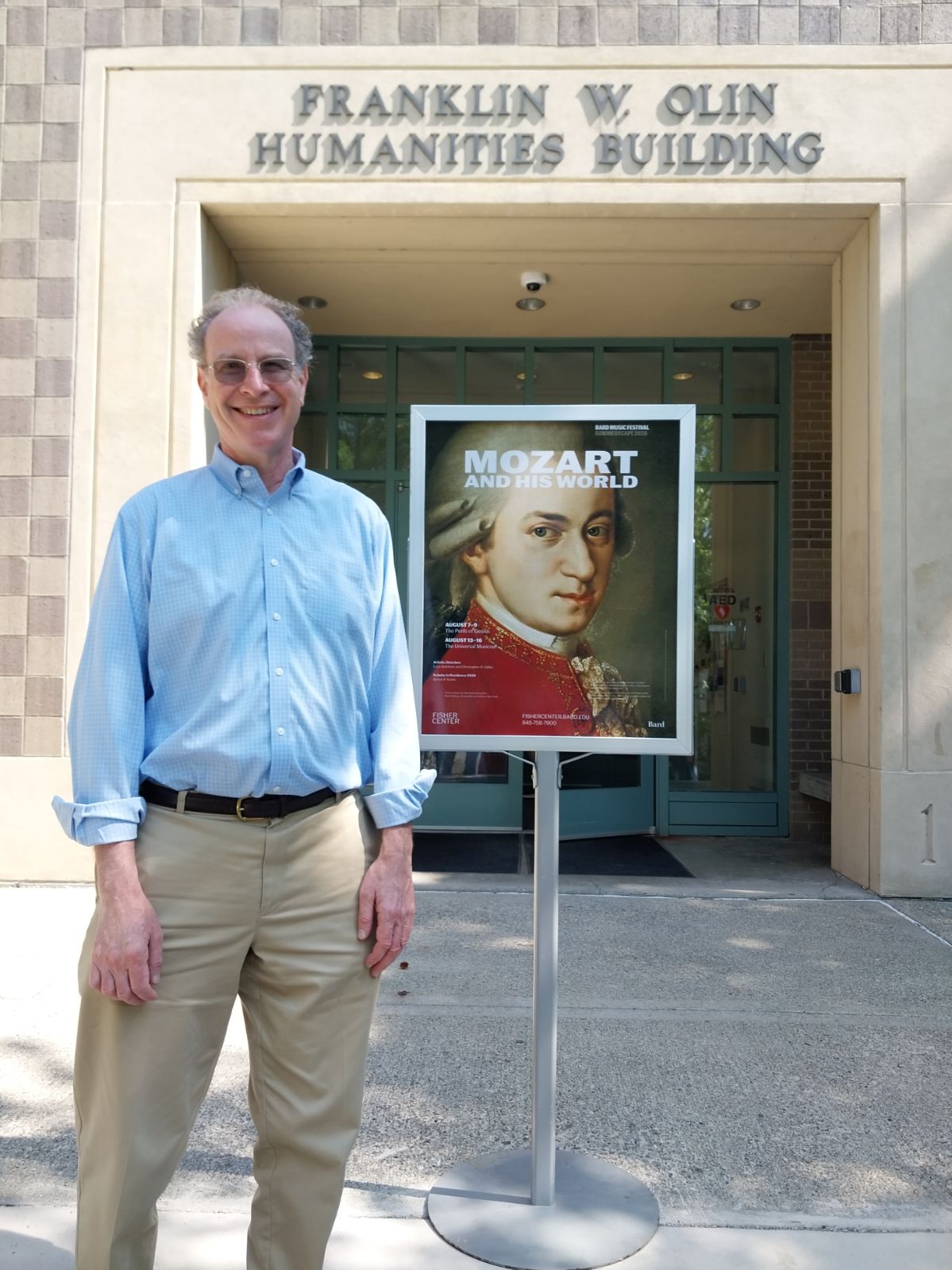
All right, I get it. Mozart is one of the cornerstones of Western classical music. Universally acknowledged as one of the three or four greatest composers who ever lived. Also, one of the most frequently programmed. For performing arts organizations, the guy is as close as it comes to box office gold. Why then, is he being programmed so heavily at that maverick among euphonious summer music destinations, the Bard Music Festival?
I mean, recent years have been devoted to works by Bohuslav Martinů, Hector Berlioz, Ralph Vaughan Williams, and Erich Wolfgang Korngold. When Mexican composer Carlos Chávez was the focus, the programming ran deep into the underexposed repertoire of Latin America.
Well, any regular attendee of the festival should know that, whoever’s name is on the marquee, the concerts are going to be full of enlightening digressions and rediscoveries. The programming at Bard – a careful juxtaposition of works in a variety of forms and other composers somehow related to the subject – is further illuminated by biographical, historical, and musicological insights by resident scholars.
There’s also a lavish, 70-page festival program book. Seriously, the program book is a collector’s item, attractively laid-out on 8 ½ x 11” glossy stock, sumptuously-illustrated, and full of handy timelines and interesting commentary. I can’t imagine anyone would ever want to part with it. It’s free with a ticket to any of the concerts.
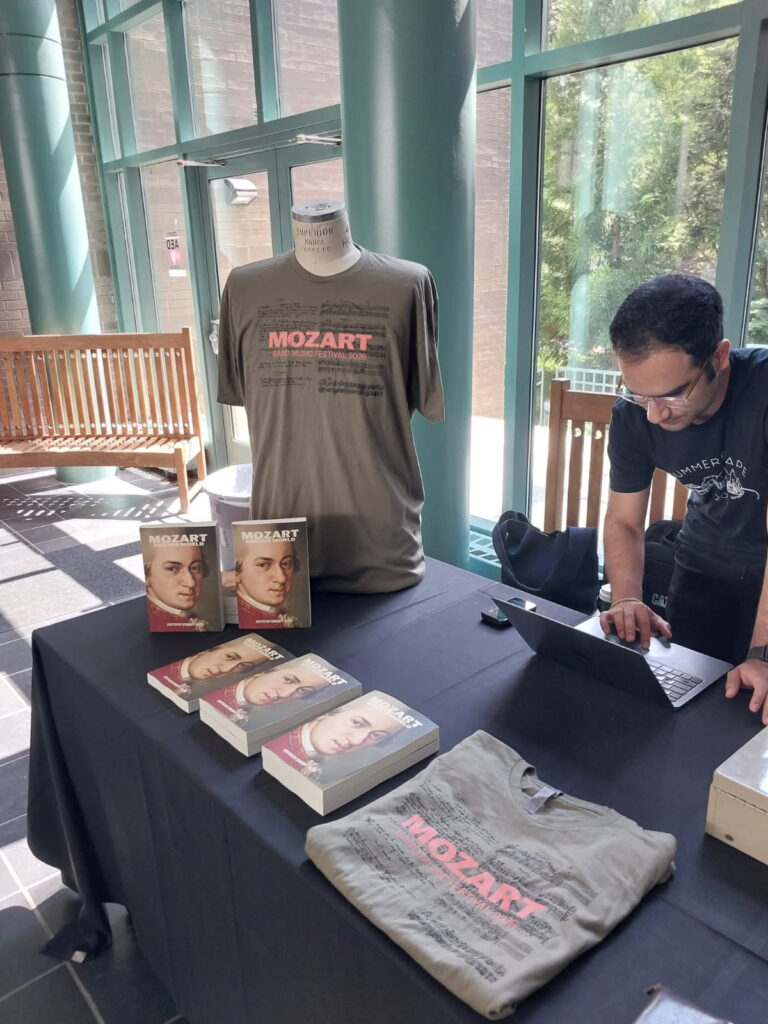
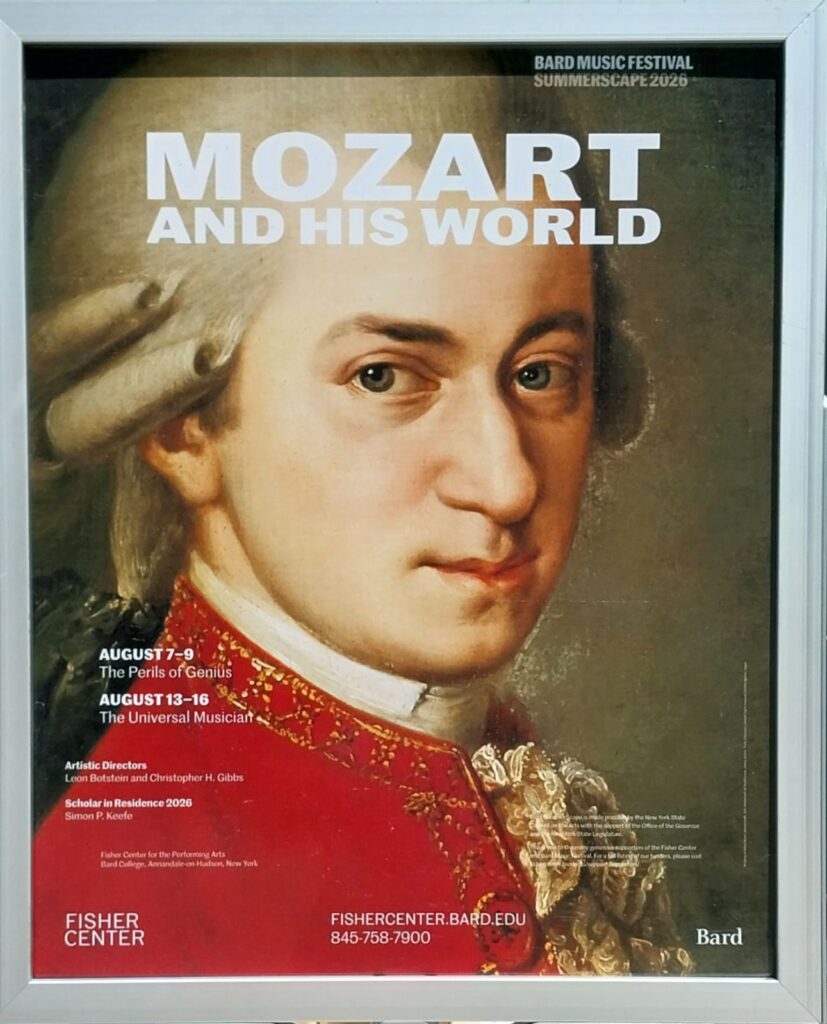
For sale, there’s a related book of scholarly essays, “Mozart and His World,” edited by Simon P. Keefe and published by University of Chicago Press. And of course, the festival t-shirt.
I admit, I suffered a lapse of faith when I saw “Mozart.” Not that there’s anything wrong with Mozart; he’s just not going to get the little hearts popping over my head for a two-week festival. As a classical music person, I’m pretty much guaranteed to encounter some of Mozart’s music somewhere, somehow, just about every day.
My near-apostasy seemed justified when I glanced at the preliminary programs. But I should have known, having attended most of the festivals since 2008 (13 out of 18), there is always more at Bard than meets the eye. True to form, this year has offered plenty of fascinating curiosities to offset the established classics. In at least one instance, some of the selections were revived from unpublished manuscripts.
Friday, opening night, was what I would describe as a true Bard concert. Already straining the seams with an overabundance of chamber music, vocal works, and orchestral music (the ambitious thesis was “The Many Facets of Mozart”), the marathon running time swelled to epic proportions when conductor and co-artistic director Leon Botstein – already charged with offering fairly concise (for him) introductions to some of the pieces – during a stage change indulged in a lengthy extemporized meditation on the composer. While Botstein is always fascinating and entertaining to listen to, a magnificent orator, it was one more block in the monument to be surmounted over a numbing three hours.
There were no such digressions on Saturday night, but the concert still ran to… three hours. That’s Bard for you. Get your rest, don’t drink too much beforehand, and be prepared to concentrate.
As for the musical content, well, Bard will send to heaven, even as you risk a blood clot sending you to hell.
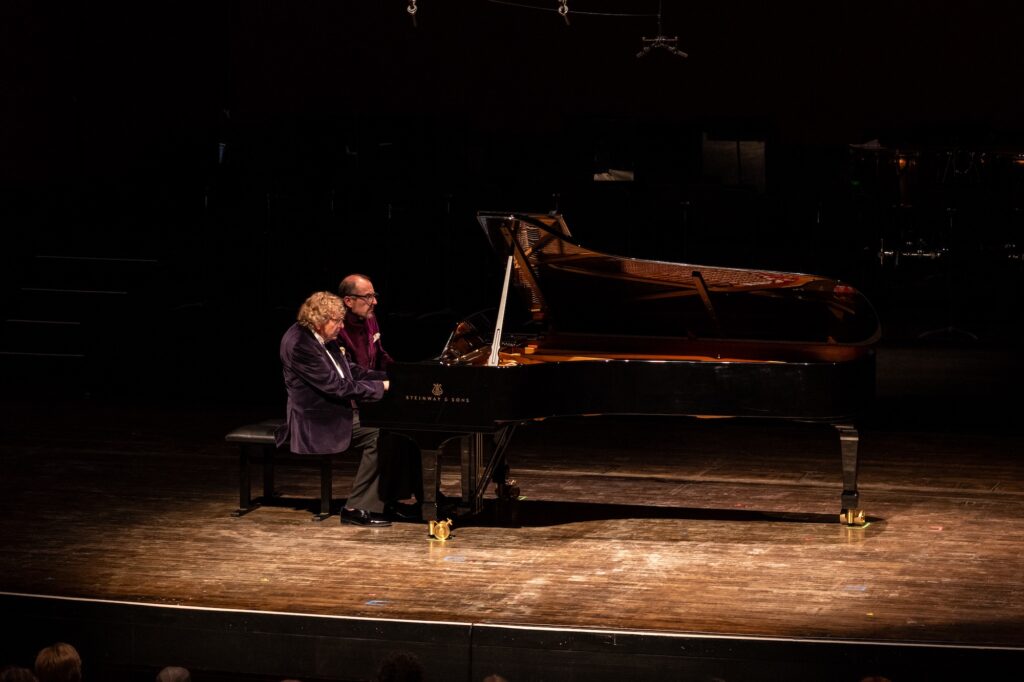
The opening program got off to a lively start with the Sonata in D major, for piano four-hands, K. 381. A great treat to have Bard stalwarts Piers Lane and Danny Driver at the keyboard. Both have recorded extensively for the Hyperion label (and elsewhere). In the first movement, there were playful presentiments of a musical refrain in Cherubino’s aria “Voi che sapete” from “The Marriage of Figaro.”
Interestingly, on the second half of the program, a musical chimera, “Ch’io mi scordi di te?,” a concert aria for voice and orchestra with obbligato piano (new to me), recalled in its coda the composer’s much better-known “Exsultate, jubilate.” Soprano Katrina Galka has a striking voice, with a distinctive timbre, and she knows how to use it. It set me ruminating, not for the first time, that there are so many talented singers out there, and so few of them crack the top tier; although many of them are able, thank goodness, to carve out careers for themselves, so that they are able to do what they love and share their talent. And for most of the singers at Bard, it’s still early, so who knows?
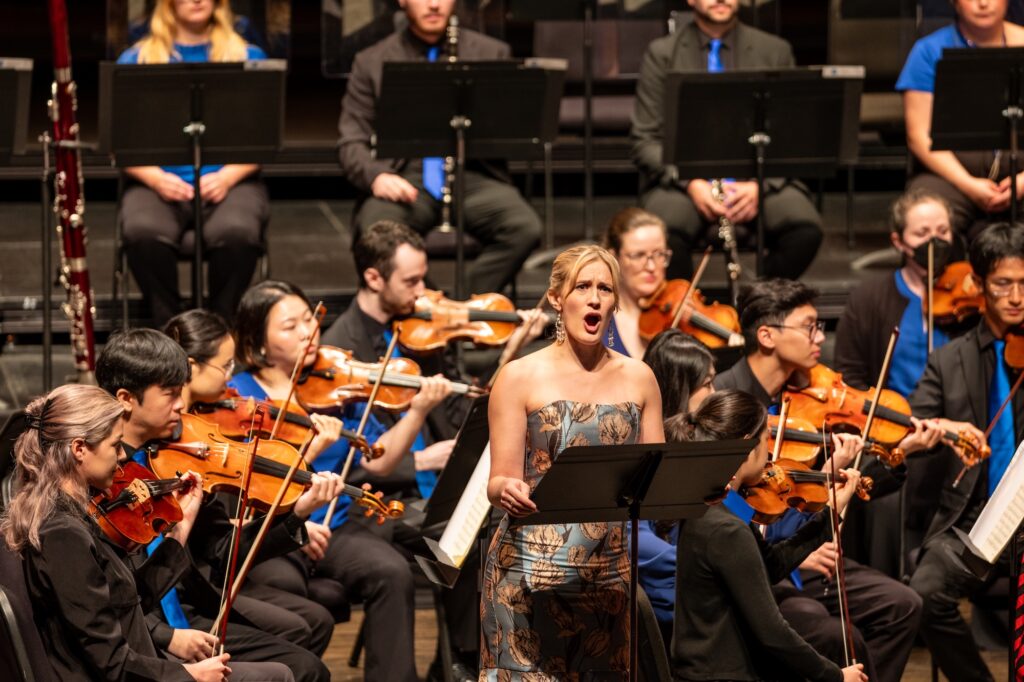
The pianist was Anna Polonsky, another Bard fixture, and Botstein conducted The Orchestra Now, the graduate training ensemble he founded. The “kids” played with confidence and commitment in their appearances throughout the weekend, some swaying with the music or smiling as they performed. Their involvement and even joy were evident, and Botstein displayed a genuine, old school affinity with the repertoire. (I say “old school,” in comparison with Dorian Bundy, who tore the place up with his punchy, “historically informed” Mozart on Sunday; but more on that in another post.) Botstein’s success is perhaps surprising for a man who so loves his Richard Strauss. But Strauss was also a Mozart fan, so… Whatever the case, Mozart’s generosity of spirit was well-served by Botstein’s unfussy direction, which allowed the music to speak for itself.
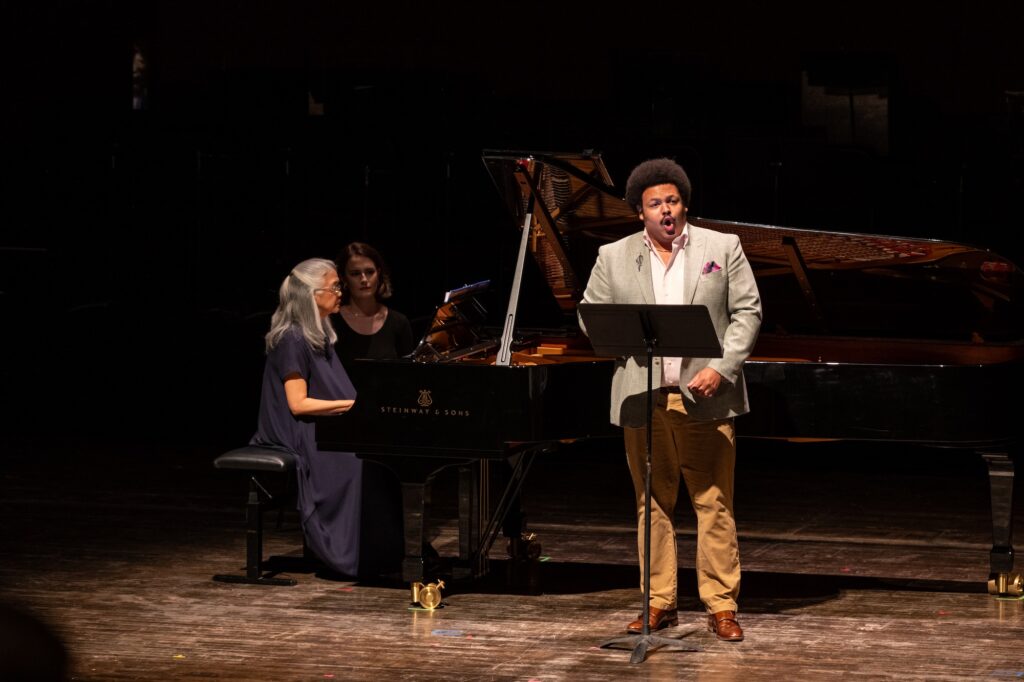
Back to the first half of the program. Following the four-hand piano sonata was another rarity, “Eine kleine deutsche Kantate,” on a text reflecting Masonic values, sung by tenor Joshua Blue (who I only just realized I heard sing Tamino in the Julie Taymor production of “The Magic Flute” at the Met this past December). He was joined by pianist Kayo Iwawa, another recurring presence. (Many of the musicians are on the faculty of the Bard Conservatory.) She’s always so gracious, with a winning smile when she makes her entrances and afterward, when she acknowledges applause.
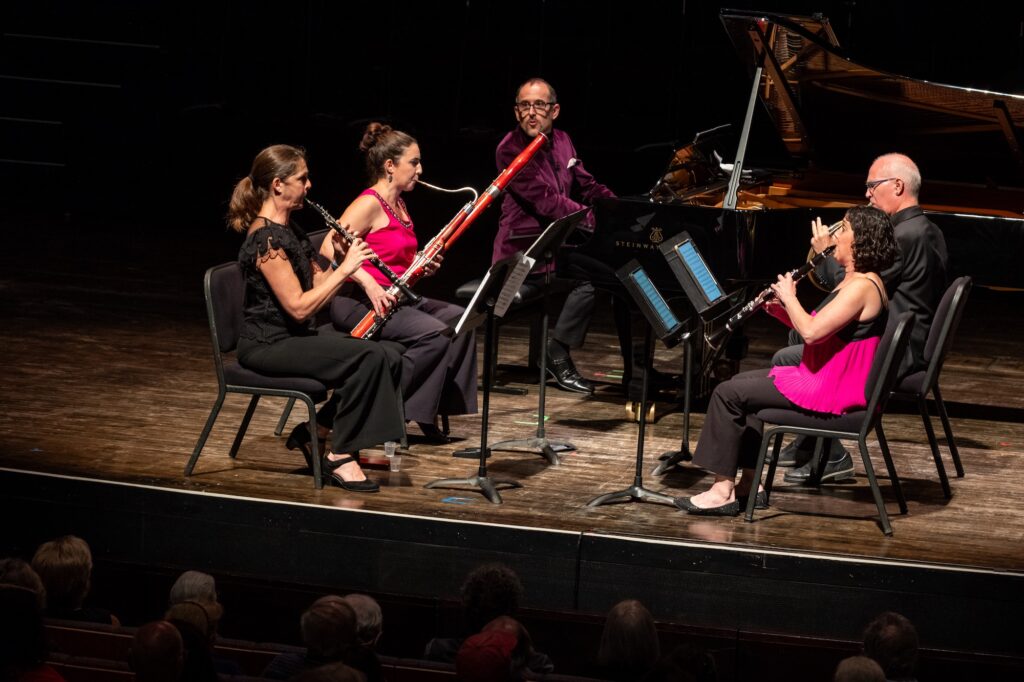
The final work before intermission was the well-known Quintet for Piano and Winds, a work Mozart at one time considered his best. I really could find nothing to distract me from my enjoyment of the music in the performance by oboist Alexander Knox, clarinetist Shari Hoffman, hornist Karl Kramer-Johansen, bassoonist Gina Cuffari, and again, Danny Driver at the keyboard.
Botstein’s oration was to take place between the cantata and the quintet, as the chairs were being reset for the wind players, but by the time he took the stage, the need for “filler” had already passed. Not that anything he had to say could be described as superfluous. It was appropriate to thank everyone who helped make the festival possible and then to set up Mozart as the focal point of this year’s musical peregrinations. Even so, following such a loquacious interlude, the Quintet was the very thing to buoy one to a belated intermission.
The second half, fascinatingly, began with the first movement of a symphony attributed to Mozart, the Symphony No. 37, for which he actually only provided the introductory material. The rest of the symphony is by Michael Haydn. It’s not the only time Mozart helped Michael out of a jam. He also composed a couple of duos for violin and viola for him, after Michael had fallen ill, to fulfill a commission from the Archbishop of Salzburg. For as much as I would have liked to hear the entire symphony, thank goodness it wasn’t played, or we never would have gotten out of there! Attendees of the next Friday concert will have a chance to hear Michael Haydn’s Requiem in C Minor, on the same program with Mozart’s “Davide penitente” (“David the Penitent”). When’s the last time you heard that?
Until a few years ago, when it seems many classical music stations stopped playing longer pieces of music in their entirety, one would frequently hear Mozart’s Sinfonia concertante for violin, viola and orchestra. At 30 minutes in length, you’ll rarely encounter it now outside the concert hall, except perhaps in your own record collection. But what a work it is! Especially as it was performed on this particular occasion, by violinist Grace Park and violist Barry Schiffman. There was high-energy from the start, with the soloists “warming up” by facing the orchestra and doubling their respective sections in the introductory passages, prior to their official entrance. Then they turned to the audience for the first of their sustained duets.
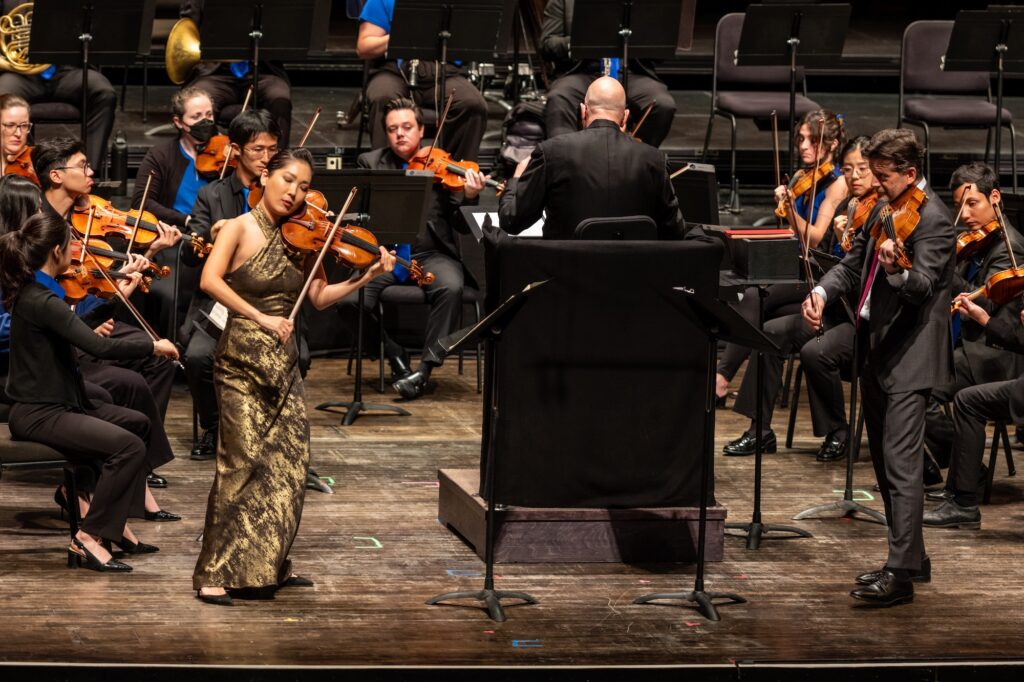
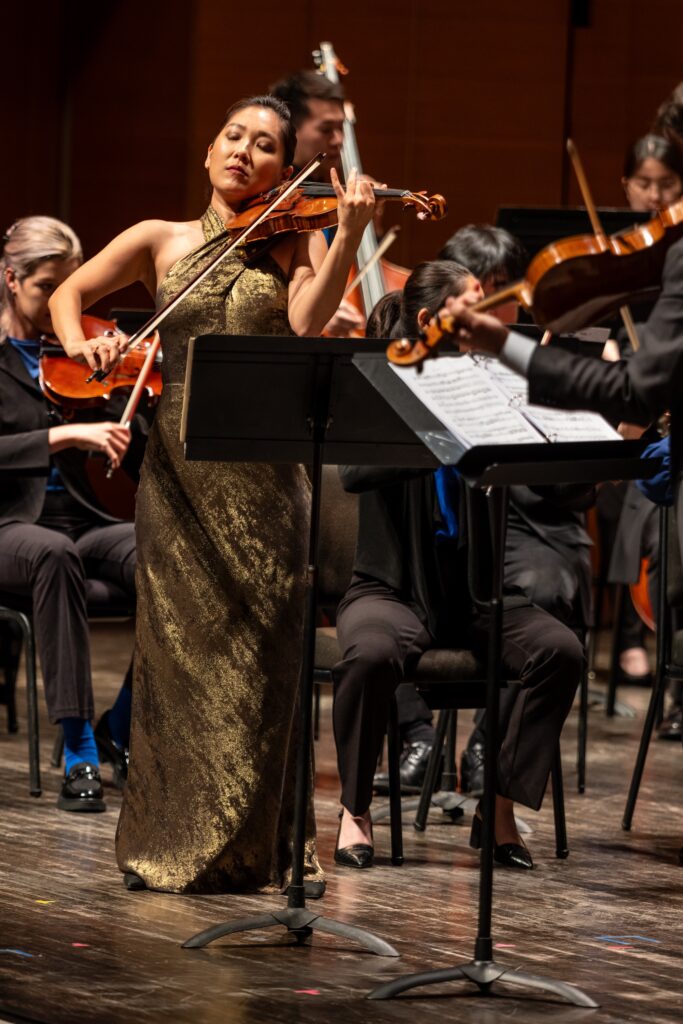
I’ve heard Park at Bard before, so I can attest that, throughout the weekend, her playing and presence were up to her usual high standards. I need hardly say, she’s a master of her instrument. Schiffman, on the lower-voiced viola, was outmatched from the start, through no fault of his own. He exuded notable confidence in his bearing, perhaps to compensate for the more subdued timbre of his own instrument in juxtaposition with the brighter, flashier violin. But together the musicians found their sweet spot, and by the final movement, everyone really did play as one. It proved to be a high point of the evening.
By the time Botstein and the orchestra got around to the “Paris” Symphony, to conclude, it felt as if I’d already been through several concerts. This is not uncommon at Bard. Happily, the symphony is not a long work. I was curious which of the two slow movements Botstein would employ. Mozart was asked to write a replacement by Joseph Le Gros, the director of the Concert spirituel, who conducted the work’s premiere, despite the composer’s observation that the original had made a hit with the “Parisian connoisseurs.” Friday’s performance went with Mozart’s original thoughts. Bravo.
Despite my evident fatigue, I want to emphasize that, taken individually, every one of the components of the program – including Botstein’s speech – was delivered at a very high level. Frankly, I wasn’t rested enough following the usual preparations for having to be away for a weekend and a three-hour commute. So often, I suspect my judgments may be clouded by physical, emotional, and psychological factors.
Also, being so accustomed to hearing certain works performed on recordings is bound to color my perceptions. It’s a blight afflicting criticism in the modern age. But this is not intended as a review so much as one listener’s impressions. As Botstein observed during a panel the following morning, recordings are not the same thing as actual “music.” It’s no great trick to balance a violin and viola, with each other and with an orchestra, under studio conditions, with the ability to tweak levels and edit in post-production. If a recording is able to communicate a number of ideas and emotions suggested by a certain piece of music, it’s a medium that preserves a single interpretation, and often a calculated one at that, assembled over many takes.
What was undeniable on Friday was that, personal frailties aside, I was on the receiving end of three hours of glorious music and devoted musicmaking. Mozart’s joy, invention, and humanity were conveyed in every phrase. I do want to be clear that even though I found some of the concerts to be a mite long, this is Bard, after all, and I would NOT have it any other way!
Speaking of excess, this is only about a third of what I’ve written so far, so I’m going to cut it off here and ask that you check back tomorrow, when I can give you, at the very least, an account of Saturday. It’s the only way I’m going to be able to keep this manageable!
It was foolhardy of me to think I could fit everything into one post. I couldn’t do it in past years; what made me think I could do it this time? Because I was swinging for the fences, it took me a while to get the first third of what I’d written in order, but at least now the rest is in good enough shape that it will soon follow. Thanks for reading!
The Bard Music Festival, “Mozart and His World,” will continue on the campus of Bard College in Annandale-on-Hudson, NY, through Sunday.
https://fishercenter.bard.edu/what-we-do/bard-music-festival/
Photos from the Fisher Center at Bard by Matt Dine
Leave a Reply