I confess, when it comes to my health, I’m a bit of a milquetoast.
At this point, even though I’m vaccinated, I’m not entirely comfortable with the idea of sitting shoulder-to-shoulder in an enclosed auditorium with folks who can’t be counted on to wear their masks over their noses, or at all for that matter.
While I very much enjoyed the livestream of Ernest Chausson’s opera “Le Roi Arthus” from Bard College last week, it was clear I had made the right decision – for me, anyway – to stay at home, as there were at least five people within the line of sight who were not masked, despite a mandatory masking policy. Sure, everyone had to provide proof of vaccination and temperatures were taken at the door. But I just don’t want to deal with getting sick, to whatever degree, if I can possibly avoid it, and I certainly don’t want to be responsible for conveying illness to my family or friends, many of whom are considerably older than myself.
It’s not just the Sosnoff Theater (where the opera was performed, and in which many of the orchestral concerts take place), which is cavernous, and I’m sure well-ventilated; it’s also the LUMA Theater (where the chamber concerts and panels are presented), a much more intimate venue, and the crowded lobbies, concession stands, and above all, restrooms, which are like cattle chutes even under the best of circumstances.
So for as much as I love the Bard Music Festival, I’ll be keeping my distance this year, in the hope that next year will be better.
THE GOOD NEWS is that because of the extraordinary circumstances – a festival held in time of pandemic – many of the programs will be livestreamed at a reduced price. Admittedly, streaming is rather thin brew next to the experience of attending live music, but it does allow the muted pleasure of experiencing lots of unusual and neglected repertoire in the context of intelligently curated programs.
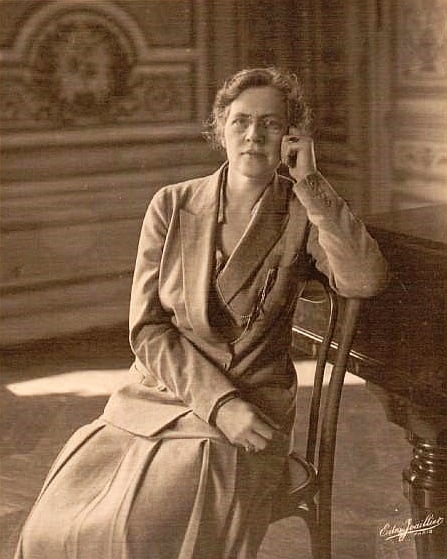
And this year promises to be an especially good one, since the focus will be “Nadia Boulanger and Her World.” Boulanger, of course, was one of the great musical pedagogues of the 20th century. Her influence was incalculable. She was particularly important to the artistic development of innumerable American composers, from Aaron Copland to Philip Glass. So the festival’s repertoire will be notably diverse and, as always, intriguing.
Also of significance, Boulanger is the first woman to be selected as a focal point of the summer event (though Grazyna Bacewicz was the subject of a satellite festival in San Francisco, Bard Music West, in 2019, and works by women composers – including Nadia’s sister, Lili – have been represented as a matter of course through Bard’s characteristically diverse programming).
This year’s Bard Music Festival will take place over two weekends, August 6-8 and August 12-15. It’s a great opportunity to experience a lot of music you would otherwise probably never get to hear in concert. If you’re interested in out-of-the-ordinary programming, definitely take a few minutes to see what it’s all about. For more information, visit https://fishercenter.bard.edu/bmf/
Mme Boulanger once expressed disdain for students who missed her classes, because they didn’t want to get caught up in rioting in the streets of Paris in 1934. She felt they weren’t taking music seriously enough. In opting for the safety of these at-home livestreams, I can practically feel the withering glare through her pince-nez.
Leave a Reply