Category: Daily Dispatch

  • Sofia Gubaidulina A Musical Titan Passes

    Sofia Gubaidulina A Musical Titan Passes

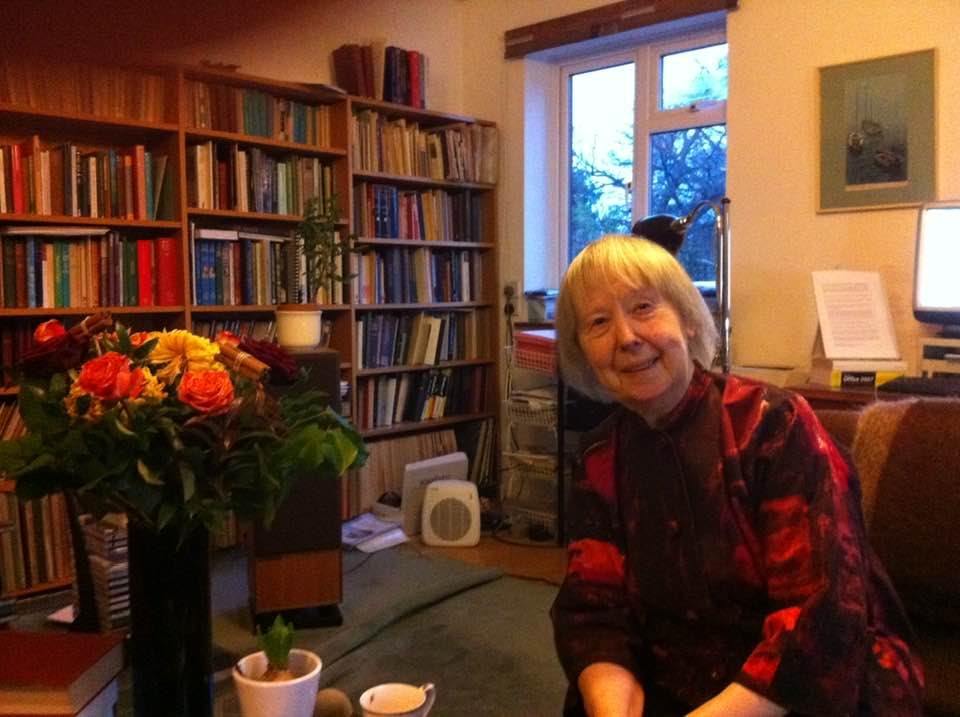
    We have lost a major composer in Sofia Gubaidulina. Of the same generation as Alfred Schnittke, Edison Denisov, Nikolai Kapustin, and Rodion Shchedrin, Gubaidulina was driven in her art to address big questions and to communicate what she believed were essential truths – not least among them, faith in God and the transformational power of music. She did so with an adventurous technique (her mature works are full of numerical and structural symbolism), imagination (intellectual constructs are never at the expense of emotion or depth), and an exceptional ear for texture, timbre, and color. There was little about her that could be dismissed as run-of-the-mill.

    Having lived for nearly 60 years under a regime that frowned on too much individuality, she pushed hard against the outside of the box. Her works earned her an international reputation as one of the most important composers to emerge from the USSR during the second half of the 20th century.

    Gubaidulina discovered music at the age of 5. She would go on to study at the Kazan Conservatory. The other great interest of her childhood was spirituality, especially as expressed in the works of the great composers – Bach, Mozart, and Beethoven. Her fascination with religion and spirituality was something she knew intuitively to keep to herself while living in the Soviet Union.

    Music became her escape from socio-political strictures. During her time at the conservatory, there were actually raids on the dormitories, during which scores by decadent Western composers (and Stravinsky!) would be confiscated. Her own music was denounced as “irresponsible.”

    Privately, she was encouraged by Shostakovich. She found a safe outlet for her particular brand of modernist expression in writing for film. Of mixed ethnicity (her father was Tatar), she founded a folk instrument ensemble, Astreja, in the mid-‘70s. In 1979, she was blacklisted for unauthorized participation in festivals of Soviet Music in the West.

    She came to international attention in the late ‘80s thanks to Gidon Kremer, who championed her violin concerto, “Offertorium.”

    Gubaidulina’s highly individual music is steeped in mystical spiritualism. Her works are informed by a kind of longing for human transcendence, a yearning for greater truths central to our being. But she seldom searched the same way twice.

    Since 1992, she made her home in Hamburg. Her awards and honors were many.

    Gubaidulina was 93 years-old. R.I.P.


    “Canticle of the Sun” for cello, chamber choir and percussion (1997)

    “Fachwerk” for bayan, percussion and string orchestra (2009)

    “Concerto for Two Orchestras” for orchestra and jazz band (1970)

    “The Wrath of God” (2019)

  • Einstein Martinů and Princeton’s Pi Day Fest

    Einstein Martinů and Princeton’s Pi Day Fest

    I’ve yet to lay my hands on a copy of this month’s Princeton Echo, but apparently my article on Albert Einstein and Bohuslav Martinů made the cover. It’s a good time for me to mention it, as the story also appears in the Princeton weekly, U.S. 1, out today.

    The timing couldn’t be better, since 3/14 is Pi Day (by coincidence, also Einstein’s birthday), and as always Princeton will pull out all the stops, this year with the celebration spanning two days, Friday and Saturday. So get ready for the Einstein look-alike contest, the Pi Day tours, the pie-throwing, pi memorization and recitation, and of course the fooderies offering deals on pie.

    An amateur violinist who adored Mozart, Einstein knew and even played with a number of notable musicians and scientists, both in Princeton and abroad. While he wasn’t exactly at home with music of the 20th century, Einstein liked and respected Martinů, who taught composition at Princeton University from 1948 to 1951. The two shared much in common, and Martinu wound up writing a piece of music for him.

    It just so happens that the composer, who is not exactly a household name, but perhaps should be, will be the subject of his own music festival, “Martinů and His World,” to be held at Bard College in Annandale-on-Hudson, NY, August 8-17.

    You’ll find lots of information at the links below:

    Cover story in Princeton Echo (March 1)

    https://www.communitynews.org/towns/princeton-echo/relatively-musical-albert-einstein-and-bohuslav-martin/article_64f724c8-f840-11ef-81f3-77d946927c50.html

    Reprinted in U.S. 1 (out today)

    https://www.communitynews.org/princetoninfo/artsandentertainment/relatively-musical-albert-einstein-and-bohuslav-martin/article_68a1ba00-fe7d-11ef-a05a-2f8ce43f2de6.html

    Princeton Pi Day events (March 14-15)

    https://princetontourcompany.com/tours/pi-day/

    Bard Music Festival, “Martinů and His World” (August 8-17)

    https://fishercenter.bard.edu/whats-on/programs/bard-music-festival/

    Fisher Center at Bard

  • Cowell Ruggles American Mavericks

    Cowell Ruggles American Mavericks

    At the risk of instigating a slap fight between two of America’s foremost musical mavericks, I salute both Henry Cowell (1897-1965) and Carl Ruggles (1876-1971) on their shared birthday.

    Actually, the two were good friends. Their circle of “ultra-modernists,” as they were dubbed, must have been swollen with cake this time of year. (Colin McPhee’s birthday anniversary is on March 15.) The surfeit of sugar made them all the more volatile, I’m sure.

    Cowell pioneered the use of atonality, polytonality, polyrhythms, and non-Western modes. He was employing tone clusters (chords made up of adjacent keys on the chromatic scale, often played with a fist or forearm) in his keyboard music before Béla Bartók.

    His experiments with aleatory (chance elements) and the “string piano” (reaching inside the piano to play the strings) influenced generations of composers. He was an autodidact who adopted established musical techniques only as he felt he needed them.

    Cowell was so bad-ass that when he was sent to San Quentin on a “morals” charge, he kept right on churning out music at his usual prolific pace. He taught his fellow inmates and organized a prison band. There’s got to be a movie in this, the musical equivalent of “The Shawshank Redemption.”

    That said, Cowell did not emerge from the experience unscarred. His later works take a more conservative tack. No longer was he quite as radical, either musically or politically. It is his music from this era that is usually deemed radio-safe.

    Cowell and Carl Ruggles were two-fifths or the “American Five,” which also included John J. Becker, Wallingford Riegger and Charles Ives. Ives was a good friend of both, supporting Cowell’s experimentation before he himself became well-known.

    He famously defended Ruggles by leaping to his feet, following a performance of “Men and Mountains,” to confront a heckler with, “You g**d*** sissy! When you hear strong, masculine music like this, get up and use your ears like a man.” This would likely be received even less favorably today than it was then. But these guys existed before political correctness.

    In fact, Ruggles was so incorrect, he eventually alienated even Ives. Even so, Ives was seemingly the only one of Ruggles’ acquaintances never to be on the receiving end of his ire.

    Ruggles disdained music theory and composed by ear, painstakingly, through trial and error. He did adhere to a kind of dissonant counterpoint. Because of his perfectionism, he left only ten authorized works. He found it to be much less labor-intensive to paint. Over the course of his lifetime, he sold hundreds of his paintings. (Curious to see some? Google is your friend.)

    There’s no question that Ruggles was a world-class S.O.B., but he did manage to leave behind some fascinating, even breathtaking music.

    Happy birthday to two American originals.


    Henry Cowell, “The Banshee,” for string piano:

    Carl Ruggles, “Men and Mountains”:


    IMAGES: (left) Henry Cowell and friend; “The Sun Treader (Portrait of Carl Ruggles)” by Thomas Hart Benton

  • Angela Morley: Celebrating a Transgender Composer

    Angela Morley: Celebrating a Transgender Composer

    When I go to produce a show, sometimes my scripts run a little long, so that after recording I wind up with an audio file that exceeds 58 minutes and 30 seconds. If it’s close, I can whittle down some of the commentary to squeeze in all the music. But if the first cut runs to, say, 1 hour and 1 minute, there’s no way I’ll be able to fit everything in. Something else has to go.

    This weekend, I was very sorry to have to jettison Angela Morley. Morley was born Walter Stott on this date in 1924. Known professionally as Wally Stott, in 1970 he transitioned to a woman, undergoing sex reassignment surgery in Casablanca, of all places. Obviously, this was not a decision made lightly. It’s something he felt compelled to do, and it took guts.

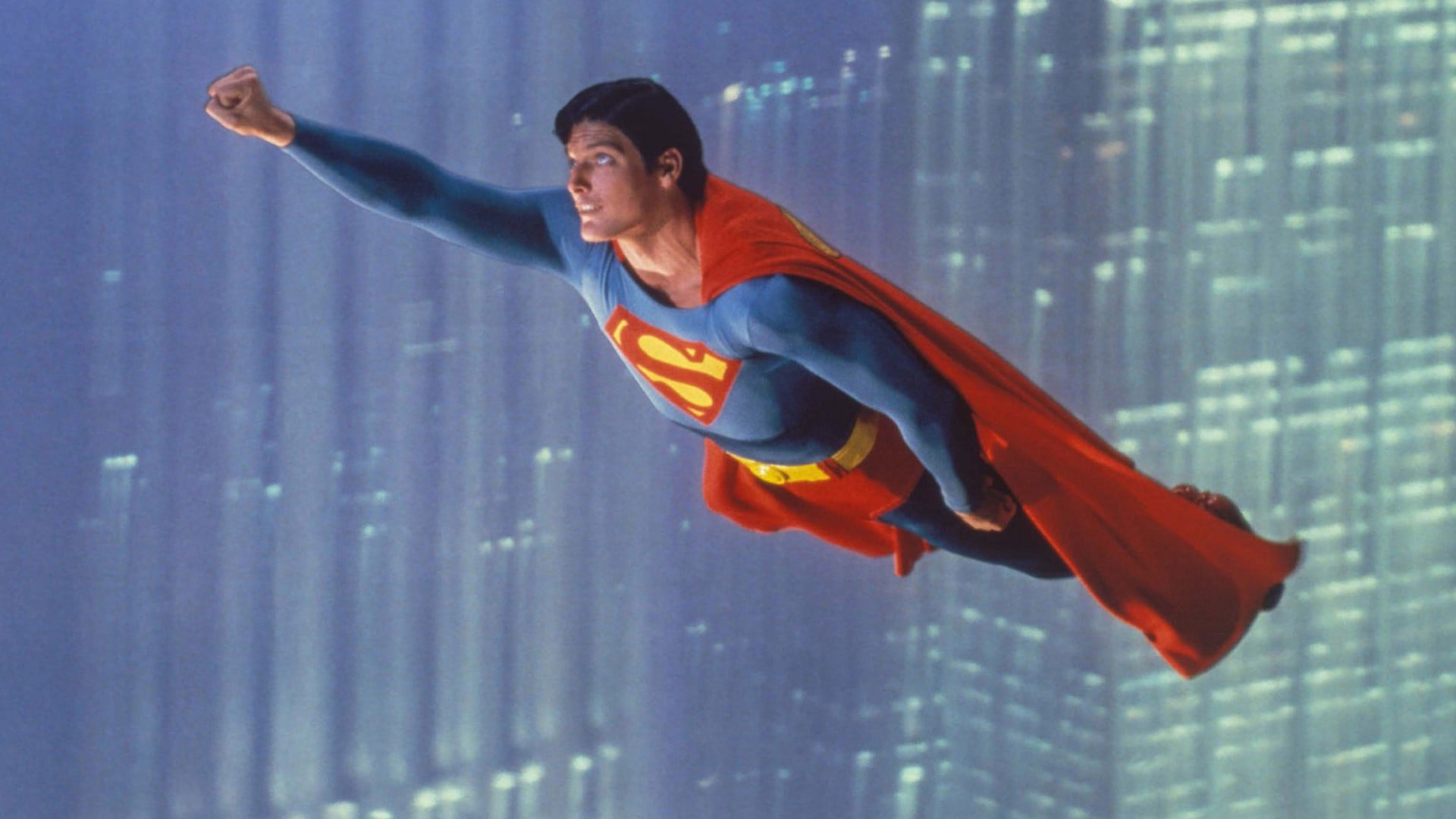
    As Stott, he was music director for “The Goon Show.” He also arranged and conducted for artists such as Noël Coward, Marlene Dietrich, and Shirley Bassey. As Morley, she was nominated for an Academy Award for her work on Stanley Donen’s film of Lerner & Loewe’s “The Little Prince” and again for her work on the Sherman Brothers’ “The Slipper and the Rose.” She also assisted John Williams on a number of his classic film scores, including “Star Wars,” “Superman,” “E.T.,” and “Schindler’s List,” and provided arrangements for the Boston Pops.

    It was with some regret that I had to edit out her light music classic “Rotten Row,” but I figured, what the hell, if I said anything about her, it probably would have triggered a complaint from some crackpot anyway. Time was when the gender transition would have been considered an interesting biographical detail. Now it’s political Armageddon.

    Happily for Morley, she was accepted for her talent and her professionalism, which is all anyone else should be concerned about.

    Morley was married twice, both times to women. Stott met his second wife, Christine Parker, before his transition and she was supportive throughout. The marriage endured until Angela’s death in Scottsdale, AZ, in 2009, at the age of 84.

    Somehow, I missed her centenary last year. Happy 101, Angela Morley!


    Wondering why on earth ANYONE would consider having surgery in Casablanca in 1970, I came up with this when doing a Google search. It’s an interesting read.

    https://www.the-independent.com/health-and-wellbeing/georges-burou-gender-reassignment-surgery-b1760402.html#:~:text=From%20the%201950s%20to%20the,see%20Dr%20Burou%20for%20GRS.

    “Rotten Row”

    From “The Little Prince” (1974), with Bob Fosse as the snake

    “The Slipper and the Rose” (1976)

    “Watership Down” (1978), Morley taking over for Malcolm Williamson, who composed the first six minutes. “Keehar’s Theme” is a standout.

    “The Liaison” for cello and strings

    “Reverie” for violin and strings

    Three-page memoir typed by Morley. Very quick reading and worthwhile.

    https://static1.squarespace.com/static/5c372f191aef1d34a0a4cdf8/t/60b4d013d50e143d7f0b9535/1622462483317/Angela+Morley.pdf

    Angela Morley speaks

    Hour-long interview

    1997 print interview in The Arizona Republic, in which she talks about her work with John Williams and others

    https://www.jwfan.com/forums/index.php?/topic/21632-angela-morley-about-arranging-for-john-williams-on-star-wars/

  • Mysliveček Barber Birthday Double Feature

    Mysliveček Barber Birthday Double Feature

    Earlier, I posted a link to a recent biopic about the 18th century Czech composer Josef Mysliveček, on the occasion of this, his birthday anniversary. It also happens to be the birthday of the great American composer Samuel Barber (he of “Adagio for Strings” fame). While I’m on the topic of recommended viewing, I thought I would share a reminder about H. Paul Moon’s award-winning documentary, Samuel Barber: Absolute Beauty. The film aired nationally on PBS back in 2017 and is now available for streaming on demand on Vimeo and elsewhere.

    You’ll find a trailer at the link:

    In case you missed my earlier post on “The Bohemian”

    https://www.facebook.com/photo/?fbid=1507245400194518&set=a.883855802533484

    Who knows, you might find these offerings would make for quite the Sunday double-feature!

Tag Cloud

Aaron Copland (93) Beethoven (95) Composer (114) Film Music (124) Film Score (143) Film Scores (255) Halloween (94) John Williams (188) KWAX (229) Leonard Bernstein (101) Marlboro Music Festival (125) Movie Music (139) Opera (202) Philadelphia Orchestra (89) Picture Perfect (174) Princeton Symphony Orchestra (106) Radio (87) Ralph Vaughan Williams (85) Ross Amico (244) Roy's Tie-Dye Sci-Fi Corner (290) The Classical Network (101) The Lost Chord (268) Vaughan Williams (103) WPRB (396) WWFM (881)

DON’T MISS A BEAT

Receive a weekly digest every Sunday at noon by signing up here


RECENT POSTS