Category: Daily Dispatch

  • Exploring the Lesser-Known Works of Carl Orff

    Exploring the Lesser-Known Works of Carl Orff

    I probably have more Carl Orff than anybody needs. Some of the pieces are ceremonial and perhaps more effective if heard live; they have way too much talk, in German, for repeated listening on record.

    He did write a delightful “Christmas Story” for children, in collaboration with Gunild Keetman. There’s also a charming piece for winds, harpsichord and percussion, “Kleines Konzert,” inspired by 16th century lute pieces. One of them was also used by Ottorino Respighi (whose birthday I neglected yesterday) in one of the “Ancient Airs and Dances” suites.

    There’s an operatic double-bill, recorded by Wolfgang Sawallisch, of “Die Kluge” (“The Wise Girl”) and “Der Mond” (“The Moon”), both after the Brothers Grimm. It features singers such as Elisabeth Schwarzkopf and Hans Hotter; but be forewarned, they were recorded in mono, if that’s a dealbreaker for you. If not, you’ll probably enjoy them.

    However, if all you’re interested in is “Carmina Burana” (later expanded by the composer into a trilogy, with the more monochromatic “Catulli Carmina” and “Trionfo di Afrodite”), it’s my opinion that, unless you are a deranged Orffphile, you’re good. If you’re like me, on the other hand, you might still be curious to give the other works a listen.

    Many years ago, I had a chance to pick up all the Orff operas recorded for Deutsche Grammophon, which wound up in a clearance bin at Philadelphia’s HMV Records (now long gone). But even at the slashed prices, it would have been a pinch for me to buy everything. Would I ever actually listen to them? Probably, eventually. Once.

    At the time, I assumed I would be able to do very little with them on the air, often a factor when deciding whether or not to commit to such an expenditure. Would I buy them now, if they came through Princeton Record Exchange for a few bucks? Sure.

    I happened to be a PREX only last week and almost missed this six-CD box of Orff’s “Musica Poetica,” a collection of his “Schulwerk,” percussion-heavy educational music conceived for performance by the young, again amassed with the assistance of Gunild Keetman. It was too prominently displayed. I spend most of my time down on the floor flipping through the dollar boxes.

    I already own three of the discs – previously purchased at the Exchange – but for $9.99, I couldn’t let it pass. Will I listen to them for pleasure? Who knows. Maybe not. But I have drawn from the other discs for my radio shows.

    Happy birthday, Carl Orff, you old note-spinner, you.


    More about Orff’s “Schulwerk” here:

    What Is Orff Schulwerk?

  • David Diamond’s Rounds American Optimism in Music

    David Diamond’s Rounds American Optimism in Music

    In 1944, American composer David Diamond, at 29-years-old, received a commission from Dimitri Mitropoulos, principal conductor of the Minneapolis Symphony Orchestra. Mitropoulos had only one stipulation. “These are distressing times,” he said. “Most of the music I play is distressing. Make me happy.” Diamond responded, in the exuberance of youth, with his “Rounds for String Orchestra.”

    The piece is alive with imitative counterpoint, the title a reference to musical canons or “rounds” – you know, like the “Row, Row, Row Your Boat” or “Frère Jacques” – with the different “voices” entering in rapid succession along the same melodic lines. The melodies are Diamond’s own, but sound every bit as “American” as Copland’s assimilation of an Appalachian fiddle dance or a Shaker tune or a Mississippi riverboat song.

    Regarding the piece, Diamond wrote, “The different string choirs enter in strict canonic fashion as an introduction to the main subject, which is played by the violas and soon restated by the cellos and basses. The Adagio is an expressive lyric movement, acting as a resting point between the two fast movements. The last movement again makes use of characteristic canonic devices, though it may be more specifically analyzed as a kind of fugal countersubject for the principal thematic ideas, so helping to ‘round’ out the entire work and unify the entire formal structure.”

    There is an inevitability about the piece that makes it almost an ebullient, extroverted flipside of Barber’s “Adagio for Strings.” Both works exude inspiration and are perfectly argued, without a wasted note. “Rounds” is Diamond’s most famous work, but it still deserves to be heard more frequently. It can hold its head high on any classical music concert that aspires to represent what’s best in American music.

    It should be considered with the same respect and affection as Barber’s “Adagio,” Copland’s “Appalachian Spring,” Gershwin’s “Rhapsody in Blue,” and Sousa’s “The Stars and Stripes Forever.” It’s that good. Optimism, vitality, and joy are too often dismissed at the expense of the weightier considerations of human existence.

    Today would have been Diamond’s 110th birthday. He went on to write quite a lot of quality music – and not all of it “happy” – including 11 symphonies (criminally, some of these have yet to be recorded), but nothing I’ve heard – and I have heard more than most – equals the sustained inspiration of Diamond’s “Rounds.”

    I pray that the impending U.S. Semiquincentennial brings a much-deserved reassessment of the greatest generation of American symphonists, now sadly neglected, of which Diamond is one; but so far, what I’ve seen of the 2025-26 concert season brochures from Philadelphia, New York, and Princeton has not been promising (one Ives symphony aside). If I had the power and a podium, I would see to it that the cream of Walter Piston, Roy Harris, William Schumann, Howard Hanson, Peter Mennin, Vincent Persichetti, Randall Thompson, Harold Shapero, and yes, David Diamond, would flow.

    The world should be reminded of the creative promise of this country – its vibrancy, energy, and invention – when it still seemed to be very much on the way up.

    Thank you, David Diamond, and happy birthday wherever you are.


    I just discovered this remarkable performance of “Rounds” by a youth orchestra, so don’t tell me it’s too “difficult” to program. Too bad somebody in the audience drops an anvil at around 5:45.

  • Classical Music’s Wackiest Composers

    Classical Music’s Wackiest Composers

    If you’re in search of loony tunesmiths, you need look no further than July 8. Today marks the birthday anniversaries of two of classical music’s wackiest pianist-composers.

    George Antheil, self-proclaimed “Bad Boy of Music,” was born in Trenton, NJ on this date in 1900. His “Ballet Mécanique,” scored for synchronized player pianos, airplane propellers, siren and electric bells, provoked one of the great classical music riots at its Paris premiere in 1926.

    Antheil would practice the piano with such ferocity that he would have to pause, periodically, to thrust his hands into two fish bowls filled with ice water. Before the start of a recital, he would ostentatiously remove a pistol from a silk holster sewn into his jacket and place it atop the piano, to telegraph the message that he would brook no nonsense.

    Later, he became a Hollywood film composer, a war correspondent, the author of a column of advice to the lovelorn, an expert in endocrinology, and co-inventor, with actress Hedy Lamarr, of a frequency-hopping system for the guidance of Allied torpedoes that would become the basis for modern spread-spectrum communications technology. Neither Antheil nor Lamarr would ever see a dime for their invention.

    In 1944, he scored a notable success with his Symphony No. 4, after it was taken up by Leopold Stokowski and later Sir Eugene Goossens, who recorded it. Antheil was also the author of a bestselling autobiography, “Bad Boy of Music.” He died of a heart attack at the age of 59. A third recorded cycle of his symphonies was recently completed for the Chandos label. Not bad for a boy from Trenton.

    Wouldn’t you know, Percy Aldridge Grainger was also born on this date, outside Melbourne, Australia, in 1882. Another one of classical music’s great eccentrics, Grainger was obsessed with physical fitness. Rather than drive or take the train between towns and recitals, it was his preference to jog. He was also known to throw a ball over one side of a house, and then race through to the other side to catch it.

    Enamored with Nordic culture, he went out of his way to use only Anglo-Saxon words, avoiding in his letters anything of Norman or Latin origin. This extended to his scores, in which he eschewed Italian musical terms in favor of faux “Anglo-Saxon” equivalents (“middle fiddle” for viola, “tone-wright” for composer, “louden” for crescendo). In 1928, he married Ella Ström, from Sweden, during a concert at the Hollywood Bowl. On the program was his new work, “To a Nordic Princess.”

    Lest his cultural quirks be misconstrued in an increasingly black-and-white world, Grainger’s embrace of “blue-eyed English” was as idiosyncratic as everything else in his character. He bristled against the dominance of German music, he served in the U.S. Army against Germany in WWI, he embraced music from a wide diversity of cultures, all the way to Bali, he championed works by African-Canadian-American composer R. Nathaniel Dett, and he adored Duke Ellington and George Gershwin.

    Grainger was unusually close to his mother and exhibited sadomasochistic tendencies. He donated whips and blood-stained clothes to the Grainger Museum, which he founded in 1932. His request to have his skeleton displayed – posthumously, of course – was denied.

    Later, while living in White Plains, NY, he experimented with electronics and “machine music,” in a sense paralleling an obsession of Antheil, who besides “Ballet Mécanique,” wrote such works as “Airplane Sonata” and “Death of Machines.”

    Sadly, only the tiniest portion of Grainger’s output is known by the general public, and he is celebrated as the composer of such folksy trifles as “Country Gardens,” “Molly on the Shore,” and “Shepherd’s Hey.” But Grainger’s treatment of harmony and rhythm could be highly original. He was a brilliant musician, and wholly unconventional in more ways than one.

    Grainger died in White Plains in 1961 at the age of 78. His remains, including his skeleton, rest in Adelaide.

    Happy birthday, you wacky, wacky boys.


    Grainger, “Scotch Strathspey and Reel”

    Grainger orchestration of Debussy’s “Pagodes”

    His imaginary ballet, “The Warriors”

    Grainger plays “Molly on the Shore”

    R. Nathaniel Dett’s “Juba”

    Antheil, “Ballet Mécanique” – presumably in its revision, because of the use of live pianists – with the annoying Fernand Léger film

    Antheil, “Jazz Symphony”

    Antheil, Symphony No. 4 “1942”

    Antheil, “Specter of the Rose” (from the film score, 1946)

    Antheil speaks!


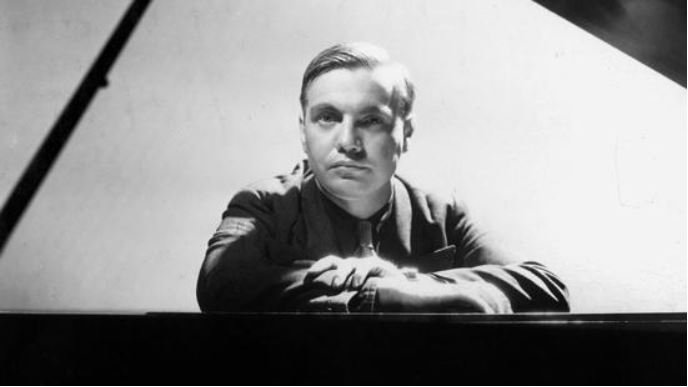
    PHOTOS: Antheil packing heat (top), and the multifaceted Grainger

  • Mahler Still Talks to Us Today

    Mahler Still Talks to Us Today

    As Oscar Wilde memorably observed, “… There is only one thing in the world worse than being talked about, and that’s not being talked about.”

    Gustav Mahler’s unprecedentedly ambitious – and loud – masterworks caused his contemporaries to sit up and take notice. Reactions ranged from exaltation to confusion to outright hostility, and not necessarily in that order. Of course Mahler got the last laugh. Despite the high cost of presenting his symphonies, they are now more prevalent on concert programs than ever before. And the halls are packed.

    You haven’t really made it until you are widely caricatured. You’ll find more examples by following the link below. Some of the portraits are affectionate; some are mean-spirited. Either way, it’s clear that Mahler was being talked about.

    Happy birthday, Gustav Mahler!

    Cartoons and caricatures

  • Philadelphia Art Alliance Fire Historic Loss

    Philadelphia Art Alliance Fire Historic Loss

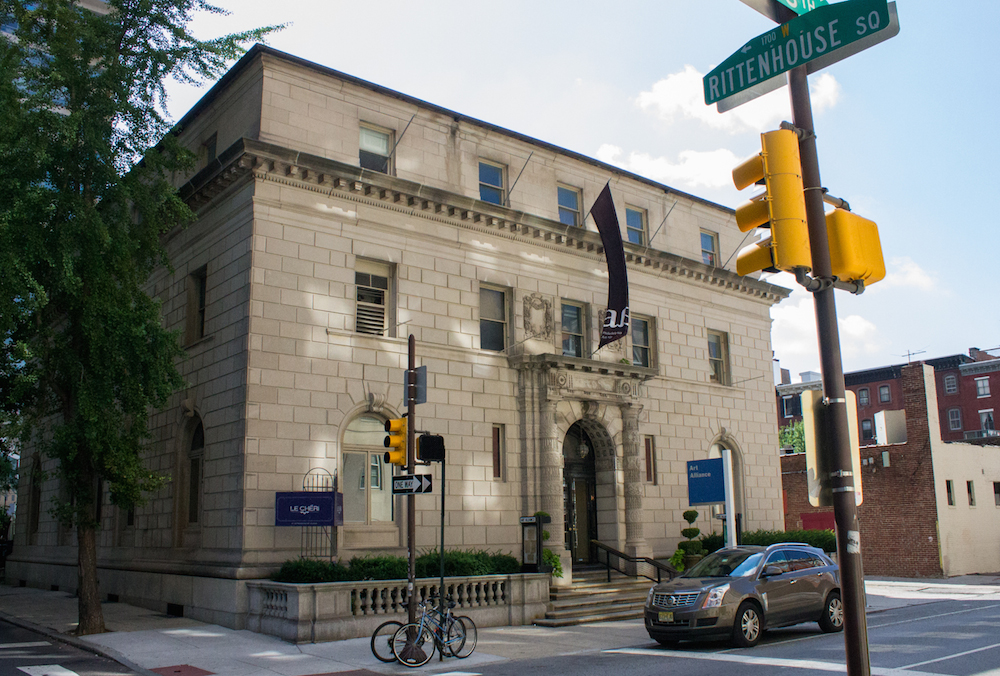
    When I saw the headlines about fire damaging “building owned by Curtis Institute,” my heart sank. The Curtis Institute of Music is such a lovely building. But it was actually historic Wetherill Mansion, located behind Curtis, at 251 South 18th Street, that burned. Not to the ground mind you, but looking rather the worse for wear. The building, formerly owned by the now-defunct University of the Arts, was purchased by Curtis last year. Not that its destruction is not an enormous loss. The longtime home of the Philadelphia Art Alliance, situated on the southeast corner of Rittenhouse Square, was designed by architect Frank Miles Day in 1906.

    For over a century, the Alliance was committed to showcasing local art, craft, and design, while also hosting works by world-renowned artists and architects, such as Mary Cassatt, Le Corbusier, M.C. Escher, Antonio Gaudi, Walter Gropius, George Nakashima, Horace Pippin, Man Ray, and Andrew Wyeth. Among those who performed or read there were Alvin Ailey, W.H. Auden, Leonard Bernstein, John Cage, E.E. Cummings, Merce Cunningham, Buckminster Fuller, Martha Graham, and Dorothy Parker.

    I lived within walking distance of the Alliance for over 30 years, sometimes only within a block or two. When I owned my bookshop at 259 South 17th Street (next to the Medical Tower), I strolled past every day on my morning and evening dog walks to Rittenhouse Square. It was a lovely little block then, before a high rise was erected on 17th Street – admittedly, on the site of a squalid little parking lot, but at least it was open space. You didn’t feel boxed-in, and I could still see the sky from my desk. I believe its construction also resulted in the demolition of the charming old Rittenhouse Medical Bookstore, with its upstairs leaded-glass windows, and with which I had a friendly professional relationship. Next to that was the residence of piano pedagogue Eleanor Sokoloff. Leopold Stokowski once kept an apartment a few doors down, but I believe that too had already been demolished. Across the street was the top-floor residence of a double bassist with whom I used to drink beers on the roof until late at night. She now holds a principal position with a symphony orchestra out west. Come to think of it, I also used to drink with a cellist who lived upstairs from my shop, a Curtis and later Juilliard student, who spent at least as much time on the golf course as he did in class. It was a nice little set-up for me. My irritable dog, a stray recovered from Rittenhouse Square in a thunderstorm, used to amuse herself by standing in the open window, with her front paws in the shop flower box, six feet or so from street level, causing passersby to cry out in surprise and drop their sodas when they were startled by her sharp, sudden barks.

    The Philadelphia Art Alliance was established in 1915 by philanthropist Christine Wetherill Stevenson, heiress of the Pittsburgh Paint Company. Property was purchased to house the enterprise at 1823-25 Walnut Street (with 1827 Walnut added later), but in 1926 the PAA was moved to the Stevenson family home on Rittenhouse Square.

    Stokowski’s wife, the pianist Olga Samaroff, once served on the PAA’s music committee. In 1958, Curtis Institute founder Mary Louise (Curtis) Bok Zimbalist was awarded a PAA Medal of Achievement for “advancement of or outstanding achievement in the arts.”

    The building is on the National Register of Historic Places. I used to lunch there sometimes with the late flutist and bon vivant Robert Stallman.

    The fire broke out early on the morning on July 4, resulting in “significant damage.” Aerial shots of the building reveal a badly compromised roof. Surely there is extensive damage inside, the result of the fire itself, efforts to extinguish it, and whatever materials may have been released by the heat. The cause has yet to be revealed, but I speak from personal experience when I say that Philadelphia is a big fireworks town.

    The craftsmanship and building materials were products of a bygone age. The building can be restored, perhaps, but it’s doubtful that that sense of permanence, instilled by so many institutions of the era, will ever be recaptured.

Tag Cloud

Aaron Copland (94) Beethoven (95) Composer (114) Film Music (149) Film Score (143) Film Scores (255) Halloween (99) John Williams (197) KWAX (233) Leonard Bernstein (105) Marlboro Music Festival (125) Movie Music (164) Mozart (91) Opera (215) Philadelphia Orchestra (90) Picture Perfect (174) Princeton Symphony Orchestra (110) Radio (90) Ross Amico (244) Roy's Tie-Dye Sci-Fi Corner (290) The Classical Network (101) The Lost Chord (269) Vaughan Williams (107) WPRB (397) WWFM (881)

DON’T MISS A BEAT

Receive a weekly digest every Sunday at noon by signing up here


RECENT POSTS