I’d been meaning to read “Hugh Wynne, Free Quaker” for a good 25 years. Introduced to me by a fellow bibliophile who added much to my knowledge and education in the book trade, “Hugh” was the second best-selling novel of 1898, behind Francis Hopkinson Smith’s “Caleb West, Master Diver,” about the dangerous underwater construction of a lighthouse off the coast of New England. Smith, a descendent of the Declaration signer whose name he shares, was an engineer who built New York’s Race Rock Lighthouse, as well as the foundation to the Statue of Liberty.
Essentially, “Hugh Wynne” is a bildungsroman set during the American Revolution and the years preceding, about a young Quaker of Welsh ancestry, who is raised in colonial Philadelphia by a severe father (the author’s preface to the book’s nineteenth edition indicates that this character was the source of some controversy in the Friends community) and a vivacious, indulgent French mother, while also receiving instruction on the side in the ways of society and the wider world by an independent, free-thinking, well-to-do aunt (his father’s sister). In my ideal film adaptation, I imagine Edna May Oliver or perhaps Dame Edith Evans in the role.
Interestingly, Hugh’s best friend is Jack Warder, who is noted throughout for his effeminacy – I mean, nearly every time he appears, in person or in conversation, to the point where how could the reader not wonder if there was something coded going on there. But Mitchell also has him hopelessly in love with a capricious coquette who entrances seemingly every male in the novel, and sets up an interesting rivalry with Hugh, which is never fully exploited.
It’s not the only aspect of the drama Mitchell fails to leverage. The novel’s last act should have been screwed to a fever pitch. Within moments of finishing the book, I thought of at least three elements that, had the author squeezed the tube, would have really heightened the drama. And it’s a great shame that he didn’t, as the book could have been as fondly remembered as any of the historical fiction of James Fennimore Cooper.
Instead, he deflates tension by having Hugh reveal things such as, “On the last occasion I saw so-and-so,” negating all suspense as to whether or not a certain villain is going to come back later to make trouble for the protagonists. At the beginning, he remembers his late friend Jack – the story is told in the first-person, with selections from Jack’s diary filling in details or offering perspectives at the time unknown to Hugh – which, as the novel progresses, makes the reader anticipate Jack’s untimely end – which never comes! And there is the wasted potential of heightened tension between two friends in their love for the same woman. Astonishing, that Mitchell could squander such opportunities! In their place, he settles for drawing room kerfuffle and romantic coda.
That said, the book does have its points, particularly for those familiar with Center City Philadelphia, especially Society Hill and Old City, but also Germantown and Chestnut Hill. It’s interesting to imagine this colonial town of woodlots, woodland from 8th Street to the Schuylkill, and wilderness north of Fairmount Avenue, which, when occupied, is dotted with English forts.
The book is also successful in illustrating just how divided the colonials were in their beliefs and allegiances, even as they were united in their social lives. Tories and Patriots frequently occupy the same drawing rooms, sharing gossip, tea, and cards, united in all, it seems, except politics. In fact, Hugh forms a number of allegiances and friendships with Loyalists and even British soldiers that show that, in some respects, the American Revolution was actually a precursor of the Civil War, in terms of pitting brother against brother. This is something historical fiction can often address more effectively than the bald statistics of straight history.
Naturally, as a Quaker – a member of the Religious Society of Friends – Hugh also struggles to reconcile his pacifist upbringing with a moral duty to fight for American independence. At home, there is further tension in his conflicted relationship with his domineering, disapproving father, who, as the story progresses, also becomes a figure of concern, as he begins to show signs of cognitive decline.
Hugh is less guarded in his emotions when he attempts to save a friend condemned to death for spying. Earlier, another, newfound friend looks out for him while they are incarcerated in a makeshift British prison on what is now Washington Square, of a type, in its squalor and brutality, Alexandre Dumas and Victor Hugo would have recognized.
Hugh’s Philadelphia is a port town of merchants and blacksmiths, taverns and churches, redcoats and Continental Congressmen. In peacetime, mornings are passed in abundant private gardens, lazy afternoons in boating on (and bathing in) the Delaware and Schuylkill Rivers, and free days on horseback excursions to Germantown and Chestnut Hill.
However, there are ominous undercurrents even in Hugh’s largely untroubled youth, as the colonies begin to bristle under English taxation and corruption. The spirit of revolution is intensifying, and Hugh will be a part of the action. Historical figures such as Alexander Hamilton, Benjamin Franklin, Benedict Arnold, and especially George Washington, play supporting, though obviously important, parts in the narrative.
The author, S. Weir Mitchell (1829-1914), was a prominent Philadelphia doctor and Civil War surgeon. His observations of nerve trauma and “phantom limb” syndrome launched him on a career as a pioneer in the field of neurology.
Some of his theories and treatments were not uncontroversial. Charlotte Perkins Gilman claimed to have written her famous short story, “The Yellow Wallpaper,” as a repost to Mitchell’s “rest cure” – which prescribed bed rest, seclusion, electrotherapy, and overfeeding on a protein diet (including a lot of milk), primarily for “nervous” women, who were also instructed not to engage in intellectual activity, such as study, writing, or any kind of creative work. Anxious men were sent West to rope, hunt, and roughride.
Mitchell wrote broadly on science and medical matters, but at midlife, he was also took an interest in literary fiction. “Hugh Wynne” proved to be his greatest success. It’s an absorbing read, I would even say a page-turner, by my standards, but I understand I am a peculiar person, often older than my years, perhaps even born too late. I always kept a selection of Mitchell’s novels in my Philadelphia bookshops, and they invariably sold. So there are still other people out there who know their local history – or perhaps medical history – and are interested in reading him.
Of his other titles, Mitchell’s “The Red City” is also set in Philadelphia, during the time of Washington’s second administration and the Yellow Fever epidemic of 1793 (during which many were buried in Washington Square – then Southeast Square – since 1706 a potter’s field and final resting place of African Americans, Native Americans, and Revolutionary War soldiers).
It’s also mindblowing to contemplate a time when the City of Brotherly Love really was an extension of Penn’s Woods, with abundant tree cover and even forest over most of Center City. My thoughts travel to a print I once saw of a view from the old Fairmount Prison (also instituted by Quakers), with Penn’s “green country town” so seemingly distant. From as recently as the 1920s and ‘30s, there are black and white photographs of livestock being driven down Broad Street. How quickly it all changed, how Penn’s vision devolved into a modern urban nightmare. I am reminded of Wilde’s quip, “Nowadays people know the price of everything and the value of nothing.”
Attentive Philadelphians will still find evidence of Weir’s life and accomplishments around town. There’s an historical marker, a frieze with his likeness, on a building at 1528 Walnut Street (the site of his former residence), not far from Rittenhouse Square. There’s Mitchell Elementary School in southwest Philly. There’s Mitchell Hall in the College of Physicians on 22nd Street (in the same structure that houses the notorious Mütter Museum of medical oddities). And of course there’s his final resting place in Woodlands Cemetery. Interestingly, I only just learned of a contemporary actor and producer, Silas Weir Mitchell – a distant relative – born in Philadelphia in 1969.
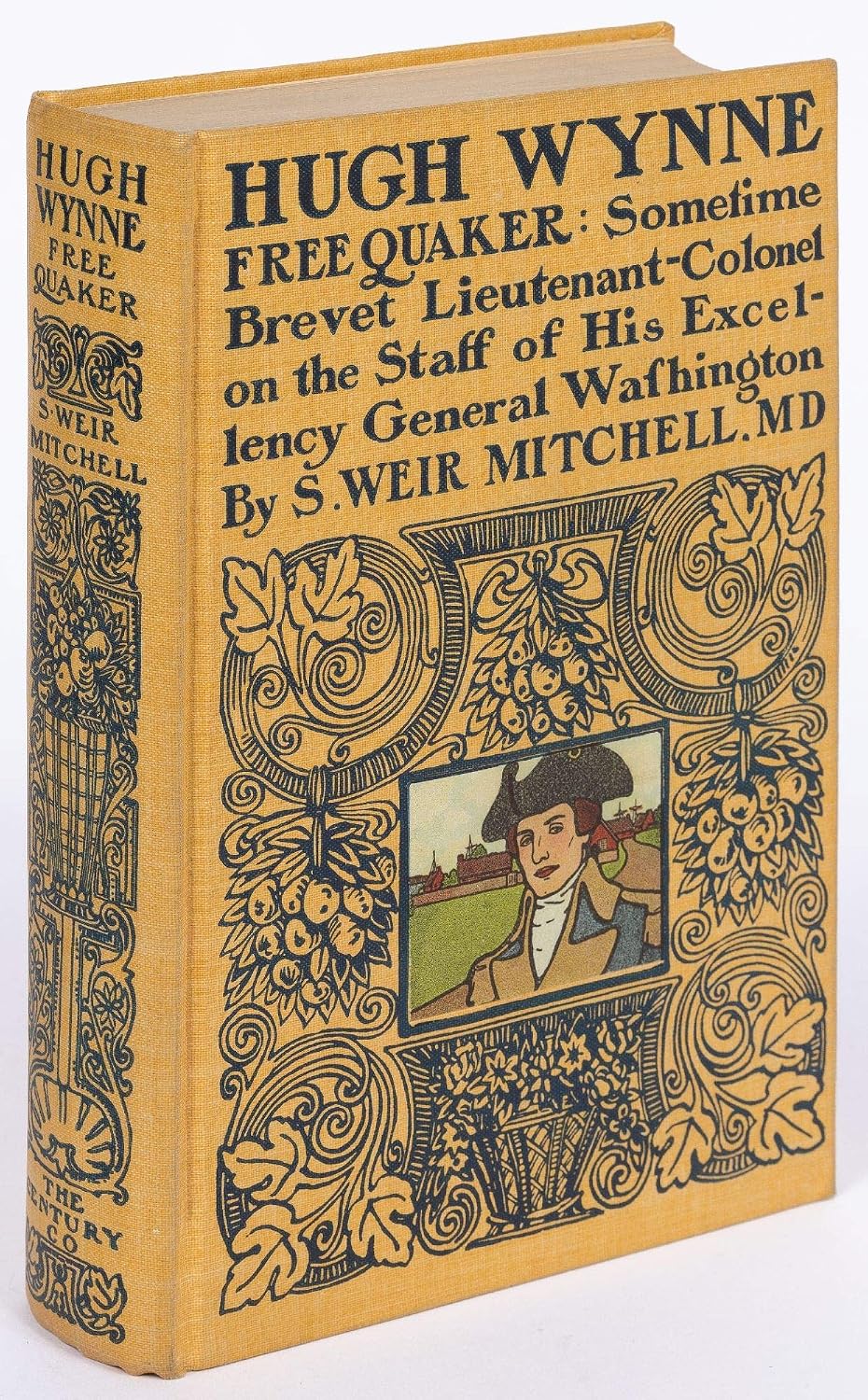
Early editions of “Hugh Wynne” (including my copy) contain black and white plates by Howard Pyle, which, to be honest, lack the dynamism of his famous pirate illustrations and are actually kind of blah. The cover is great, though, with gold cloth embossed with black lettering and ornate design, and a color paste-down plate of Hugh in a tricorn.
It’s fascinating to consider that at the time “Hugh” was written, it would be the equivalent of someone today writing an historical novel about the turn of last century – the time when ”Hugh” was actually written! The novel is equidistant between us and the events of the nation’s founding. Mitchell might very well have encountered veterans of the Revolution. (It’s thought that the last of these, Daniel Frederick Bakeman, died in 1869 at the age of 109.) He certainly grew up surrounded by the living memory of the Revolutionary generation. It is yet another example of what we all take for granted as the comparative youth of the United States, but being made to focus on it, its brevity still boggles the mind.
———-
A fairly thorough overview of Mitchell
https://www.med.upenn.edu/neurology/silas-weir-mitchell.html
His “Rest” and “West” cures
https://www.apa.org/monitor/2012/01/go-rest
Charlotte Perkins Gilman, “The Yellow Wallpaper”
https://www.nlm.nih.gov/exhibition/theliteratureofprescription/exhibitionAssets/digitalDocs/The-Yellow-Wall-Paper.pdf
Gilman, “Why I Wrote ‘The Yellow Wallpaper’”
https://www.americanyawp.com/reader/18-industrial-america/charlotte-perkins-gilman-why-i-wrote-the-yellow-wallpaper-1913/
S. Weir Mitchell historical marker
https://www.hmdb.org/m.asp?m=232078
Category: Daily Dispatch
-
Quaker Notes: S. Weir Mitchell’s “Hugh Wynne”
-
Passable Batons?
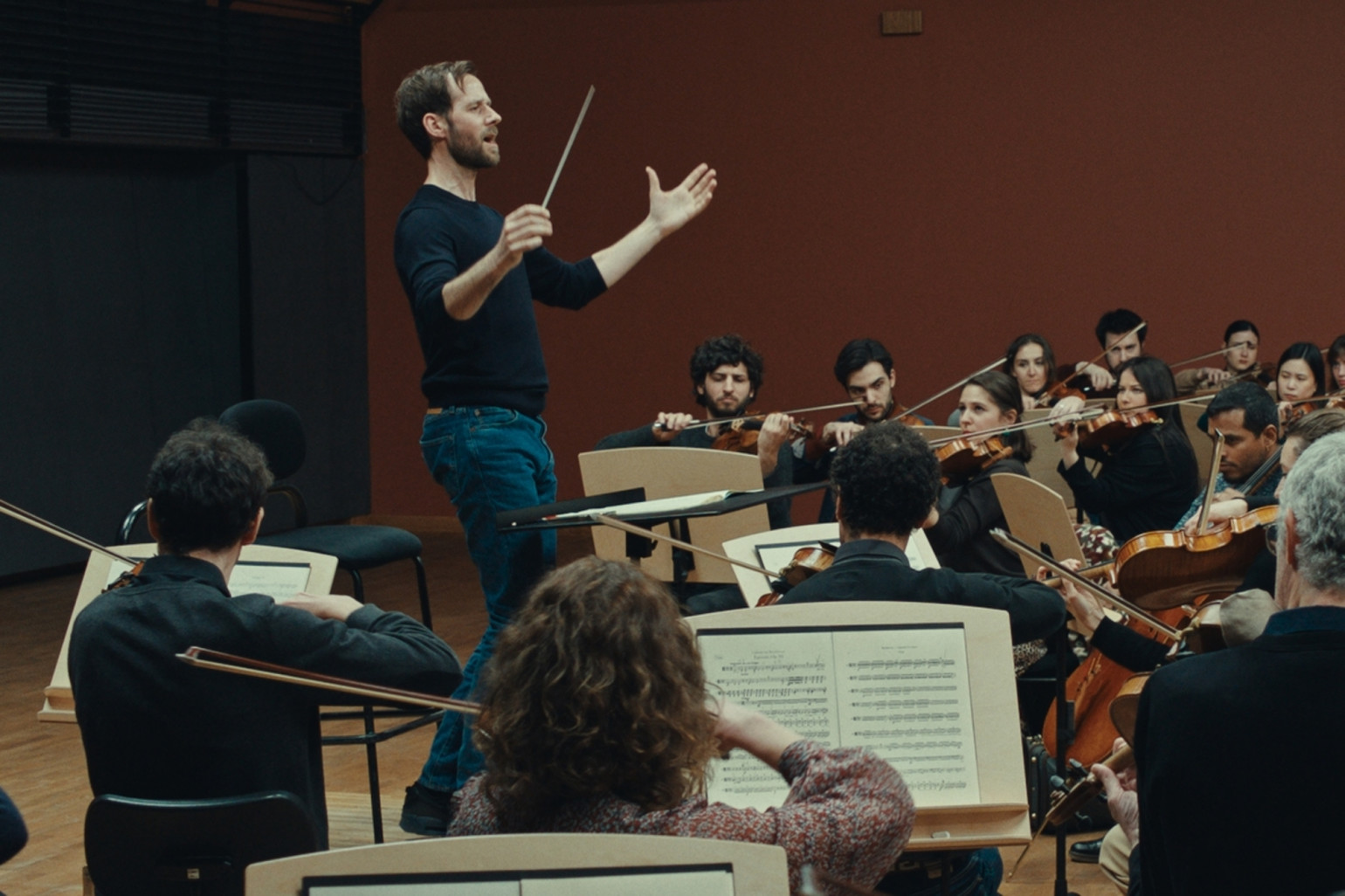
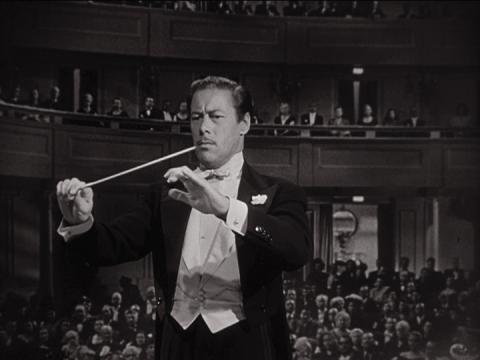
In yesterday’s post – my impressions of the French film “The Marching Band” (now in theaters) – I made some complimentary observations about actor Benjamin Lavernhe’s baton technique. His has to be one of the more convincing portrayals of a conductor on the podium. One of the worst that springs immediately to mind, because I rewatched it only fairly recently, is Rex Harrison’s in the Preston Sturges’ ”Unfaithfully Yours,” who to me seems stiff and metronomic. Any of you movie-loving classical music aficionados care to weigh in with your nominations for most passable or cringeworthy conducting on film?
-
For Classical Music People, “The Marching Band” Gets It Mostly Right
What a delightful surprise this was! My ideal condition for seeing a movie is knowing next to nothing about it, and I walked into this one cold. It’s a French film, released here in the U.S. as “The Marching Band,” which I know is not a direct translation of the original title, “En Fanfare.” There’s not a lot to spoil in the basic premise, but I will be as vague about it as possible in stating that it is about two brothers, adopted into separate families at birth, who are brought together in adulthood only to discover a surprising connection through music.
If this were made in England, I could see it becoming a quirky art house hit along the lines of “Brassed Off,” with which it shares certain elements in common. But it is French, after all, so the whimsy is a little more restrained, and the drama a little more vérité (by which I mean, literally, truthful, as opposed to anything related specifically to the style of cinema).
I walked in anticipating the focus would be on the brothers’ relationship and wholly expected the musical elements to be subservient to the drama. So often movies about classical music just don’t get the “music” and the process of creating and performing music right. I have to say, in this case, it mostly did. And there was enough Beethoven, Mozart, Mahler, Debussy, and Ravel to keep me happy.
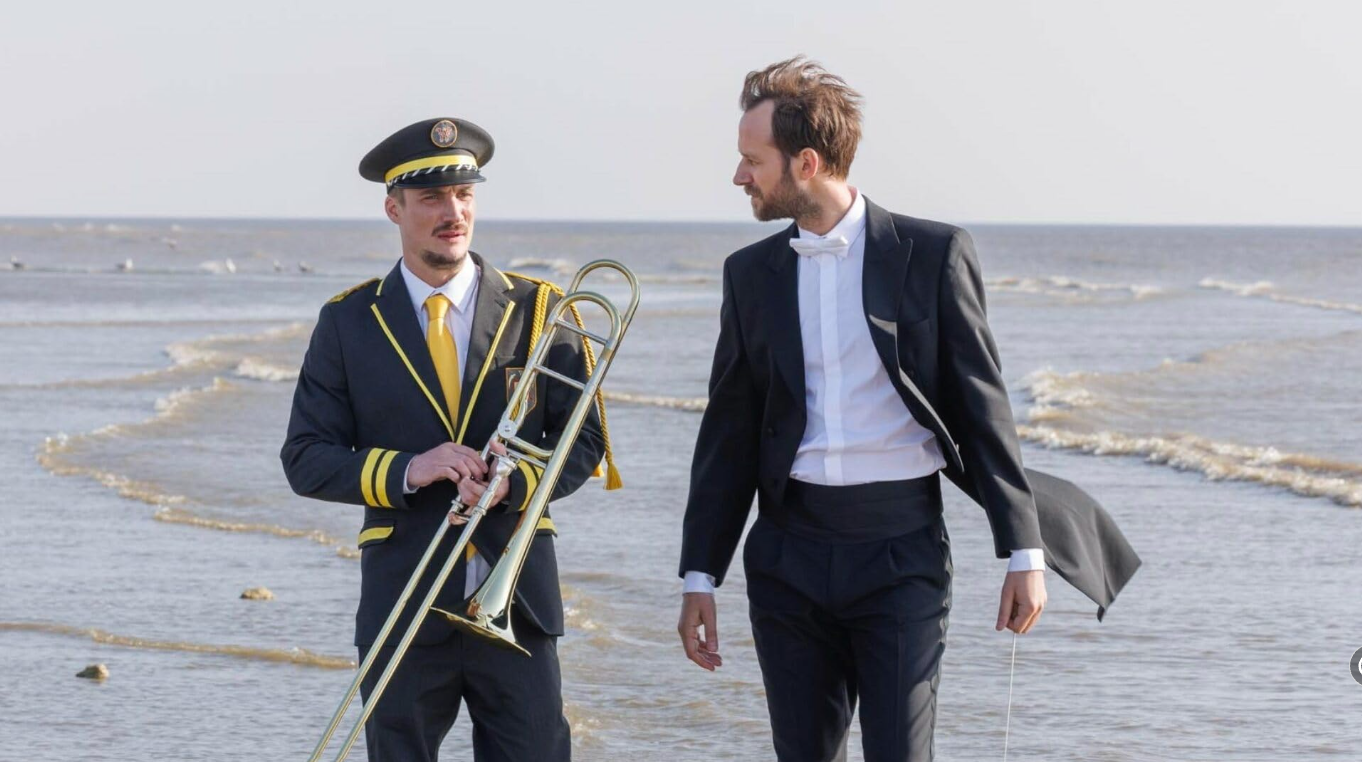
I didn’t know who any of the actors are, but the lead, Benjamin Lavernhe, who plays an internationally recognized conductor of symphony orchestras, is very good. I looked him up, and he is predominately a stage actor, associated with classical theater (his screen credit explicitly links him to the Comédie-Française), from Euripides through Racine, Shakespeare, and Molière, to Chekhov. The most recent playwright on his resume in Bertolt Brecht. For all that, he turns in a remarkably naturalistic and easygoing charismatic performance.
Classical music people will be relieved to know that, for once, this is a movie in which an actor conducting doesn’t look like he just took a few lessons. Lavernhe is comfortable with a baton, and his bearing and technique transcend pantomime to be wholly convincing.
The other brother is played by Pierre Lottin, who has the less showy, and perhaps more difficult role, since so much of it is internalized. His character hasn’t enjoyed the same advantages as Lavernhe’s, nor does he share his constructive attitude. He’s tamping down a lifetime of hurt and disappointment, and the struggle, the suppressed emotion, can be read in his eyes. Despite himself, he finds himself opening up to his long-lost brother. But his wounds are too close to the surface, and he keeps retreating back into his shell. Interestingly, Lottin is best known in France for a series of successful comedies (the “Les Tuche” series), but here he gives a good dramatic performance.
Remarkably, the director and screenwriter, Emmanuel Courcol, is not a musician, nor did he have any formal musical training, but his family instilled in him a lifelong passion for classical music. He certainly has the right instincts in terms of finding good coaches and the right actors to commit to the training.
Lavernhe is a far more convincing conductor, and character, than Cate Blanchett’s Lydia Tár. And he comes across as a real person, as opposed to an egotistical, condescending sociopath (though unquestionably problematic conductors do exist!). It’s nice to see a music director portrayed as something other than a “Seinfeld” maestro caricature for a change.
The only part that screamed “movie” for me was the ending, which at first I found a touch contrived, though it undeniably packs an emotional punch, to the extent that it teeters on the brink of sentiment. But after I left the theater, I thought about it for a while, and I realized, though in the moment it may have been a lot to swallow and certainly seemed a little more heart-on-the-sleeve than the rest of the film, it was still within the realm of plausibility. But it is something more along the lines of what you might expect from one of those British charmers like “Brassed Off,” “The Full Monty,” “Calendar Girls,” or “Kinky Boots.” Don’t go into it expecting that kind of movie. It’s not. Unless perhaps filtered through a Gallic sensibility.
At least it lands more convincingly than Richard Dreyfuss’ painful “American Symphony” that mars “Mr. Holland’s Opus.” “The Marching Band” doesn’t tidy everything up with its spoonful of sugar, but it delivers enough of an uplift to send you out of the theater feeling you had just experienced something worthwhile.
No guns. No superheroes. No CGI. No Hans Zimmer. Just a good, solid, human movie, that will also have you thinking about the old question of nature versus nurture, as music will out! -

Port of Riches: Composers with Puerto Rican Connections on “The Lost Chord”
I hope you’ve got the taste for rum and plantains. This week on “The Lost Chord,” we pack our bags and strike out for the Caribbean.
We’ll have music by two composers with Puerto Rican connections: Ernesto Cordero (b. 1946), though born in New York, was raised there; Roberto Sierra (b. 1953) was born there and now teaches at Cornell.
Cordero studied at the Conservatory of Music in Puerto Rico and the Royal Conservatory of Music in Madrid. He did post graduate work in composition in Rome and New York (with Julián Orbón). He also studied guitar under the legendary Regino Sáinz de la Maza (who gave the premiere of Rodrigo’s “Concierto de Aranjuez”) and Alirio Díaz.
Cordero’s music is distinguished by its Caribbean flavor. He has written at least eight concertos to date. We’ll be listening to his “Concierto Festivo” (2003), dedicated to Pepe Romero.
Sierra studied composition in Hamburg with György Ligeti. In 1986, his opera, “El mensajero de plata” (“The Silver Messenger”), was given its premiere at the Interamerican Festival in San Juan. In 1985, Zdenek Macal conducted the first performance of Sierra’s first major orchestral composition, “Jubilo,” with the Puerto Rico Symphony Orchestra. Macal took the work to Carnegie Hall in 1987, with the Milwaukee Symphony Orchestra, effectively kickstarting Sierra’s international career.
Sierra spent three seasons as Milwaukee’s composer-in-residence, from 1989 to 1992. The culmination of his residency was the world premiere of “Tropicalia” (1991). The work falls into three movements: “Foliage” is evocative of a rainforest; “Nocturne” conjures childhood memories of fireflies and “coqui,” Puerto Rican tree frogs; and “Celebration” is full of upbeat, indigenous rhythms.
I hope you’ll join me for “Port of Riches,” on “The Lost Chord,” now in syndication on KWAX Classical Oregon!
——-
Clip and save the start times for all three of my recorded shows:
PICTURE PERFECT, the movie music show – Friday at 8:00 PM EDT/5:00 PM PDT
SWEETNESS AND LIGHT, the light music program – Saturday at 11:00 AM EDT/8:00 AM PDT
THE LOST CHORD, unusual and neglected rep – Saturday at 7:00 PM EDT/4:00 PM PDT
Stream them, wherever you are, at the link!
https://kwax.uoregon.edu/ -

A Canadian Pancake Breakfast on “Sweetness and Light”
This week on “Sweetness and Light,” the focus is on our friends to the north – all music associated, in one way or another, with Canada. We’ll hear works by Canadian composers Healey Willan and Robert Farnon, including Farnon’s “Ottawa” Symphony, with a few of his light music classics tossed into the bargain.
Neither Emil Nikolaus von Reznicek nor Ralph Vaughan Williams were Canadian, but both wrote music associated with the Great White North. Television audiences of the late 1950s would come to associate Reznicek’s best-known music with the North-West Mounted Police, during the time of the Klondike Gold Rush, when his “Donna Diana Overture” was appropriated as the theme for “Sergeant Preston of the Yukon.” And what a performance we’ll hear, with Hermann Scherchen conducting, in a recording that was made contemporaneously with the run of the show!
Vaughan Williams wrote the music for the Powell-Pressburger film “49th Parallel,” in which patriotic Canadian citizens save our bacon from Nazi invasion. Raymond Massey beating the tar out of a Nazi? Now that’s the kind of propaganda I can get behind!
I’ll be ladling out the syrup and the pancakes will be fluffy, as we salute Canada on “Sweetness and Light,” this Saturday morning at 11:00 EDT/8:00 PDT, exclusively on KWAX Classical Oregon!
Stream it, wherever you are, at the link:
https://kwax.uoregon.edu/
Tag Cloud
Aaron Copland (94) Beethoven (95) Composer (114) Film Music (149) Film Score (143) Film Scores (255) Halloween (97) John Williams (197) KWAX (232) Leonard Bernstein (105) Marlboro Music Festival (125) Movie Music (164) Mozart (91) Opera (215) Philadelphia Orchestra (90) Picture Perfect (174) Princeton Symphony Orchestra (110) Radio (90) Ross Amico (244) Roy's Tie-Dye Sci-Fi Corner (290) The Classical Network (101) The Lost Chord (269) Vaughan Williams (107) WPRB (397) WWFM (881)