
I hope you’ve got the taste for rum and plantains. This week on “The Lost Chord,” we pack our bags and strike out for the Caribbean.
We’ll have music by two composers with Puerto Rican connections: Ernesto Cordero (b. 1946), though born in New York, was raised there; Roberto Sierra (b. 1953) was born there and now teaches at Cornell.
Cordero studied at the Conservatory of Music in Puerto Rico and the Royal Conservatory of Music in Madrid. He did post graduate work in composition in Rome and New York (with Julián Orbón). He also studied guitar under the legendary Regino Sáinz de la Maza (who gave the premiere of Rodrigo’s “Concierto de Aranjuez”) and Alirio Díaz.
Cordero’s music is distinguished by its Caribbean flavor. He has written at least eight concertos to date. We’ll be listening to his “Concierto Festivo” (2003), dedicated to Pepe Romero.
Sierra studied composition in Hamburg with György Ligeti. In 1986, his opera, “El mensajero de plata” (“The Silver Messenger”), was given its premiere at the Interamerican Festival in San Juan. In 1985, Zdenek Macal conducted the first performance of Sierra’s first major orchestral composition, “Jubilo,” with the Puerto Rico Symphony Orchestra. Macal took the work to Carnegie Hall in 1987, with the Milwaukee Symphony Orchestra, effectively kickstarting Sierra’s international career.
Sierra spent three seasons as Milwaukee’s composer-in-residence, from 1989 to 1992. The culmination of his residency was the world premiere of “Tropicalia” (1991). The work falls into three movements: “Foliage” is evocative of a rainforest; “Nocturne” conjures childhood memories of fireflies and “coqui,” Puerto Rican tree frogs; and “Celebration” is full of upbeat, indigenous rhythms.
I hope you’ll join me for “Port of Riches,” on “The Lost Chord,” now in syndication on KWAX Classical Oregon!
——-
Clip and save the start times for all three of my recorded shows:
PICTURE PERFECT, the movie music show – Friday at 8:00 PM EDT/5:00 PM PDT
SWEETNESS AND LIGHT, the light music program – Saturday at 11:00 AM EDT/8:00 AM PDT
THE LOST CHORD, unusual and neglected rep – Saturday at 7:00 PM EDT/4:00 PM PDT
Stream them, wherever you are, at the link!
https://kwax.uoregon.edu/
Category: Daily Dispatch
-
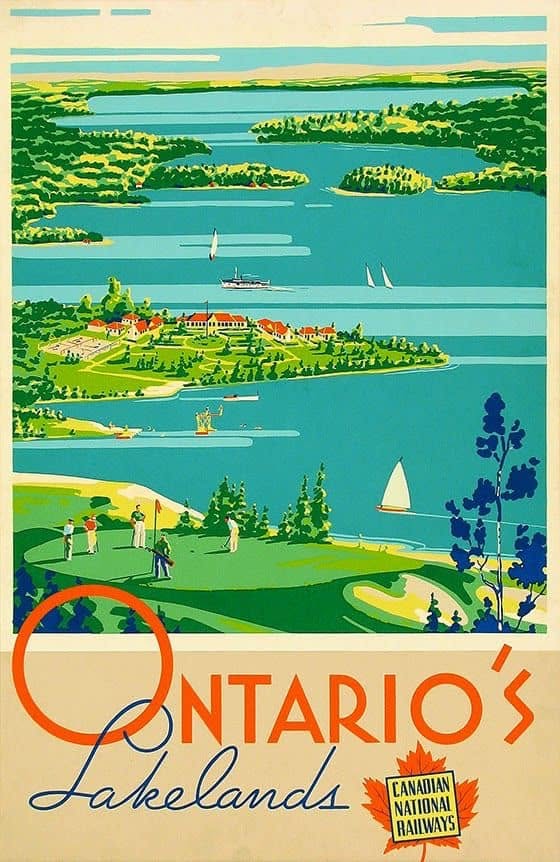
A Canadian Pancake Breakfast on “Sweetness and Light”
This week on “Sweetness and Light,” the focus is on our friends to the north – all music associated, in one way or another, with Canada. We’ll hear works by Canadian composers Healey Willan and Robert Farnon, including Farnon’s “Ottawa” Symphony, with a few of his light music classics tossed into the bargain.
Neither Emil Nikolaus von Reznicek nor Ralph Vaughan Williams were Canadian, but both wrote music associated with the Great White North. Television audiences of the late 1950s would come to associate Reznicek’s best-known music with the North-West Mounted Police, during the time of the Klondike Gold Rush, when his “Donna Diana Overture” was appropriated as the theme for “Sergeant Preston of the Yukon.” And what a performance we’ll hear, with Hermann Scherchen conducting, in a recording that was made contemporaneously with the run of the show!
Vaughan Williams wrote the music for the Powell-Pressburger film “49th Parallel,” in which patriotic Canadian citizens save our bacon from Nazi invasion. Raymond Massey beating the tar out of a Nazi? Now that’s the kind of propaganda I can get behind!
I’ll be ladling out the syrup and the pancakes will be fluffy, as we salute Canada on “Sweetness and Light,” this Saturday morning at 11:00 EDT/8:00 PDT, exclusively on KWAX Classical Oregon!
Stream it, wherever you are, at the link:
https://kwax.uoregon.edu/ -
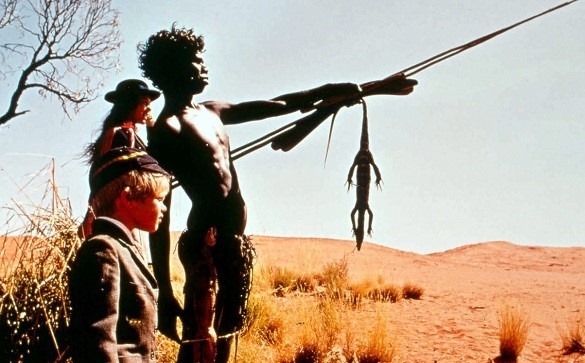
Down Under and Out Back on “Picture Perfect”
G’day! This week on “Picture Perfect,” we’re off to the antipodes for an hour of music from films set in the Australian bush.
Ealing Studios shot several movies there – three independently, and then two in collaboration with MGM. The first was “The Overlanders” (1946), told in semi-documentary style, about a wartime push to evacuate Australia’s Northern Territory, with its 5000 settlers and a million head of cattle, before an anticipated Japanese invasion. The music is by John Ireland. Despite its excellence, it would prove to be Ireland’s only film score.
Ealing’s final independent Australian venture was “Bitter Springs” (1950). One of the earliest cinematic attempts to address Aboriginal land rights and colonial dispossession, the film tells the story of a headstrong patriarch of an Australian pioneer family, who denies the locals access to a watering hole, precipitating a cycle of violence.
The thematic material was by Ralph Vaughan Williams, who left it to composer and conductor Ernest Irving to arrange and orchestrate what he felt needed for the various cues. Vaughan Williams wrote his friend and colleague to express his pleasure with the finished product. Irving would soon receive the dedication of Vaughan Williams’ Symphony No. 7, the “Sinfonia Antartica” (itself derived from RVW’s film score to Ealing’s “Scott of the Antarctic”).
Both of these films, “The Overlanders” and “Bitter Springs,” are essentially westerns set in the Australian outback. From a little closer to our own time, we’ll hear music from another film that’s unapologetic in its use of American western motifs, “Quigley Down Under” (1990).
The film stars Tom Selleck as an American cowboy, hired by an Australian rancher, played by Alan Rickman, allegedly to shoot dingoes; however, he soon finds that the rancher’s real purpose is to rid the land of Aborigines – a proposition Quigley naturally rejects, setting up the film’s conflict.
The score is by Basil Poledouris, a composer who achieved cult status for his work on films like “Robocop” and especially “Conan the Barbarian,” though he never really seemed to receive the recognition the deserved. He did, however, win an Emmy for his score to “Lonesome Dove.”
Finally, we’ll have just a bit from John Barry’s haunting score to Nicholas Roeg’s “Walkabout” (1971), in which two British children find themselves stranded in the bush and survive only through the aid of a young Aborigine.
We’re heading down under and out back this week, on “Picture Perfect,” music for the movies, now in syndication on KWAX Classical Oregon!
——-
Clip and save the start times for all three of my recorded shows:
PICTURE PERFECT, the movie music show – Friday at 8:00 PM EDT/5:00 PM PDT
SWEETNESS AND LIGHT, the light music program – Saturday at 11:00 AM EDT/8:00 AM PDT
THE LOST CHORD, unusual and neglected rep – Saturday at 7:00 PM EDT/4:00 PM PDT
Stream them, wherever you are, at the link!
https://kwax.uoregon.edu/ -
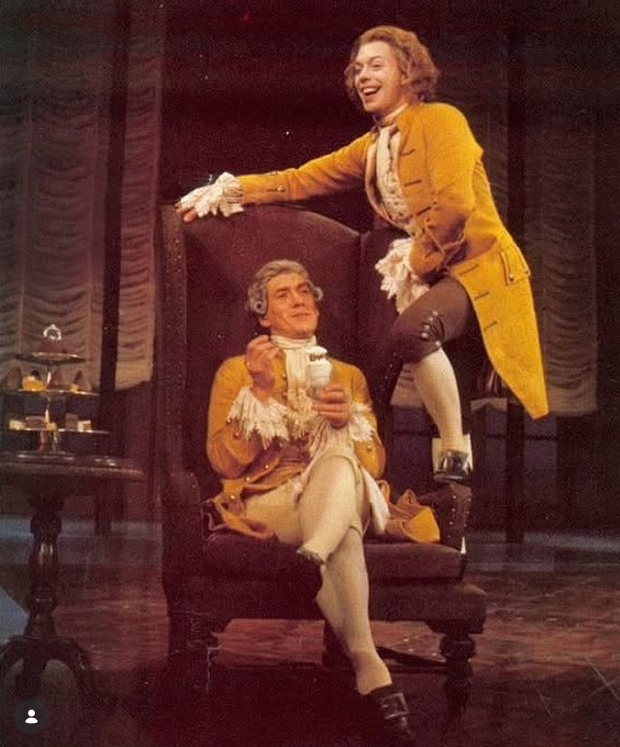
Tim Curry: From Frank N. Furter to Mozart (With a Digression on Frank Langella’s Dracula)
And now Tim Curry is gone. He’ll always be remembered for his audacious turn as Frank-N-Furter, but here he is as Mozart, with Ian McKellen as Salieri, in “Amadeus.” This production of Peter Shaffer’s play opened on Broadway in December 1980, its U.S. debut, also featuring Jane Seymour as Constanze. “Amadeus” was first presented in London in 1979, with Paul Scofield as Salieri and Simon Callow as Mozart. Curry’s death was announced yesterday. He was 80 years old.
There are a few Broadway shows I missed that I would have loved to have seen. In 1980, I was still basically a kid, and if my parents didn’t take me to see something, I didn’t see it. Thankfully, we did go to a few shows a year, mostly musicals, though my parents went to more (which I don’t begrudge them!). Given my burgeoning interest in classical music (I made them listen to a cassette of the “Eroica” Symphony on a drive in to the city), I don’t know why we didn’t see “Amadeus.”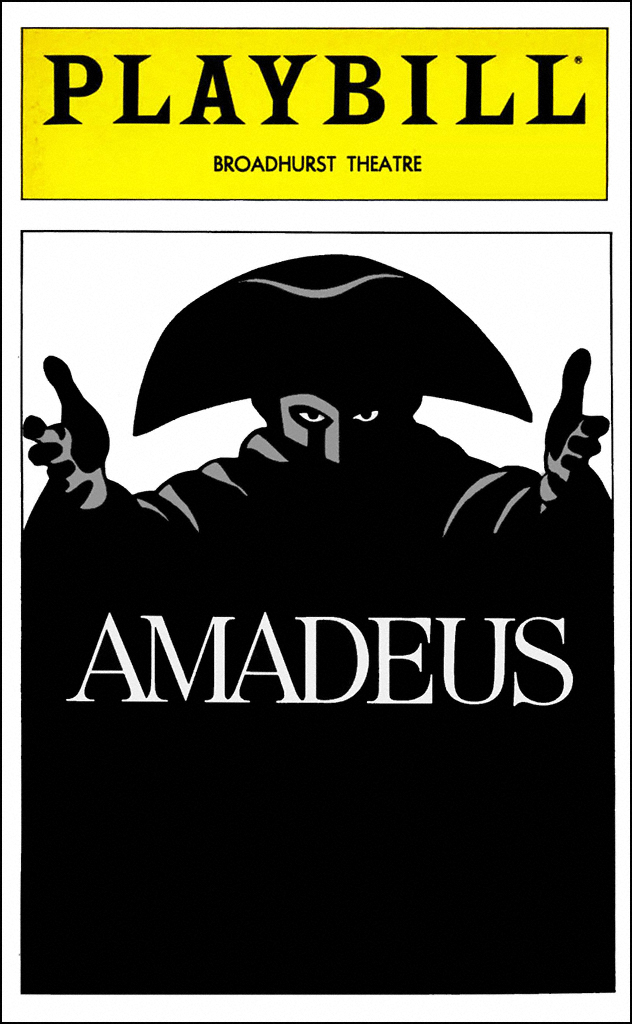
Another show I would have gone crazy for was the Edward Gorey production of “Dracula,” with Frank Langella (who also played Salieri on Broadway, opposite Dennis Boutsikaris as Mozart). Before I was bitten by the classical music bug, I was crazy for the Universal horror pictures. My parents did see this one. I don’t know why I wasn’t invited. I can’t complain, though. I saw a lot. I just should have seen these two!
From what I understand, there is an audio-visual recording of the McKellen-Curry “Amadeus” archived at the New York Public Library of the Performing Arts, but it is accessible only for research purposes. I don’t know if “Dracula” was documented.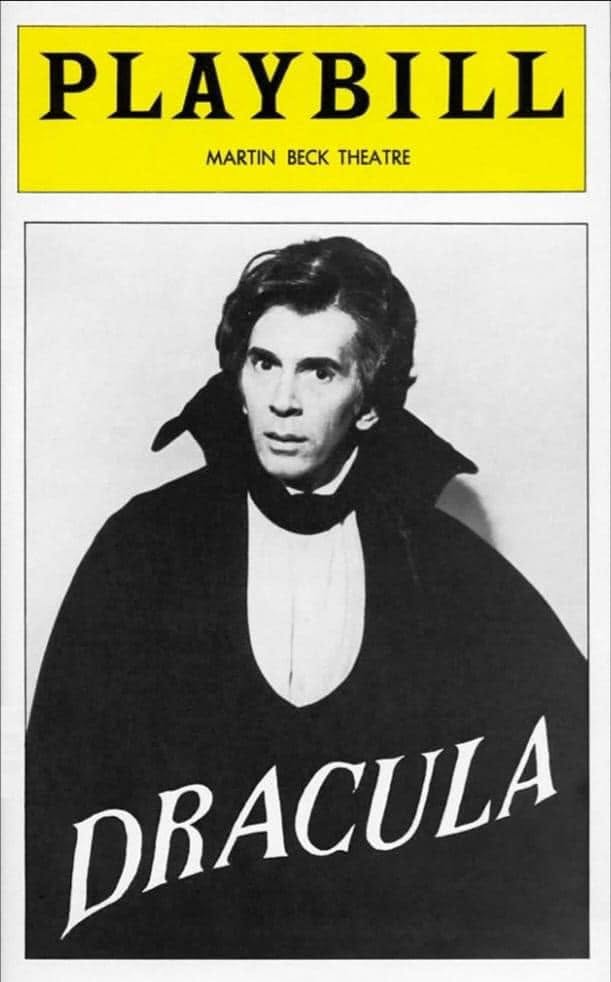
I was beyond excited when I saw the trailer for Langella’s film version (with music by John Williams!), but by all accounts, the Broadway show was the one to see. The film was viewed as a disappointment (and, Langella aside, it is), but on Broadway it was a sensation, with Tony Awards for Gorey’s costume designs and for “Most Innovative Production of a Revival.”
Bela Lugosi appeared in the original Broadway production in 1927, 50 years earlier. Of course, Lugosi went on to star in the classic 1931 film and was typecast as a horror actor for the rest of his life.
You’ll find images of the “Amadeus” Playbill at the link:
https://playbill.com/production/amadeus-broadhurst-theatre-vault-0000002018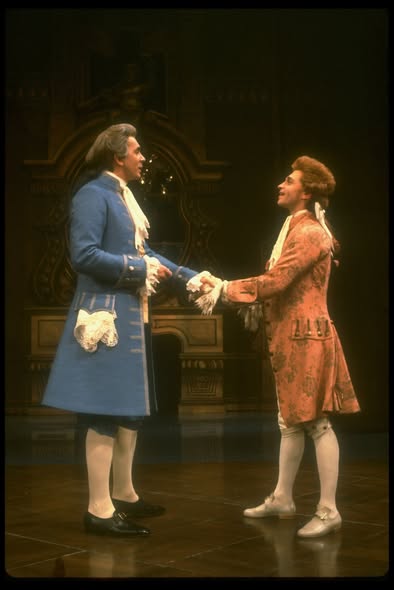
Langella and Boutsikaris in “Amadeus”
-
Goodbye, Dolly
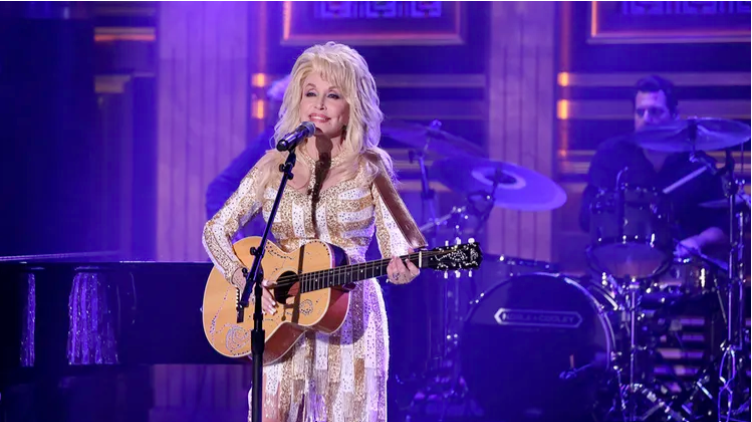
I know I’m the last person on the internet to post about Dolly Parton. By the time the news of her death broke yesterday, I had to hurry up and get ready and be out the door. But my reaction was one of surprising sadness for the passing of one I never met and whose career I never followed particularly closely. It’s just that Parton’s been in the public eye and in our popular entertainment for basically my entire life. So I found myself thinking, “Oh no! Not Dolly!”
I know she was having some health challenges, but she had just posted an upbeat, folksy update on social media, I thought only a week or two ago, but I guess she recorded it some time back, and it had only just popped up in my feed. What a lovely person she was, with real concern for others. She never forgot her hardscrabble origins, and undoubtedly her own struggles – and faith – informed her inexhaustible empathy. But I also suspect she was just made that way.
She set up a foundation to promote literacy and education for kids. She helped finance hospitals and medical research. When forest fires swept through the Great Smoky Mountains in her native Siever County, she organized a telethon and rallied corporate support to raise more than $9 million in aid. Why can’t we have someone like her as president?
I’m very sorry to learn of her passing. The woman defined exuberance and positivity. Also, she was a hell of a songwriter, who touched millions around the world with her 100-watt beautiful soul. May she rest in peace.
Tag Cloud
Aaron Copland (94) Beethoven (95) Composer (114) Film Music (149) Film Score (143) Film Scores (255) Halloween (98) John Williams (197) KWAX (232) Leonard Bernstein (105) Marlboro Music Festival (125) Movie Music (164) Mozart (91) Opera (215) Philadelphia Orchestra (90) Picture Perfect (174) Princeton Symphony Orchestra (110) Radio (90) Ross Amico (244) Roy's Tie-Dye Sci-Fi Corner (290) The Classical Network (101) The Lost Chord (269) Vaughan Williams (107) WPRB (397) WWFM (881)