Category: Daily Dispatch

  • Welcome Spring with “The Snow Maiden” on “The Lost Chord”

    Welcome Spring with “The Snow Maiden” on “The Lost Chord”

    Nikolai Rimsky-Korsakov was the composer of no fewer than 15 operas. But how many of them are known in the West?

    This week on “The Lost Chord,” we’ll have a chance to sample one of them, as we welcome spring with selections from “The Snow Maiden.”

    Based on an allegorical fairy tale of humans, quasi-mythological creatures, and the eternal forces of nature, it’s the story of a star-crossed love that brings about the end of a 15-year winter. The orchestral suite – which climaxes with the “Dance of the Tumblers” – is fairly popular, but the opera itself is seldom done, at least outside of Russia.

    The recording we’ll sample, on the Capriccio label, features the Bulgarian Radio Symphony conducted by Stoyan Angelov. It may not hold a candle to the best Rimsky opera recordings by conductors like Nikolai Golovanov, but it’s enough to give a taste of what American opera lovers are missing.

    I hope you’ll join me for “The Thaw of the Wild,” on “The Lost Chord,” now in syndication on KWAX Classical Oregon!

    ——–

    Clip and save the start times for all three of my recorded shows:

    PICTURE PERFECT, the movie music show – Friday at 8:00 PM EDT/5:00 PM PDT

    SWEETNESS AND LIGHT, the light music program – Saturday at 11:00 AM EDT/8:00 AM PDT

    THE LOST CHORD, unusual and neglected rep – Saturday at 7:00 PM EDT/4:00 PM PDT

    Stream them, wherever you are, at the link!

    https://kwax.uoregon.edu
  • March Madness on “Sweetness and Light”

    March Madness on “Sweetness and Light”

    Sir Edward Elgar completed five “Pomp and Circumstance” marches. Of course, the “Pomp and Circumstance March No. 1” is the most familiar. Anyone who’s ever attended a graduation ceremony knows it. No. 4 has also enjoyed some popularity. But I find, taken as a set, all five make for a satisfying emotional journey. Judge for yourself this morning on “Sweetness and Light,” as Elgar’s marches anchor an hour in 4/4 time. That’s right, it’s our annual “March Madness” show!

    As I’m sure aware if you follow this page, I’m an ardent anglophile, so you won’t be surprised to learn that I’ll also be including marches by Percy Whitlock and John Ireland. In addition, we’ll hear works by Tchaikovsky, Johan Halvorsen, and Beethoven.

    These boots are made for marching on “Sweetness and Light.” The madness begins this Saturday morning at 11:00 EDT/8:00 PDT, exclusively on KWAX Classical Oregon!

    Stream it, wherever you are, at the link:

    https://kwax.uoregon.edu/

  • Spring Into Documentary Music from England’s Green and Pleasant Land

    Spring Into Documentary Music from England’s Green and Pleasant Land

    This week on “Picture Perfect,” with the arrival of spring, we travel to “England’s green and pleasant land” for an hour of documentary music. The playlist will include scores by some of the country’s most respected composers.

    We’ll hear selections by Ralph Vaughan Williams, from “The People’s Land” (1941), Benjamin Britten, from “The King’s Stamp” (1935), William Alwyn, from “The Green Girdle” (1941), and Master of the Queen’s Music, Sir Arthur Bliss, from “The Royal Palaces of Britain” (1966). All four films are patriotic utterances on distinctly English themes.

    Historically, in the United States, writing music for the movies has often been regarded as “hack work,” but overseas it has been accepted as just another aspect of what it means to be a working artist. There is no disgrace in a composer earning a living, and some of the nation’s greatest musicians – including those in the employ of the Royal Family – have contributed finely-crafted scores to its body of cinema.

    You may not have seen any of these shorts, but the music sure is beautiful. I hope you’ll join me for music from English documentaries, on “The Lost Chord,” now in syndication on KWAX Classical Oregon!

    ——–

    Clip and save the start times for all three of my recorded shows:

    PICTURE PERFECT, the movie music show – Friday at 8:00 PM EDT/5:00 PM PDT

    SWEETNESS AND LIGHT, the light music program – Saturday at 11:00 AM EDT/8:00 AM PDT

    THE LOST CHORD, unusual and neglected rep – Saturday at 7:00 PM EDT/4:00 PM PDT

    Stream them, wherever you are, at the link!

    https://kwax.uoregon.edu

    ——–

    In the meantime, if you’re having a slow day, why not get a taste of the films themselves?

    “The People’s Land,” score by Vaughan Williams:

    https://film.britishcouncil.org/resources/film-archive/the-peoples-land

    “The King’s Stamp,” score by Benjamin Britten:

    https://www.dailymotion.com/video/x21r04k

    “The Green Girdle,” score by William Alwyn:

    https://www.youtube.com/watch?v=YOlnnshTsvQ

  • Farewell to Robert White

    Farewell to Robert White

    Unbelievable. Robert White, who could always be counted on to do a mean impression of Irish tenor John McCormack, died yesterday, the day after St. Patrick’s Day, at the age of 89. Dolores Cascarino and I had just written about him yesterday, in the comments section under my St. Patrick’s Day post. I suppose it’s hardly surprising, as White was always associated with Irish song.

    It’s amazing to contemplate that his career spanned eight decades, but already he was performing on the radio in 1942, celebrated as “the little John McCormack.” His repertoire would grow much more versatile than this monicker would suggest.

    In the late 1950s, he embarked on a career as a concert tenor. He performed with the New York Philharmonic and the Philadelphia Orchestra, but in the 1960s he also dipped a toe into what was then still considered arcane territory, when he embraced “early music.” Among other things, he sang in the U.S. premiere of Handel’s “Athalia.”

    But he also sang a lot of new music. He appeared in the first performance of Paul Hindemith’s “The Long Christmas Dinner” at Juilliard in 1963. Other prominent composers who wrote for him include Mark Adamo, William Bolcom, John Corigliano, Lukas Foss, Stephen Hough, Libby Larsen, Lowell Liebermann, Gian Carlo Menotti, Tobias Picker, Ned Rorem, and David Del Tredici.

    In the 1970s, White leaned into his success as an “Irish” tenor. He was actually born in the Bronx. He received his early training from his father and as a chorister at St. Jerome’s Church. At the age of 6, he made his radio debut as Bobby White. He recorded his first album, “Ring of Gold,” at the age of 7. His radio appearances teamed him with Bing Crosby, Frank Sinatra, and Humphrey Bogart.

    He undertook his formal studies at Hunter College, and then in Europe, where he attended, among other institutions, the American Academy at Fontainebleau, where he benefited from the guidance of Gérard Souzay and Nadia Boulanger.

    He later returned to Hunter College and Juilliard as a teacher. He also taught at Manhattan School of Music. He was twice invited to the White House, to perform for Presidents John F. Kennedy and Jimmy Carter.

    For years, whenever one of my air shifts happened to coincide with St. Patrick’s Day, I would play from White’s recording (with Ani Kavafian, Yo-Yo Ma, and Samuel Sanders) of Beethoven’s settings of Irish folk songs. White also made fine recordings for EMI, Virgin Classics, and Hyperion Records.

    R.I.P.


  • Rimsky-Korsakov Speaks Truth to Power

    Rimsky-Korsakov Speaks Truth to Power

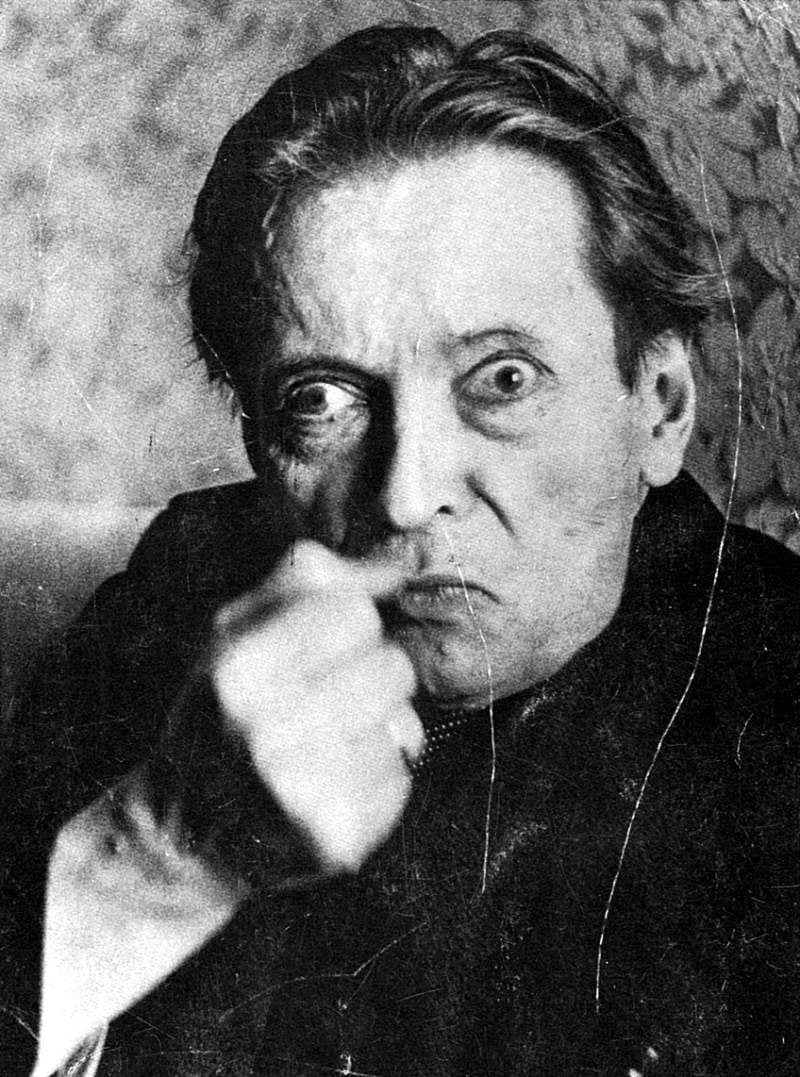
    I know Russia isn’t exactly “in” right now. But on Rimsky-Korsakov’s birthday, I am reminded of how the last act of this most venerable of Russian nationalist composers was to give a great big middle finger to the Tsar.

    With the completion of “The Invisible City of Kitezh” in 1905, Rimsky thought he was through with the operatic stage. He had composed 14 operas in all, and for “Kitezh” he brought the utmost in his artistry to bear. It would form the capstone in a kind of pantheon to a distinctly Russian national sound in music, the foundations of which were laid by Mikhail Glinka, beginning in the 1830s and ‘40s.

    But political indignation stirred Rimsky to take up his pen for one final statement, a sardonic take-down of autocratic rule, Russian imperialism, and military incompetence during the Russo-Japanese War.

    To say that the conflict, in which rival empires clashed for supremacy around the Yellow Sea, proved to be an enormous embarrassment for Russia would be an understatement. After a series of staggering defeats, Emperor Nicholas II remained headstrong in his determination to win. Even beyond the point of all hope for victory, he doubled-down to try to save face, rather than submit to a “humiliating peace.” He ignored an olive branch from Japan and rejected the idea of ending the war.

    The inadequacy of the Russian military and Japan’s decisive victory stunned the world. It led to the decline of Russian prestige and influence abroad, and contributed to growing domestic unrest that culminated in the 1905 Russian Revolution.

    It didn’t help that at home the Imperial Guard had fired on workers during an unarmed demonstration, a peaceful march to the Winter Palace. The actions of the Tsar’s soldiers resulted in the deaths of men, women, and children. Depending on who you believe, casualties were somewhere between 96 (according the official record) and 4,000. Ironically, the Tsar wasn’t even in residence at the time.

    That was in January. The war finally ended in September with the Treaty of Portsmouth, mediated by Theodore Roosevelt.

    Rimsky himself had earlier served as an officer in the Russian Imperial Navy and later as a civilian inspector of its bands. In 1905 he took to the ramparts, figuratively speaking, when he stood with student agitators at the St. Petersburg Conservatory. Rimsky was in his 60s at the time and a much-beloved presence. For his actions, he was dismissed from his professorship, approximately 100 students were expelled, and the conservatory was threatened with closure.

    A second demonstration by students during a performance of one of Rimsky’s earlier operas, “Kashchey the Immortal,” led to a ban on his music. Widespread outrage rippled beyond Russia’s borders. 300 students staged a walkout at the conservatory until Rimsky was reinstated. Not long after, in 1906, Rimsky would resign to launch into work on his final opera, with a pen warmed up in hell.

    On its surface, “The Golden Cockerel,” after Pushkin, is a fairy tale. But like all the best fairy tales, it also serves as a thinly-veiled allegory. The Astrologer in the work’s prologue and epilogue tells us that the characters are all based on real persons and that the moral is valid and true. In between, we’re introduced to a paranoid ruler who reneges on his promises, commits criminal acts, makes war on a sovereign state, displays military ineptitude, and in the end has his jugular pecked out by a cockerel.

    There’s no way the Russian censors were ever going to allow this work onstage. Rimsky, whose health was in decline, demanded that no changes be made, and suggested to a friend that he arrange for it to be performed in Paris. It got there eventually, staged as “Le coq d’or,” the title by which it has frequently been identified in the West ever since.

    But the actual premiere took place in Moscow in 1909, the year after Rimsky’s death. And yes, the libretto was judiciously pruned and the staging carefully modified.

    In his lifetime, Rimsky-Korsakov was one of the most prominent and respected musical figures in all of Russia. The St. Petersburg Conservatory, from which he was fired, now bears his name.

    Ironies continue to pile upon ironies, as history ever looms, ready to repeat itself. In 2026, Rimsky’s barbed response to the events of 1905 seems uncannily prescient and sadly universal.

    ————

    From a New York City Opera telecast, in English, with Beverly Sills in 1971. The Tsar (Norman Treigle) gets the big peck at 1:38:30.


    There are plenty more legible productions on YouTube, but most are sung in Russian, and not many have subtitles.

    Here’s a more vivid production, with no translations:


    Perhaps the opera’s best-known number, “Hymn to the Sun”


    Arthur Fielder conducts the orchestral suite:

Tag Cloud

Aaron Copland (92) Beethoven (95) Composer (114) Film Music (123) Film Score (143) Film Scores (255) Halloween (94) John Williams (187) KWAX (229) Leonard Bernstein (101) Marlboro Music Festival (125) Movie Music (138) Opera (202) Philadelphia Orchestra (89) Picture Perfect (174) Princeton Symphony Orchestra (106) Radio (87) Ralph Vaughan Williams (85) Ross Amico (244) Roy's Tie-Dye Sci-Fi Corner (290) The Classical Network (101) The Lost Chord (268) Vaughan Williams (103) WPRB (396) WWFM (881)

DON’T MISS A BEAT

Receive a weekly digest every Sunday at noon by signing up here


RECENT POSTS