Category: Daily Dispatch

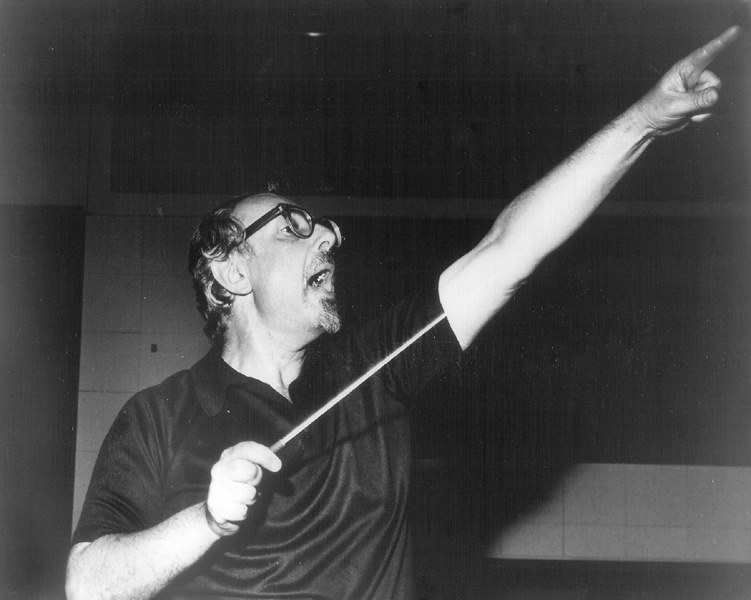
  • Ernest Gold Hollywood Composer Spotlight

    Ernest Gold Hollywood Composer Spotlight

    This Sunday night on “The Lost Chord,” we’re on the quest for Gold – Ernest Gold, that is.

    Gold, who won an Academy Award for his work on “Exodus” in 1960, wrote nearly 100 film scores, including those for “The Defiant Ones,” “Inherit the Wind,” and “It’s a Mad, Mad, Mad, Mad World.” He was perhaps Hollywood’s last major musical link with Old Vienna.

    Though from the start his ambition was to write for film like his hero, Max Steiner, he eked out a livelihood in New York, where he had settled in the wake of the Anschluss in 1938. There, he found work as a piano accompanist and a writer of popular songs. He used the income to formally study harmony and orchestration. He wrote a symphony in 1941. It was never performed in his lifetime, though his Piano Concerto made it to Carnegie Hall. It was damned by the critics as sounding like movie music, but Gold embraced the endorsement, packed his bags, and struck out for the West Coast. He would eventually secure a foothold at Columbia Studios, where he worked with directors like Stanley Kramer and Otto Preminger.

    Despite his love of film, he never lost his enthusiasm for composing absolute music. The result was a piano sonata, a Symphony for Five Instruments, and one of the works we’ll hear, his String Quartet No. 1 from 1948. It was Gold’s intention that it would be a very serious piece, of an uncompromising, modernist bent. But he soon hit up against a mental block and realized that the only way to go was to write from the heart.

    For 19 years, Gold was married to Marni Nixon, the second of his three wives. If you’re a fan of screen musicals of the 1950s and ‘60s, you probably know that Nixon dubbed the singing voices of the lead actresses in films like “The King and I,” “West Side Story,” and “My Fair Lady.”

    Gold wrote his “Songs of Love and Parting” expressly for Nixon in 1963. The texts were drawn from a variety of sources, the better to convey the universality of love and the heartache of separation, including poetry by James Thomson, William Shakespeare, Robert Burns, Emily Dickinson, Edna St. Vincent Millay and Percy Bysshe Shelley.

    In the few minutes remaining at the end of the hour, we’ll have time for a couple of Gold’s classic film themes. I hope you’ll join me for “Unalloyed Gold,” this Sunday night at 10 EDT, with a repeat Wednesday evening at 6; or that you’ll listen to it later as a webcast at wwfm.org.
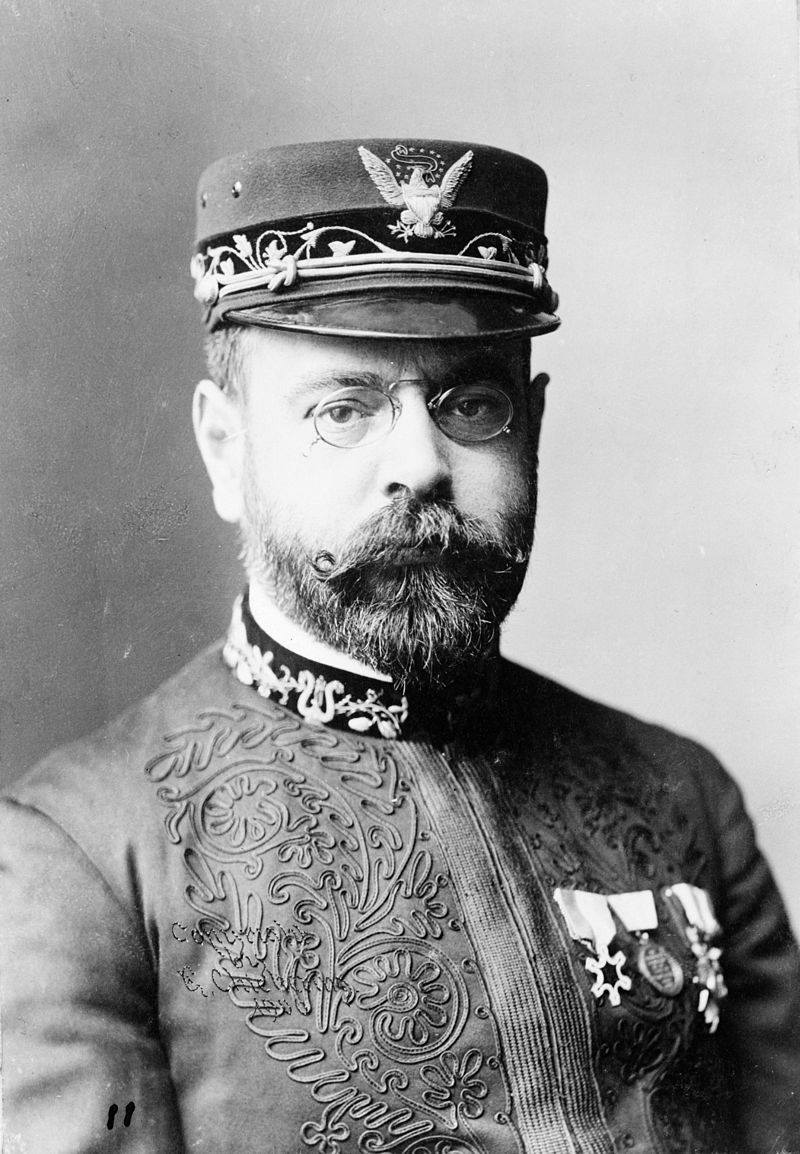

  • Stars and Stripes Forever Premiered in 1897

    Stars and Stripes Forever Premiered in 1897

    It was on this date in 1897 that John Philip Sousa’s “The Stars and Stripes Forever” was given its premiere in Philadelphia. Sousa composed the piece, in large part, on Christmas Day, 1896. He knocked it off in a New York hotel room in just a couple of hours.

    Though the first performance was enthusiastically received, it wasn’t until the start of the Spanish-American War in 1898 that sales went through the roof. This was precipitated in part by the composer organizing a pageant involving hundreds of performers, complete with flag-bearing soldiers and a ravishing beauty decked out in red, white and blue.

    With a dash of canny showmanship, “The Stars and Stripes Forever” surfed the wave of wartime patriotism to world-wide and lasting renown.

    John Philip Sousa conducts his best known music:

  • Princeton Symphony Explores “Hiraeth”

    Princeton Symphony Explores “Hiraeth”

    “There isn’t a precise English translation, but loosely, it means homesickness tinged with longing for the lost or departed, or people that have passed on. It’s this idea of homesickness for a place you can no longer get back to.”

    That is Princeton composer Sarah Kirkland Snider’s explanation of “Hiraeth,” from the Welsh, the title of her new piece, to be performed by the Princeton Symphony Orchestra this weekend.

    The work, the product of a PSO co-commission with the North Carolina Symphony, is at the heart of a program, “Passion & Affection,” which will also include Tchaikovsky’s “Romeo and Juliet Fantasy Overture,” Johann Strauss II’s “Wine, Women and Song,” and a suite from Richard Strauss’ “Der Rosenkavalier.” PSO music director Rossen Milanov will conduct. The concert will take place at Richardson Auditorium on Sunday at 4 p.m.

    Snider and Milanov will discuss their collaboration on “Hiraeth” in a PSO “Behind the Music” event at the Arts Council of Princeton’s Paul Robeson Center tomorrow at 4 p.m.

    On Tuesday, May 17 at 7:30 p.m., musicians of the PSO will present Snider’s song cycle “Penelope,” on a special concert at the Princeton High School Performing Arts Center. Playwright Ellen McLaughlin provided the texts, which will be sung by Carla Kihlstedt. The performance will be led by PSO assistant conductor John Devlin. The concert is free and open to the public with ticketed reservations via the orchestra’s website, http://www.princetonsymphony.org.

    Local lovers of orchestral music are spoiled for choice this weekend. The New Jersey Symphony Orchestra will also perform at Richardson Auditorium, tonight at 8 p.m. Augustin Hadelich will be the soloist in Tchaikovsky’s Violin Concerto, the centerpiece of a program that will include Mendelssohn’s “Hebrides Overture” and Brahms’ Serenade No. 1. Jérémie Rhorer will conduct.

    Last but not least, the New Jersey Capital Philharmonic Orchestra will present a concert of “Cinematic Classics,” featuring music by Miklós Rózsa, Bernard Herrmann, Erich Wolfgang Korngold and William Walton, at the Trenton War Memorial tomorrow at 7:30 p.m. Odin Rathnam will be the soloist in Korngold’s Violin Concerto. Also on the program will be music from “El Cid,” “The Man Who Knew Too Much,” “Psycho,” “Vertigo,” and “Henry V.” Daniel Spalding will conduct.

    The Trenton Times has been getting tighter with space in the print edition over the past few months, often resulting in some fairly hairpin edits to my articles. The chopped up versions run on Fridays. You can read my unexpurgated piece on the Princeton Symphony concerts here:

    http://www.nj.com/times-entertainment/index.ssf/2016/05/classical_music_pso_performing_1.html

  • Jungle Book & Wild Film Scores

    Jungle Book & Wild Film Scores

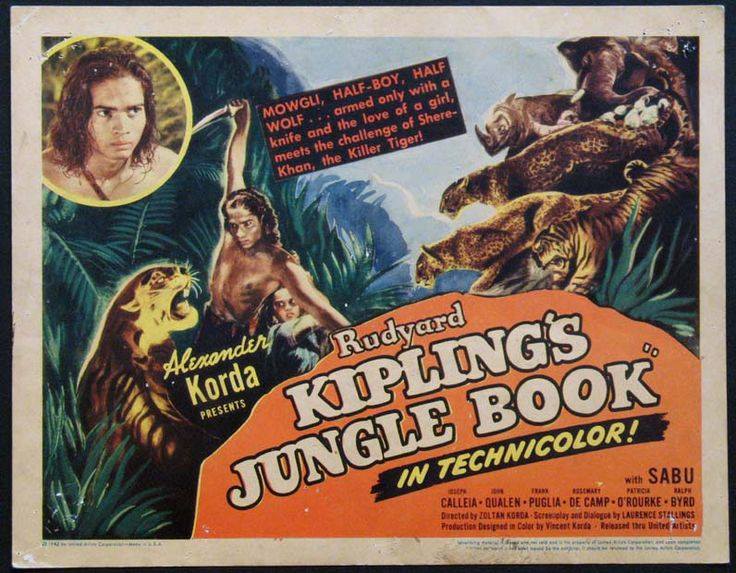
    This week on “Picture Perfect,” with the box office success of the most recent incarnation of Rudyard Kipling’s “The Jungle Book,” I thought it might be fun to revisit music from the 1942 Korda Brothers’ version. The film starred the charismatic Sabu as Mowgli (for the record, Kipling pronounced “Mowgli” so that the first syllable rhymes with “cow”), and Miklós Rózsa wrote the enchanting score.

    We’ll also hear selections from John Barry’s music for “Born Free” (1966), based on Joy Adamson’s memoir about the raising of Elsa, an orphaned lion cub who grows to adulthood and is eventually released into the Kenyan wilderness. The music proved a double Academy Award winner for Barry, who was recognized for Best Original Score and Best Original Song.

    Jerome Moross, best known for his music to “The Big Country,” had such a strong personality that his immediately recognizable sound extended even to his work on the National Geographic special, “Grizzly!” (1967), a documentary about a pair of ecologists studying North American bears. “Grizzly!” sports an energetic Americana score that is cut very much from the same cloth.

    And I can’t get through the hour without playing Henry Mancini’s “Baby Elephant Walk,” from “Hatari!” (So many exclamation points in these wilderness titles.) The film was directed by Howard Hawks and starred John Wayne. In case you’re wondering, “Hatari!” is Swahili for “Danger!”

    No danger in treating yourself to this cinematic carnival of the animals. We’re going wild this week on “Picture Perfect,” this Friday evening at 6 EDT, with a repeat Saturday morning at 6; or listen to it later as a webcast at wwfm.org.
  • Film Composers on WPRB Radio Today

    Film Composers on WPRB Radio Today

    This morning on WPRB, we get “reel.” It’s concert music by composers better known for their work in film, with examples of their music for the movies.

    The playlist is still taking shape – a show is always a thing in progress – but the Box of Wonders contains enchantments by the likes of Elmer Bernstein, Bruce Broughton, Ernest Gold, Jerry Goldsmith, Bernard Herrmann, Erich Wolfgang Korngold, Jerome Moross, Ennio Morricone, Rachel Portman, Nino Rota, Miklós Rózsa, Lalo Schifrin, Franz Waxman and John Williams.

    Daniel Spalding will drop by at around 10:00. Spalding will conduct the New Jersey Capital Philharmonic Orchestra in a blockbuster program of “Cinematic Classics” this weekend, including works by Rózsa, Herrmann and William Walton, with Odin Rathnam the soloist in Korngold’s Violin Concerto. The concert will take place at the Trenton War Memorial on Saturday evening at 7:30.

    Past WPRB guests, JoAnn Falletta and Mariusz Smolij, music director of the Riverside Symphonia in Lambertville, will be represented this morning in fine recordings of music by Moross and Rózsa, respectively.

    The concert hall becomes a screening room, from 6 to 11 EDT, on WPRB 103.3 FM and at wprb.com. We’re ready for our close-up, on Classic Ross Amico.

Tag Cloud

Aaron Copland (93) Beethoven (95) Composer (114) Film Music (139) Film Score (143) Film Scores (255) Halloween (94) John Williams (195) KWAX (229) Leonard Bernstein (103) Marlboro Music Festival (125) Movie Music (154) Mozart (89) Opera (210) Philadelphia Orchestra (89) Picture Perfect (174) Princeton Symphony Orchestra (108) Radio (88) Ross Amico (244) Roy's Tie-Dye Sci-Fi Corner (290) The Classical Network (101) The Lost Chord (268) Vaughan Williams (103) WPRB (396) WWFM (881)

DON’T MISS A BEAT

Receive a weekly digest every Sunday at noon by signing up here


RECENT POSTS