Category: Daily Dispatch

  • Maundy Thursday: Origins & Passion Week Music

    Maundy Thursday: Origins & Passion Week Music

    Is it Maundy, or is it Thursday? Why, it’s Maundy Thursday!

    “Maundy” is most likely derived from the Latin “mandatum,” as in “Mandatum novum do vobis ut diligatis invicem sicut dilexi vos” (“A new commandment I give you, That ye love one another; as I have loved you”). Or it could come from the Middle English and Old French words “maund” and “mendier,” respectively, after the Latin “mendicare,” meaning to beg.

    In any case, we are now entering the holiest days of the Christian calendar. Maundy Thursday commemorates Jesus’ washing of the feet of his disciples, the Last Supper, and the betrayal and arrest of Christ in the garden of Gethsemane.

    This morning on WPRB, we’ll have music inspired by the events of Passion Week, when Christians mark the crucifixion and the resurrection of Christ. We’ll have a setting of the Stabat Mater, a poignant work for string quartet inspired by Christ’s reflections in the garden on the eve of his crucifixion, and a symphonic poem inspired by the same.

    It won’t all be hardcore, however. We’ll also have music of a more generalized reflective or mystical nature. For instance, later on in this hour, we’ll hear William Alwyn’s gorgeous harp concerto, “Lyra Angelica,” which was popularized by figure skater Michelle Kwan when she used it as the basis for one of her performances during the 1998 Winter Olympics.

    I hope you’ll join me this morning from 6 to 11 EDT, on WPRB 103.3 FM and at wprb.com, as we get passionate about Holy Week on Classic Ross Amico.


    PHOTO: Early 13th century depiction by an unknown artist of Christ washing the feet of his disciples, located in the Basilica di San Marco in Venice

  • Holy Week Music Judas’s Betrayal on WPRB

    Holy Week Music Judas’s Betrayal on WPRB

    Not only did Judas betray Jesus, he forgot to bring horseradish to the Last Supper. Have you ever had gefilte fish without horseradish? Thanks a lot, Judas.

    Also, he was a lousy kisser.

    If you stick around for the remainder of my shift, here’s some of the music you’ll get to enjoy: Ottorino Respighi’s “Church Windows,” Maurice Duruflé’s “Four Motets on Gregorian Themes,” Victor de Sabata’s symphonic poem “Gethsemani,” Karol Szymanowski’s “Stabat Mater,” and Paul Creston’s Symphony No. 3 “Three Mysteries.”

    Those and more, as we continue our musical observation of Holy Week for this Maundy Thursday, until 11 EDT on WPRB 103.3 FM and at wprb.com

  • Holy Week Music on WPRB

    Holy Week Music on WPRB

    Have you got a passion for Passions? Do you think Stabat Maters matter? Tune in to WPRB tomorrow morning for music for Holy Week. That’s right, it’s wholly music for Passiontide.

    Well, not wholly. We’ll have some selections of a broadly mystical nature (William Alwyn’s harp concerto, “Lyra Angelica,” for instance), works of a meditative bent (for example, John Tavener’s “Song of the Angel”), and perhaps a couple of pieces concerning hope and renewal (such as Edmund Rubbra’s “Resurgam Overture”).

    Otherwise, it will be music inspired by the Passion story, ranging roughly from Palm Sunday through, possibly, the observation of Russian Easter. Some of it will be purely orchestral (Paul Creston’s Symphony No. 3 “Three Mysteries,” Victor De Sabata’s “Gethsemani”) and some will include vocal soloists and chorus (Karol Szymanowski’s “Stabat Mater”).

    Also, a certain listener has been requesting Eugene Ormandy’s recording of Respighi’s “Church Windows” since June, probably. Now seems as good a time as any to blast that out. For my own edification, I may have to play Vaughan Williams’ “Five Mystical Songs,” with the great John Shirley-Quirk.

    This is a radio show, not a church service, so nobody freak out if an “Alleluia” or a “Gloria” slip into the mix, okay? We’re here to celebrate the music, not to scrupulously observe the minutiae of tradition. I’ll be lining the CD case with Easter grass, tomorrow morning from 6 to 11 EDT, on WPRB 103.3 FM and at wprb.com, and wishing you peace, hope, and happiness, on Classic Ross Amico.

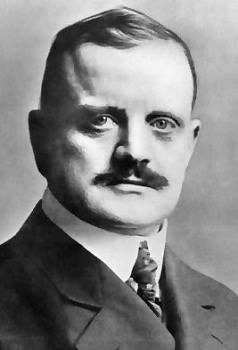
  • Sibelius’s Great Grandson Rocks

    Sibelius’s Great Grandson Rocks

    Thank you, Kenneth Hutchins, for bringing this article to my attention the other day.

    The Sound of Silence

    Sibelius may not have been able to complete his Eighth Symphony, but his great grandson has composed this awesome electric guitar concerto.

    http://www.classiclive.com/porra-entropia-full-video

    Lauri Porra is a bassist in the Finnish metal band Stratovarius.

  • Celebrating Women Composers Kápralová and Smyth

    Celebrating Women Composers Kápralová and Smyth

    It’s the first day of spring – and Palm Sunday, to boot. With March already slipping away, on this week’s edition of WWFM’s “The Lost Chord,” I’ve opted to focus on contributions of two female composers in honor of Women’s History Month. Both were featured on my earlier, WPRB salute.

    However, I feel in some way that I could have made a stronger case for Vitězslava Kápralová (1915-1940). While I called her one of the great hopes of Czech music, a figure who undoubtedly would be much better known had she not died of tuberculosis at the age of 25, I opted to play her “Partita for Strings and Piano.” While impressive, the work was written very much under the influence of her teacher and lover, Bohuslav Martinu. Martinu’s fingerprints are all over the piece.

    Her String Quartet, on the other hand, was written while she was yet a student at the Prague Conservatory, where her teachers included Vitězslav Novák and Václav Talich. (She studied with Martinu later in Paris.) The work was completed in 1936, when Kápralová was about 21 years-old. In many ways it is a more distinctive and appealing creation. Judge for yourself tonight.

    More about Kápralová here, in this article written to mark her centenary in 2015:

    http://www.telegraph.co.uk/culture/music/classicalmusic/11365848/The-tragedy-of-Europes-great-forgotten-female-composer.html

    Then we’ll have a chance to enjoy a second hearing of Ethel Smyth’s “Serenade in D” – a symphony in all but name – which brought such a positive response when I played it a few weeks ago on WPRB. What I neglected to mention on that occasion was that the piece was Smyth’s first orchestral score, composed in 1890, when she was about 32 years-old.

    I did state that the “Serenade” is better than just about anything composed by her contemporary, Sir Hubert Parry, and much more compelling than the symphonies of Sir Charles Villiers Stanford, and I stand by those assessments. It’s a remarkably assured work, and one that deserves to be far better known.

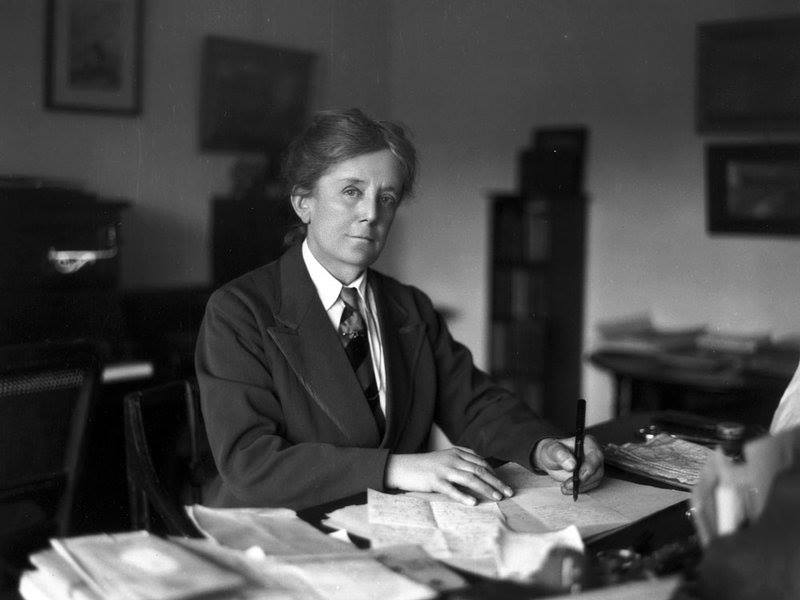
    Smyth (later DAME Ethel Smyth, 1858-1944) was one of the most vocal advocates of the women’s suffrage movement in England. She overcame early opposition to a career in music on the part of her father to receive the praise of George Bernard Shaw, who called her Mass “magnificent.”

    However, her works were often better-appreciated abroad. Her operas, in particular, were embraced in Germany. One of them, “Der Wald,” was the only opera by a woman composer mounted by New York’s Metropolitan opera for over a century!

    Smyth served time in prison for putting out the windows of politicians who opposed a woman’s right to vote. She also wrote for the cause “The March of the Women.” When Sir Thomas Beecham went to visit her in jail, he witnessed her conducting through the bars of her window with a toothbrush as her associates gathered for exercise in the courtyard.

    More about Ethyl Smyth here, in this piece put together in connection with a revival of her opera, “The Wreckers,” by the great Leon Botstein:

    http://www.npr.org/sections/deceptivecadence/2015/07/23/410033088/one-feisty-victorian-womans-opera-revived

    I hope you’ll join me tonight on “The Lost Chord” for music by these two extraordinary women – “A Woman’s Place is in the Concert Hall” – this Sunday night at 10 ET, with a repeat Wednesday evening at 6; or that you’ll listen to it later as a webcast at wwfm.org.


    PHOTOS: Ethel Smyth at her desk (top); Vitězslava Kápralová taking up the baton (she studied conducting in Prague with Václav Talich and in Paris with Charles Munch)

Tag Cloud

Aaron Copland (94) Beethoven (95) Composer (114) Film Music (153) Film Score (143) Film Scores (255) Halloween (107) John Williams (198) KWAX (233) Leonard Bernstein (105) Marlboro Music Festival (125) Movie Music (168) Mozart (92) Opera (222) Philadelphia Orchestra (91) Picture Perfect (174) Princeton Symphony Orchestra (110) Radio (90) Ross Amico (244) Roy's Tie-Dye Sci-Fi Corner (290) The Classical Network (101) The Lost Chord (269) Vaughan Williams (107) WPRB (397) WWFM (881)

DON’T MISS A BEAT

Receive a weekly digest every Sunday at noon by signing up here


RECENT POSTS