Category: Daily Dispatch

  • MLK Day: Celebrating Black Composers on WPRB

    MLK Day: Celebrating Black Composers on WPRB

    “You don’t have to see the whole staircase. Just take the first step.”

    So said Dr. Martin Luther King, Jr. On this, the eve of King’s birthday anniversary, we present a full morning of music by composers of African descent, much of it underrepresented at any time of the year. You’ll hear fine and shamefully neglected works by David Baker, Marion Bauer, Henry T. Burleigh, Samuel Coleridge-Taylor, Roque Cordero, William Levi Dawson, Duke Ellington, Adolphus Hailstork, Ulysses Kay, Tania León, the Chevalier J.J.O. de Meude-Monpas, Florence Price, William Grant Still, and George Walker, or as many of these as we can get to.

    Clipper Erickson, piano of Westminster Conservatory of Music will drop by at around 10:00 to talk a bit about R. Nathaniel Dett, the grandson of fugitive slaves, who went on to become an important voice in American music. Erickson’s album of Dett’s complete piano works, “My Cup Runneth Over,” has recently been issued on the Navona Records label.

    We’ll be there before sunrise to honor MLK’s vision of a daybreak of freedom and justice and equality, from 6 to 11 ET, on WPRB 103.3 FM and at wprb.com. We rise up with greater readiness, on Classic Ross Amico.

  • Music Color & Expectations

    Music Color & Expectations

    Does the color of one’s skin have any bearing on the kind of music one writes? Should a black composer be expected to incorporate jazz or spiritual inflections into his or her music?

    Tune in tomorrow morning to have lazy expectations confounded. We’ll have representatives of the jazzy and spiritual schools, of course, but we’ll also hear works by a Pulitzer Prize winner who makes his home in New Jersey, an Afro-Cuban master of the guitar, a musketeer in the service of Louis XVI, and an Englishman infatuated with the works of Henry Wadsworth Longfellow.

    Clipper Erickson, piano of Westminster Conservatory of Music will drop by at around 10:00 to talk a bit about R. Nathaniel Dett, the grandson of fugitive slaves, who went on to become an important voice in American music. Erickson’s album of Dett’s complete piano works, “My Cup Runneth Over,” has recently been issued on the Navona Records label.

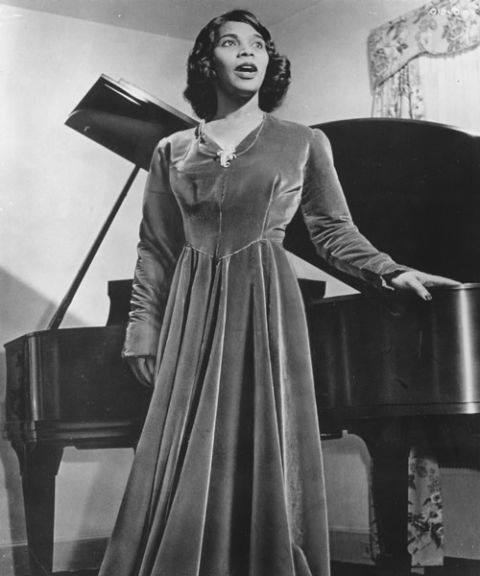
    In addition, we’ll hear recordings of the late conductor Paul Freeman, some spirituals sung by Marian Anderson, and the cantata “Done Made My Vow” by Adolphus Hailstork, in a recording made by the Baltimore Symphony Orchestra.

    In advance of MLK Day, it’s an exploration of content, character and color, with music by composers of African descent, tomorrow morning from 6 to 11 ET, on WPRB 103.3 FM or at wprb.com. Music is King, on Classic Ross Amico.

  • Conan the Barbarian Organ: A Holy Film Score

    Conan the Barbarian Organ: A Holy Film Score

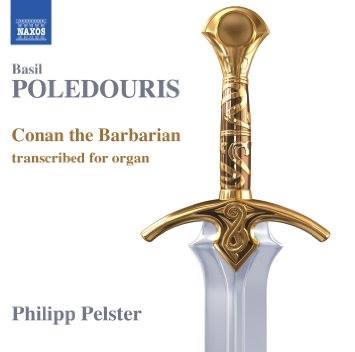
    If what’s been keeping you out of church is that there’s simply not enough music from “Conan the Barbarian” being played on the organ, Naxos Records has done your soul an enormous service.

    Organist Philipp Pelster has transcribed and recorded Basil Poledouris’ film score magnum opus for the King of Instruments. What’s that, you say, something GOOD actually came out of “Conan?” Well, yes, actually, as a matter of fact. Having seen the movie, I was skeptical, myself. But Poledouris’ film score is one of the best of the era. And that’s saying something.

    To bless the venture and keep it holy, here’s Arnold Schwarzenegger’s prayer to Crom:

    If you just can’t deal with the silliness, here’s the music without the visuals:

    Feel free to needle-drop. There’s great stuff all the way through it.

    Unfortunately, there are no clips of the organ transcription posted on YouTube. I guess I’ll just have to shell out the $12 and hope for the best. CROM! HEAR ME, CROMMM!!!!

  • Boulez: A Corrective Force in Music

    Boulez: A Corrective Force in Music

    Think of Pierre Boulez as a corrective.

    Whether or not you are crazy about Boulez as a composer or a conductor, he certainly had a knack for casting music in a fresh light. No romantic indulgence or fuzzy thinking to be found in his interpretations of Debussy and Ravel. Instead, a kind of neoclassical elegance prevails.

    A similar sense of discipline informs his recordings of the Mahler symphonies (of all things). He transforms what under Leonard Bernstein, for instance, became the ne plus ultra of Romantic excess, into presentiments of the Modern Age – which to some extent actually makes sense. After all, didn’t Mahler himself once declare, “My time will come!”

    As concerns his own music, he actually thought Arnold Schoenberg didn’t take his 12-tone experiments far enough. Boulez was a radical who out-radicaled the radicals. He redrew the boundaries of integral serialism, controlled chance, and electronic music. An aggressive push to the avant garde earned him a reputation as an enfant terrible.

    Ironically, by the time Boulez died last week at the age of 90, his brand of dogma had long come to seem old-fashioned, as pluralism and a new acceptance of tonality have come to dominate the contemporary music scene.

    This Sunday night on “The Lost Chord,” we’ll remember Boulez with a recording of his keystone composition, “Le Marteau sans maître” (“The Hammer without a Master”), written between 1953 and 1957. The piece consists of three cycles, instrumental and vocal, after poems by René Char – one surreal and fantastical; another somber and existentialist; and a third romantic and utopian. The individual movements of the cycles are shuffled and integrated. The titles of the poems: “The Furious Craftsman,” “Stately Building and Presentiments,” and “Hangmen of Solitude.”

    There is a further fascination to be found in the work’s instrumentation, which includes a colorful assortment of percussion, and the use of the instruments, which suggests Southeast Asian and African influences.

    The piece was lauded by Igor Stravinsky as “the only significant work of this new age,” and by György Ligeti as “the chief work of the 1950s.” Furthermore, it is surprisingly listenable, with a kind of hypnotic allure.

    We’ll round out the hour with Maurice Ravel’s evocations of a distant land, his “Chansons madécasses” (“Madegascan Songs”), of 1925/1926, on texts of Evariste-Desiréa de Parny.

    Again, there are three of them: “Nahandove,” the name of the narrator’s beloved, the arrival of whom he anticipates on a sticky, languorous night; “Aoua!,” a violent outcry against white imperialism; and “Il est doux” (“How pleasant to lie”), a portrait of a lazy day, passed beneath a palm tree, waiting for the cool of night.

    I thought this an ideal complement to “Le Marteau sans maître,” with Boulez conducting, of course.

    If there’s one thing Boulez did well it was to force everyone to think – about music, about progress and about the reasons we value the things we hold sacred.

    He once proclaimed, “A civilization that conserves is one that will decay!” Even so, we are very lucky to have his recordings, and music is the healthier for his provocations.

    I hope you’ll join me for “Modern Romance” – Pierre Boulez in poetry and song – tonight at 10 ET, with a repeat Wednesday evening at 6; or that you’ll listen to it later as a webcast, at wwfm.org.

    PHOTO: The Hammer has found a Master

  • Bowie’s Low Symphony a Philip Glass Tribute

    Bowie’s Low Symphony a Philip Glass Tribute

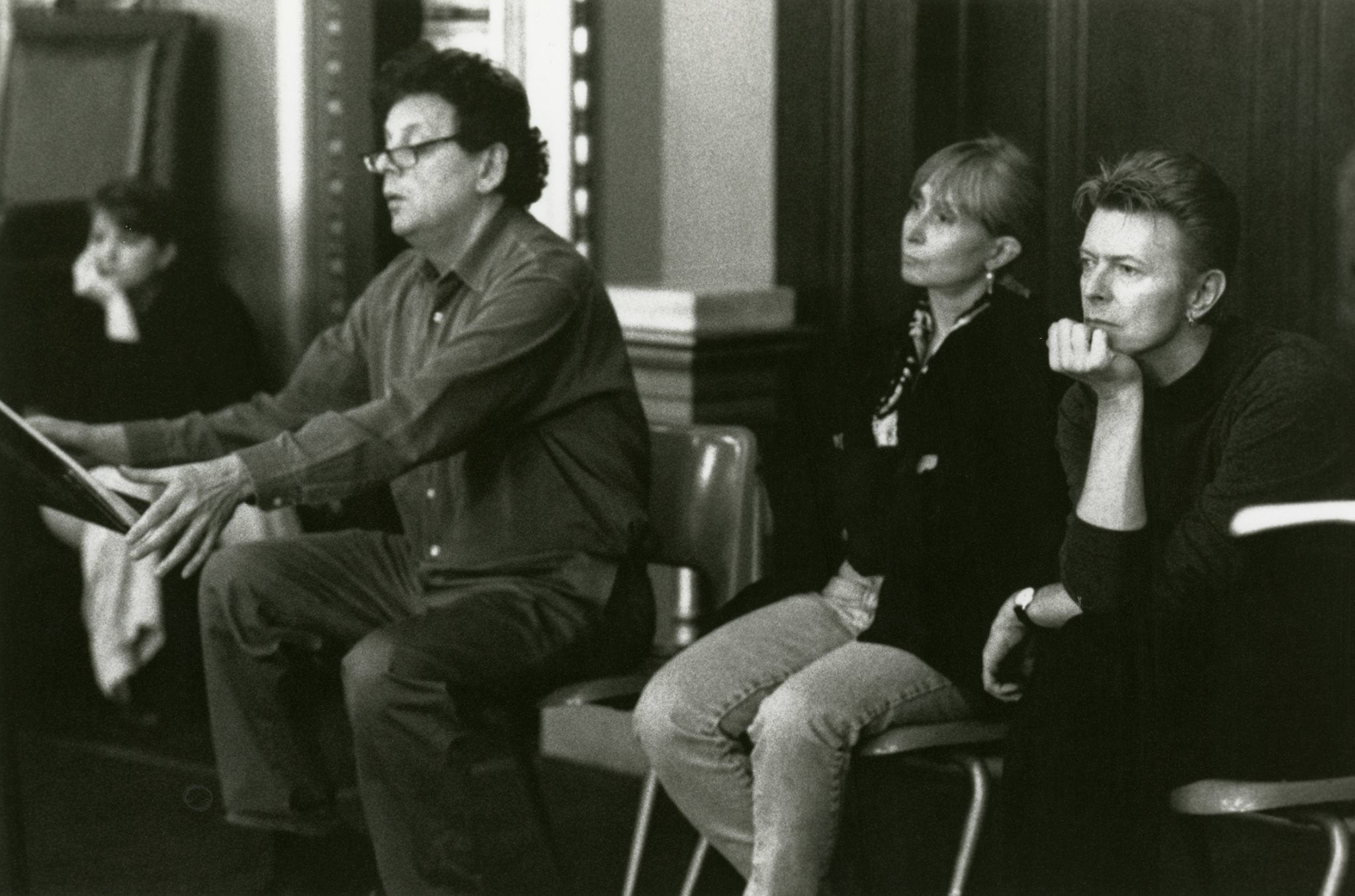
    David Bowie died yesterday at the age of 69. Here is Philip Glass’ Symphony No. 1, from 1992, known as the “Low” Symphony, inspired by the album “Low,” by Bowie and Brian Eno.

    I. Subterraneans:

    II. Some Are:

    III. Warszawa:

    Glass later wrote a “Heroes” Symphony (the Symphony No. 4), in 1996, also based on a Bowie album.

    https://www.youtube.com/watch?v=3TZsW99Vw_U&list=PLTUlTwlsdlFTGaOSuJfZGw82ySkas60me

    Bowie and Glass discuss “Low”:

    https://www.youtube.com/watch?v=p_SxYgtUVu4


    PHOTO: With Twyla Tharp, rehearsing “Heroes”

Tag Cloud

Aaron Copland (93) Beethoven (95) Composer (114) Film Music (139) Film Score (143) Film Scores (255) Halloween (94) John Williams (195) KWAX (229) Leonard Bernstein (103) Marlboro Music Festival (125) Movie Music (154) Mozart (89) Opera (210) Philadelphia Orchestra (89) Picture Perfect (174) Princeton Symphony Orchestra (108) Radio (88) Ross Amico (244) Roy's Tie-Dye Sci-Fi Corner (290) The Classical Network (101) The Lost Chord (268) Vaughan Williams (103) WPRB (396) WWFM (881)

DON’T MISS A BEAT

Receive a weekly digest every Sunday at noon by signing up here


RECENT POSTS