Category: Daily Dispatch

  • Princeton Festival’s Incendiary Figaro

    Princeton Festival’s Incendiary Figaro

    Its source material was considered incendiary in its day. Performances of the original play were banned in France for its volatile political notions. It was barred from Austrian stages for its alleged licentious content.

    When Mozart and his librettist, Lorenzo da Ponte, proposed to Emperor Joseph II that they would like to turn it into an opera, they must have done some fast talking. The Emperor gave his blessing (on the condition that they tone down the revolutionary tendencies), and the result was one of the greatest operas ever written.

    This weekend, the Princeton Festival will unveil its production of “The Marriage of Figaro,” which will run for three performances at McCarter Theatre Center: Saturday at 7:30 p.m. and 6/21 & 6/28 at 3 p.m. The festival’s artistic director Richard Tang Yuk will conduct.

    This year’s musical theatre offering, “The 25th Annual Putnam County Spelling Bee,” will begin its run of ten performances at Matthews Acting Studio, Lewis Center for the Arts, Princeton University, beginning today at 8 p.m.

    Also this weekend, the final round of the piano competition will take place on Sunday at 3 p.m., at the Clark Music Center, The Lawrenceville School, in Lawrenceville.

    Other highlights of the festival include upcoming concerts by Concordia Chamber Players (6/20), the Nashville guitar duo Striking Matches (6/21), the Festival Baroque Orchestra (6/24), pianist Fei-Fei Dong (6/26), and the Indian music and dance group Pradhanica (6/27). Related lectures and events pepper the schedule.

    The Princeton Festival runs through June 28. For more information, look online at http://www.princetonfestival.org.

    You can read more about it in my article in today’s Trenton Times.

    http://www.nj.com/times-entertainment/index.ssf/2015/06/classical_music_princeton_fest_1.html

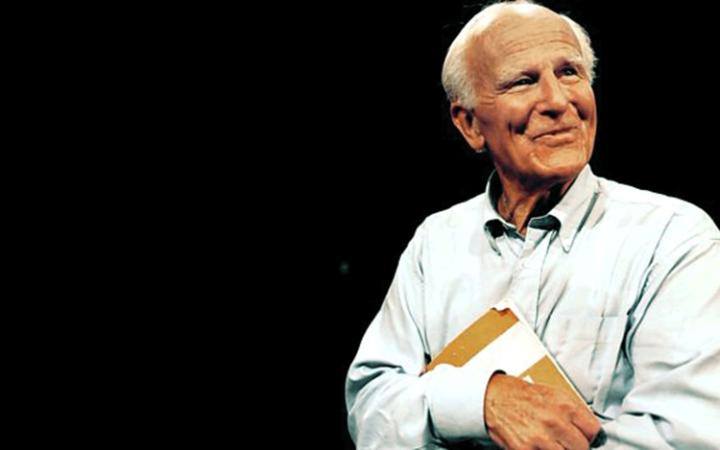
    PHOTO: Super-salesmen Mozart and Da Ponte

  • Jaws Turns 40 Underwater Thriller Film Scores

    Jaws Turns 40 Underwater Thriller Film Scores

    Just when you thought it was safe to go back in the water…

    The film “Jaws” opened on June 20, 1975 – which means we are barreling down on its 40th anniversary. (Personally, I find that concept much more terrifying than anything portrayed onscreen.)

    The blockbuster success of “Jaws” is widely credited with having laid the foundation for the phenomenon which was to become known as the summer movie. This week, we celebrate Steven Spielberg’s game-changer with music from films about underwater threats.

    “Beneath the 12-Mile Reef” (1953) stars Robert Wagner and Peter Graves in a Romeo and Juliet story about two families of competing fishermen along the Gulf coast of Florida, one working class and of Greek origin, and the other a family of privileged WASPs. Gilbert Roland is the Greek patriarch who runs afoul of an improbably large octopus. Bernard Herrmann wrote the music. The complete score, characterized by ample harp glissandi for the underwater sequences, has been reissued on Kritzerland Records in a limited edition of 1000 copies.

    In “The Sharkfighters” (1956), Victor Mature joins Navy scientists in trying to develop a shark repellent (from octopus ink, actually) in order protect downed pilots at sea. The score, by Jerome Moross, employs an expanded percussion section reflective of the film’s Cuban environs.

    A young Henry Mancini was one of three composers to work on “The Creature from the Black Lagoon” (1954). Mancini was teamed with veteran film composer Hans J. Salter and Herman Stein. None of the three are credited on screen – typical of what was considered at the time a low-budget B-movie.

    It all culminates in “Jaws” (1975). What can be said about John Williams’ masterful music? It’s right up there with “Psycho” and “The Good, the Bad and the Ugly” in terms of most recognized and most-frequently parodied. Everyone remembers the primal shark theme, but what is sometimes overlooked is that “Jaws” is also one of the great adventure scores, the music effortlessly navigating the choppy waters of suspense, horror, and seafaring swashbuckler. The composer was recognized with a richly-deserved Academy Award.

    I hope you’ll join me (on the beach) for “Picture Perfect,” music for the movies, this evening at 6 ET, with a repeat tomorrow morning at 6; or that you’ll listen to it later as a webcast at http://www.wwfm.org.

  • Strauss, Bernstein & More on WPRB This Week

    Strauss, Bernstein & More on WPRB This Week

    A lousy night’s sleep, but lots of great music ahead, including Strauss conducting Strauss (on his birthday); Bernstein conducting American music (by request); birthday candles for Carl Nielsen (6/9), Carlisle Floyd (6/11), and Carlos Chavez (6/13); in studio visits by Richard Tang Yuk, artistic director of the Princeton Festival (who will conduct “The Marriage of Figaro” at McCarter Theatre, starting this weekend), and members of the Assisi Quartet (who will talk about Olivier Messiaen, in anticipation of their concert tonight at Westminster Choir College’s Bristol Chapel).

    I hope you’ll join me, from 6 to 11 a.m.: WPRB 103.3 FM, or online at wprb.com.

    Keep it classy with… zzzzzzzzzzzzzzz.


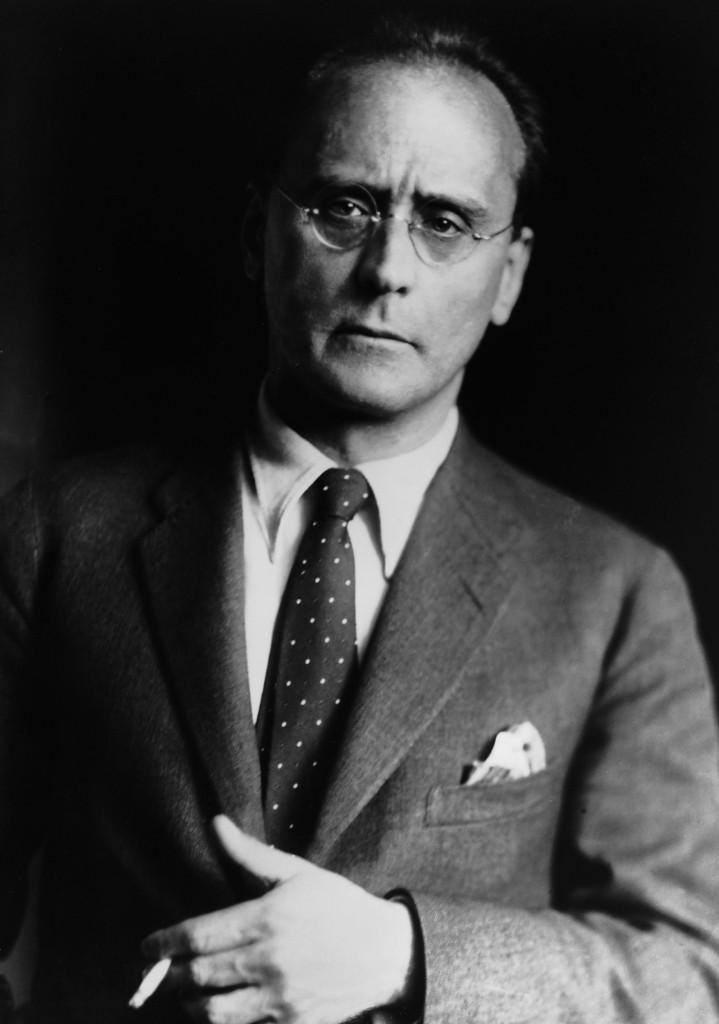
    PHOTO: A nattily dressed Strauss, on his birthday

  • Strauss’s 10 Conducting Commandments

    Strauss’s 10 Conducting Commandments

    Since I mentioned these on the air, I figured I’d copy them here for your edification: Richard Strauss’ “Ten Golden Rules for the Album of a Young Conductor” (1927):

    1. Remember that you are making music not to amuse yourself, but to delight your audience.

    2. You should not perspire when conducting. Only the audience should get warm.

    3. Conduct “Salome” and “Elektra” as if they were by Mendelssohn: Fairy music.

    4. Never look encouragingly at the brass, except with a brief glance to give an important cue.

    5. But never let the horns and woodwinds out of your sight. If you can hear them at all, they are still too strong.

    6. If you think that the brass is now blowing hard enough, tone it down another shade or two.

    7. It is not enough that you yourself should hear every word the soloist sings. You should know it by heart anyway. The audience must be able to follow without effort. If they do not understand the words, they will go to sleep.

    8. Always accompany the singer in such a way that he can sing without effort.

    9. When you think you have reached the limits of prestissimo, double the pace. (Amended in 1948: “Today I should like to amend this: take the tempo half as fast.”)

    10. If you follow these rules carefully, you will, with your fine gifts and your great accomplishments, always be the darling of your listeners.

    PHOTO: Strauss, there is method in his madness

  • Christopher Lee Opera Secret Revealed

    Christopher Lee Opera Secret Revealed

    Christopher Lee, who died on Sunday – but whose passing was only just announced today (in order to allow time for the notification of family) – was a lifelong opera lover. In fact, in his autobiography, “Lord of Misrule” (previously released as “Tall, Dark and Gruesome”), he relates how he relished a stint in Scandinavia early in his career, since it gave him the opportunity to steal away with a regional opera company.

    On the recommendation of Jussi Björling, he auditioned for the Swedish Opera, and was accepted, but unfortunately he could not afford the training.

    He liked to claim his singing talent was genetic. His great grandparents founded the first opera company in Australia.

    In recent years, he stated his one regret in life was that he had not pursued singing professionally. But then he added philosophically that if he had, he most certainly would have had to give it up years ago, whereas as an actor, he just kept right on going.

    Opportunities to hear Lee employ his singing voice in film are sadly rare. Here’s a clip from 1970:

    https://www.youtube.com/watch?t=247&v=xWc3kUEjYOI

Tag Cloud

Aaron Copland (92) Beethoven (95) Composer (114) Film Music (119) Film Score (143) Film Scores (255) Halloween (94) John Williams (185) KWAX (229) Leonard Bernstein (99) Marlboro Music Festival (125) Movie Music (134) Opera (198) Philadelphia Orchestra (87) Picture Perfect (174) Princeton Symphony Orchestra (106) Radio (87) Ralph Vaughan Williams (85) Ross Amico (244) Roy's Tie-Dye Sci-Fi Corner (290) The Classical Network (101) The Lost Chord (268) Vaughan Williams (102) WPRB (396) WWFM (881)

DON’T MISS A BEAT

Receive a weekly digest every Sunday at noon by signing up here


RECENT POSTS