The articles get more and more difficult to write, so the submissions get later and later. Is it any wonder that the Monday posts get flimsier and flimsier?
Today is the birthday of Brian Easdale (1909-1995), probably best known for his score to “The Red Shoes.” Here’s the ballet music, conducted by Sir Thomas Beecham, no less.
PHOTO: Easdale (center), with Beecham, looking thoroughly engaged
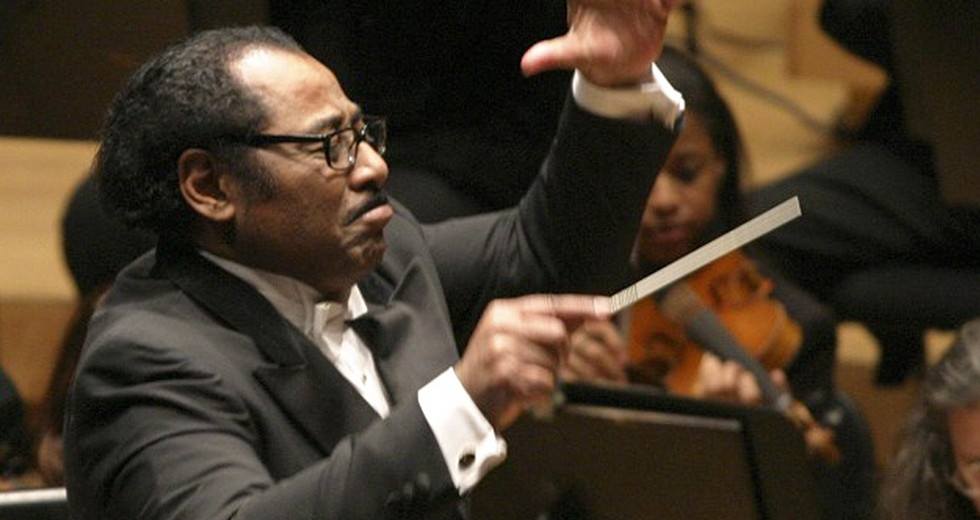
Paul Freeman has always been a conductor after my own heart. A champion of unusual and neglected repertoire, Freeman recorded prolifically – some 200 albums. I won’t get into whether or not the color of his skin had a negative impact on his career. Freeman was a positive force who always found a way.
He held posts with the Dallas Symphony Orchestra, the Detroit Symphony, and the Helsinki Philharmonic. He was music director of the Chicago Sinfonietta, the Czech National Symphony Orchestra, and the Victoria Symphony in British Columbia.
Freeman retired from conducting in 2011. He died on July 21, at the age of 79. We celebrate his artistry and love of music this week on “The Lost Chord,” by way of his extensive and varied discography.
From his series, “Paul Freeman Introduces,” on the Albany label, we’ll hear music by Richard Yardumian, former composer-in-residence with the Philadelphia Orchestra . “Veni, Sancte Spiritus” was one of a number of Yardumian works to be documented by Ormandy and the Philadelphians during the LP era. Atonishingly, none of them ever made it to compact disc. Leave it to Freeman to fill in the gap.
Adophus Hailstork, one of the artists Freeman favored as part of his landmark “Black Composers Series,” set down for Columbia Records back in the 1970s, will also be represented. His “Sonata da Chiesa” for string orchestra grew out of Hailstork’s love for cathedrals.
Freeman was always an enthusiastic champion of new music and works by African-American composers. He was also a sensitive and sympathetic accompanist, as borne out by his many concerto recordings. Of those, we’ll hear what is probably the strangest of them all – Morton Gould’s “Tap Dance Concerto.”
Finally, we’ll have selections from the “African Suite,” by Nigerian composer Fela Sowande, a work Freeman recorded twice, for Columbia in the 1970s, and decades later for Cedille Records, as part of the three-volume “African Heritage Symphonic Series.”
It’s a nice assortment, though of course it only scratches the surface. It is with mixed emotions that I bid “Farewell to Freeman,” tonight at 10 ET, with a repeat Wednesday evening at 6. You can also listen to it later as a webcast, at wwfm.org.
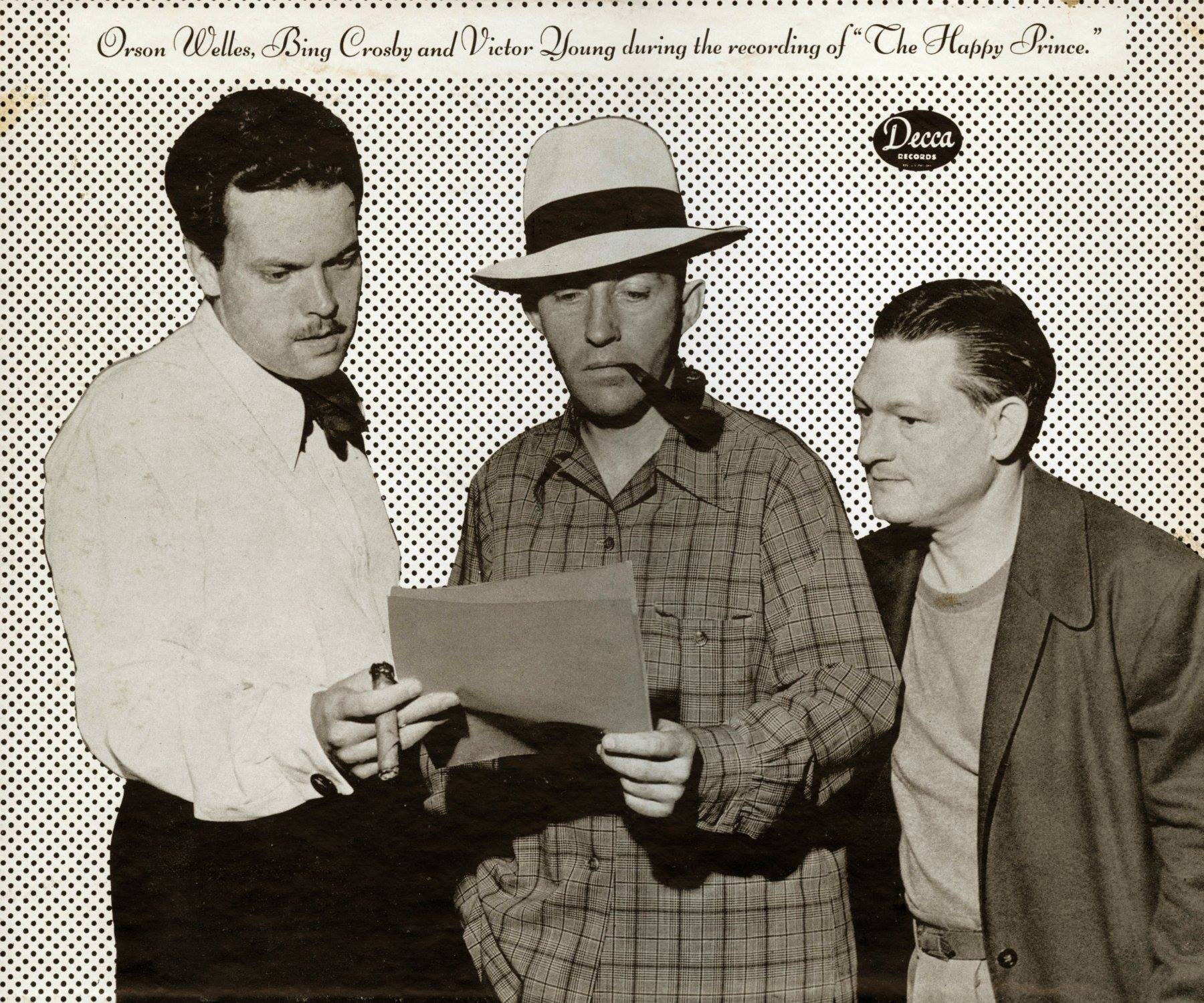
He may have died in 1956, but his music is forever Young. Victor Young was born in Chicago on this date in 1900.
The composer of “Stella by Starlight” and “When I Fall in Love” was classically trained and thoroughly drilled: a violinist from the age of 6, he studied at the Warsaw Imperial Conservatory and found employment (following further training on the piano at the Paris Conservatory) while still a teen in the Warsaw Philharmonic Orchestra.
His talent was admired by Czar Nicholas II, but his ability to capitalize on the connection was sharply curtailed as Russia boiled over into revolution, and Young barely escaped with his life. He fled to Warsaw and then Paris, and he didn’t stop running until he reached the United States.
Here, he acted as a conductor and arranger of popular music. He was responsible for transforming Hoagy Carmichael’s “Stardust,” which had previously been played as an up-tempo dance number, into a romantic ballad, which secured its status as a mega-hit. “Stardust” went on to become one of the most-recorded songs of all time.
In the mid-‘30s, Young made the move to film, where his gift for melody served him well. Over the course of the next two decades, he received 22 Academy Award nominations. Twice, he was nominated four times within a single year. Young holds the record for the most nominations prior to a win.
Unfortunately, the honor of Oscar gold would be bestowed posthumously. His score for “Around the World in 80 Days” was recognized in 1957. Young died of a cerebral hemorrhage in November of 1956.
In 20 years, he managed to compose 300 scores, among them those for “Reap the Wild Wind,” “The Glass Key,” “The Palm Beach Story,” “For Whom the Bell Tolls,” “The Uninvited,” “State of the Union,” “A Connecticut Yankee in King Arthur’s Court,” “Sands of Iwo Jima,” “Samson and Delilah,” “Rio Grande,” “The Greatest Show on Earth,” “Scaramouche,” “The Quiet Man,” “Shane,” “Three Coins in a Fountain” and “Johnny Guitar.”
In 1960, he received a star on the Hollywood Walk of Fame. In 1970, he was inducted into the Songwriters Hall of Fame.
Happy birthday, Victor Young. What he might have accomplished had he lived to be old!
In a development that promises to be as enlightening as it is mildly disorienting, a drive north this weekend will lead you “south of the border.”
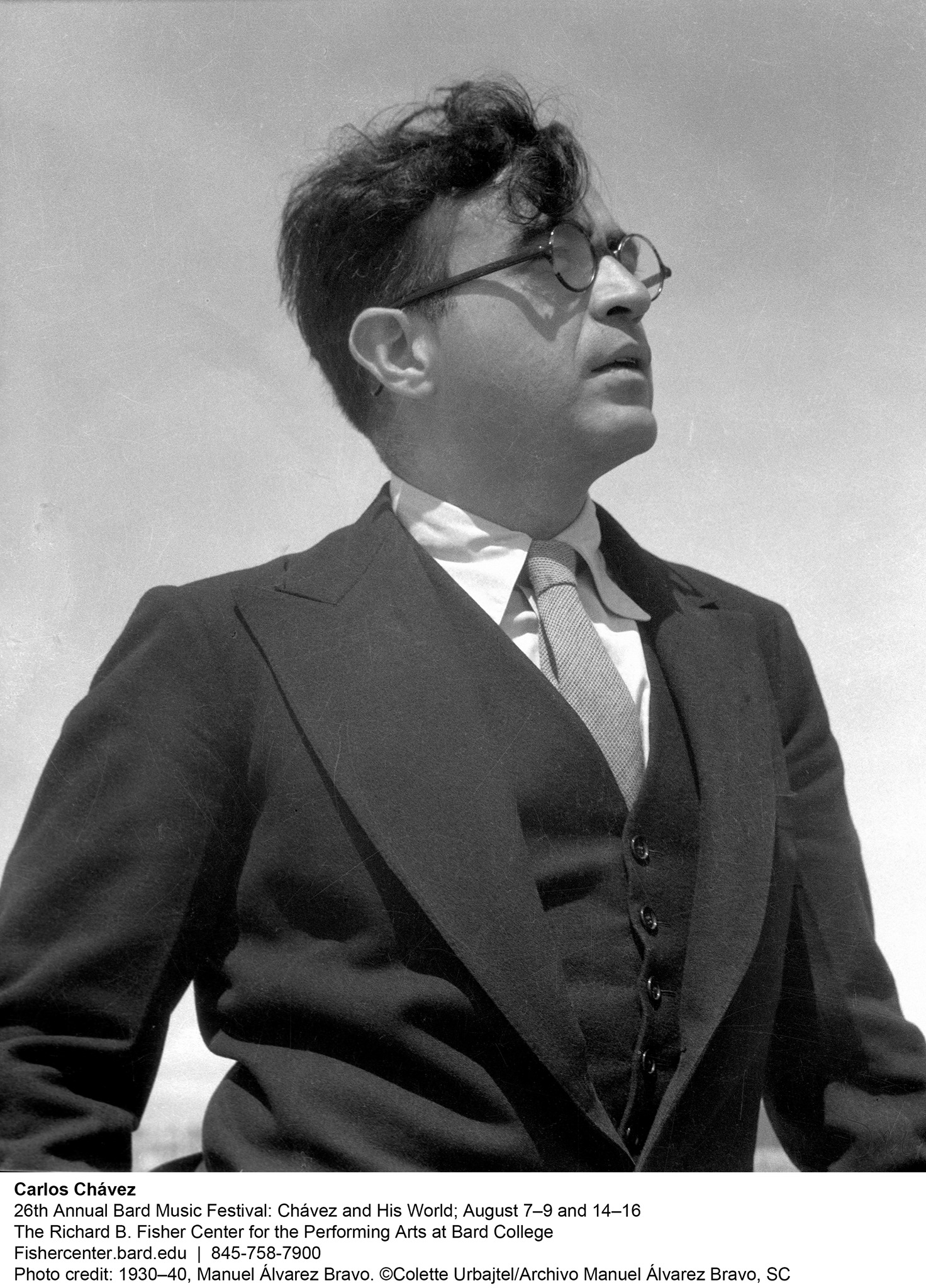
Carlos Chávez (1899-1978), regarded by many as Mexico’s foremost composer and conductor, will be the focus of this year’s Bard Music Festival, which begins today at Bard College in Annandale-on-Hudson, NY.
For the next two weeks, Bard will bring together crackerjack artists (an impressive number of them on the Bard Conservatory faculty), leading musicologists, and appreciative audiences to celebrate music of the Americas, with an unusual focus on underplayed music of Mexico and South America.
Among the featured performers will be Princeton University’s ensemble-in-residence, So Percussion, which will appear on a concert of music by Chávez, John Cage, Lou Harrison, Henry Cowell, Amadeo Roldán, and Colin McPhee, on August 14.
Chávez is a fascinating figure, whose influence cannot be underestimated. His own works are divided between nationalistic utterances, pitched to the people, and more cosmopolitan, modernist experiments. His most famous bit of populism is his Symphony No. 2, the “Sinfonia India,” based on melodies by indigenous tribes of northern Mexico. The piece will be heard at Bard on August 15, alongside works by Latin American powerhouses Heitor Villa-Lobos, Silvestre Revueltas, and José Pablo Moncayo.
In 1937, Chávez conducted the world premiere of Aaron Copland’s “El Salón México,” which essentially launched Copland into the mainstream.
As always with the Bard festival, a tie-in book of scholarly essays, “Carlos Chávez and His World,” is being issued by Princeton University Press.
Read more about this amazing, total immersion in the composer’s life and work in my article in today’s Trenton Times.
Did you ever have one of those mornings? You dream of being awakened by a kiss, but instead you get a four-legged friend panting (or worse) for his or her breakfast.
This morning, we turn our backs on reality to immerse ourselves in the fantasy worlds of the Brothers Grimm, Hans Christian Andersen, Charles Perrault, Aesop and others.
Okay, so maybe sometimes things turn out even worse in fairy tales. But the subjects invariably offer a blank canvas for the imaginative flights of some of the world’s great composers.
I hope you’ll join me this morning for music by Havergal Brian, Daniel Dorff, Paul Hindemith, Gustav Holst, William Hurlstone, Nikolai Medtner, Robert McBride, Robert Moran, Nikolai Rimsky-Korsakov, Ernst Toch, Siegfried Wagner, Ralph Vaughan Williams, Alexander Zemlinsky, and others of their ilk.
Musical subjects will include Pinocchio, Snow White, Old King Cole, The Little Mermaid, Three Blind Mice, and Beauty and the Beast.
It all takes place from 6 to 11 a.m. ET, on WPRB 103.3 FM or at wrpb.com. Keep the ogres at bay – and the earbuds in – with Classic Ross Amico.