Category: Daily Dispatch

  • Lost Worlds Movie Music Adventures

    Lost Worlds Movie Music Adventures

    This week on “Picture Perfect,” I invite you to get lost. It’s all music from movies about lost worlds and forgotten civilizations.

    While the concept of the “Lost World” dates at least as far back as Plato’s Atlantis, it wasn’t until the Victorian Era that the idea really blossomed in the public consciousness. At the time, of course, lost civilizations were genuinely being discovered – which might help explain, in part, the incredible of success of “King Solomon’s Mines.” The author, H. Rider Haggard, wrote the book on a bet that he could churn out an adventure story half as good as Robert Louis Stevenson’s “Treasure Island,” which had been published two years earlier.

    “King Solomon’s Mines” became the literary sensation of 1885. Its protagonist, Allen Quatermain, is a direct ancestor of Indiana Jones. The book inspired reams of sequels and at least five film adaptations.

    The two best known starred Stewart Granger, in 1950, and Paul Robeson, in 1937. Robeson, who played Umbopa, a king in disguise, received top billing. The score was by Mischa Spoliansky.

    Haggard achieved another “Lost World” hit with “She,” first issued in book form in 1887 – another adventure about Europeans in Africa, who meet a seemingly immortal white queen known as the all-powerful “She,” or “She-Who-Must-Be-Obeyed.”

    “She” has been adapted to film six times. The 1965 version starred Ursula Andress, Peter Cushing and Christopher Lee. The music was by Hammer Studios house composer, James Bernard. It’s nice to hear Bernard, who mostly wrote horror scores for the likes of Dracula and Frankenstein, provide something a little more nuanced for a change.

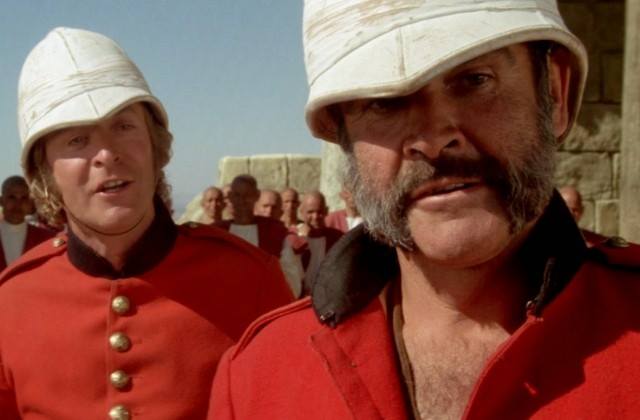
    Rudyard Kipling’s “The Man Who Would Be King,” published in 1888, was clearly influenced by the writings of Haggard. In this case, two British adventurers in India strike out for a remote corner of Afghanistan to set themselves up as kings. The story was made into one of the great adventure films of the 1970s, directed by John Huston, and starring Sean Connery and Michael Caine. That Christopher Plummer appears as Kipling himself is only icing on the cake. Maurice Jarre wrote the rousing score.

    Finally, James Hilton’s “Lost Horizon,” published in 1933, imagines Shangri-La, a Utopian society nestled in a sheltered valley somewhere in the mountains of Tibet. A British diplomat is one of a handful of passengers who survives a plane crash to be taken into the lamasery.

    “Lost Horizon” was made into a film twice. The less said about the 1973 version, a musical with songs by Burt Bacharach, the better. Frank Capra directed the classic 1937 version, which starred Ronald Colman, Jane Wyatt, and outstanding character actors of the day, people like Edward Everett Horton, Thomas Mitchell, Sam Jaffe and H.B. Warner.

    The score, Dimitri Tiomkin’s first major contribution, was also one of his most ambitious. Seldom was it so obvious that he had studied at the St. Petersburg Conservatory under Alexander Glazunov.

    I hope you’ll lose yourself in music for lost civilizations this week, on “Picture Perfect” – music for the movies – this Friday evening at 6, with a repeat Saturday morning at 6; or that you’ll listen to it later as a webcast at wwfm.org.

    PHOTO: Connery (right) with the man who would be Caine
  • Sigmund Romberg’s Birthday & Dream Casting

    Sigmund Romberg’s Birthday & Dream Casting

    Sigmund Romberg was born on this date in 1887. Romberg, of course, was the super-successful composer of musicals and operettas like “The Student Prince,” “Desert Song” and “New Moon.”

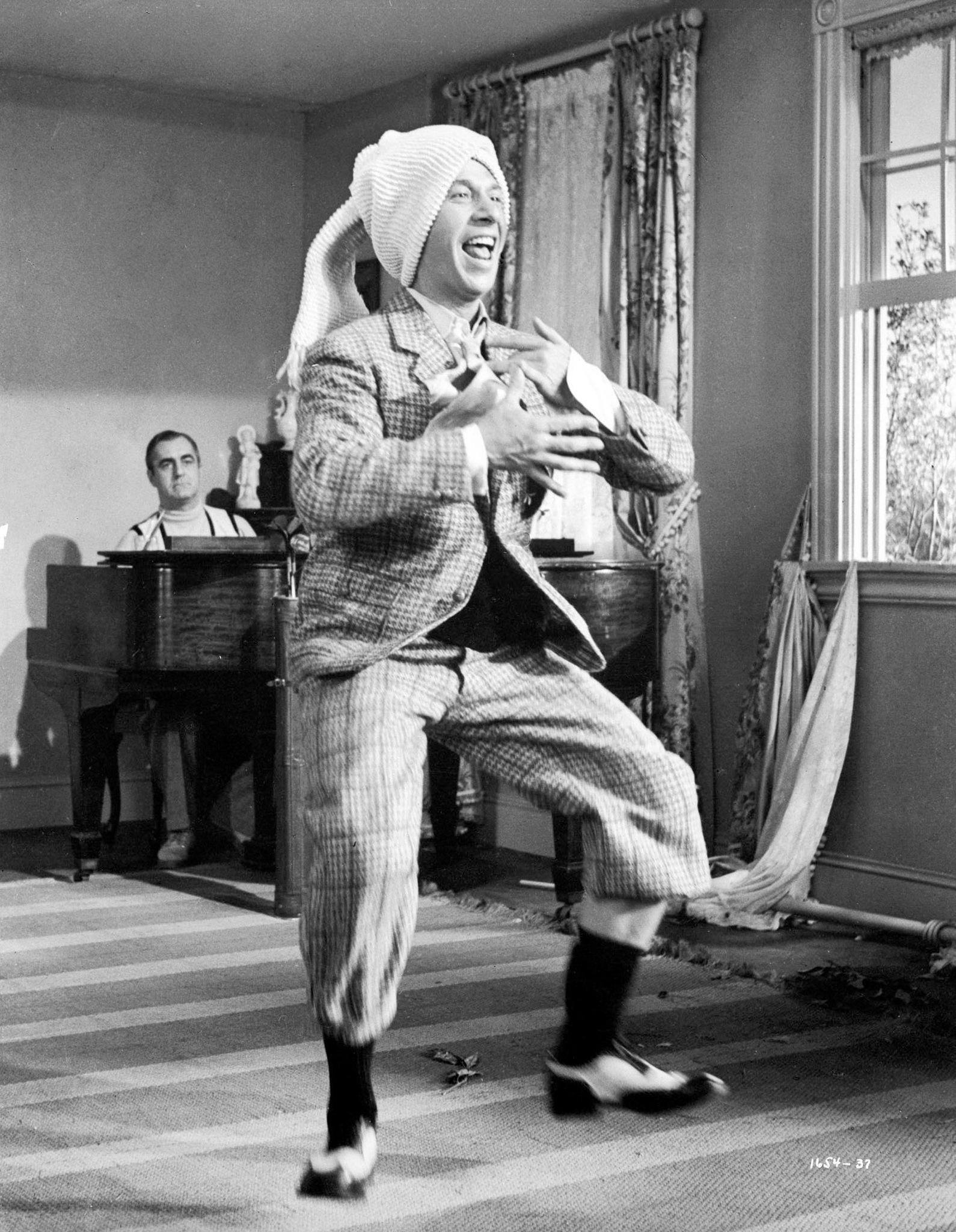
    His life was made into a film, “Deep in My Heart,” in 1954. If you were to make a film about Sigmund Romberg, who would you cast in the title role? Why, José Ferrer, of course! This would be after Ferrer’s Academy Award-winning turn as Cyrano de Bergerac, by the way.

    Here’s a radio broadcast promoting the film, featuring much of the cast, including Helen Traubel, Rosemary Clooney, Jane Powell, Vic Damone, Gene and Fred Kelly, Ann Miller, Tony Martin, and Howard Keel.

    https://www.youtube.com/watch?v=hyoG8x_x1BU

    PHOTO: José Ferrer, skating on Oscar gold

  • Theodorakis turns 90 Zorba composer and Quinn’s friend

    Theodorakis turns 90 Zorba composer and Quinn’s friend

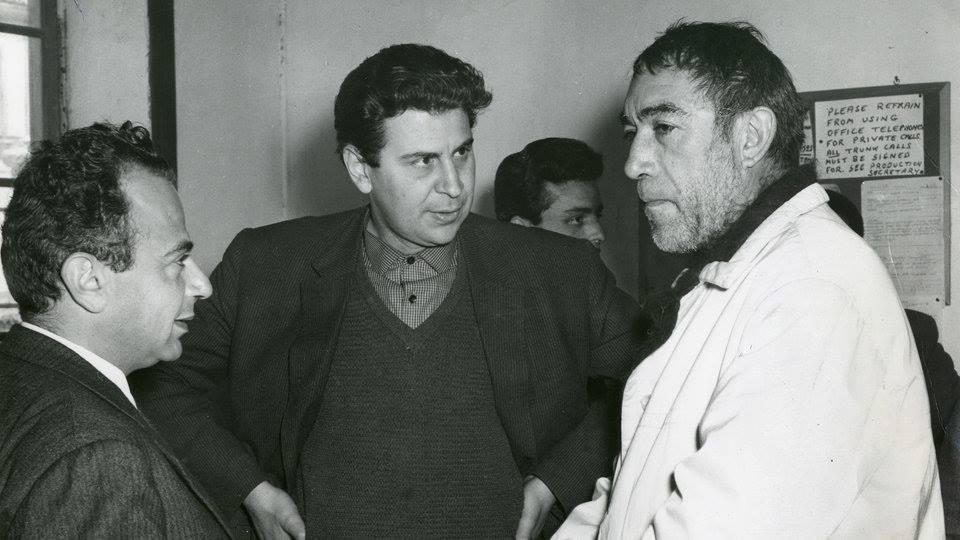
    It would be bad form for me not to acknowledge Mikis Theodorakis on his 90th birthday. Theodorakis, one of Greece’s best-known musical exports, was made world famous by his score to the film “Zorba the Greek.”

    Did you know he was a pupil of Olivier Messiaen at the Paris Conservatory? Here is Theodorakis’ Symphony No. 2, with Cyprien Katsaris at the piano:

    This year also marks the 100th anniversary of the birth of Anthony Quinn, sadly no longer with us.

    PHOTO: Theodorakis (center) with Quinn (right)

  • Rued Langgaard: A Rediscovered Genius

    Rued Langgaard: A Rediscovered Genius

    Here we are again, the birthday of Rued Langgaard. The months just fly by, don’t they?

    Langgaard lived from 1893 to 1952. Despite a promising start – born to musical parents, a prodigious childhood, meetings with major conductors, and a symphony performed by the Berlin Philharmonic – his personal and creative eccentricities worked against him.

    Langgaard was 46 by the time he managed to obtain a permanent job, as an organist at the cathedral in Ribe. It was the oldest town in Denmark, and situated far, far from Copenhagen, the center of Danish musical life. He would die in Ribe at the age of 59.

    Langgaard composed over 400 pieces. Perpetually out of step with the times, and particularly with the tastes of his fellow Danes, performances of his music were scarce. He found himself ignored by the musical establishment, with the result that his achievements really only started to be recognized in the 1960s – 16 years after his death.

    It was in 1968 that no less a personage than György Ligeti found himself on a jury alongside Danish composer Per Nørgård. In this capacity, he examined a large number of new scores by Scandinavian composers. Unbeknownst to his fellow jurors, Nørgård had slipped in the score of Langgaard’s “Music of the Spheres.” Ligeti became captivated by what he found. When the ruse was revealed, he exclaimed, with a twinkle in his eye, “Gentlemen, I have just discovered that I am a Langgaard epigone!”

    Langgaard had anticipated some of the technical aspects – tone clusters, layers, and so forth – which would appear in Ligeti’s avant garde experiments of the 1960s, in works such as “Atmosphères.”

    It was a Rued awakening that was long overdue.

    Langgaard’s “Music of the Spheres” (1918):
    https://www.youtube.com/watch?v=j959i5k6RjM

    Ligeti’s “Atmosphères” (1961):
    https://www.youtube.com/watch?v=aI0P1NnUFxc


    PHOTOS: Kindred eccentrics, Rued Langgaard (top) and György Ligeti

  • Ivan Moravec Czech Pianist Dies

    Ivan Moravec Czech Pianist Dies

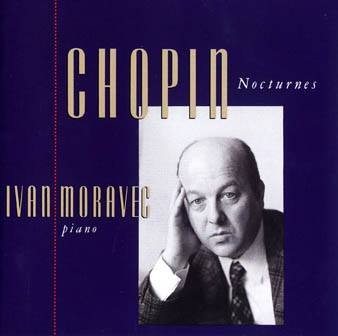
    It is with sadness that I share the news of the death of the Czech pianist Ivan Moravec. He was one of the outstanding Chopin interpreters. Here he is performing music of Josef Suk, who was the focus of last night’s “The Lost Chord.” The show will repeat Wednesday evening at 6, at wwfm.org, though I hasten to add there is no Moravec on that program. Perhaps someday soon.

    Moravec plays Chopin:

    A great loss.

Tag Cloud

Aaron Copland (93) Beethoven (95) Composer (114) Film Music (139) Film Score (143) Film Scores (255) Halloween (94) John Williams (195) KWAX (229) Leonard Bernstein (103) Marlboro Music Festival (125) Movie Music (154) Mozart (89) Opera (210) Philadelphia Orchestra (89) Picture Perfect (174) Princeton Symphony Orchestra (108) Radio (88) Ross Amico (244) Roy's Tie-Dye Sci-Fi Corner (290) The Classical Network (101) The Lost Chord (268) Vaughan Williams (103) WPRB (396) WWFM (881)

DON’T MISS A BEAT

Receive a weekly digest every Sunday at noon by signing up here


RECENT POSTS