Category: Daily Dispatch

  • Diamond Perle Centenary Celebration

    Diamond Perle Centenary Celebration

    Happy Independence Day!

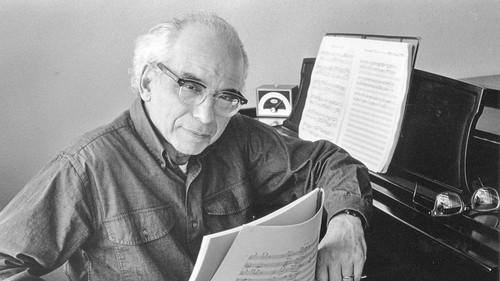
    Is there a more neglected composer among symphonists of the “Greatest Generation” of American composers than David Diamond? I think not. Diamond composed 11 symphonies, and every one that I’ve heard has been wholly worthwhile. Yet, criminally, some of them have not even been recorded.

    This Sunday night on “The Lost Chord,” we celebrate Diamond’s centenary (he was born on July 9, 1915), with his Symphony No. 4 and the orchestral fantasia “The Enormous Room,” after the autobiographical novel of E.E. Cummings.

    In between, we observe the centenary of a seemingly disparate figure, George Perle (born on May 6, 1915). Diamond would occasionally construct a theme on a tone row, but his music was essentially tonal. Perle, by contrast, was twelve tone all the way, yet he managed, much like his musical hero, Alban Berg, to keep it lyrical. Despite their different approaches, both composers, Diamond and Perle, are quite direct in their appeal to the receptive listener.

    I had been toying with the idea of programming Perle’s “Lyric Intermezzo,” a piano suite that manages to convey a romantic sensibility by way of serialism (it was inspired by Schumann’s “Waldszenen”). In the end, however, I opted for his eminently listenable – and Pulitzer Prize-winning – Wind Quintet No. 4.

    I hope you’ll join me for “Pearls from Perle, Diamonds from Diamond,” this Sunday night at 10 ET, with a repeat Wednesday evening at 6; or that you’ll listen to it later as a webcast at http://www.wwfm.org.


    An exhaustive analysis of Diamond’s symphonies by one of his former pupils:
    http://alanbelkinmusic.com/Diamond/DD.html

    David Diamond interview, conducted by Bruce Duffie:
    http://www.bruceduffie.com/diamond.html

    George Perle’s obituary in the New York Times:
    http://www.nytimes.com/2009/01/24/arts/music/24perle.html?pagewanted=all&_r=0

    George Perle in conversation with David Dubal:

    PHOTOS: Perle before swine (top); Diamond is forever

  • American Composers & July 4th Music

    American Composers & July 4th Music

    I can’t guarantee any fife and drum music (I didn’t bring any), but you never know.

    Nonetheless, I can promise wall-to-wall American composers, as we anticipate Independence Day. These may include (and won’t be limited to) George Antheil, Paul Bowles, Romeo Cascarino, John Corigliano, Daniel Dorff, Irving Fine, Lou Harrison, Bernard Herrmann, Jennifer Higdon, Ruth Crawford Seeger, Peter Schickele, Caroline Shaw, Michael Torke, and George Walker.

    I am very pleased to add that Jerry Rife, for 30 years conductor of The Blawenburg Band, has found time in his busy schedule to join me around 9:00 to share just a little bit about the band’s upcoming concerts at Princeton Shopping Center (tonight at 7 p.m.), Yardley Community Centre in Yardley, Pa. (July 4 at 4 p.m.), and Hopewell Train Station (July 6 at 7:30 p.m.).

    It’s pure Americana this week, when you tune in Classic Ross Amico, this morning from 6 to 11 a.m. ET, at WPRB 103.3 FM or online at wprb.com – classical music radio as the Founding Fathers intended.

  • Remembering James Horner’s Iconic Film Scores

    Remembering James Horner’s Iconic Film Scores

    The prolific film composer James Horner died on June 22, when his single-turboprop plane went down in Los Padres National Forest in Southern California. He was 61 years-old.

    This week on “Picture Perfect,” we honor his memory, with music from but a handful of his over 100 scores. Horner was the recipient of two Academy Awards – for Best Original Score and Best Original Song (“My Heart Will Go On”) – for his work on “Titanic” (1997). “Titanic” went on to become the bestselling soundtrack of all time.

    Horner received eight additional Academy Award nominations. We’ll hear music from at least two of the scores so recognized: “A Beautiful Mind” (2001) and “Braveheart” (1995). “A Beautiful Mind,” of course, dramatized the life of late Nobel Laureate (formerly of Princeton University) John Nash, who died in a car accident in May.

    We’ll also have music from Horner’s breakout success, “Star Trek II: The Wrath of Khan” (1982).

    I hope you’ll join me, as we honor James Horner this week, on “Picture Perfect,” music for the movies, this Friday evening at 6 ET, with a repeat Saturday morning at 6; or that you’ll listen to it later as a webcast at http://www.wwfm.org.


    Horner’s obituary in the New York Times:

    http://www.nytimes.com/2015/06/24/us/james-horner-whose-soaring-film-scores-included-titanic-dies-at-61.html?_r=0

    PHOTO: His heart will go on

  • American Music for Independence Day on WPRB

    American Music for Independence Day on WPRB

    I’ve been following Marvin Rosen’s Classical Discoveries playlist with particular interest this morning, since I too plan to play all American music tomorrow, in anticipation of the Independence Day holiday.

    Marvin is a much better planner than I, but at this point I can say with relative certainty that we MAY hear music by George Antheil, Paul Bowles, Romeo Cascarino, John Corigliano, Daniel Dorff, Irving Fine, Lou Harrison, Bernard Herrmann, Jennifer Higdon, Ruth Crawford Seeger, Peter Schickele, Caroline Shaw, Michael Torke, George Walker and many others.

    Jerry Rife, for 30 years conductor of The Blawenburg Band, will join me around 9:00 to tell us just a little bit about the band’s upcoming concerts at Princeton Shopping Center (tomorrow at 7 p.m.), Yardley Community Centre in Yardley, Pa. (July 4 at 4 p.m.), and Hopewell Train Station (July 6 at 7:30 p.m.).

    Tune in, wrap yourself in the flag, and feel the cool grass between your toes, as we celebrate America’s independence this week. Keep it classy with Classic Ross Amico, tomorrow morning from 6 to 11 a.m. ET, on WPRB 103.3 FM or online at wprb.com.

  • Discover Lajtha Hungarian Music’s Lost Voice

    Discover Lajtha Hungarian Music’s Lost Voice

    Hungry for Hungarian music? Give László Lajtha a shot.

    A forgotten colleague of Béla Bartók and Zoltán Kodály, Lajtha (pronounced “Loy-tah”) too busily collected and transcribed folk music from the Hungarian countryside prior to World War I.

    Later, he was appointed Director of Music for Hungarian Radio, Director of the Museum of Ethnography, and Director of the Budapest National Conservatory. He was summarily removed from all three posts and his passport confiscated by the Communist regime after remaining in the West too long while at work on the film score to a British screen adaptation of T.S. Eliot’s “Murder in the Cathedral” (which went on to win the Grand Prix at the Venice Film Festival in 1951). He hadn’t even provided a film score in the truest sense, instead composing three concert works (the Symphony No. 3, the Orchestral Variations, and the Harp Quintet No.2), which were excerpted in the film.

    Anyway, he was awarded the Kossuth Prize in 1951 for his achievements as a folk researcher. At least that’s something. I devoted my life to Hungarian music, and all I got was this lousy t-shirt.

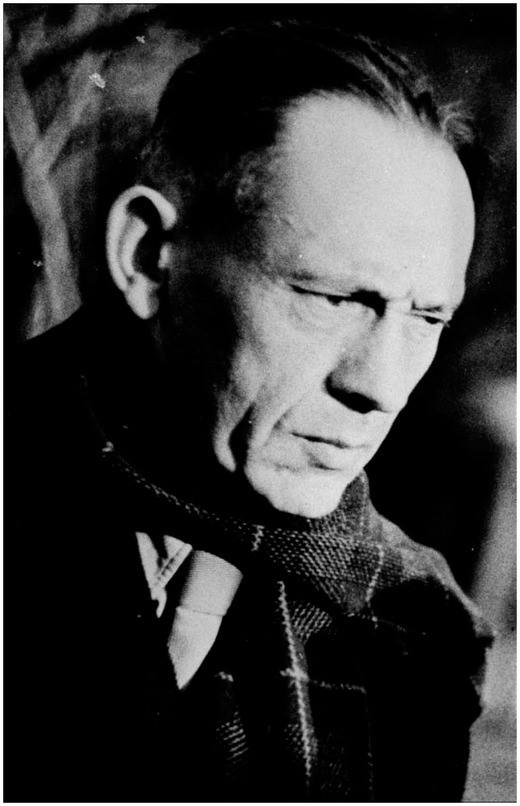
    Happy birthday, László Lajtha (1892-1963)!

    An interesting assessment of Lajtha’s music:
    http://www.crisismagazine.com/2001/music-laszlo-lajtha-music-from-a-secret-room

    Lajtha’s Symphony No. 4 “Le printemps”:


    PHOTO: Not even that scarf could insulate him from the Cold War

Tag Cloud

Aaron Copland (93) Beethoven (95) Composer (114) Film Music (139) Film Score (143) Film Scores (255) Halloween (94) John Williams (195) KWAX (229) Leonard Bernstein (103) Marlboro Music Festival (125) Movie Music (154) Mozart (89) Opera (210) Philadelphia Orchestra (89) Picture Perfect (174) Princeton Symphony Orchestra (108) Radio (88) Ross Amico (244) Roy's Tie-Dye Sci-Fi Corner (290) The Classical Network (101) The Lost Chord (268) Vaughan Williams (103) WPRB (396) WWFM (881)

DON’T MISS A BEAT

Receive a weekly digest every Sunday at noon by signing up here


RECENT POSTS