Category: Daily Dispatch

  • Irish Film Music Picture Perfect Podcast

    Irish Film Music Picture Perfect Podcast

    This week on “Picture Perfect,” we’ll have an hour of music from movies with Irish settings and Irish themes.

    Tyrone Power plays an American journalist who travels to Ireland, where he gets in touch with his roots – and a full-size leprechaun, played by Cecil Kellaway – in “The Luck of the Irish” (1948).

    No “Darby O’Gill”-style special effects here. Kellaway is just some guy in a leprechaun hat. When Power comments, “Say, aren’t you rather large for a leprechaun?,” Kellaway responds, “That’s a page of me family history I’d rather we not go into.” It was hoped that Barry Fitzgerald would have taken the role – and how perfect would that have been? – but he couldn’t be secured. In the event, Kellaway was nominated for an Academy Award for Best Supporting Actor.

    The music was by the English-born Cyril J. Mockridge, who was Alfred Newman’s assistant at 20th Century Fox. Mockridge is probably best known for his score to “Miracle on 34th Street.” “The Luck of the Irish” is full of Celtic-style folk melodies and some shimmering leprechaun music, but why it quotes “Greensleeves” is anybody’s guess. Probably at the request of a producer. (Green = Irish, right?)

    John Williams wrote a gorgeous, melancholy score for “Angela’s Ashes” (1999), adapted from Frank McCourt’s bestselling memoir. It’s refreshing to hear Williams give free rein to his lyrical side, beyond the context of lightsabers, magic wands and rampaging dinosaurs. The recording we’ll hear is from the difficult-to-acquire international release. The version issued stateside was marred by dialogue from the film. (Why do they do that?)

    You can’t have an hour of Irish film music without including something with The Chieftains. “Circle of Friends” (1995) is based on the novel by Maeve Binchy, about three childhood friends who reunite in college, and their adventures with the young men they find there. The film starred Minnie Driver, Chris O’Donnell, Alan Cumming and Colin Firth. Michael Kamen wrote the score, but it’s The Chieftains, obviously, that lend it an air of authenticity.

    Finally, we’ll have music from “The Quiet Man” (1952), surely Victor Young’s most charming project. Based on a short story by Maurice Walsh, “The Quiet Man” tells the tale of an American boxer with Irish roots who returns to the village of his birth.

    John Wayne, Maureen O’Hara, Barry Fitzgerald, Victor McLaglen, Mildred Natwick, Ward Bond, and a whole slew of Irish character actors flesh out what must be John Ford’s most delightful film. It earned him his fourth Academy Award for Best Director, and the film itself was nominated for Best Picture.

    The score is imbued with Irish folk song and popular melodies, perfectly complementing the tone of sustained whimsy, in what is essentially a love story unfolding in the face of cultural differences.

    I hope you’ll join me in the wearin’ of the green, this Friday evening at 6 ET, with a repeat Saturday morning at 6 (as good a time as any for a pint of porter); or that you’ll listen to it later as a webcast, at http://www.wwfm.org.

  • Cowell & Ruggles: Maverick American Originals

    Cowell & Ruggles: Maverick American Originals

    At the risk of instigating a slap fight between two of America’s foremost musical mavericks, I salute both Henry Cowell (1897-1965) and Carl Ruggles (1876-1971) on their shared birthday.

    Actually the two were good friends. Their circle of “ultra-modernists,” as they were dubbed, must have been swollen with cake this time of year. (Colin McPhee’s birthday anniversary is on March 15.) The surfeit of sugar made them all the more volatile, I’m sure.

    Cowell pioneered the use of atonality, polytonality, polyrhythms, and non-Western modes. He was employing tone clusters (chords made up of adjacent keys on the chromatic scale, often played with a fist or forearm) in his keyboard music before Béla Bartók.

    His experiments with aleatory (chance elements) and the “string piano” (reaching inside the piano to play the strings) influenced generations of composers. He was an autodidact who adopted established musical techniques only as he felt he needed them.

    Cowell was so bad-ass that when he was sent to San Quentin on a “morals” charge, he kept right on churning out music at his usual prolific pace. He taught his fellow inmates and organized a prison band. There’s got to be a movie in this, the musical equivalent of “The Shawshank Redemption.”

    That said, Cowell did not emerge from the experience unscarred. His later works take a more conservative tack. No longer was he quite as radical, either musically or politically. It is his music from this era that is usually deemed radio-safe.

    Cowell and Carl Ruggles were two-fifths or the “American Five,” which also included John J. Becker, Wallingford Riegger and Charles Ives. Ives was a good friend of both, supporting Cowell’s experimentation before he himself became well-known.

    He famously defended Ruggles by leaping to his feet, following a performance of “Men and Mountains,” to confront a heckler with, “You g**d*** sissy! When you hear strong, masculine music like this, get up and use your ears like a man.” Seemingly, Ives was the only one of Ruggles’ acquaintances never to be on the receiving end of his ire.

    Ruggles disdained music theory and composed by ear, painstakingly, through trial and error. He did adhere to a kind of dissonant counterpoint. Because of his perfectionism, he left only ten authorized works. He found it to be much less labor-intensive to paint. Over the course of his lifetime, he sold hundreds of his paintings.

    There’s no question that Ruggles was a world-class S.O.B., but he did manage to leave behind some fascinating, even breathtaking music.

    Happy birthday to two American originals.

    Henry Cowell, “The Banshee,” for string piano:
    https://www.youtube.com/watch?v=ND-ga_BrkCE

    Carl Ruggles, “Men and Mountains”:

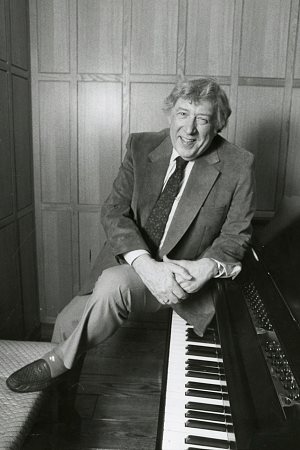
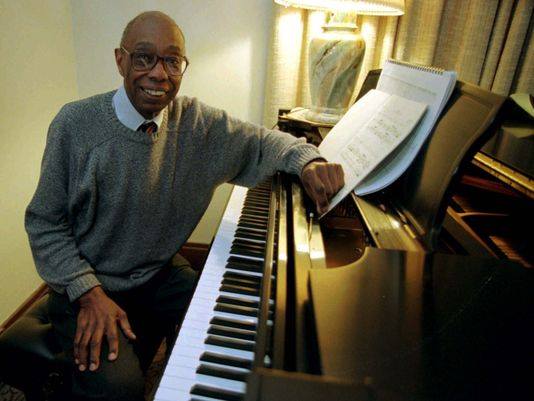
    PHOTOS: Zing! went the strings of Cowell’s banshee (left); Ruggles, as bitter as his cigar

  • Arthur Honegger Birthday Celebrating Les Six Composer

    Arthur Honegger Birthday Celebrating Les Six Composer

    Today is the birthday of Arthur Honegger (1892-1955). Honegger was a member of Les six, that collective of composers which rose to prominence in Paris circa 1920.

    His disposition, musically speaking, was generally more solemn than that of his colleagues. Not for Honegger the influence of the café and the music hall, as would be the case for, say, Francis Poulenc. Yet he was very good friends with Darius Milhaud, from their days together at the Paris Conservatory. Milhaud dedicated his String Quartet No. 4 to Honegger’s memory, as did Poulenc his Clarinet Sonata.

    I’ve always been fond of Honegger’s symphonic movement, “Rugby,” with its dissonant harmonies and flights of lyricism. It pretty much captures the exhilaration that comes from rough-housing and horseplay.

    Here’s Bernstein conducting:
    https://www.youtube.com/watch?v=YZlfHXj0mp0

    And Honegger:

    Bon anniversaire, Arthur Honegger!

    PHOTO: Les six on the Eiffel Tower in 1921: (left to right) Germaine Tailleferre, Poulenc, Honegger, Milhaud, Louis Durey, and Georges Auric

  • Hovhaness Celestial Gate Symphony Birthday Salute

    Hovhaness Celestial Gate Symphony Birthday Salute

    Busy day today. Here’s an eleventh hour salute to Alan Hovhaness (1911-2000) on his birthday – the Symphony No. 6, “Celestial Gate”:

    PHOTO: Hovhaness with his cat, Rajah Mahatma Hoyden

  • Happy Birthday Samuel Barber His Best Music

    Happy Birthday Samuel Barber His Best Music

    March 9. Time for a trip to the Barber. Samuel Barber, that is.

    Happy birthday, Sam (born in West Chester, Pa., on this date in 1910).

    My favorite Barber pieces? The Violin Concerto. The Symphony No. 1. The Second Essay for Orchestra. “Souvenirs” (in the version for four-hand piano). Okay, and the Adagio.

    Sing it, Lenny.

    If you’re feeling a little on the bleak side, here’s some happy music to counterbalance the Adagio. It’s from his set of piano pieces titled “Excursions.”

    PHOTO: What you doin’ with that black shirt and baton, Sammy? Ironically, he disliked his Second Symphony. He disliked it so much, he tried to destroy it.

Tag Cloud

Aaron Copland (92) Beethoven (95) Composer (114) Film Music (119) Film Score (143) Film Scores (255) Halloween (94) John Williams (185) KWAX (229) Leonard Bernstein (99) Marlboro Music Festival (125) Movie Music (134) Opera (198) Philadelphia Orchestra (87) Picture Perfect (174) Princeton Symphony Orchestra (106) Radio (87) Ralph Vaughan Williams (85) Ross Amico (244) Roy's Tie-Dye Sci-Fi Corner (290) The Classical Network (101) The Lost Chord (268) Vaughan Williams (102) WPRB (396) WWFM (881)

DON’T MISS A BEAT

Receive a weekly digest every Sunday at noon by signing up here


RECENT POSTS