Category: Daily Dispatch

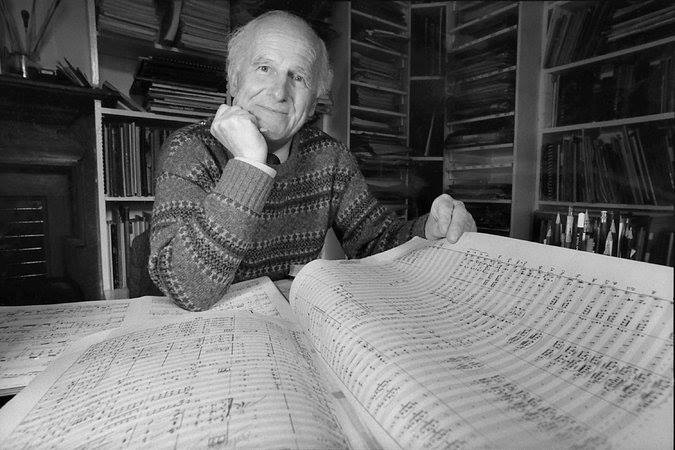
  • Sir David Willcocks A Choral Legend Remembered

    Sir David Willcocks A Choral Legend Remembered

    Sir David Willcocks did so much, so well, and for so long, it’s hard to believe he’s gone. Particularly renowned for his work with the Choir of King’s College, Cambridge, which he led from 1957 to 1974, he and the choir received world-wide exposure through their albums and the annual Christmas Eve broadcast of “Nine Lessons and Carols.”

    Willcocks set down notable recordings of Thomas Tallis’ “Spem in Alium,” Gregorio Allegri’s “Miserere,” choral masterworks of Johann Sebastian Bach, and what many regard as the definitive interpretation of the Fauré Requiem.

    His work on “Carols for Choirs,” a series of anthologies he co-edited with Reginald Jacques and John Rutter, yielded the most widely used source of carols in the British Anglican tradition, very popular among choral societies. Many of the pieces had been written, or arranged, for the annual Service of “Nine Lessons and Carols.”

    In addition to his considerable accomplishments in the classical realm, Willcocks directed his London Bach Choir in the Rolling Stones song, “You Can’t Always Get What You Want.”

    This Sunday night on “The Lost Chord,” we remember arguably the most esteemed British choral director of his generation, who died on September 17 at the age of 95, with performances of music composed by a couple of his countrymen.

    It may seem like an awfully long stretch, to reach from Mick Jagger to the New Testament, but in the writing of “Sancta Civitas” (“The Holy City”), Ralph Vaughan Williams turned to the Book of Revelation (so perhaps it’s not so far off, after all). The oratorio, which spans just a little over 30 minutes, received its first performance in 1926. Late in life, Vaughan Williams claimed it was his favorite among his choral works. We’ll hear a classic recording with tenor Ian Partridge and baritone John Shirley-Quirk.

    In the 1970s, Willcocks became director of the Royal College of Music. We’ll sample some of his work with the chamber choir there, with performances of two pieces by Gustav Holst: “Hymn to Dionysus,” composed in 1913, with its presentiments of “Jupiter, the Bringer of Jollity” from “The Planets,” and a selection from “Choral Hymns from the ‘Rig Veda,’” written between 1908 and 1912, one of numerous works to grow out of the composer’s fascination with Sanskrit literature.

    I hope you’ll join me for “King David,” as we honor the legendary Sir David Willcocks, this Sunday night at 10 ET, with a repeat Wednesday evening at 6; or that you’ll listen to it later as a webcast, at wwfm.org.

  • Gershwin’s Birthday Astaire Tributes & Last Words

    Gershwin’s Birthday Astaire Tributes & Last Words

    Today is the birthday of George Gershwin (1898-1937)

    Here are a couple of fascinating documents, set down in 1926, of Fred and Adele Astaire singing with Gershwin at the piano.

    The Astaires headlined two of Gershwin’s Broadway musicals, “Lady Be Good!” (1924) and “Funny Face” (1927). Adele married in 1932 and retired from show business. Fred later starred in the film musicals, “Shall We Dance”(1937) and “A Damsel in Distress” (1937), both at least partially scored by Gershwin.

    Gershwin received his only Academy Award nomination for Best Original Song in 1937, for “They Can’t Take That Away from Me,” from “Shall We Dance.” The nomination was posthumous, as Gershwin had died of a brain tumor two months after the film’s release.

    It’s a testament to the two men’s friendship, or at any rate their close working relationship, that reportedly Gershwin’s last words were… “Fred Astaire.”

    PHOTO: Astaire (left) with George and Ira Gerswhin

  • Pope Francis, Philly, and Pontifical Pomp

    Pope Francis, Philly, and Pontifical Pomp

    With Philadelphia under martial law – I guess for the protection of Pope Francis – there’s plenty of time to stay indoors and enjoy some papal trivia.

    Charles Gounod, perhaps most famous for that great devil opera, “Faust,” composed this “Pontifical March” in 1869 to mark the golden jubilee of Pope Pius IX’s priestly ordination. 80 years later, Pope Pius XII decided to make it the Vatican City’s official “hymn,” replacing Viktorin Hallmayer’s “Marcia trionfale” (composed in 1857). The first eight bars are played whenever the Vatican’s flag is raised.

    In 1949, Antonio Allegra, an organist at St. Peter’s Basilica, provided an Italian text to be sung to the anthem. In 1991, Raffaello Lavagna, a Catholic priest from Savona, composed Latin lyrics for four-part choir.

    Here it is, in all its pontifical pomp:

    https://www.youtube.com/watch?v=1FDB6JZXfZQ

    If you’re interested, here’s Hallmayer’s original, which I imagine would sound really great on a calliope:

    You can learn more about the “Pontifical Anthem” here:

    http://www.vaticanstate.va/content/vaticanstate/en/stato-e-governo/note-generali/inno.html

    Naturally, as the city’s premiere musical institution, the Philadelphia Orchestra will be getting in on the act, performing at two events during Francis’ visit. The orchestra will appear as part of a massive concert on the Ben Franklin Parkway, which will take place tonight from 5:30 to 9:45. Andrea Bocelli will be there. So will Aretha Franklin. The orchestra will perform from about 7:30 to the end.

    Then tomorrow, the orchestra will participate in an open air Papal Mass. It will deliver a musical prelude at 3. During the Mass, which begins at 4, the orchestra will provide relevant musical interludes. And then, beginning at around 6:10, the orchestra will perform a postlude. The Mass will include a 500 member choir. Since you’ll never be able to get close, you might as well be thankful for the streaming, which you can enjoy by way of the links provided here:

    https://www.philorch.org/blog/news/watch-philadelphia-orchestra-festival-families-concert-and-papal-mass#/

    Here’s the playlist for the Papal Mass. Quite a hodgepodge, if I do say so myself.

    http://wrti.org/post/performing-pope-francis-and-world-moment-history-philadelphia-orchestra#stream/0

    I wonder what the Pope thinks of it all. In private, he turns out to be a rather cultivated figure:

    http://www.wqxr.org/#!/story/pope-reveals-his-tastes-classical-music/

    It’s interesting to see Caravaggio on his list of favorites. Pope Paul V issued a death warrant for the artist after the fatal castration of one of his foes during a street brawl. Then again, by all accounts Wagner wasn’t such a nice guy, either.

    For the past few weeks my thoughts have been flashing back to Pope John Paul II and Father Guido Sarducci. Am I the only one who remembers this, I wonder?

    PHOTOS: Jolly Charles Gounod (left) and Pope Francis

  • Princeton Symphony: Clyne’s “Seamstress”

    Princeton Symphony: Clyne’s “Seamstress”

    I made my song a coat
    Covered with embroideries
    Out of old mythologies
    From heel to throat…

    Anna Clyne’s “The Seamstress,” a work for violin and orchestra after a poem of William Butler Yeats, will open this Sunday’s concert of the Princeton Symphony Orchestra. Jennifer Koh will be the soloist. Also on the program, music director Rossen Milanov will conduct Sergei Rachmaninoff’s Symphony No. 2. The concert will take place at Princeton University’s Richardson Auditorium Sunday afternoon at 4. Milanov will deliver a pre-concert talk at 3.

    A PSO “Behind the Music” event will take place tomorrow afternoon at 3, at The Arts Council of Princeton’s Paul Robeson Center. Insights into Clyne’s music will be offered, with Koh discussing her collaborative relationship with the composer, and Milanov his method of preparing her scores for live performance. The event is free and open to the public, with advanced reservations available through the PSO, at princetonsymphony.org or 609-497-0020.

    Clyne and Koh talk to me about “The Seamstress” in today’s Trenton Times.

    http://www.nj.com/times-entertainment/index.ssf/2015/09/classical_music_pso_opening_se.html

    Of perhaps related interest, Milanov and the PSO can be heard, along with guest soloists soprano Michelle Johnson, mezzo-soprano Margaret Lattimore, tenor Zach Borichevsky, and baritone Hugh Russell, and the Princeton High School Choir, in a broadcast concert of last season’s PSO finale, “Viva Verdi,” tonight at 8 ET, on WWFM – The Classical Network, at 89.1 FM or online at wwfm.org.

    PHOTOS: Anna Clyne (left) with Jennifer Koh and Rossen Milanov

  • Vatican Movie Music Pope Visit Philadelphia

    Vatican Movie Music Pope Visit Philadelphia

    “POPE IN PHILADELPHIA THIS WEEKEND… PLAN AHEAD… EXPECT DELAYS,” warn the flashing signs all up and down I-95, 295, and Route 1.

    The Ben Franklin Bridge will be shut down until Monday. Access to I-676 will be no more. All Center City exits will be sealed. The Pope Fence is up, mailboxes have been removed, and the car carrier trailers are full of impounded vehicles, bound for who-knows-where. Are we having fun yet?

    This week on “Picture Perfect,” we tap into the zeitgeist and celebrate what’s become a Pope cultural phenomenon with music from movies set in the Vatican.

    It would appear that Alex North (born just south of Philadelphia, by the way, in Chester, Pa.) was Hollywood’s “go to” composer for Vatican movies, with scores for two major films about the Pope.

    In “The Shoes of the Fisherman” (1968), Anthony Quinn plays Kiril Pavlovich Lakota, an archbishop who serves 20 years in a Siberian labor camp. He is released and sent to Rome where is promoted to the cardinalate. When the Pope dies, suddenly, Lakota, a dark horse candidate, is elected as his replacement. The story balances Lokata’s internal struggles and personal torments with mounting global turmoil. North juxtaposes the melancholy lyricism of Russian folksong with the steely grandeur of his music for the Vatican.

    “The Agony and the Ecstasy” (1965), about the war of wills between Michelangelo (played by Charlton Heston) and the warrior-pope Julius II (played by Rex Harrison) over the painting of the ceiling of the Sistine Chapel, suggested a completely different approach. North’s other Vatican score is rich in allusions to authentic music of the era – and of the Church – which is most impressive when we think that the Early Music Movement was, at the time, in its very infancy, and the music of the pre-Baroque would not have been particularly well known.

    Otto Preminger’s “The Cardinal” (1963) follows a fictional Boston Irish Catholic priest from his ordination in 1917 to his appointment as cardinal on the eve of World War II. Tom Tryon played the lead. Tryon later became a best-selling author (as THOMAS Tryon), with books like “The Other” and “Harvest Home.” An interesting factoid: The Vatican’s liaison officer for the production was none other than Joseph Ratzinger, later Pope Benedict XVI.

    The composer was Jerome Moross. The producers of the recording we’ll be sampling incorporate the sound of the actual bell of St. Paul’s Cathedral into the opening of the suite.

    Christopher Reeve may have been trying just a bit too hard to shake his “Superman” image when he signed on to “Monsignor” (1982). Reeve stars as a Roman Catholic priest whose ascent through the ranks at the Vatican parallels his underhanded dealings with a mafia don and an affair with a woman in the postulant stage of becoming a nun.

    Likewise, composer John Williams received his only nomination from the Golden Raspberry Awards for Worst Original Score. Tune in for this rare opportunity to hear music from Williams’ first project after his Academy Award-winning contribution to “E.T.”

    I hope you’ll join me for music from movies set in the Vatican this week, on “Picture Perfect,” Friday evening at 6 ET, with a repeat tomorrow morning at 6; or that you’ll listen to it later as a webcast at wwfm.org.

Tag Cloud

Aaron Copland (94) Beethoven (95) Composer (114) Film Music (153) Film Score (143) Film Scores (255) Halloween (107) John Williams (198) KWAX (233) Leonard Bernstein (105) Marlboro Music Festival (125) Movie Music (168) Mozart (92) Opera (222) Philadelphia Orchestra (91) Picture Perfect (174) Princeton Symphony Orchestra (110) Radio (90) Ross Amico (244) Roy's Tie-Dye Sci-Fi Corner (290) The Classical Network (101) The Lost Chord (269) Vaughan Williams (107) WPRB (397) WWFM (881)

DON’T MISS A BEAT

Receive a weekly digest every Sunday at noon by signing up here


RECENT POSTS