Category: Daily Dispatch

  • Film Noir: Shadows and Moral Ambiguity

    Film Noir: Shadows and Moral Ambiguity

    This week on “Picture Perfect,” as the shadows lengthen, we revisit the world of film noir, a genre notoriously slippery to define, but easy to know when you see it – with its long shadows and moral ambiguities; cock-eyed camera angles and snappy repartee; isolation and innuendo. It’s a genre where a pair of gams is an invitation to the gallows; where a man’s best friend – and sometimes his worst enemy – is his Colt .38, where only cigarettes and bourbon can ease the pain.

    The labyrinthine mystery at the heart of “The Big Sleep” (1946) is so disorienting, even the book’s author, Raymond Chandler, couldn’t tell whodunit. Who cares? Humphrey Bogart and Lauren Bacall get some more steamy dialogue to satisfy fans of “To Have and Have Not,” and there’s plenty of Bogey pounding the pavement and tossing off tart one-liners in pursuit of the truth. But my favorite scene involves Dorothy Malone, who runs the hottest bookstore in town.

    https://www.youtube.com/watch?v=AO9Q-81w6KQ

    Whenever there are gallows to be built or gangsters to be beaten, Warner Brothers could be counted on to assign Max Steiner.

    “Chinatown” (1974) is one of the best of the neo-noirs of the 1970s. This time, Jack Nicholson plays private dick J.J. Gittes, who takes on a seemingly routine case that begins to spiral out of control. When producer Robert Evans rejected Philip Lambro’s original score, Jerry Goldsmith stepped in as a last-minute replacement. The composer was hired with the understanding that he had only ten days to write and record new music. For his effort, Goldsmith received an Academy Award nomination.

    The Coen Brothers clearly love noir, from their first feature, “Blood Simple,” to their Academy Award winners, “Fargo” and “No Country for Old Men,” to their absurdly entertaining reimagining of “The Big Sleep,” “The Big Lebowski.” “Miller’s Crossing” (1990) was one of the more underappreciated of these. The film follows the well-worn device of an anti-hero playing two sides off of one another, until he is the last one standing – shades of Dashiell Hammett’s “Red Harvest,” with a healthy dose of “The Glass Key” thrown in, for good measure. The Irish-inflected score is by Coen regular Carter Burwell.

    Before he became stereotyped as a composer for epic films like “Ben-Hur,” “King of Kings” and “El Cid,” Miklos Rozsa was the king of noir, providing scores for genre classics such as “Double Indemnity” and “The Strange Love of Martha Ivers.” We’ll hear a suite assembled from three such projects: “Brute Force” (1947), a hard-hitting prison drama, starring Burt Lancaster as a desperate inmate and a contemptible Hume Cronyn as a sadistic guard; “The Killers” (1946), also starring Lancaster as a marked boxer; and “The Naked City” (1948), with Barry Fitzgerald leading a police investigation into the murder of a young model. The suite is titled “Background to Violence.”

    Put on your rumpled linen suit, draw the Venetian blinds, and play the sap for nobody this week. It’s film noir in the gritty city, on “Picture Perfect” – music for the movies – this Friday evening at 6, with a repeat Saturday morning at 6; or you can listen to it later as a webcast at http://www.wwfm.org.

    The theatrical trailer for “Brute Force”:

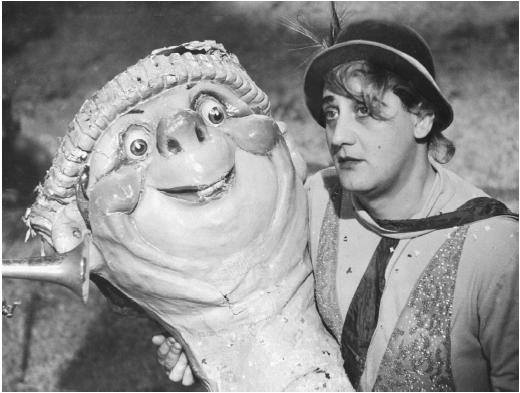
    PHOTO: Jack “nose” noir

  • Borodin Chemist Composer Nationalist

    Borodin Chemist Composer Nationalist

    The connection between music and science has been much remarked upon.

    In the case of Alexander Borodin, he was a doctor and chemist. Borodin was born on this date in 1833. As a boy he had had piano lessons, but he received his formal education at the Medical-Surgical Academy in St. Petersburg. He then served as a surgeon in a military hospital before undertaking three years of advanced scientific study in Western Europe.

    In 1862, he returned to his alma mater to teach. There, he managed to establish courses for women. In 1872, he founded a school of medicine for women. He devoted the remainder of his scientific career to research. He is co-credited with the discovery of the aldol reaction, a means of forming carbon-carbon bonds in organic chemistry.

    Around the time of his return to the Academy, he met Mily Balakirev, the persuasive advocate of Russian nationalism in music, who took the chemist under his wing and supervised the composition of his Symphony No. 1. Borodin began work on his Symphony No. 2 in 1869. Since regarded as a particularly successful blend of Slavic drama and lyricism with European classical form, it was not a particular success at its premiere in 1877.

    Borodin became sidetracked while working on the piece by his absorption in an opera on the subject of Prince Igor. This was to become his most significant musical contribution and one of the most important Russian historical operas. Because of his other commitments and repeated distractions, the work was left unfinished at the time of his death. It was completed by his friends and colleagues, Nikolai Rimsky-Korsakov and Alexander Glazunov.

    The big show-stopper, of course, is his “Polovtsian Dances,” which has been used to sell everything from records to cleanser.

    Borodin was yet another beneficiary of the exceeding generosity of Franz Liszt, whose contributions in this regard are not widely enough acknowledged. It was Liszt’s advocacy as a conductor that brought Borodin to the attention of European audiences. In gratitude, the composer dedicated “In the Steppes of Central Asia” to Liszt in 1880.

    Borodin was also embraced by the French Impressionists, who admired his unusual harmonies. Of course, he achieved even greater renown when melodies from his works became the basis for the musical “Kismet” in 1953. In 1954, he was honored with a posthumous Tony Award!

    Since for Borodin music was basically an avocation, something to which he devoted himself mostly during holidays or when he was otherwise unable to report to work, it became a running gag among his friends that they’d wish him poor health.

    “In winter I can only compose when I am too unwell to give my lectures,” he wrote. “So my friends, reversing the usual custom, never say to me, ‘I hope you are well’ but ‘I do hope you are ill.’”

    He had plenty of experience with illness. The composer survived cholera and suffered several heart attacks. He finally dropped dead during a ball at the Academy in 1887.

    Happy birthday, Alexander Borodin!

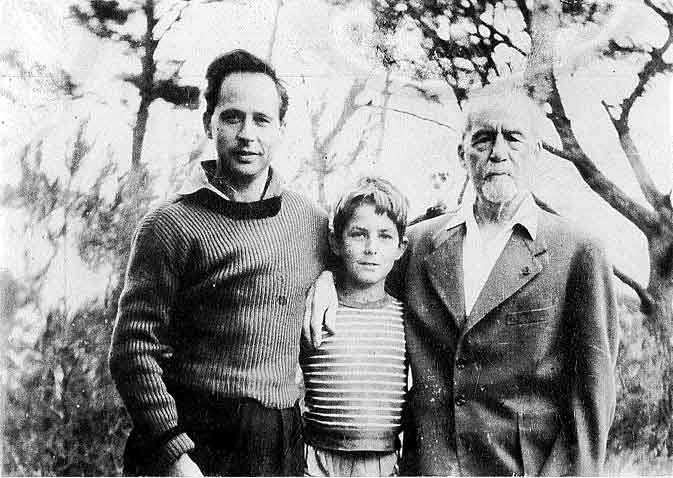
    PHOTO: Alexander Borodin: chemistry to burn

  • Veterans Day In Flanders Fields & Family Memories

    Veterans Day In Flanders Fields & Family Memories

    It’s Veterans Day. Nearly a century ago, in May 1915, Canadian military doctor Maj. John M. McCrae composed the poem “In Flanders Fields,” after treating victims of a German chemical attack in Belgium. It captured the imagination of millions so that red poppies became a widely recognized symbol of Veterans Day.

    In Flanders fields the poppies blow
    Between the crosses, row on row,
    That mark our place; and in the sky
    The larks, still bravely singing, fly
    Scarce heard amid the guns below.

    We are the Dead. Short days ago
    We lived, felt dawn, saw sunset glow,
    Loved and were loved, and now we lie
    In Flanders fields.

    Take up our quarrel with the foe:
    To you from failing hands we throw
    The torch; be yours to hold it high.
    If ye break faith with us who die
    We shall not sleep, though poppies grow
    In Flanders fields.

    The text became the basis for the second of “Three War Songs,” by Charles Ives:

    On a lighter note, here’s Ives himself singing the third, “They Are There!”

    My grandfather served in World War II. He was an engineer, a sergeant, who was involved in construction and demolition. Among other things, he and his men built and blew up bridges. My uncles had medical conditions that kept them out of Vietnam. I feel very fortunate never to have had to experience modern warfare. I can’t imagine what my grandfather had to endure. He didn’t have people shooting at him all the time, but the war was no picnic, and though he had lots of funny stories, he had some close calls and did some desperate things. There are things about the war he never talked about. Some he revealed to me only toward the end of his life.

    He died in 1996. At his viewing, it was mostly family, until the door opened and in walked a stranger, an old man in uniform. He had come to say farewell to his sergeant and friend, someone he had not seen for 50 years. Those of us who weren’t there, in Europe, in the Pacific, can only imagine what it was like. A simple night’s sleep could be interrupted at anytime. Of course, you couldn’t smoke, because the glowing tip of a cigarette was as good as a target.

    One night, a German plane malfunctioned. Everyone heard the engine sputter, but there was no moon, and there was nothing to do but scramble blindly for shelter. My grandfather took refuge under a jeep. After the explosion, the men went to look for the body. All they found were the pilot’s feet.

    In the Pacific, they had to transport nitroglycerin over some rough terrain. I gather from one of his murkier stories that someone took a shot at them.

    The flag that was draped over my grandfather’s coffin was displayed on our mantle until my mother passed. It is now in the possession of my aunt.

    I think of my grandfather often. I wonder what it was like to leave a young wife behind to risk everything in Europe, only to be sent to the Pacific. He talked about waves so powerful, they would dent the hull of a ship. After the war, he saw to it that all of his men found a way home. There was no organization, so everyone had to hitch rides with cargo or whatever they could get. But in the end, he did make it back.

    From his image, captured in black and white photographs of the time, everyone remarks how much I look like my grandfather. The similarity ends there.

  • Ennio Morricone Navajo Joe Birthday Tribute

    Ennio Morricone Navajo Joe Birthday Tribute

    Ennio Morricone’s birthday (b. 1928). Give it up for “Navajo Joe.”

  • Dvořák’s “New World” Returns to NYC

    Dvořák’s “New World” Returns to NYC

    If, like me, you’re of the opinion that Dvořák never wrote a bad note, or you are a particular fan of the “New World” Symphony, you might be interested to know that the composer’s original manuscript will be returning to New York City for five days, beginning on Nov. 17. This will be the first time the manuscript for this seminal “American” work has been outside the Czech Republic since Dvořák left with it in 1895. The document will be on display at Bohemian National Hall at the Czech Center New York, 321 E. 73rd St.

    The exhibition will be prefaced on Sunday, Nov. 16, by a performance of the “New World” Symphony at Carnegie Hall, with the Czech Philharmonic Orchestra, conducted by Jiří Bělohlávek. For more information on these and related events, look online at http://www.czechcenter.com.

    To honor the occasion, tonight on “The Lost Chord” I thought we’d listen to a work from a fairly recent release on the Naxos label, a “Hiawatha Melodrama,” on themes of Dvořák, many of them taken from the “New World” Symphony.

    Dvořák composed what is now commonly termed his Symphony No. 9 (for decades it was recognized as his Symphony No. 5) in 1893, while he was director of the National Conservatory of Music in New York. The work was influenced by Native American music and African American spirituals. The composer intimated that certain sections were inspired by his reading of “The Song of Hiawatha.” In fact, he intended the famous Largo as a sketch for a later opera or cantata on the theme, and the third movement scherzo was suggested by a dance at Hiawatha’s wedding feast.

    Beginning in the early 1990s, cultural historian Joseph Horowitz and Dvořák scholar Michael Beckerman began experimenting with presentations incorporating portions of Longfellow’s text with music from Dvořák’s symphony. These developed into a 35-minute melodrama, which achieved its final form in 2013. (In musical terms, a melodrama is the marriage of music with spoken word.) The arrangers also lifted passages from Native American-influenced music from Dvořák’s Sonatina, Op. 100 (the composer sketched the theme for the Larghetto on his starched cuff during a visit to Minnehaha Falls in Minnesota), and his “American Suite.”

    The narrator is bass-baritone Kevin Deas. Deas regularly appears in Dvořák festivals curated by Horowitz, including a show devoted to Harry T. Burleigh, Dvořák’s African American assistant at the National Conservatory, who is said to have introduced Dvořák to the spiritual. They have toured the show to schools throughout the United States.

    The fascinating disc also contains the “American Suite” in its original piano version, as well as several of the “Humoresques,” the Larghetto from the “Sonatina,” an arrangement by Dvořák pupil William Arms Fisher of the symphony’s Largo as a spiritual, “Goin’ Home,” and three works by one of the first American composers to follow Dvořák’s example, Arthur Farwell.

    To round out the hour, I’ve also programmed selections from “Hiawatha’s Wedding Feast,” one of three cantatas which comprise “Scenes from the Song of Hiawatha,” by the English composer of African descent, Samuel Coleridge-Taylor. Coleridge-Taylor composed the work five years after Dvořák completed his “New World” Symphony.

    “Hiawatha’s Wedding Feast,” became a cultural phenomenon. By the time it was taken up by Sir Malcolm Sargent, it was given annually, from 1928 to 1939, in a costumed, semi-ballet version, featuring close to a thousand performers. Unfortunately, this was among the works the composer had sold outright, his heirs thereby missing out on the royalties. By the time of Sargent’s advocacy, the short-lived Coleridge-Taylor had already been dead for 16 years.

    The recording, released on the Argo label back in 1991, is one of the earliest of rising star Bryn Terfel.

    In the age of the computer, when first thoughts can be deleted without a trace, Dvořák’s manuscript provides an especially valuable glimpse into the artist’s creative process. WWFM’s Rachel Katz, on her show “A Tempo” this week, interviewed Czech Center director Barbara Karpetova, along with Beckerman, for their insights into the work and its cultural significance, with additional commentary by New York Philharmonic historian and archivist Barbara Haws.

    The New York Philharmonic, which owns the original orchestral parts of the “New World” Symphony and is lending them for this display, will be presenting its own Dvořák festival from Dec. 4 through Dec. 13, with Dvořák chamber works presented on their Saturday matinees throughout the season.

    If you missed “A Tempo,” the show will be posted this week as a webcast at the WWFM website, with all three conversations presented uncut. Listen in to learn about the evolution of the famous “New World” Largo and to hear a clip from a vintage performance by the New York Philharmonic, whose personnel still included performers who had played in the work’s premiere.

    In the meantime, I hope you’ll join me tonight for “Indian Summer” – works inspired by Longfellow’s “The Song of Hiawatha” – at 10 ET, with a repeat Wednesday evening at 6, or that you’ll listen to it later as a webcast at http://www.wwfm.org.

Tag Cloud

Aaron Copland (92) Beethoven (95) Composer (114) Film Music (119) Film Score (143) Film Scores (255) Halloween (94) John Williams (185) KWAX (229) Leonard Bernstein (99) Marlboro Music Festival (125) Movie Music (134) Opera (198) Philadelphia Orchestra (87) Picture Perfect (174) Princeton Symphony Orchestra (106) Radio (87) Ralph Vaughan Williams (85) Ross Amico (244) Roy's Tie-Dye Sci-Fi Corner (290) The Classical Network (101) The Lost Chord (268) Vaughan Williams (102) WPRB (396) WWFM (881)

DON’T MISS A BEAT

Receive a weekly digest every Sunday at noon by signing up here


RECENT POSTS