Category: Daily Dispatch

  • Douglas Lilburn New Zealand’s Musical Pioneer

    Douglas Lilburn New Zealand’s Musical Pioneer

    Being such a huge Sibelius fan, I remember being positively charmed by my discovery of the music of Douglas Lilburn. Lilburn is probably New Zealand’s most celebrated composer.

    Lilburn studied journalism and music at Canterbury University College, then part of the University of New Zealand, before embarking for London’s Royal College of Music. There he was tutored by Ralph Vaughan Williams. The two remained good friends, with Lilburn sending his former teacher gifts of New Zealand honey.

    Lilburn made his mark at home not only as a composer, but as a conductor and a noted teacher. For decades, he was associated with Victoria University in Wellington, beginning in 1947.

    Astonishingly, for one whose own music was so rooted in tradition, Lilburn founded the first electronic music studio in Australasia. This followed visits to electronic facilities at Darmstadt and the University of Toronto.

    Actually, his comparatively thorny Third Symphony signaled something of a turning point. Soon after its completion, in 1961, he shifted his attention exclusively to electronics, a field in which he spent the remainder of his career. Many of his works in the medium evoke the New Zealand landscape and the natural sounds he loved so well.

    Lilburn died in 2001. He was 85 years old. He has been described as “the elder statesman” and “grandfather of New Zealand music.”

    Happy birthday to this antipodean giant!

    Liliburn’s “A Song of Islands” (1946):

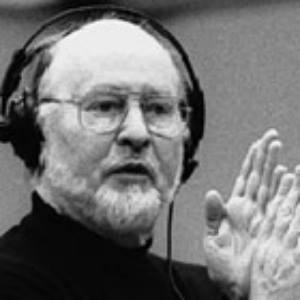
    The composer in the electronic music studio he founded:

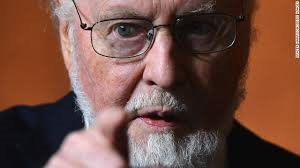
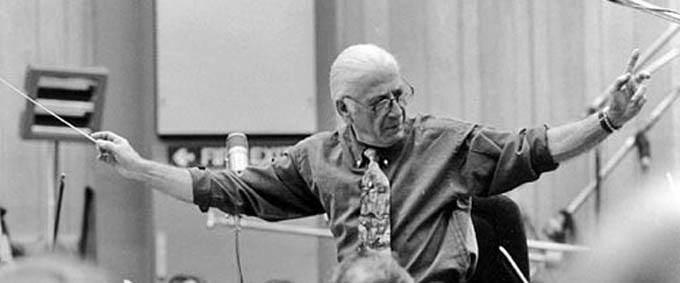
    PHOTO: Lilburn in a whimsical mood

  • Autumn Music from the North: Langgaard & Rautavaara

    Autumn Music from the North: Langgaard & Rautavaara

    So it’s November 1st. All Saints’ Day. Something is seriously wrong with my schedule when I am too busy to write about my favorite day of the year, which is Hallowe’en. Even worse, I couldn’t take any portion of the day simply to relax in front of the television set with Boris Karloff, Bela Lugosi, Vincent Price or Christopher Lee. I shake my fist at the heavens in impotent rage.

    Ah well. I will hope for a more relaxed schedule next year. For now, allow me to thank all of you who supported the station during its recent membership campaign. The station did very good business this week, and we met the challenge that was posed during my “pre-game” show on Wednesday (before the rebroadcast of “The Lost Chord” at 6), so thanks again. I don’t know that it will get me any of my regular shifts back, but thank you all the same.

    Speaking of “The Lost Chord,” I hope you will pardon me if I take this opportunity to tell you a few things about this week’s program. My thesis will be autumn in the North countries, as well as in the Nordic soul – which is another way of saying, we’ll hear two works that deal with natural and metaphorical autumn.

    First we’ll have the Symphony No. 4, subtitled “Fall of the Leaf,” composed in 1916, by the Danish composer Rued Langgaard (he of the impossible-to-pronounce name). Langgaard, an eccentric and an outcast, bucked every trend in Danish music, so that it took well over a decade after his death in 1952, at the age of 59, for his works to begin to gain traction. A number of the symphony’s sections bear descriptive subtitles, such as “Rustle in the Forest;” “Glimpse of Sun;” “Thunderstorm;” “Autumnal;” “Tired;” “Despair;” “Sunday Morning (The Bells);” and “At an End.” Don’t expect sonata-allegro form!

    Then we’ll have a three-movement tone painting by Einojuhani Rautavaara, the grand old man of Finnish music, his “Autumn Gardens,” from 1999. The work is characterized by plenty of late-period Rautavaara lyricism and luminosity. If you enjoy the music of Sibelius and Vaughan Williams, don’t miss it!

    That’s “Fall of the Leif” – autumnal meditations from the North. You can hear it this Sunday night at 10 ET, with a repeat Wednesday evening at 6; or listen to it later as a webcast, at http://www.wwfm.org.

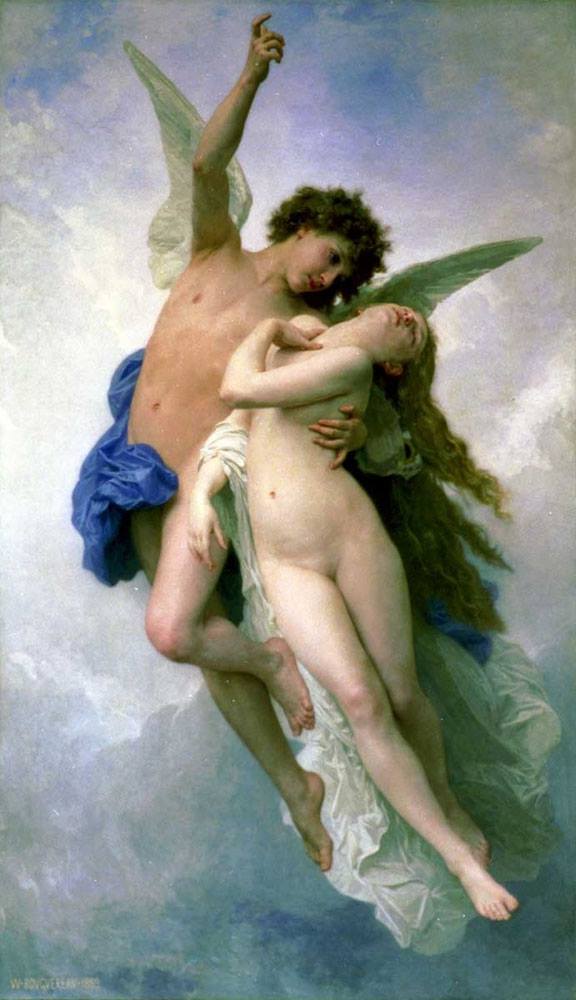
    PHOTO: The Leifs certainly are lovely this time of year

  • Princeton Symphony: Commedia dell’Arte Concert

    Princeton Symphony: Commedia dell’Arte Concert

    Commedia dell’arte tomfoolery, I suppose, could have a tenuous connection to Hallowe’en, with its masked stock characters (figures such as Harlequin, Scaramouche, Pulcinella, etc.) all up to some sort of trickery. But comparisons end there, as the Princeton Symphony Orchestra presents a commedia-heavy concert this Sunday.

    Rossen Milanov will conduct Stravinsky’s “Petrushka,” a ballet about a lovelorn puppet who meets a violent end, only to return commedia-style and jeer his tormentors, and William Bolcom’s “Commedia for ‘Almost’ 18th Century Orchestra.” In between, Natasha Paremski will be the soloist in Tchaikovsky’s Piano Concerto No. 1.

    The concert will take place at Princeton University’s Richardson Auditorium this Sunday at 4 p.m., with a pre-concert talk at 3.

    A post-concert reception will be held for ticket-holders at the Princeton University Art Museum, at which commedia-related prints will be displayed.

    You can read more about it in my article in today’s Trenton Times:

    http://www.nj.com/times-entertainment/index.ssf/2014/10/classical_music_princeton_symp.html

    PHOTO: Antic Arlecchino (a.k.a. Harlequin)

  • Theremin Sounds in Sci-Fi Film Scores

    Theremin Sounds in Sci-Fi Film Scores

    You all know the sound. That crazy, trilled electronic whistle that dips into a whoop. Or it starts in a trough and shoots up into the super stratosphere. It’s the sound of UFOs and mad science. It’s the sound of the theremin.

    The electronic instrument, invented by Leon Theremin in 1928, is played without physical contact. The proximity of the hands to two antennae determines volume and pitch.

    This week on “Picture Perfect,” we’ll hear music from four films which feature the instrument’s distinctive, extraterrestrial timbre.

    “The Thing from Another World” was one of two seminal science fiction scores written in 1951. (The other was Bernard Herrmann’s “The Day the Earth Stood Still.”) On the soundtrack, the theremin acts as a musical counterpart to James Arness’ rampaging humanoid carrot. This was unquestionably composer Dimitri Tiomkin’s wildest hour; he never wrote anything like it again.

    “The Thing” and “The Day the Earth Stood Still” may have been the most influential, but “Rocketship X-M” was the first. The film was rushed into production in 1950 to beat George Pal’s “Destination Moon” to theaters. It was shot in just 18 days! The unlikely plot has the crew of a moon expedition blown off course to Mars. Interestingly, the composer was none other than Ferde Grofé – he of the “Grand Canyon Suite” fame.

    Far more reputable, but still not wholly comfortable with its science, is Alfred Hitchcock’s “Spellbound,” from 1945. Gregory Peck plays an amnesiac, who may or may not have committed murder, and Ingrid Bergman plays the psychoanalyst who falls in love with him. The film is of greatest interest for its production design, which features dream sequences conceived by Salvador Dali, and for its music, by Miklós Rózsa.

    Hitchcock disliked the score – he thought it got in the way of his direction – but the Academy disagreed, and the music earned Rózsa the first of his three Academy Awards.

    Closer to our own time, Howard Shore incorporated the theremin into his Mancini-esque score to “Ed Wood,” released in 1991, Tim Burton’s love letter to the grade-Z director of “Plan 9 from Outer Space,” which is widely regarded as the worst movie ever made (worse even than “Rocketship X-M”).

    Join me for an hour of theremins for Hallowe’en this week, on “Picture Perfect,” music for the movies – this Friday evening at 6 ET, with a repeat Saturday morning at 6; or listen to it later as a webcast at http://www.wwfm.org.

    FUN FACT: On three of the four movies from which scores we’ll be sampling (“Spellbound,” “Rocketship X-M,” and “The Thing”), the original thereminist was Samuel Hoffman. Hoffman played in dozens of Hollywood films in the 1940s and ‘50s. By day, he worked as a podiatrist!

    PHOTO: Hoffman (right) looks on as Cary Grant tries his hand at the theremin

  • Live on Air Today! Pledge Drive & Lost Chord Favorites

    Live on Air Today! Pledge Drive & Lost Chord Favorites

    Today’s the day!

    As a preamble to tonight’s rebroadcast of “The Lost Chord” (“The Most Dangerous Game,” at 6 p.m. ET), I will be on the air live for two hours, beginning at 4, to present some of my favorites from “Lost Chords” past.

    Don’t forget, we are in the middle of a pledge drive, so I’ll be joined, I believe, by Alice Weiss and Michael Kownacky. Things have really been cooking the past couple of days, so there is every possibility we’ll be skiing an avalanche as we near an early end to the campaign. The focus, after all, is on raising money.

    For the two hour “pre-Game,” I’ll be playing a mix of contemporary composers, vintage recordings, and light music classics of yore. If we’re lucky, apropos to World Series time, we may even get to hear George Kleinsinger’s “Brooklyn Baseball Cantata,” with Robert Merrill.

    In addition, I will be offering as a special thank you gift signed copies of Robert Moran’s new album, “Game of the Antichrist,” released yesterday on the innova Recordings label – just in time for Hallowe’en. Stay tuned, then, for an interview with Moran and to listen to the title piece at 6:00.

    If “the Antichrist” isn’t your thing (it’s an adaptation of a medieval mystery play, incorporating bar piano, alphorn and giant puppets), there’s always the station mug, the tote bag and the Cantus CD, “Harvest Home,” that I hope will entice you.

    This will be my first live air shift since June. It would be nice if everyone supported the station under any circumstances, but if you do call or pledge online, feel free to put in a good word for me and my shows (though sometimes that information gets lost as the phone volunteers struggle to keep up).

    One way or another, I hope you will help keep the station healthy by pledging your support at http://www.wwfm.org, or 1-888-232-1212.

    Thank you!

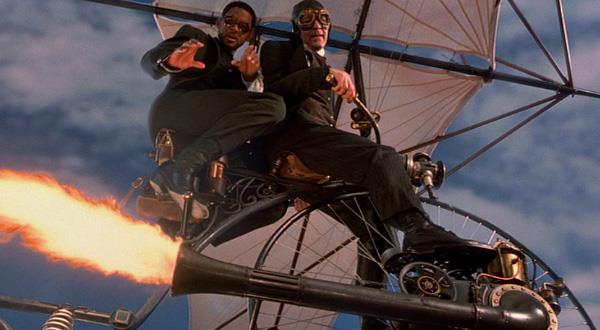
    PHOTOS: Join me for the Yankees and other Antichrists this afternoon on The Classical Network

Tag Cloud

Aaron Copland (92) Beethoven (95) Composer (114) Film Music (119) Film Score (143) Film Scores (255) Halloween (94) John Williams (185) KWAX (229) Leonard Bernstein (99) Marlboro Music Festival (125) Movie Music (134) Opera (198) Philadelphia Orchestra (87) Picture Perfect (174) Princeton Symphony Orchestra (106) Radio (87) Ralph Vaughan Williams (85) Ross Amico (244) Roy's Tie-Dye Sci-Fi Corner (290) The Classical Network (101) The Lost Chord (268) Vaughan Williams (102) WPRB (396) WWFM (881)

DON’T MISS A BEAT

Receive a weekly digest every Sunday at noon by signing up here


RECENT POSTS