Category: Daily Dispatch

  • Philadelphia Organ Delights

    Philadelphia Organ Delights

    It occurs to me that I haven’t had the time to acknowledge the passing of Minnesota composer Stephen Paulus, who died Oct. 19, nearly 16 months after suffering a debilitating stroke. Paulus, who made his home in the Twin Cities area (though born in Summit, NJ), was particularly noted for his choral and vocal works.

    The The Philadelphia Orchestra will perform Paulus’ Grand Concerto for Organ and Orchestra at the Kimmel Center tonight at 8. The work was composed in 2004. This will be its first performance by the orchestra. Ken Cowan will be the soloist. It comes at the end of a three-concert weekend celebrating the Verizon Hall’s magnificent Fred J. Cooper Memorial Organ, the largest mechanical-action concert organ in the United States.

    Each program includes a different organ work, each rendered by a world-class performer. Yesterday afternoon, Paul Jacobs joined the orchestra for Alexandre Guilmant’s Symphony No. 1 for organ and orchestra.

    I attended the first of the concerts on Thursday night, with Peter Richard Conte in Joseph Jongen’s Symphonie concertante, and it was a stunner. The work is well enough represented on recordings, though this is the first time I had an opportunity to enjoy it live. The soloist, choirmaster and organist at Philadelphia’s St. Clement’s Church and Grand Court Organist of the famed Wanamaker organ, was seated at a console situated right up between the cellos and the podium, which was wholly appropriate in a work with so much interplay between organ and the other instruments. It is an extremely well-written piece, and the orchestra, which played beautifully, with plenty of elegance in the winds, merged seamlessly with the organ, the King of Instruments on a genial stroll out among its subjects.

    All three programs open with Carlos Chávez’s orchestration of an organ piece by Dietrich Buxtehude, his Chaconne in E Minor. Buxtehude, of course, was an influential and revered organist. Composers travelled from all over Europe to hear him perform. There is a famous story, perhaps apocryphal, of Bach walking close to 300 miles for the privilege. It’s certainly possible, since Bach took off work for almost four months for the occasion!

    I have to say, I found Chávez’s arrangement to be surprisingly refreshing. Maybe I’m just suffering from Bach/Stokowski fatigue. Even the austere Schoenberg, for as much as I enjoy his arrangement of the “St. Anne” Fugue, is far too flashy for me not to feel a little cheap for enjoying it. Chávez‘s treatment is a model of good taste, allowing the music to speak for itself, without any attention-grabbing razzle dazzle. This kind of restraint in orchestrating a keyboard work is not to be undersold (though showmanship certainly does have its place). Of course it helps that the music in itself is extremely beautiful.

    Buxtehude’s use of ostinato influenced Bach, and the Chaconne in particular became the model for the final movement of Brahms’ Symphony No. 4.

    Here it is, played by a youth orchestra in Caracas:

    The Latin connection, both in the clip and in the ethnicity of the orchestrator, is fitting, since the chaconne had its roots in the Spanish colonies as a triple-meter dance of the 16th century. Of course, once the Germans got a hold of it, everything became very solemn.

    The concerts conclude with Sir Edward Elgar’s “Enigma Variations,” a work I never tire of hearing. On Thursday, the orchestra did the piece proud. Each variation was put across as characterful, sporatically witty or energetic, often melancholy, and always noble.

    I was a little worried toward the end, since music director Yannick Nézet-Séguin has a tendency to push, rather than allow a work’s grandeur to unfold naturally. Indeed, he launched into the finale in a vigorous manner, perhaps just to prove his players could keep up. For me, personally, this kind of thing has marred his interpretations of Shostakovich’s 5th and Mahler’s 1st, for instance, though from the ecstatic audience and critical reaction, I appear to be in the minority. Thankfully, it was only a momentary aberration, and the Elgar concluded with unforced grandeur and nobility as it should. The organ was heard once again in the progam’s finale, in all its “Star Wars” throne room pomp.

    While I have had mixed feelings about Yannick, his programs are often undeniably exciting in themselves. This was the second Philadelphia concert I attended this season to which I was enticed by the opportunity to experience unusual repertoire performed by a major orchestra. A couple of weeks ago, I shelled out my hard-earned dollars to hear Leoš Janácek’s “Glagolitic Mass,” an astonishing piece of music I never thought I’d be able to hear live without traveling to the Czech Republic (which also happens to feature a major part for organ, including a wild cadenza). The balance of the program was made up of symphonic poems by Sibelius and Dvorak.

    Sadly, on that occasion, as on this, the hall was half empty. Can it really be that audiences only want to hear Schubert’s 9th Symphony?

    PHOTO: Philadelphia’s King of Instruments

  • Concordia Chamber Players: Michelle Djokic in Concert

    Concordia Chamber Players: Michelle Djokic in Concert

    As a columnist, what do you do when there are three concerts in the area that really deserve coverage, but you can only really treat one of them? Why, begin with a discursive prologue, of course!

    Michelle Djokic, artistic director of Concordia Chamber Players, is really the focus this week. The first of this season’s Concordia concerts will take place at Trinity Episcopal Church in Solebury, Pa., this Sunday at 3 p.m. It may sound a bit out of the way, but the venue is lovely, and the music-making is always first-rate. Also, they put out the best spread at intermission. (That last digression is courtesy of a hungry freelancer.)

    Djokic was born in Trenton, one of seven (!) musical brothers and sisters. She now makes her home in the San Francisco Bay area, where she relocated to perform with the San Francisco Symphony. She currently plays in the New Century Chamber Orchestra under Nadja Salerno-Sonnenberg.

    Her family and her concerts with Concordia bring her back to the area a number of times each year. Now her relationship with Foundation Academy in downtown Trenton, where she conducts master classes with the kids, brings her back to her old neighborhood, in the vicinity of Cumberland Avenue.

    The concert, her remarkable upbringing, and her relationship with the kids form the focus of this week’s article (once it gets going), so it’s amusing to me that the online version puts the New Jersey Symphony Orchestra, mentioned in passing in the opening paragraph, in the headline.

    Here’s the piece, in today’s Trenton Times:

    http://www.nj.com/times-entertainment/index.ssf/2014/11/classical_music_nj_symphony_or.html

    In the print edition, two words are cut (fine with me), but three typos slip by!

    On a related note, Glenn Smith will host a broadcast of a concert given by Concordia this past February, which featured the String Quartet No. 1 by Alexander Zemlinsky and the astonishing Suite for 2 Violins, Cello and Piano Left-Hand by Zemlinsky’s pupil, Erich Wolfgang Korngold. You can enjoy the broadcast today at 12 p.m. ET, at http://www.wwfm.org.

    PHOTO: Michelle Djokic instructing the students at Trenton’s Foundation Academy Intermediate. Sadly, none of Peggy Krist’s photos made it into the paper (the article was probably too long), or even online.

  • Dark Secrets of Suburbia: Peyton Place, Kings Row & More

    Dark Secrets of Suburbia: Peyton Place, Kings Row & More

    This week on “Picture Perfect,” we look past the white picket fences and manicured lawns of suburban and small town America to arrive at some disturbing truths.

    Films like “Peyton Place” and “Kings Row” present seemingly idyllic settings full of long shadows and closets heaped with skeletons; while those like “Far from Heaven” and “Edward Scissorhands” explore the themes of isolation and the consequences of bucking conformity.

    For all its Hays Code concessions, “Kings Row” (1942) can be seen as a spiritual forerunner of the films of David Lynch. Yet its makers manage to finesse Henry Bellamann’s novel so that, for all the terrible occurrences, the film is also full of hope and optimism.

    Erich Wolfgang Korngold, at this point in his career associated with historical adventure films (as Errol Flynn’s regular composer), wrote a brash fanfare wholly in this vein, on an initial assumption made from the film’s title.

    “Peyton Place” (1957) is a natural successor, another sleepy town full of secrets and roiling with gossip. Again, Grace Metalious’ bestselling novel was cleaned up somewhat in its transfer to the screen. Still, the film and a subsequent TV series were spicy enough to stir controversy. Franz Waxman wrote the music, and the theme retains a toehold in the public consciousness.

    “Far from Heaven”(2002) brings the sensibility of a Douglas Sirk melodrama of the 1950s into the 21st century, with its exploration of social issues regarding race, class, gender roles and sexual orientation. Elmer Bernstein, who had been scoring films since the Sirk era, was a perfect choice for composer. He was nominated for an Academy Award for the 14th time, at the age of 80. “Far from Heaven” would be Bernstein’s final score.

    Director Tim Burton’s take on suburban conformity is much broader, with everyone following the same routine, their cookie-cutter houses painted in faded pastels. Fashion and décor are simultaneously tacky and anonymous. Into this setting wanders “Edward Scissorhands” (1990), a gentle Frankenstein’s monster, whose special gifts soon ingratiate him with the suspicious neighbors. But Edward’s acceptance is not to last, as in the film’s third act a mob mentality takes hold. Danny Elfman’s music suits Burton’s alternately moving and satirical fable.

    I hope you’ll join me for an hour of suburban and small town blues this week, on “Picture Perfect,” music for the movies – this Friday evening at 6 ET, with a repeat Saturday morning at 6; or that you’ll enjoy the show later as a webcast at http://www.wwfm.org.
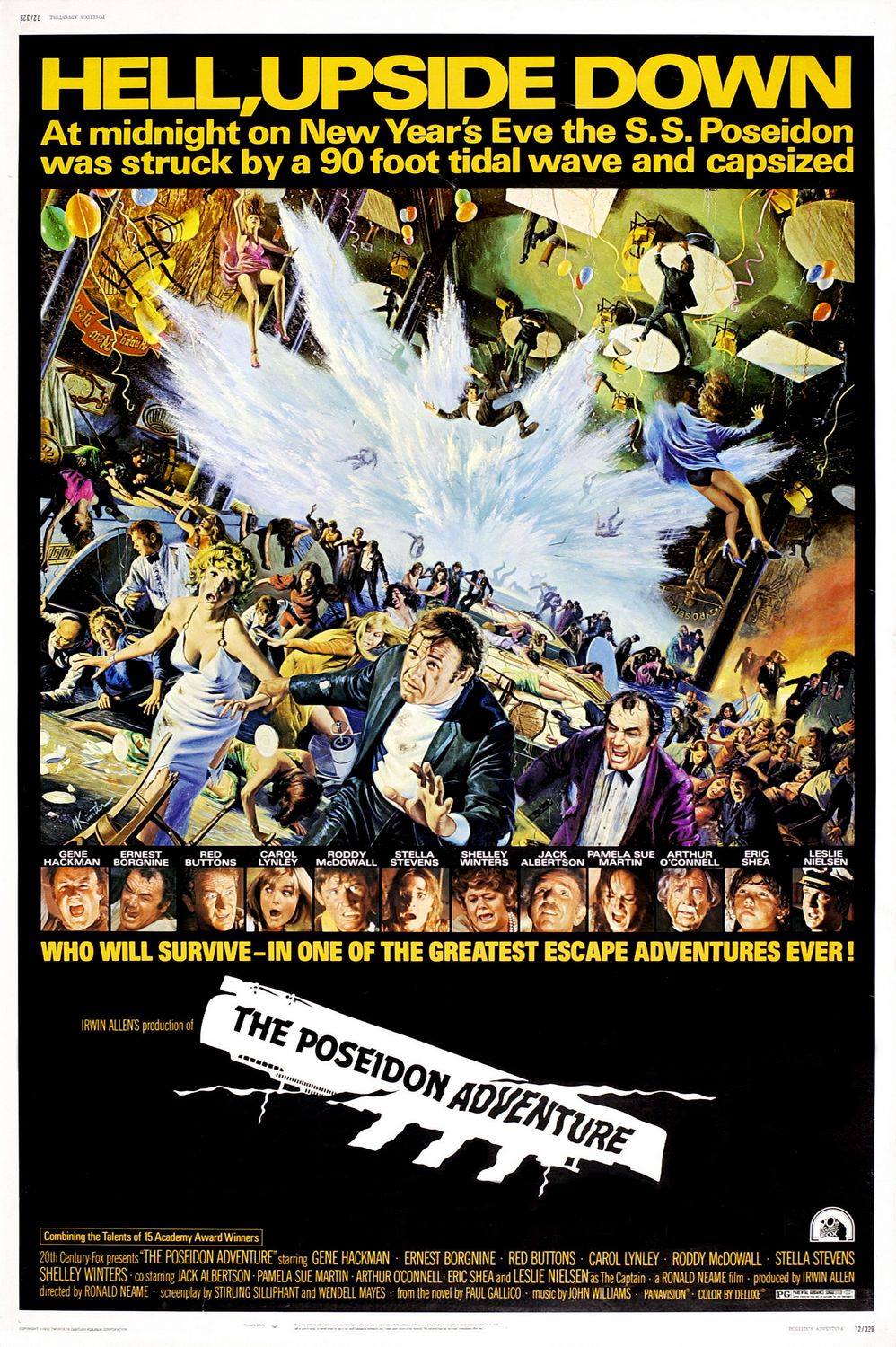
    (And lest you think I am slamming small towns, next week’s theme will be “Gritty Cities.”)

    PHOTO: Well, yeah, if you don’t mind madness, murder, suicide and unnecessary amputation

  • Hans Sachs: Cobbler, Poet, Opera Star

    Hans Sachs: Cobbler, Poet, Opera Star

    I wonder if someone will write an opera about me 300 years after my death?

    That’s what happened to the humble cobbler Hans Sachs, when Richard Wagner cast him as the wise, avuncular protagonist of his comedy “Die Meistersinger von Nürnberg.” In the opera, Sachs, the most famous of the historical Master Singers, is crowned with a laurel wreath and lionized by his peers.

    The real-life Sachs was the product of a versifying mania which swept through Germany, beginning in the 14th century, and had the effect of transforming blacksmiths into bards, and bricklayers into balladists. Companies of these poet-tradesmen organized themselves in guilds.

    Sachs composed some 4000 master songs, in addition to 2000 poetical works, 200 of which were verse dramas. He suffered a fair amount of tragedy, including the loss of seven children and his first wife. However, a second marriage late in life (at the age of 66) was a happy one. With his own death, he slipped into obscurity only to be rediscovered two centuries later by Goethe.

    Today is anniversary of Sachs’ birth (b. 1494). By the way, he was also the subject of an earlier opera, “Hans Sachs,” by Albert Lortzing, who scooped Wagner by nearly 30 years!

    Albert Lortzing’s “Hans Sachs” Overture:

    Thomas Stewart sings “Wahn! Wahn! Überall Wahn!” (Madness! Madness! Everywhere Madness!) from Wagner’s version:

    https://www.youtube.com/watch?v=Jb4Qm1Aj4jY

    The historical Hans Sachs’ “Nachdem David war redlich und aufrichtig” (Since David was honest and candid):

    http://grooveshark.com/#!/search/song?q=Hans+Sachs+Hans+Sachs+%2F+Nachdem+David+war+redlich+und+aufrichtig

    PHOTO: Hans Sachs: If the shoe fits…

  • Film Composers Times Changing?

    Film Composers Times Changing?

    “Times sure have changed for film composers,” writes Allan Kozinn of the New York Times. I’m not so sure.

    Kozinn is of the opinion that film music is making massive strides in the concert halls. While it’s true that orchestras have embraced the profitability of performing film scores with showings of the actual movies, for the most part you’ll find music written for film relegated to pops concerts. And you’ll likely hear only the main themes. That’s not to say that all film music deserves to stand toe-to-toe with the world’s masterpieces. But judicious selections from the best would be at least as welcome as Berlioz or Liszt.

    Part of the problem is that many of the composers themselves weren’t thinking of posterity. They were just churning the stuff out against deadline and then chasing the next paycheck. But when you think about it, so was Mozart.

    Some of the music is derivative, certainly, but that can be gotten around. There is plenty of finely-crafted music from which to draw by composers with a strong, original voice. Miklós Rózsa, for instance.

    Another part of the problem is that because of the nature of the film business, many of the scores weren’t even preserved. So many modern recordings have taken place only after painstaking reconstruction. If the actual, widespread rehabilitation of classic film music ever catches fire, it could be the biggest business since the period instrument movement.

    Finally, it was comparatively seldom that film composers made usable concert arrangements, so that the music can be enjoyed separate from the images. There are notable exceptions: for instance, Bernard Herrmann’s “Psycho: A Narrative for String Orchestra.” Can you name another piece of orchestral music composed in 1960 that is as widely recognized as that written for the film’s shower scene? Herrmann’s suite contains 15 minutes of alternately driving, moody and chilling music.

    On the other hand, sometimes composers are not the best judge of their own material. I cringe whenever I hear John Williams’ concert arrangement, “Adventures on Earth,” drawn from his score to “E.T.,” which completely subverts the perfection he achieved when writing for the film. The music was so good, director Steven Spielberg told Williams to just go with it when conducting and he’d edit the images to suit the music. That’s a show of respect rarely bestowed on the film composer. Yet rather than allow the music to speak as it did so eloquently in the film’s final 15 minutes, Williams’ concert arrangement jumps all over the place, grabbing a little bit from here and a little bit from there. Even judging from a purely musical standpoint, the end result is a much weaker statement.

    Anyone who has ever listened to Sibelius’ incidental music to “The Tempest” understands the wisdom of taking the best moments and arranging them into concert suites. In the digital age, there are multiple recordings of the complete score for the curious. For the average symphony concert, I don’t propose programming the complete music from “King Kong,” say, any more than I would the complete incidental music to Mendelssohn’s “Oepidus at Colonus” (though I certainly believe there is a niche to be filled by some enterprising orchestra that would devote itself exclusively to just that – playing and preserving classic film scores in their entirety). Often the best bits are already in the concert suites, or even the overtures.

    There is at least one positive development, in terms of respectability. Kozinn reports that London’s Royal College of Music is offering a new scholarship named for the composer John Barry. Barry was the winner of five Academy Awards, including two for “Born Free,” and one each for “The Lion in Winter,” “Out of Africa” and “Dances with Wolves.” The John Barry Scholarship for Film Composition, established by the composer’s widow, Laurie Barry, covers tuition fees for a two year period, as well as a student’s living expenses.

    While this post has devolved into a rant about preservation and acceptance, what we really need in the present are educated film composers. I am so sick of Hans Zimmer.

    But if the music is going to get better, one hopes so will the films, or at least the conditions, so that the composer is able to write something good. Writing music takes time, and time is money. In Hollywood, there has always been a tension between art and commerce. Over the decades, however, the shift has been decidedly in favor of the latter. Can independent films afford the expense of recording with a symphony orchestra? The ball, sadly, appears to remain in Hollywood’s court.

    Here’s Kozinn’s article:

    PHOTO: John Barry accepts his Oscar for “Out of Africa.”

Tag Cloud

Aaron Copland (92) Beethoven (95) Composer (114) Film Music (119) Film Score (143) Film Scores (255) Halloween (94) John Williams (185) KWAX (229) Leonard Bernstein (99) Marlboro Music Festival (125) Movie Music (134) Opera (198) Philadelphia Orchestra (87) Picture Perfect (174) Princeton Symphony Orchestra (106) Radio (87) Ralph Vaughan Williams (85) Ross Amico (244) Roy's Tie-Dye Sci-Fi Corner (290) The Classical Network (101) The Lost Chord (268) Vaughan Williams (102) WPRB (396) WWFM (881)

DON’T MISS A BEAT

Receive a weekly digest every Sunday at noon by signing up here


RECENT POSTS