Category: Daily Dispatch

  • Das Christ-Elflein A Forgotten Holiday Gem

    Das Christ-Elflein A Forgotten Holiday Gem

    Stop me if you’ve heard this one before. An elf, a Christmas tree, and Baby Jesus walk into a bar…

    Well, not quite, maybe, but it is kind of like the premise of Hans Pfitzner’s “Das Christ-Elflein” (“The Christmas Elf”).

    This week on “The Lost Chord,” I’ll be reaching deep into the archive for an encore presentation of highlights from this neglected holiday gem, a largely forgotten link in the German fairy tale opera craze that also yielded Engelbert Humperdinck’s “Hansel and Gretel.”

    I’ve got plenty more to say about it, but this time of year I know you’re busy, so rather than ladle out all the kinderpunsch here, I’ll save some of it for the show.

    Treat yourself to the Elf! Enjoy highlights from Hans Pfitzner’s fairy tale opera “Das Christ-Elflein.” That’s “Fairy Christmas,” on “The Lost Chord,” now in syndication on KWAX, the radio station of the University of Oregon!


    Clip and save the start times for all three of my recorded shows:

    PICTURE PERFECT, the movie music show – Friday at 8:00 PM EST/5:00 PM PST

    SWEETNESS AND LIGHT, the light music program – ALL NEW! – Saturday at 11:00 AM EST/8:00 AM PST

    THE LOST CHORD, unusual and neglected rep – Saturday at 7:00 PM EST/4:00 PM PST

    Stream them, wherever you are, at the link!

    https://kwax.uoregon.edu/


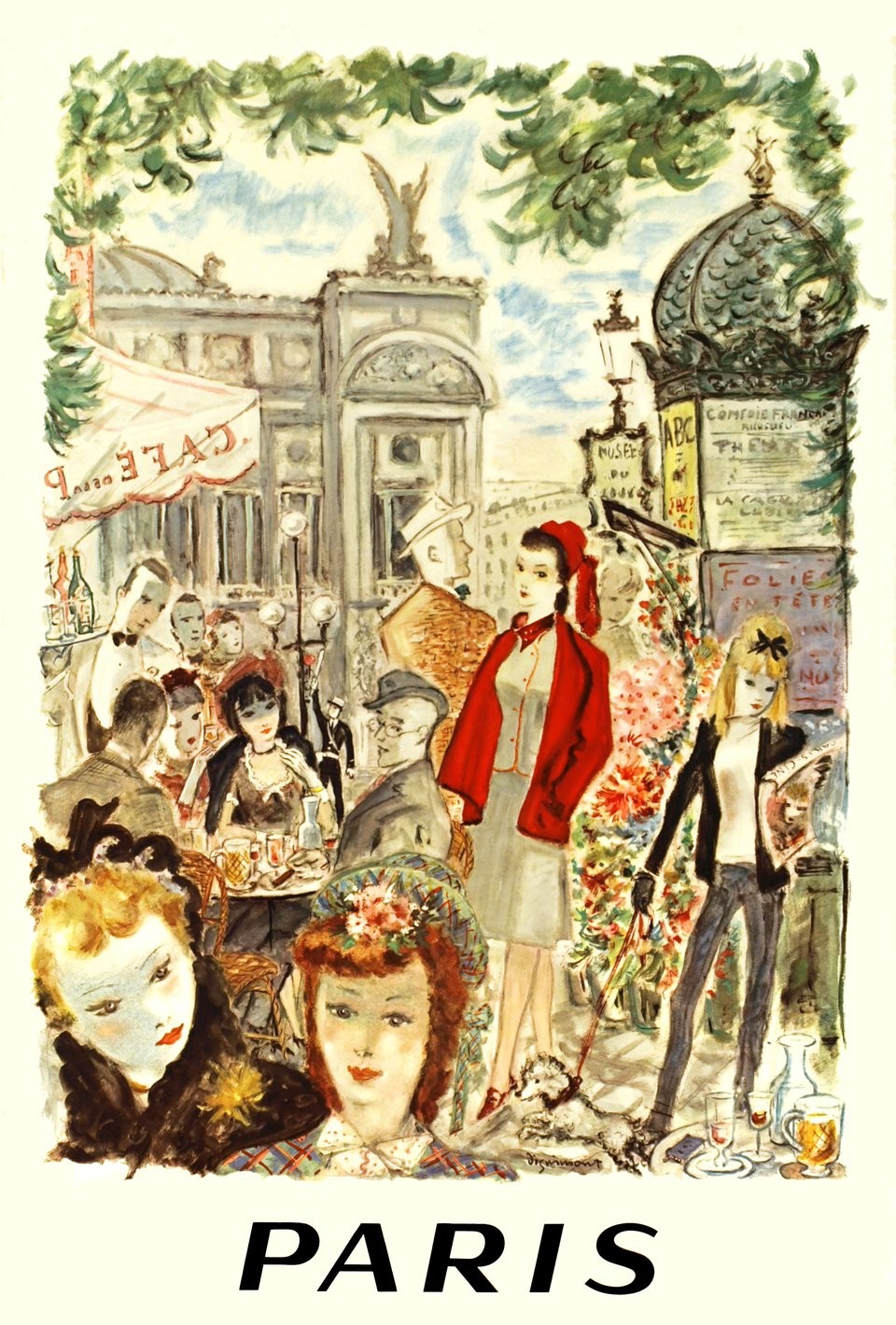
    IMAGE: A contemporaneous German Christmas card, similarly mixing sacred and secular traditions

  • Winter Solstice Music with Ross Amico on KWAX

    Winter Solstice Music with Ross Amico on KWAX

    Yes, I know the winter solstice isn’t until next Saturday. However, since by then I’ll already be going full-bore ho-ho-ho, this week on “Sweetness and Light,” I figured I’d get a jump on Old Man Winter and do my best to conjure some seasonal atmosphere, in providing a pleasant background for putting together a holiday checklist and perhaps even filling out a few Christmas cards over a cup of tea. It will be all music evocative of wintry scenes and activities.

    We’ll hear works by Philip Lane, Frederick Delius, Erich Wolfgang Korngold, and Leopold Mozart; also the original version of “Jingle Bells,” published in 1857 by James Pierpont as “The One-Horse Open Sleigh,” in a hilarious performance by the Robert DeCormier Singers. Be forewarned: sleighs will be “upsot!”

    Put on the kettle and link arms with Classic Ross Amico. We’ll be walking in a winter wonderland on “Sweetness and Light,” this Saturday morning at 11:00 EST/8:00 PST, exclusively on KWAX, the radio station of the University of Oregon!

    Stream it wherever you are at the link:

    https://kwax.uoregon.edu/

  • Dickens Movie Music for a Scrooge Friday the 13th

    Dickens Movie Music for a Scrooge Friday the 13th

    HUMBUG! It’s the last Friday the 13th before Christmas.

    This week on “Picture Perfect,” it’s an Ebenezer Scrooge mixtape, with music from film adaptations of the writings of Charles Dickens.

    Tune in for selections from “Nicholas Nickleby” (1947) by Lord Berners, “Oliver Twist” (1948) by Sir Arnold Bax, “David Copperfield” (1969) by Sir Malcolm Arnold, and “A Christmas Carol” (1951) by Richard Addinsell.

    If I had my way, every fool who goes around with “Merry Christmas” on his lips should be boiled in his own pudding and buried with a stake of holly in his heart!

    Blame it on an undigested bit of beef, a blot of mustard, a crumb of cheese, a fragment of an underdone potato. There will be more of gravy than of the grave about it. Take your pick of Dickens, on “Picture Perfect,” music for the movies, now in syndication on KWAX, the radio station of the University of Oregon!


    Clip and save the start times for all three of my recorded shows:

    PICTURE PERFECT, the movie music show – Friday at 8:00 PM EST/5:00 PM PST

    SWEETNESS AND LIGHT, the light music program – ALL NEW! – Saturday at 11:00 AM EST/8:00 AM PST

    THE LOST CHORD, unusual and neglected rep – Saturday at 7:00 PM EST/4:00 PM PST

    Stream them, wherever you are, at the link!

    https://kwax.uoregon.edu/

  • Barbara Hannigan: A Transformative Concert

    Barbara Hannigan: A Transformative Concert

    I’ve seen so many concerts recently, I would have neither the time nor the energy to write about all of them. But Tuesday night’s appearance by Barbara Hannigan, at the Kimmel Center for the Performing Arts’ Perelman Theater (courtesy of the Philadelphia Chamber Music Society), was extraordinary, astonishing, transformative. There really is no one else like her.

    The program, presented without intermission, was bookended by two song cycles. Olivier Messiaen’s “Chants de Terre et de Ciel” (“Songs of Earth and Heaven”) of 1938 is a 30-minute confessional on poetic texts offering insights into the composer’s domestic love and Catholic faith. As much a method actor as she is a vocal artist, Hannigan projected herself right into the heart of this intimate score, assimilating its hopes, doubts, and moments of ecstasy.

    In fact, she sang with such nuance and commitment, it had the paradoxical effect of lulling me into a kind of complacency, if such a thing is possible in the presence of artistry of this caliber, as I expected her usual high standards when she returned to perform John Zorn’s “Jumalattaret” of 2012. But she pulled the rug right out from under me, knocking me back on my heels, as she took things to a whole other, unanticipated level. I don’t know that I will witness a performance quite like it ever again.

    “Jumalattaret,” inspired by “The Kalevala” (the Finnish national epic that informs so much of Sibelius’ music), praises nine goddesses out of Sámi shamanism: Päivätär, goddess of the sun; Vedenemo, mother of waters; Akka, queen of the ancient magic; Louhi, hostess of the underworld; Mielikki, the huntress; Kuu, moon goddess; Tellervo, forest spirit; Ilmatar, virgin spirit of the air; and Vellamo, goddess of the sea.

    Hannigan delivered the opening invocation as almost a cooing sprechtstimme. As the cycle progressed, she also employed or engaged in birdlike vibrato, Queen of the Night scat-singing, diaphanous humming, and possessed laughter, all the while having to focus on clearing the work’s many polyrhythmic hurdles. I hasten to add, it was not all style over substance: with equal skill, she unfurled passages of ethereal beauty.

    Yes, she smacked her palms, thudded her chest, and enacted what I can only compare to the once common practice among children of clapping their hands against their mouths in Indian “woo-woo” fashion. But these gestures transcended gimmicky and reached to the primordial roots of the source material. You can always count on Hannigan to bend and blend technique and effect to the service of storytelling. A passage in which she begins with a hush, her voice blossoming unhurriedly, so that you can feel every petal unfold, will gently hairpin into a controlled decrescendo al niente that is as seamlessly executed as it is mesmerizing.

    In the program notes, she claims that the demands of the score initially stumped her. That’s saying something, for a singer who has seen and done it all. Not just done, mind you, but MASTERED. She reached out to Zorn to see if there might be some concessions they could make so that she might actually be able to perform his music. Somehow, he convinced her to just go for it. Hannigan shares some of their correspondence. Zorn wrote, “One cannot transcend anything by staying on safe ground. And it is in these intense moments that we can find deeper truths, bringing mind and heart together – and begin to understand the soul and its workings in that courageous moment of letting go and going for it, the music will become alive in a special way – a way that is beyond the notes on paper.”

    As astonishing as her performance was, I find it even more so that she would even have to be told this, as Hannigan always goes for broke. The score must have seemed beyond human capability. All the same, on Tuesday, she walked the tightrope between laser-focus and hurling-herself-into-the-void abandon.

    Certainly, Hannigan has had her forebears in avant-garde specialists like Cathy Berberian, Lucy Shelton, and Meredith Monk, all courageously exploring extended techniques, but I don’t know that any of them employed the entire tool kit with such facility. In uncanny precision and otherworldly beauty, Hannigan is like a human theremin.

    The last time I saw her live was as Gepopo in György Ligeti’s “Le Grand Macabre,” with the New York Philharmonic in 2010. She has lost none of her voice, and if anything her technique is even more astonishing.

    Zorn’s piano writing ranged wildly in its shifting time signatures from dissonant complexity to what I can only assume is meant to be folk-like simplicity. To me, it sounded like a cross between Vince Guaraldi and Mark Isham.

    He also employs an arsenal of inside-the-piano effects pioneered by composers like Henry Cowell (stroking and plucking the strings, banging on the wood, and inserting objects) and George Crumb (the soprano singing into the strings). Toward the end of the cycle, Hannigan produced a tiny suspended cymbal from inside the piano and struck it with a minute stick.

    Furthermore, Hannigan’s creative collaborator for the evening, Bertrand Chamayou, forwent the traditional music stand, preferring to read the scores from where he laid them open, also inside the piano, on the strings.

    The two song cycles were separated by a pair of piano pieces by Alexander Scriabin: “Poème-nocturne” (“Night Poem”), Op. 61, of 1912, and “Vers la flamme” (“Towards the flame”), Op. 72, of 1914. These were no mere palate-cleansers. Rather than divert, they maintained the keen interest aroused by the Messiaen, and they were absorbingly presented.

    Lights at the back of the stage emitted different colors during each of the pieces – red for Messiaen and blue for Zorn – not inappropriate for a program constructed on music by composers sensitive to the effects of synesthesia (a neurological phenomenon in which different tones trigger sensations of color).

    Granted, it was a rainy, foggy Tuesday night, with accidents and traffic jams everywhere, and new music can be a hard sell, but I was flabbergasted that the hall was not packed. The downstairs was near-full, and the first balcony respectably so, but the seats around the back of the stage were empty, save for I think one person. Where I sat, on the second balcony, with all the lonely old men in beards, we were all involuntarily social distancing.

    But it is still an intimate hall (of 650 seats), and Hannigan’s charisma, intensity, and daring sent electric shocks to the bleachers.


    PHOTOS: The blurrier ones at the bottom are mine; the one at the top is an authorized photo taken at the Teatro di San Carlo by Luciano Romano

  • Berlioz’s L’enfance du Christ Explained

    Berlioz’s L’enfance du Christ Explained

    I read a lot of Berlioz over the past year. (He was the composer of focus at last summer’s Bard Music Festival.) If his Memoirs make one thing clear, it’s that people, with all their foibles and bureaucracies, are always the same. And when it comes to Berlioz’s music, haters gonna hate.

    Granted, Berlioz’s music is like nobody else’s, so forward-looking at times that it still makes listeners accustomed to the more rational works of his predecessors (Beethoven was still viewed askance in some circles) and milder contemporaries (Mendelssohn was a friend) uneasy. He never mastered the finer points of theory, they grumble. He makes too much noise. He’s just plain weird. Well, yeah, maybe. But those things are also what make him great.

    Of his large-scale compositions, perhaps there is no greater retort to the Berlioz agnostic than “L’enfance du Christ” (“The Childhood of Christ”). The work is rare in Berlioz’s canon in that it wasn’t uniformly lambasted by the Parisian critics when it was given its debut in 1853. In fact, his detractors lauded this kinder, gentler style, and identified it as a welcome shift in Berlioz’s development; which Berlioz, of course, declared to be nonsense. The style merely suited the subject, he said, and had he written “L’enfance” twenty years earlier, he would have approached it in precisely the same manner.

    The work came to him easily, if in somewhat of a piecemeal fashion. Berlioz rolled it out gradually, with one of the best-known numbers, “The Shepherds’ Farewell,” originally conceived as an organ piece for a friend. This he soon transformed into a choral setting, which he impishly introduced under the assumed name of a fictitious 17th century composer, Ducré. The audience at the first performance was enchanted. At least one old woman was heard to remark, “Berlioz would never be able to write a tune as simple and charming as this little piece by old Ducré.”

    Next to be composed was the tenor aria, “Le repos de la sainte famille” (“The Repose of the Holy Family”). This and “The Shepherd’s Farewell” are two of the most striking movements of the entire work. It’s easy for “Le repos,” especially, to get stuck in one’s head. Then again, my head is full of flypaper for this sort of thing.

    Berlioz added an overture and called it “La fuite en Egypte” (“The Flight into Egypt”). The premiere was so successful that he was encouraged to create a companion piece, “L’arrivée à Sais” (“The Arrival at Sais”), which included parts for Mary and Joseph. “Le songe d’Hérode” (“Herod’s Dream”), the first panel of the completed triptych, was the last to be composed.

    Though Berlioz himself was not religious, he had a lifelong appreciation for the beauty of religious music (as long as it didn’t conclude with a fugue, a fashion he found ludicrously academic and generally out of keeping with the subject at hand).

    This composer, who achieved notoriety for his lurid evocations of witches’ sabbaths, brigands’ orgies, and headlong galops into the abyss of Hell, described “L’enfance du Christ” as a “sacred trilogy.” It is perhaps the least outlandish of his major works. It has maintained its popularity and is still performed around Christmas. Not too long ago, you might even encounter it on American classical radio. In 2024, I wish you luck with that. At the risk of mixing my biblical references, the struggle against Philistinism never ends.

    Happy birthday, Hector Berlioz!


    “The Shepherds’ Farewell”

    “Le repos de la sainte famille”

Tag Cloud

Aaron Copland (93) Beethoven (95) Composer (114) Film Music (124) Film Score (143) Film Scores (255) Halloween (94) John Williams (188) KWAX (229) Leonard Bernstein (101) Marlboro Music Festival (125) Movie Music (139) Opera (202) Philadelphia Orchestra (89) Picture Perfect (174) Princeton Symphony Orchestra (106) Radio (87) Ralph Vaughan Williams (85) Ross Amico (244) Roy's Tie-Dye Sci-Fi Corner (290) The Classical Network (101) The Lost Chord (268) Vaughan Williams (103) WPRB (396) WWFM (881)

DON’T MISS A BEAT

Receive a weekly digest every Sunday at noon by signing up here


RECENT POSTS