Category: Daily Dispatch

  • Varney the Vampyre Penny Dreadful Review

    Varney the Vampyre Penny Dreadful Review

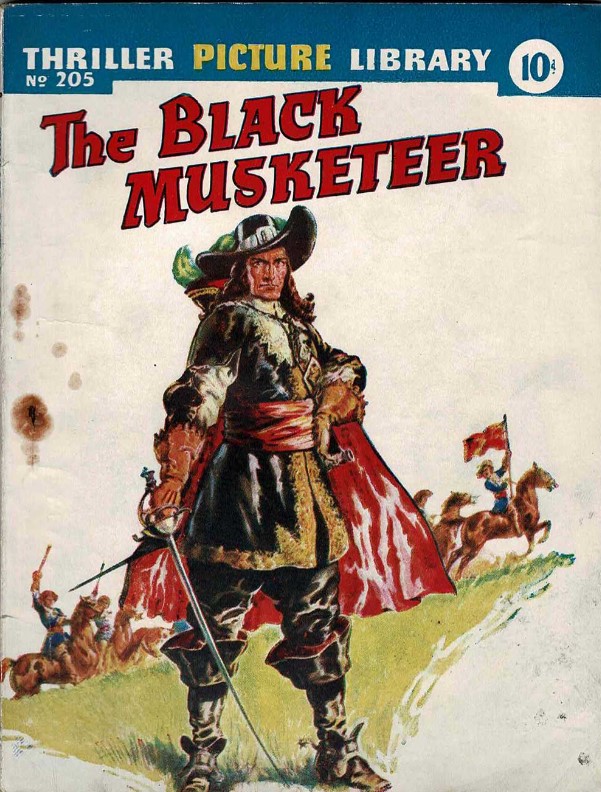
    Is this the year I finally tackle “Varney the Vampyre?”

    One of the most notorious of the Victorian penny dreadfuls (inexpensive serialized tales of a decidedly lurid nature, designed to capitalize on the rise of literacy among the working class), “Varney” first appeared in 109 weekly installments issued from 1845 to 1847.

    While penny dreadfuls were not, by any stretch of the imagination, great literature, they could conjure undeniably powerful images and provoke a kind of morbid curiosity that have left their mark on popular fiction down the centuries.

    Take this passage from “Varney:”

    “Her bosom heaves, and her limbs tremble, yet she cannot withdraw her eyes from that marble-looking face. He holds her with his glittering eye…

    “With a sudden rush that could not be foreseen – with a strange howling cry that was enough to awaken terror in every breast, the figure seized the long tresses of her hair, and twining them round his bony hands he held her to the bed. Then she screamed…. Her beautifully rounded limbs quivered with the agony of her soul. The glassy, horrible eyes of the figure ran over that angelic form with a hideous satisfaction – horrible profanation.”

    Say what you will about the prose, I’ve been able to quote that last sentence since the first time I encountered it, some 40 years ago. Also, “THE GIRL HAS SWOONED, AND THE VAMPYRE IS AT HIS HIDEOUS REPAST! (“Horrible” and “hideous” are used a lot in “Varney.”) THAT’S the power of the penny dreadful.

    And it’s just a taste of Chapter One.

    “Varney” was published anonymously (who could blame the author?), and its true provenance remains a matter of debate. Was it James Malcolm Rymer – as seems to be the current consensus – or Thomas Peckett Prest? Either one or both are also believed to have had a hand in the creation of penny dreadful icon Sweeney Todd. Some believe they may have worked in tandem.

    It was common for these writers to get paid by the word, so they very quickly became adept at being able to spin out sensational stories to monumental length. Publishers were elated by proliferating sales spurred by hooked and ever-expanding audiences. It’s the same system that gave rise to more respectable authors such as Dickens, Thackeray, and Trollope; but penny dreadfuls dealt unapologetically with extravagant melodrama, flamboyant highwaymen, grisly murder, occult transgressions, exotic Gypsies, blasphemous monk-and-nunsploitation, and cheap knock-offs of more reputable (and more expensive) bestsellers.

    Whoever was the animating force behind “Varney” wound up pounding out the first complete vampire novel in the English language. (Among those who made earlier attempts was Lord Byron – a fragment later elaborated upon by his physician, John Polidori – the product of the same summer of 1816 contest that produced Mary Shelley’s “Frankenstein.”)

    For as hideous as “Varney” is on every level, the folkloric traits that the author (or authors) synthesized and dramatic situations he (or they) concocted have left their stamp on vampire fiction and movies. Without “Varney,” we would not have had Bram Stoker’s “Dracula,” much less Barnabas Collins.

    Along the way, Varney begins to develop a conscience and the story flirts with his psychological struggle. For the first time, the vampire is portrayed as a tragic figure. In the end, after a two-year spree, fatigue gets the best of him – AND the writer(s) and probably the public and by extension the publisher – and the vampire decides to destroy himself. [SPOILER ALERT: He hurls himself into Mount Vesuvius!]

    The story was first published in book form in 1847. In 1972, it was reprinted in an affordable pair of Dover paperbacks. These soon became as difficult to locate as the vampire’s resting place. In the days before the internet, “Varney” attained a kind of legendary status, because it was simply unattainable. I had only excerpts that were included in anthologies of vampire fiction and English popular literature to whet my appetite.

    Now, of course, secondhand copies can be found online. And the work has been reprinted, so you don’t have to break the blood bank to purchase those elusive Dover editions. Dover itself has reprinted them. I just ordered a pair of library discards, which include the original illustrations. I imagine not only is the collected “Varney” more manageable when broken up into two volumes, but the illustrations will be welcome oases for the eyes.

    For now, my copy is a super-affordable Wordsworth Editions paperback, published in the U.K., which I located at the Strand bookstore in New York City, probably over a decade ago, for dirt-cheap. The paperback runs to 1166 closely-printed pages. It might prove to be a little rich even for my blood! Also, my eyes aren’t what they used to be. So I am looking forward to the arrival of the Dover edition. There are no illustrations in the Wordsworth volume.

    At the time I purchased “Varney,” I also picked up the Wordsworth reprint of another collected penny dreadful, George W. M. Reynolds’ “Wagner the Werewolf,” which I read – and posted about – back in 2014. You can read my thoughts about it here:

    https://www.facebook.com/photo/?fbid=280906105410020&set=a.279006378933326

    I’d be very interested to know what books you’ll be sinking your fangs into this month. Happy Halloween!

  • Paul Dukas Beyond The Sorcerer’s Apprentice

    Paul Dukas Beyond The Sorcerer’s Apprentice

    When we hear of Paul Dukas, we generally think of one thing: “The Sorcerer’s Apprentice.” And when we think of “The Sorcerer’s Apprentice,” we think of Mickey Mouse.

    Dukas was an intensely self-critical artist, who wound up destroying most of his own works. Eventually he gave up composition altogether. Rather, like Shakespeare’s Prospero, he broke his staff and drowned his book to become a respected teacher of music, taking up posts at the Paris Conservatory and the École Normale de Musique. Among his students were Carlos Chávez, Maurice Duruflé, Olivier Messiaen, Manuel Ponce and Joaquin Rodrigo.

    Would that this creator of such vivid, brilliantly orchestrated works had left us more. But since all anyone knows is “The Sorcerer’s Apprentice,” I suppose it hardly matters.

    Here’s a suite from his rarely-heard opera, “Ariane et Barbe-Bleue,” after the Bluebeard story. Bluebeard, of course, is the fairy tale uxoricide whose castle rooms reveal increasingly horrible secrets. But since Dukas’ libretto was taken from a play by Maurice Maeterlinck – whose “Pelléas et Mélisande” Debussy was only just in the process of finishing up – there is less blood, and more layers of airy ambiguity. In fact, Maeterlinck essentially turns the tale on its head, making Ariane a pluckily resourceful, would-be liberator.

    Arturo Toscanini conducts the NBC Symphony and Princeton’s own Westminster Choir:

    “O mes clairs diamants” (“O my clear diamonds”):

    Those expecting a darker, more disturbing, psychologically twisted account of the fairy story should stick with Bartók’s Bluebeard.

    Zut alors! Look what I found! Silent film master Georges Méliès’ adaptation of Bluebeard:

    Mommy! Where’s Mickey Mouse???

    Why, right here…

    https://video.disney.com/watch/sorcerer-s-apprentice-fantasia-4ea9ebc01a74ea59a5867853?fbclid=IwY2xjawFpAr9leHRuA2FlbQIxMAABHeVVIl9i0OU2jnjVQDWmlIzZw3us7GOQXrkZHFUXsy2_FHP5lMx8ppbWRA_aem_r9KNCmIfsrEvoZXsUnCTAg

    Happy birthday, Paul Dukas (1865-1935)!


    PICTURED: The key to a dysfunctional marriage; and Mickey Mouse, axe-murderer

  • September Song Kurt Weill’s Timeless Classic

    September Song Kurt Weill’s Timeless Classic

    The last of September. My favorite Kurt Weill song? “September Song,” from “Knickerbocker Holiday.” Here’s Walter Huston in 1938. The lyrics are by Maxwell Anderson.

  • Romeo Cascarino’s Lost “Epitaph” Reborn

    Romeo Cascarino’s Lost “Epitaph” Reborn

    I wanted to post this yesterday for Romeo Cascarino’s birthday, but then life got in the way. It’s a computer realization of a rediscovered work by this sadly underperformed Philadelphia composer.

    “Epitaph for a Soldier” was written in 1942/43, when Cascarino was around 20-years-old and serving in the U.S. Army.

    According to his widow, soprano Dolores Ferraro, “It’s never been performed, just was among the scores in the basement. Romeo never talked much about the war and I was remiss in [not] asking him more about this piece, though I have my ideas. …[I]t’s stunning; dark with angst, thunder and lightning; yet lyrical and hopeful, too.

    “We all know a work of Romeo’s would be beautiful, masterfully written and orchestrated, and it is, but different. Of course, the subject matter calls for this. It’s upsetting, moving and exciting! …What a thrill it gave me to hear what a 20-year-old Romeo composed! How painful to think of what he was feeling during that time….”

    Its reemergence is like manna from heaven for admirers of the composer, most of whose orchestral output was issued on a Naxos compact disc conducted by JoAnn Falletta.

    There’s a biographical profile of the composer beneath the audio file at the link. The realization is by Cascarino pupil Joe Nocella.

    Cascarino’s “Blades of Grass,” for English horn and string orchestra, seems to have become his most-frequently encountered work, after perhaps the Bassoon Sonata and maybe some of the songs. The piece, which has been recorded twice, has, in addition to its other qualities, brevity on its side (at approximately nine minutes), so it gets the most radio air play. The work was inspired by a well-known poem of Carl Sandburg, “Grass,” a somber reflection on the nature of conflict and the futility of war, which makes it a good fit for any Memorial Day concert or radio show. Last year, it came to the notice of the U.S. Marine Band. Perhaps they might also be interested in this recent rediscovery?

    Cascarino attained the rank of sergeant. His Bassoon Sonata, which I broadcast yesterday on “Sweetness and Light,” was written for his Army buddy, Sol Schoenbach, who went on to become principal bassoonist of the Philadelphia Orchestra.

    “Epitaph for a Soldier” is a valuable addition to the composer’s catalogue and another piece wholly suitable for Memorial Day performance. Is there anyone out there in a position to give it its world premiere?

    BTW – There are other works by the composer that have either been similarly realized through electronic means or played only by student performers or by the composer himself in private recordings. These include movements for string quartet, piano works, and even a sextet for winds.

    If you are interested in taking a look at any of these, send me a note and I’ll put you in touch with Dolores.

    Here’s one of my many posts about the composer from last year.

    Happy belated birthday, Romeo Cascarino.


    PHOTO: Cascarino (left) with Sol Schoenbach

  • Florent Schmitt Rediscovered Composer

    Florent Schmitt Rediscovered Composer

    Florent Schmitt was one of the most successful French composers of the early 20th century. However, as fashions changed, his characteristically opulent music became marginalized, only to experience something of a revival, in recent years, mostly on recordings.

    This week on “The Lost Chord,” we’ll mark the anniversary of Schmitt’s birth (on September 28, 1870) by sharing selections from his incidental music for a production of Shakespeare’s “Antony and Cleopatra” and his grandiose setting of “Psalm XLVII.”

    Schmitt entered the Paris Conservatory in 1889, where he studied with Gabriel Fauré, Jules Massenet, and Théodore Dubois. He was a winner of the Prix de Rome in 1900. He also befriended Frederick Delius, while Delius was in Paris, and prepared the vocal scores for a number of his operas.

    In addition, Schmitt was a music critic, who attained a degree of notoriety for shouting out his assessments from the audience. He was described by one music publisher as an irresponsible lunatic.

    The later neglect of his music may have been due, in part, to his willingness to go along with the Vichy regime during the Nazi occupation of France. But Schmitt is too fascinating a figure to be dismissed out-of-hand. Stravinsky was an early admirer, remarking that the composer’s “The Tragedy of Salome” gave him greater joy than any other he had heard in a long time. Certain elements of the ballet anticipate analogous experiments in Stravinsky’s own “The Rite of Spring.”

    Indeed, Schmitt’s appetite for overheated decadence and lurid orientalism seems to have been insatiable. There will be nothing on our menu this week but overegged Florentine. I hope you’ll join me for “Schmitt Happens,” on “The Lost Chord,” now in syndication on KWAX, the radio station of the University of Oregon!


    Clip and save the start times for all three of my recorded shows:

    PICTURE PERFECT, the movie music show – Friday at 8:00 PM EDT/5:00 PM PDT

    SWEETNESS AND LIGHT, the light music program – ALL NEW! – Saturday at 11:00 AM EDT/8:00 AM PDT

    THE LOST CHORD, unusual and neglected rep – Saturday at 7:00 PM EDT/4:00 PM PDT

    Stream them, wherever you are, at the link!

    https://kwax.uoregon.edu/


    Exhaustive website devoted to all things Florent Schmitt: florentschmitt.com

Tag Cloud

Aaron Copland (93) Beethoven (95) Composer (114) Film Music (124) Film Score (143) Film Scores (255) Halloween (94) John Williams (188) KWAX (229) Leonard Bernstein (101) Marlboro Music Festival (125) Movie Music (139) Opera (202) Philadelphia Orchestra (89) Picture Perfect (174) Princeton Symphony Orchestra (106) Radio (87) Ralph Vaughan Williams (85) Ross Amico (244) Roy's Tie-Dye Sci-Fi Corner (290) The Classical Network (101) The Lost Chord (268) Vaughan Williams (103) WPRB (396) WWFM (881)

DON’T MISS A BEAT

Receive a weekly digest every Sunday at noon by signing up here


RECENT POSTS