Category: Daily Dispatch

  • William Grant Still Afro-American Composer

    William Grant Still Afro-American Composer

    They say that still waters run deep.

    William Grant Still, frequently described as the “Dean of Afro-American Composers,” wrote a lot of attractive music, much of it informed by the black experience. This week on “The Lost Chord,” to coincide with Still’s birthday anniversary (born on this date in 1895), we’ll hear some of it, including the delightful Symphony No. 2, subtitled “Song of a New Race.” Also, a more serious work fueled by racial injustice, “And They Lynched Him on a Tree,” for double-choir, narrator and orchestra.

    Still, who died in 1978, emerged from unlikely circumstances – born in Woodville, Mississippi and raised in Little Rock, Arkansas – to become a major force in American music. Having abandoned a career in medicine for studies at the Oberlin Conservatory of Music and the New England Conservatory in Boston, where he studied with George Whitefield Chadwick, Still was a “first” in many respects.

    His Symphony No. 1, the “Afro-American Symphony” was the first written by a black composer to be performed by a major orchestra (the Rochester Philharmonic). He was the first to be given the opportunity to conduct a major orchestra (the Los Angeles Philharmonic, at the Hollywood Bowl). His opera, “Troubled Island,” became the first to be produced by a major company (the New York City Opera). Another of his operas, “A Bayou Legend,” was the first to be performed on national television (as late as 1981). His works were performed internationally by the Berlin Philharmonic, the London Symphony Orchestra, the BBC Symphony, and the Tokyo Philharmonic.

    Perhaps the least likely pupil of Edgard Varèse, Still incorporated jazz and blues elements into his concert music. He cut his teeth writing arrangements for Paul Whiteman, W.C. Handy, and Artie Shaw. According to Eubie Blake, one of Still’s improvisations in the pit during Blake’s revue “Shuffle Along” became the basis for Gershwin’s hit tune “I Got Rhythm.” (Blake conceded the appropriation was probably inadvertent.) Still and Gershwin were on friendly terms and made it a point to attend one and another’s performances.

    Listen to Still’s Symphony No. 2 – first performed in 1936 by Leopold Stokowski and the Philadelphia Orchestra – and see if you don’t agree that Gershwin could only wish that he had composed its elegant second movement.

    We’ll follow that with a very different piece, Still’s choral ballad “And They Lynched Him on a Tree,” composed in 1940. Poet Katherine G.C. Biddle, niece of Charlotte Mason, “Godmother of the Harlem Renaissance,” provided the libretto. The work is scored for contralto soloist, as mother of the victim, a “white chorus” to depict the mob, a “black chorus” to discover the lynching, a narrator (William Warfield in this recording), and small orchestra. The piece is almost exactly contemporary with Abel Meeropol’s “Strange Fruit.” It was given its first performance by the New York Philharmonic, conducted by Artur Rodzinski.

    Finally, at the end of the hour, we’ll decompress with Still’s beautiful and contemplative “Summerland.”

    I hope you’ll join me for “Still Runs Deep” – music by William Grant Still – this week on “The Lost Chord,” now in syndication on KWAX, the radio station of the University of Oregon!


    Remember, KWAX is on the West Coast, so there’s a three-hour difference for those of you listening in the East. Here are the respective air-times for all three of my recorded shows (with East Coast conversions in parentheses):

    PICTURE PERFECT, the movie music show – Friday on KWAX at 5:00 PM PACIFIC TIME (8:00 PM EASTERN)

    SWEETNESS AND LIGHT, the light music program – ALL NEW! – Saturday on KWAX at 8:00 AM PACIFIC TIME (11:00 AM EASTERN)

    THE LOST CHORD, unusual and neglected rep – Saturday on KWAX at 4:00 PM PACIFIC TIME (7:00 PM EASTERN)

    Stream all three, at the times indicated, by following the link!

    https://kwax.uoregon.edu/
  • Mother’s Day Music Sweetness and Light on KWAX

    Mother’s Day Music Sweetness and Light on KWAX

    Get ready for the mother of all shows this week, on “Sweetness and Light.” It’s music for Mom for Mother’s Day!

    Enjoy works on nursery themes by Grace Williams, Charles Williams, and Vaughan Williams (all unrelated). Also, Wolfgang Amadeus Williams – er, I mean Mozart.

    Of course, Mom deserves more, so I’ve also enlisted Yo-Yo Ma (despite his name, not really a mother, though if said properly, guaranteed to get Mom’s attention) and Luciano Pavarotti (accompanied by Henry Mancini, no less).

    Start your day with a musical candygram. It’s a suite of sweets for Mom on “Sweetness and Light, this Saturday morning at 11:00 EDT/8:00 EDT, exclusively on KWAX, the radio station of the University of Oregon!

    Stream it, wherever you are, at the link.

    https://kwax.uoregon.edu/

  • Old World Composers Score the Wild West

    Old World Composers Score the Wild West

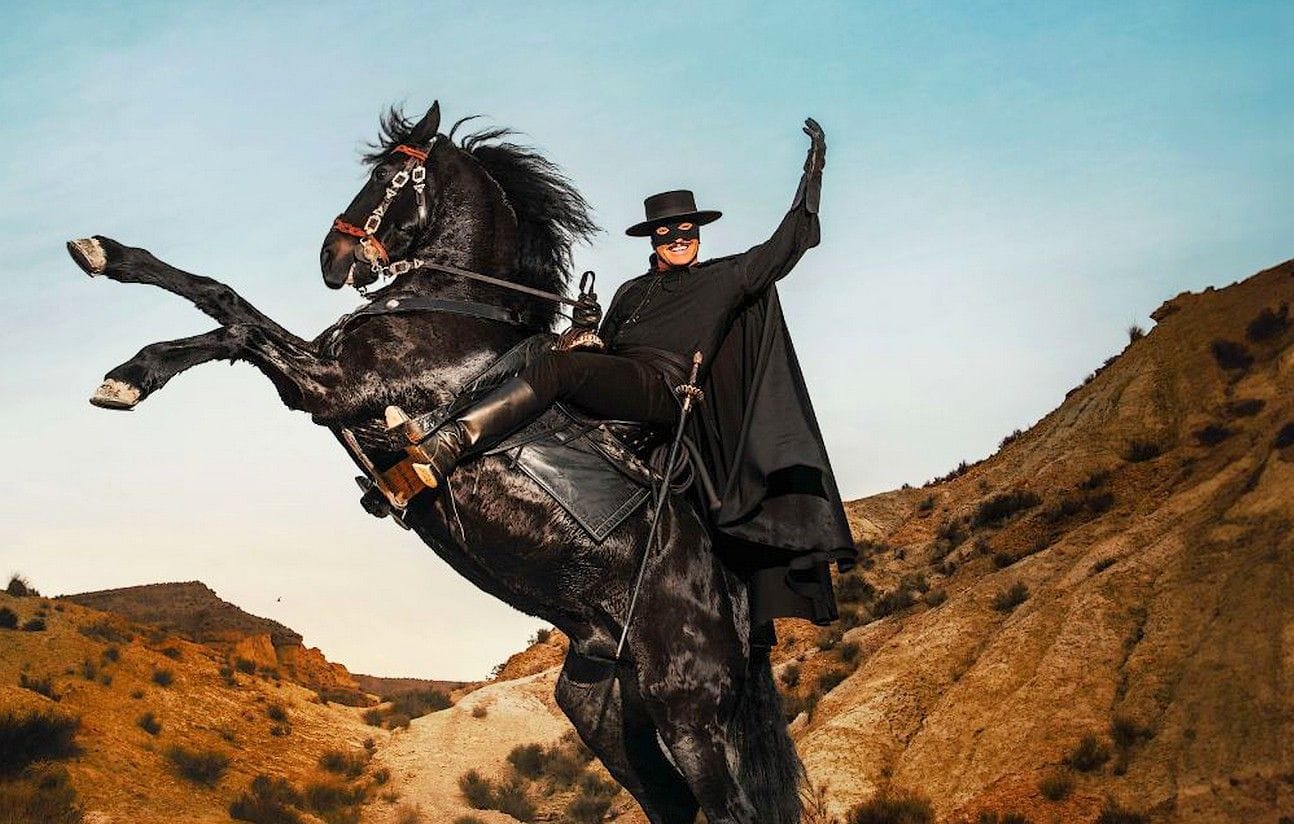
    Before American composers like Jerome Moross and Elmer Bernstein made the western distinctly their own, the task of scoring the genre fell largely to European émigrés. This week on “Picture Perfect,” we’ll take a look at some outside perspectives on how the West was won.

    Literally the godson of Richard Strauss, Max Steiner (born on this date in 1888) came from Vienna, where he studied with Johannes Brahms and Robert Fuchs. In Hollywood, he wound up scoring such classics as “King Kong,” “Gone with the Wind” and “Casablanca.”

    Among his over 300 film projects were a number of westerns. One of these was “They Died with Their Boots On” (1941), which starred Errol Flynn as George Armstrong Custer and Olivia de Havilland as Libby, the woman who becomes his wife. Steiner’s score features familiar folk material, some old-fashioned faux “Indian” music, and one of his characteristically lush love themes.

    Dimitri Tiomkin (born in Ukraine on this date in 1894) was a pupil of Alexander Glazunov. He came to revolutionize the sound of the American West, when he wrote the music for “High Noon,” the first of his “ballad” scores. Advance word, based on an early screening for the press, was that the picture would be a failure. However, Tiomkin had such faith in the theme song, sung in the film by Tex Ritter, that he hired Frankie Laine to record it, and the record became a world-wide hit. In fact, his score is largely credited with having saved the film.

    Tiomkin was recognized with two Academy Awards: one for Best Original Song, and one for the score itself. It was the first time a composer won two Oscars for his work on the same movie. It also changed the way western scores were done. In the 1950s, Tiomkin became THE western composer of choice. He produced a number of subsequent ballad scores, including that for “Gunfight at the O.K. Corral” (1957). Asked how it was that a composer from Ukraine could write so convincingly for the American West, Tiomkin quipped, “A steppe is a steppe is a steppe.”

    Another unexpected source of classic western music, Franz Waxman was born in Upper Silesia. He arrived in the U.S. by way of Germany. Nonetheless, as part of the composer’s varied and prolific output, he did indeed score a number of films in the genre, including “The Furies” (1950), a peculiar noir-western hybrid. Walter Huston, in his final film, plays a cattle baron who remarries and throws his empire into jeopardy. Barbara Stanwyck is his strong-willed daughter.

    Hungarian-born composer Miklós Rózsa scored many films with historical settings – “Quo Vadis,” “Ben-Hur,” and “King of Kings,” among them. However, to my knowledge, his only western was “Tribute to a Bad Man” (1956). James Cagney stars as a rancher who doles out some frontier justice.

    Finally, we’ll hear music by Ennio Morricone, from arguably the most operatic of all spaghetti westerns, “Once Upon a Time in the West” (1968). As a reaction to Tiomkin’s ballad scores and the neo-Coplandisms of Elmer Bernstein and the rest, Morricone brings his own quirky sensibility to bear on the classic western iconography. Get ready for indelible motifs for harmonica and banjo, but also an unexpectedly moving elegiac arioso, underscoring the close of the American West with the arrival of the railroad.

    Doublecheck your train tables and wind your pocket watches. Old World composers go west this week on “Picture Perfect,” music for the movies, now in syndication on KWAX, the radio station of the University of Oregon!


    Remember, KWAX is on the West Coast, so there’s a three-hour difference for those of you listening in the East. Here are the respective air-times for all three of my recorded shows (with East Coast conversions in parentheses):

    PICTURE PERFECT, the movie music show – Friday on KWAX at 5:00 PM PACIFIC TIME (8:00 PM EASTERN)

    SWEETNESS AND LIGHT, the light music program – ALL NEW! – Saturday on KWAX at 8:00 AM PACIFIC TIME (11:00 AM EASTERN)

    THE LOST CHORD, unusual and neglected rep – Saturday on KWAX at 4:00 PM PACIFIC TIME (7:00 PM EASTERN)

    Stream all three, at the times indicated, by following the link!

    https://kwax.uoregon.edu/

  • ’84 Summer Nostalgia Indy Ghostbusters and Growing Up

    ’84 Summer Nostalgia Indy Ghostbusters and Growing Up

    Despite the sporadically hot weather, somehow the summer has really crept up on my me. But then, time moves very quickly anymore. I spoke with my college-age nephew on Tuesday and he had just completed the last of his final exams. I’d forgotten how long college summers were! And then yesterday, while scrolling on Facebook, I saw that somebody noted that it was 40 years to the day since the release of “Indiana Jones and the Temple of Doom.” I don’t know why this hit me with such force. I am a nostalgic person by nature, so I am very much aware of the passage of time. But I guess since 1984 was really my last summer of uncomplicated freedom, it carries a little more significance than usual.

    Looking back, movie-wise, that summer turned out to be the last and least of our high school summers, but that doesn’t mean I didn’t go to the movies all the time and that I wasn’t entertained.

    Funny, looking at a list of the releases now, I realize what a weak summer it was, next to those of the earlier ’80s. Indy will always be closest to my heart, of course, although this one was the shakiest of the ’80s trio. It’s still like “Citizen Kane” next to “Indiana Jones and the Dial of Destiny,” proving that even the disappointing movies back then were better than anything being made now! And John Williams’ music, as it so often was, was the soundtrack to my summer.

    It was also the summer of “Ghostbusters,” of course, and “Splash” was fun, if slight. I was really looking forward to “Greystoke,” which was entertaining (it was beautifully mounted and Ian Holm was great), but it seems like someone must have edited the hell out of it. I’m not a fan of “directors’ cuts,” but this one could have really used one. Again, “Gremlins” was entertaining, but even then I knew it was slick, sick trash. By then, the Spielberg formula was well-worn, and this one skimmed very close to the surface. (It should be noted that this was the summer that led to the PG-13 rating, due to the mounting intensity of movies marketed to the young.)

    “Star Trek III,” though a step down from “Khan,” on which it heavily relied, got the job done. Poignantly (and all-too-appropriately, with the frontiers of youth dwindling), the Enterprise goes down in flames. “Buckaroo Banzai” was self-consciously hip, and again entertaining, but not all that it could have been. “Romancing the Stone” (actually released in March) was okay. Again, entertaining, but pretty disposable. I’m glad it gave Zemeckis a boost, but it was no Indiana Jones. At least it took a different approach (and to be honest, it was more consistent than “Temple of Doom”).

    But of course it was the off-screen adventure and romance that really resounded. It would be our last hurrah before the old gang was disbanded, our American Graffiti summer. People continued to return from school for holidays and for a good portion of the summer of ’85, of course, but soon other opportunities, interests, and friendships began to present themselves, and we saw one another less and less, and then everyone started to get jobs and get into relationships and gradually disappear from our Neverland. Believe me, I extended my childhood as long as any person possibly could. But there was much weight on my heart back then, nostalgia and longing and melancholy, and much torment in my soul, if I ever tried to rewatch the movies I’d watched during my school years or revisit the stories I’d written.

    Of course, my mother was still alive and the house continued to function pretty much as it always had. Hard to believe that we moved in only in the summer of ’83, before my senior year of high school. But I returned to it whenever I could, on weekends and holidays, through the time I opened my own business and started working at the radio in 1995.

    After that, my attic bedroom gradually became a storage space, a dumping ground for old clothing, curtains, bins of wrapping paper, boxes of photos. To revisit now is like taking a submersible through the wreckage of the Titanic, everything perfectly preserved under layers of sand and coral. I need to finish cleaning that place out. I’ve already retrieved some of my most valued items, but I’ve even got shoes and clothing up there from back-in-the-day, which really should go. Do I have the heart to get rid of it? Every piece of bric-a-brac is loaded with memory.

    I know I said much the same thing a couple of years ago, when recollecting the summer of ‘82, but when I die, if there’s a heaven, and they let me in, I hope it’s an awful lot like the early ‘80s.

  • Copland Sorey Pulitzer Music Victory

    Copland Sorey Pulitzer Music Victory

    It was on V-E Day, marking Allied victory in Europe on this date in 1945, that Aaron Copland became the recipient of the Pulitzer Prize for Music for his ballet “Appalachian Spring.” It remains one of the most successful of Pulitzer Prize winners, very few of which have remained in the active repertoire.

    This is a good opportunity for me to acknowledge the fact, only slightly belatedly, that this year’s honoree is Tyshawn Sorey, who was awarded the prize on Monday for “Adagio (For Wadada Leo Smith),” a 20-minute work for alto saxophone and orchestra. Sorey describes the piece, which was co-commissioned by the Atlanta Symphony Orchestra and Lucerne Festival, as an “anti-concerto,” designed to “provide a respite from the chaos and intrusiveness on modern life.”

    I was able to locate an audio file here:

    https://soundcloud.com/tyshawn-sorey/adagio-for-wadada-leo-smith

    In 2020, Sorey joined the faculty of the University of Pennsylvania. Belated congratulations to him for this year’s Pulitzer recognition.

    https://www.tyshawnsorey.com/

Tag Cloud

Aaron Copland (93) Beethoven (95) Composer (114) Film Music (132) Film Score (143) Film Scores (255) Halloween (94) John Williams (193) KWAX (229) Leonard Bernstein (103) Marlboro Music Festival (125) Movie Music (147) Mozart (88) Opera (206) Philadelphia Orchestra (89) Picture Perfect (174) Princeton Symphony Orchestra (108) Radio (88) Ross Amico (244) Roy's Tie-Dye Sci-Fi Corner (290) The Classical Network (101) The Lost Chord (268) Vaughan Williams (103) WPRB (396) WWFM (881)

DON’T MISS A BEAT

Receive a weekly digest every Sunday at noon by signing up here


RECENT POSTS