One of the ways I kept myself entertained during the pandemic was to come up with fifty or so clues on any given subject for a Sunday morning crossword puzzle. It would be something to keep me occupied while walking, doing the dishes, or having a coffee out on the lawn. As a friend of mine once quipped, “Man, you were made for COVID.”
Anyway, the clues are mine, but the grids were generated by a computer program. I would click through a few of them until I got one that seemed passable, although if I were ever to publish them, I would be more thoughtful about how and where the boxes intersect, in order to provide some additional hints about the answers.
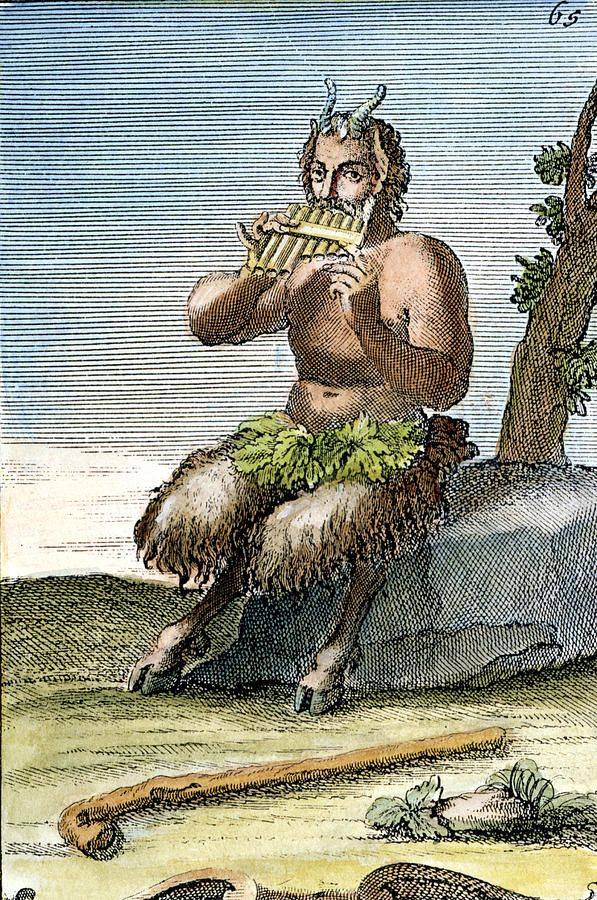
Here’s one I put together in August 2020. As an addendum to my weekend of radio shows on Greco-Roman mythological themes, it’s a crossword about Classical myths in classical music.
To fill out the puzzle, follow the link and select “solve online” at the bottom of the page. You’ll then be able to type directly into the squares. Once you feel you’ve exhausted the clues, you’ll find the solutions by clicking on “Answer Key PDF.”
There’s classical, and then there’s “Classical.” Strap on your thinking cap and your goat leggings, and then head on over here:
https://www.armoredpenguin.com/crossword/Data/2020.08/1608/16082045.682.html
Category: Daily Dispatch
-
Classical Weekend with Classic Ross Amico
With Christopher Nolan’s “The Odyssey” sailing into theaters today, interest in Classical mythology is renewed. I mean, I think it’s always been a fascination for school children, but thanks to that early inculcation, it remains with us for the rest of our lives – sometimes pushed to the backs of our brains, but who doesn’t remember with affection the Greek heroes, their imposing quests and impossible challenges, the fickle gods, the peculiar trysts, the triumphs and turns of fortune, and perhaps most of all, the grotesque monsters?
“The Odyssey” is an excuse for me to revisit these youthful enthusiasms, as I make Classical mythology the focus of all three of my radio shows this weekend (with air times and streaming information posted below).
First, today, on “Picture Perfect,” it’s a mythological mash-up of music from fantasy films, including selections from “Helen of Troy” (Max Steiner), “Clash of the Titans” (Laurence Rosenthal), “Hercules” (Pino Donaggio), and “Jason and the Argonauts” (Bernard Herrmann).
Then, tomorrow morning on “Sweetness and Light,” it’s an ambrosial assortment of pieces inspired by Orpheus and Eurydice, Daphnis and Chloe, Hercules, and a riot of nymphs, satyrs, and fauns, vividly evoked by Jacques Offenbach, Howard Hanson, Cécile Chaminade, George Frideric Handel, Camille Saint-Saëns, and Maurice Ravel.
Finally, indomitable Odysseus makes his belated return from the Trojan War to Ithaca on “The Lost Chord,” in works by Ernst Boehe (“Departure and Shipwreck” from the symphonic cycle “From Odysseus’ Voyages”) and Benjamin Britten (the radio play “The Rescue of Penelope,” narrated with gusto by Dame Janet Baker), on “Home Sweet Homer.”
So much for moderation. Join me for a triple helping of Classical classics. I’ll be stringing my bow and launching arrows down a gallery of axe-heads, in celebration of “The Odyssey,” on “Picture Perfect,” “Sweetness and Light,” and “The Lost Chord” – all three originating from KWAX Classical Oregon!
——–
Clip and save the start times of my recorded shows:
PICTURE PERFECT, the movie music show – Friday at 8:00 PM EST/5:00 PM PST
SWEETNESS AND LIGHT, the light music program – Saturday at 11:00 AM EST/8:00 AM PST
THE LOST CHORD, unusual and neglected rep – Saturday at 7:00 PM EST/4:00 PM PST
Stream them, wherever you are, at the link!
https://kwax.uoregon.edu/
——–
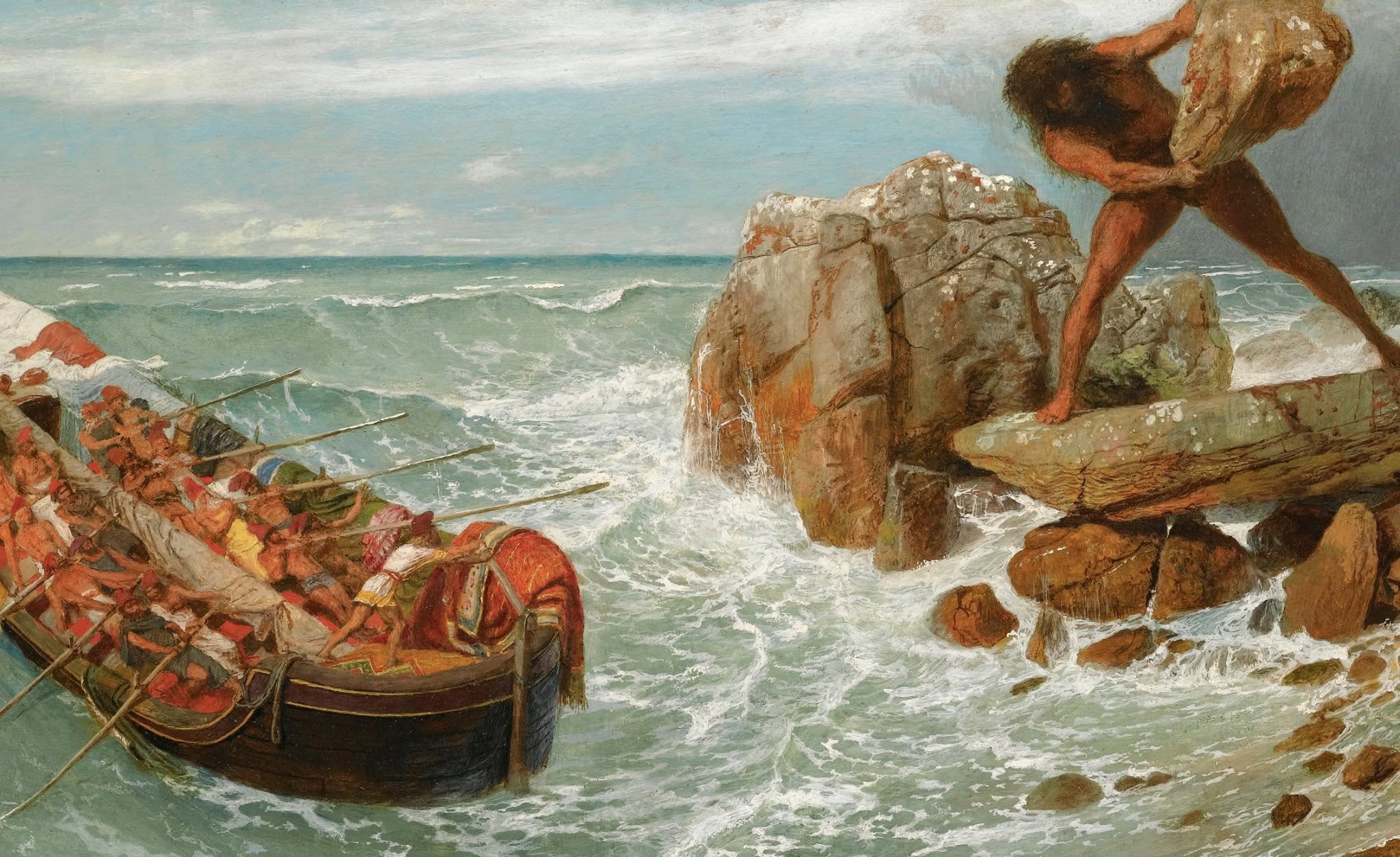
IMAGE: “Odysseus and Polyphemus” (1896) by Arnold Böcklin -
Epic Summer
I’ve got some followers that I know are big readers. Myself, I am reading something all the time, but unfortunately I am rather slow under the best of circumstances, and since I read mostly at bedtime these days (thank you, internet), I often find myself pushing back against drooping eyelids. I used to read in the morning also, in the days before I had a laptop. Previously, what happened at work – where I kept my desktop – stayed at work. When you have two reading sessions built into your day, even short ones, at breakfast and bed, you do cover a lot of ground, more than you would think.
Anyway, last week I finally finished Robert Fagles’ translation of “The Odyssey,” in advance of Christopher Nolan’s movie, which I’m pretty sure I’m going to have issues with (and not because I’m a “culture warrior”). And since then, I knocked out Bernard Knox’s 60-page intro, which I found informative and essential, in order to more fully grasp the history and significance of this cornerstone of Western literature, which is so much more than simply an adventure story.
The edition – which I discover is inscribed by Fagles (who taught at Princeton University) – has been part of my library since I skimmed it off the inventory of one of my bookstores, but somehow I never got around to reading it until now. It’s been part of the Princeton High School curriculum. In my hometown, for some reason, we read “The Iliad.” Granted it was an AP course, but with all the cataloguing in which Homer indulges, so that we know all about the participating forces, the leaders’ lineages, their geographical origin and their weaponry, it was kind of a slog. It was a long time ago, but I don’t even know that I can blame the translation (by W.H.D. Rouse).
Fagles’ “Odyssey” is a much more enjoyable read. In fact, surprisingly so. I expected it to be heavy lifting, akin to the boulder Polyphemus uses to seal his cave. But it turned out to be far from it. (Incidentally, I see the audio book is read by Sir Ian McKellen!)
However, I am sure it is not the last word in “Odyssey” translations, acclaimed though it be. In fact, I can understand why there are so many “Odyssey” fanatics on YouTube, who seem to have a working familiarity of the finer points of all the various translations. Since I cannot read Greek myself, I would definitely be interested in checking out some of the other versions. I am especially curious to take a look at the much-lauded, and I’m sure more elevated, translation by Alexander Pope. Somewhat in common with its hero’s travails, one’s encounter with “The Odyssey” could expand into an epic journey of many years.
You have to admit, the story has had legs. Even if you’ve never read a word of it, you probably already know a lot of it. It’s been a crowd-pleaser for 2,800 years! Ralph Fiennes played a brooding (and surprisingly jacked) Odysseus only last year, in “The Return,” and I recently learned that Jerry Bruckheimer, of all people, is overseeing an animated musical (!) on the story, based on a recent internet series (?), for theatrical release. I remember watching a miniseries with Armand Assante, back in the ‘90s, but for me, the benchmark will probably always be Kirk Douglas in “Ulysses.” When men were men, and cyclopes were cyclopes!
By coincidence, I’ve got a ticket to see “Die ägyptische Helena” (“The Egyptian Helen”) at Bard College later this month. Richard Strauss’ rarely-heard opera about Helen of Troy sets a libretto by Hugo von Hofmannsthal – whose source material is Euripides’ play “Helen,” as opposed to Homer’s “Iliad,” but hey…
Only yesterday, I bought a loaf of bread from a local bakery and the woman on the counter’s name was Penelope! I’m taking it as a sign.
Nolan’s movie opens tomorrow. Watch this space, because this weekend all three of my radio shows – “Picture Perfect,” “Sweetness and Light,” and “The Lost Chord” – will be on Classical mythological themes.
It seems Homer is everywhere these days. But really, has he ever gone away?
———-
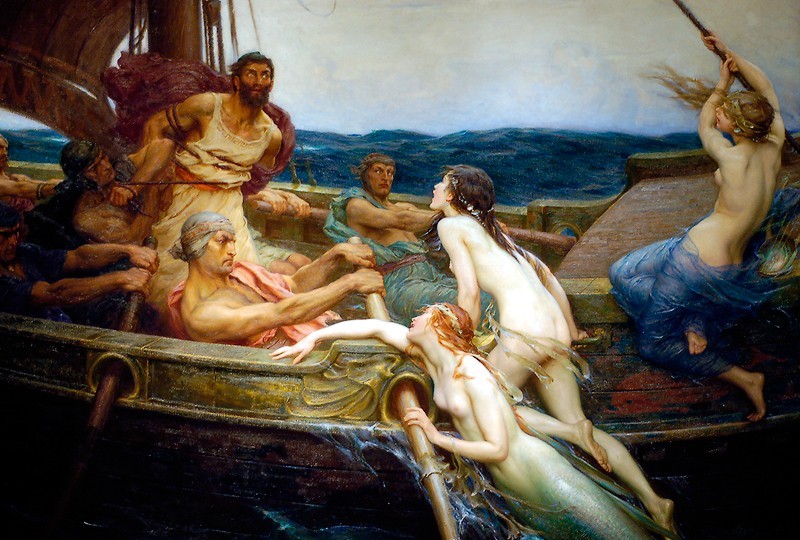
IMAGE: Matt Damon tempted by the Sirens in Christopher Nolan’s “The Odyssey”
(Actually “Ulysses and the Sirens,” 1909, by Herbert James Draper) -
Pantheon of Film Composers, Circa 1997
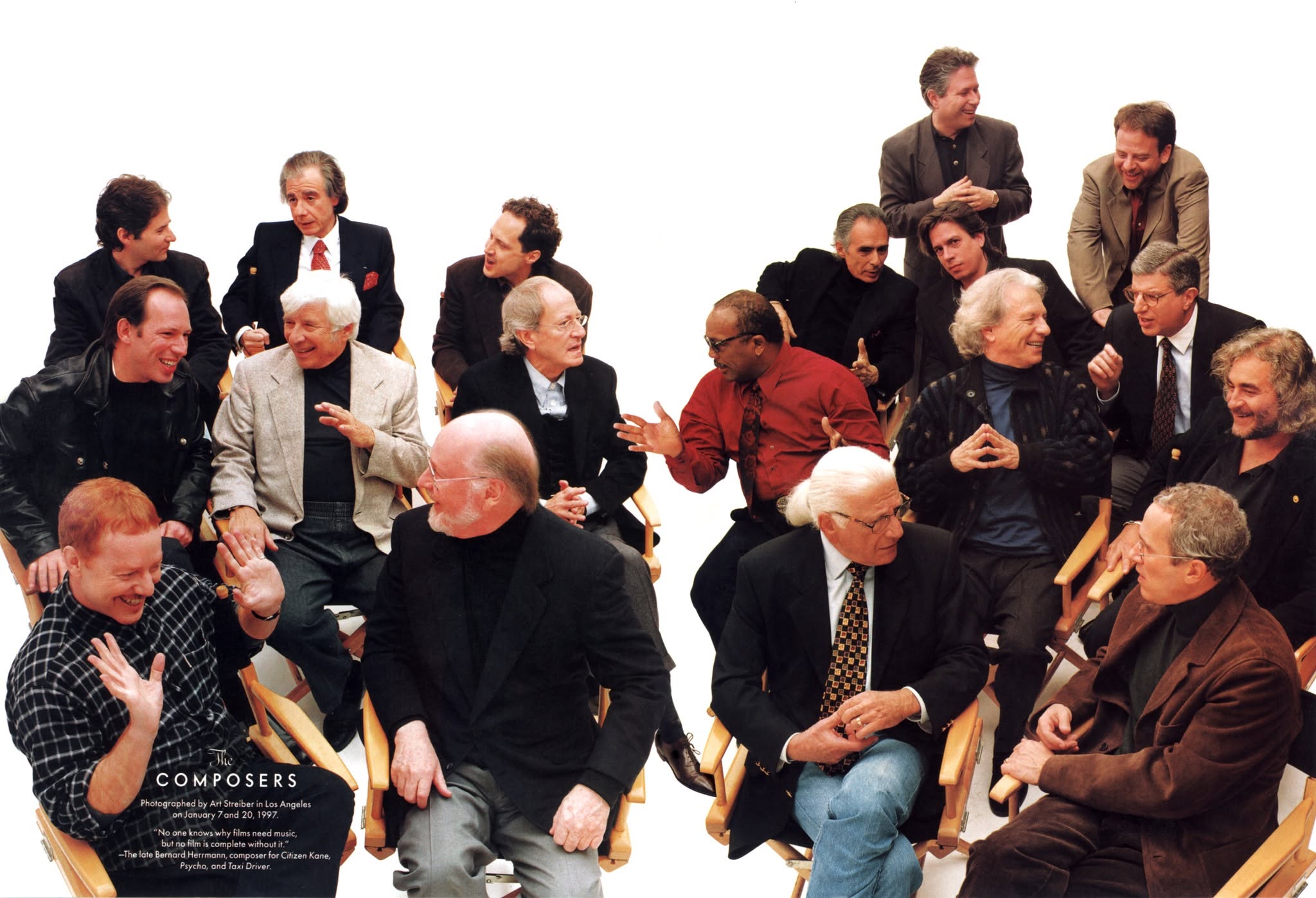
I was reminded of this photo the other day when it resurfaced on Facebook (in humorously doctored form). Here’s the original, reproduced from a two-page spread in a special “Hollywood 1997” issue of Vanity Fair that appeared on newsstands in April of that year. Be forewarned: if you care about film music of the era, and the decades preceding, your head might explode.
Front row, L to R: Danny Elfman, John Williams, Jerry Goldsmith, James Newton Howard
Middle row: Hans Zimmer, Elmer Bernstein, John Barry, Quincy Jones, Maurice Jarre, Michael Kamen
Back row, seated: James Horner, Lalo Schifrin, Mark Isham, Bill Conti, Elliot Goldenthal, Marvin Hamlisch (who looks a bit like Bernard Herrmann, chatting with Jarre in front of him)
Standing: Alan Menken, Marc Shaiman
The photo, by Art Streiber, is actually doctored, with the subjects being captured in two sessions, on January 7 & 20, 1997.
Some notable omissions (and by no means an exclusive list): the Newmans, Alan Silvestri, Patrick Doyle, Rachel Portman, and of course Ennio Morricone. Still, a stunning assemblage, from a time when Goldsmith, Elmer Bernstein, John Barry, and Maurice Jarre still walked among us. All gone now. We’ve also lost Quincy Jones, Marvin Hamlisch, Lalo Schifrin, Michael Kamen, and James Horner.
Zimmer (what could he possibly have to talk about with Elmer Bernstein?) has done more than anyone to drive the classic Hollywood sound to extinction. Sadly, his influential brand of electronically generated and/or manipulated drones and ostinati have come to dominate cinema in the digital era, as films are tweaked into bland homogeneity virtually up to the day of release. Most of it is easily forgettable, as a chainsaw or a leaf blower is forgettable. The annoyance evaporates as soon as it stops. Recently, I was impressed by his work on “Dune,” but as is so often the case, so much of it is more like sound design than music.
I am thankful to have lived through such a great era, but I am continually reminded of all that’s changed for the worse. In 1997, the movies were already on shaky ground. My heart aches every day, not least of all for their faded glory. -
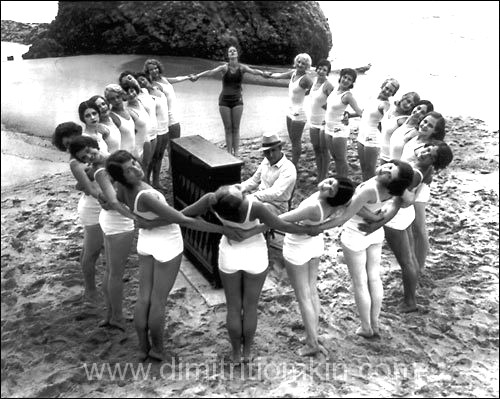
Dimitri Tiomkin and Ballet on the Beach
It’s summer, and for some, life’s a beach. Here’s a fun photo of future film legend Dimitri Tiomkin, the man who kicked off the craze for title songs in the seemingly incongruous genre of the movie western, when his score and song for “High Noon” earned wide acclaim, double Oscars, and enormous financial dividends. In fact, “Do Not Forsake Me, Oh My Darlin’” has been credited by some with having saved the picture from box office failure and cementing its status as an American classic.
From then on, Tiomkin was always sure to include a title song in his westerns – “Gunfight at the O.K. Corral,” “The Alamo,” “The War Wagon,” “Rio Bravo,” and, for television, “Rawhide,” among them – and for films in other genres, as well (“Friendly Persuasion,” “The Guns of Navarone,” “Wild Is the Wind”).
Interestingly, Tiomkin was born in Ukraine and studied at the St. Petersburg Conservatory with Alexander Glazunov. When asked the secret to his exceptional success writing music for westerns, Tiomkin replied with a shrug, “A steppe is a steppe is a steppe.”
Early on, it had been his mother’s dream that he become a concert pianist. To this end, he studied with Felix Blumenfeld, teacher of Horowitz, and Isabelle Vengerova. Also with Ferruccio Busoni and Egon Petri. He made his debut with the Berlin Philharmonic in Liszt’s Piano Concerto No. 2. At Carnegie Hall, he played Ravel, Scriabin, Poulenc, and Alexandre Tansman. He also gave the European premiere, in Paris, of Gershwin’s Concerto in F, with the composer in attendance.
Predating his Hollywood years, Tiomkin accompanied and wrote music for a ballet company run by his wife, Austrian dancer and choreographer Albertina Rasch, with whom he had first teamed on the American vaudeville circuit. After the stock market crash of 1929, opportunities in New York dwindled, but Rasch was hired to supervise dance numbers in MGM musicals. It was during this time that the beach photo was taken.
Tiomkin made mostly undistinguished, often uncredited contributions to motion pictures in the 1930s. The best known of these was a misbegotten all-star adaptation of “Alice in Wonderland” in 1933. But it was with Frank Capra’s “Lost Horizon,” in 1937, that he was really able to show his stuff. The opulent score was conducted by the vastly more experienced Max Steiner. Recognition came just in time, as Tiomkin broke his arm, effectively ending his career as a concert pianist.
He needn’t have worried. He found success composing more than 100 film scores, earning 22 Academy Award nominations. He won four, and numerous Golden Globes. Enough of the title songs were covered by major artists and turned into popular hits that he made a very comfortable living.
You can learn more about Tiomkin and Rasch at Castle Rock Beach and the then-provocative photo (which, as we would say today, “went viral”) at the link.Some of his ballet music for Rasch was recorded in 2020 for the album “Paris Under the Stars,” released on the Intrada label.
Tag Cloud
Aaron Copland (94) Beethoven (95) Composer (114) Film Music (149) Film Score (143) Film Scores (255) Halloween (98) John Williams (197) KWAX (232) Leonard Bernstein (105) Marlboro Music Festival (125) Movie Music (164) Mozart (91) Opera (215) Philadelphia Orchestra (90) Picture Perfect (174) Princeton Symphony Orchestra (110) Radio (90) Ross Amico (244) Roy's Tie-Dye Sci-Fi Corner (290) The Classical Network (101) The Lost Chord (269) Vaughan Williams (107) WPRB (397) WWFM (881)