I’m sorry, I’ve been so busy lately, and if I don’t get started on these posts first thing in the morning, it’s very hard for me to write anything of consequence that reads well. Generally speaking, the earlier I write, the better. Best is when it’s so early, I can’t even think. Just sit down with a cup of coffee and let those fingers go.
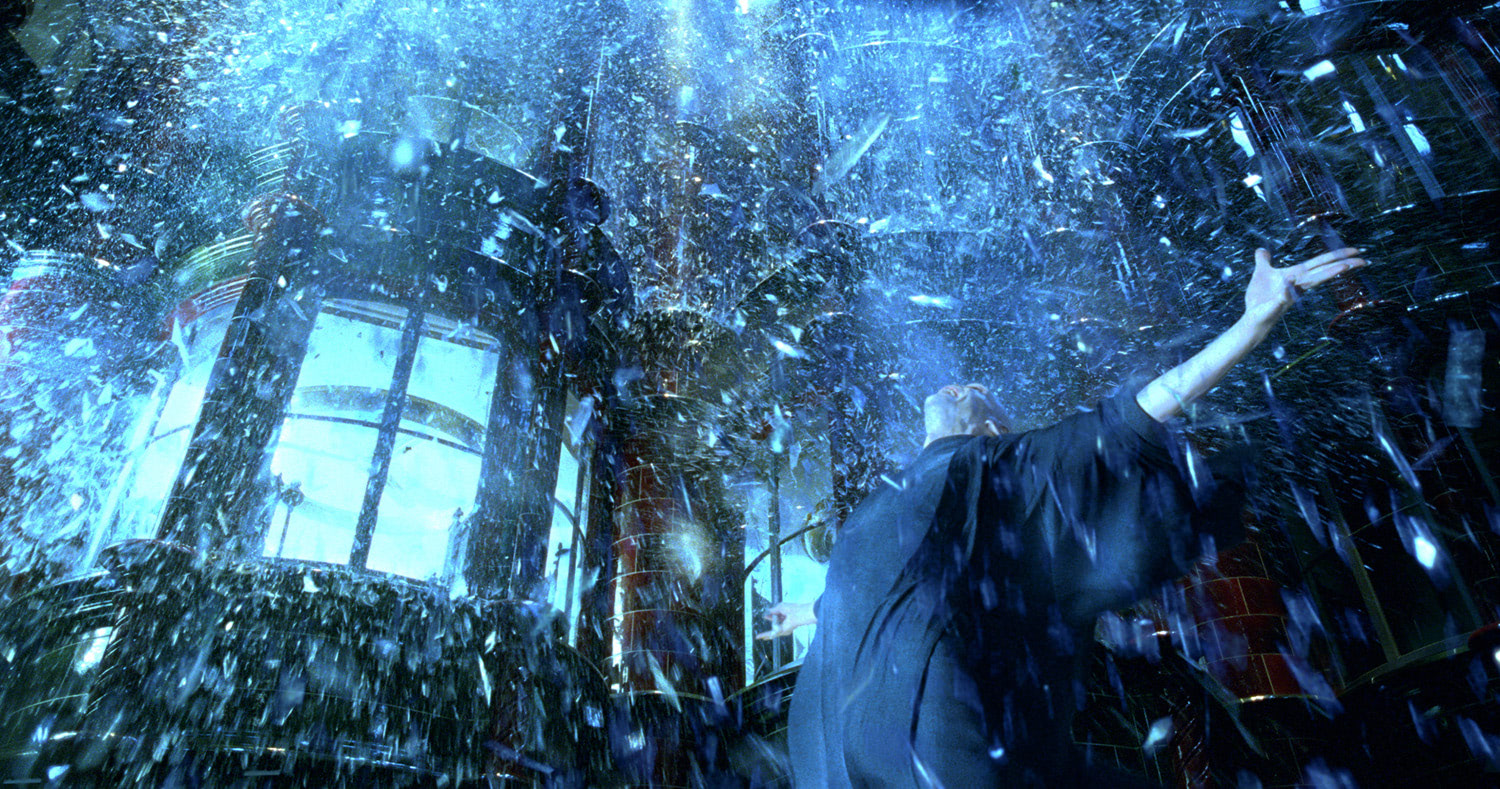
But life is such that I can’t always do that. Which is why, for Gustav Mahler’s birthday, here I am at 11:00 a.m., sharing a video of Yoda, Gandalf, and Voldemort conducting the “Resurrection” Symphony. Hey, don’t let it be said that I don’t do my part to popularize the classics.
And it’s not like it’s that farfetched. Dismiss the concept, if you’d like, as puerile nonsense, but it would take wizards of this magnitude to translate the work’s emotional grandeur into images worthy of its transcendent power, even if the music itself is more seismic, uplifting, and transformative than anything that could possibly be expressed on a motion picture screen.
Let me know which of the three you think has the best technique, if you’re so inclined, and happy birthday, Gustav Mahler.
Category: Daily Dispatch
-
“Fantastic” Conductors Tackle Mahler’s “Resurrection”
-
Worthwhile American Music Marathon Archived for a Limited Time on WHRB
Last week was a really a crazy one for me. I had to so much to do in an abbreviated amount of time (since everyone had off on Friday, in anticipation of the holiday) and the madness only intensified yesterday, since not only was it the Fourth of July, but it was my birthday. And on my birthday, it’s never just about me. Because there are family obligations and entertaining to be done. And c’mon, it was America 250! However, my entire life it’s been like that, more or less. Never be born on a holiday! But at least I’ve always got off work. All the same, I’m always glad whenever the festivities are over and we can all just get back to our own routines.
I wasn’t even able to finish everything I *needed* to get done, so of course I neglected to promote a special marathon of American music that was broadcast yesterday of WHRB, the radio station of Harvard University. Every year, my friend Mather Pfeiffenberger makes the trek back to his alma mater to share a special Fourth of July program, and this year was set to be a doozy. Unfortunately, Mather wound up being stuck in D.C., but he was able to enlist a trusted colleague, Jonathan Lehrich, to share his thoughtfully curated playlist and some of his insights into the music.
I only got to catch a little of it yesterday, but I must say, the selections I heard were exceptional, and many of them are things you will never hear on the radio – live concert recordings, historic documents of such vintage they would never be considered for air play anywhere else, and more – alongside interesting performances of certified American classics, some of them offered in alternative editions. Seriously, if you care about American classical music and you think you just can’t listen to another performance of “Victory at Sea” or the “Grand Canyon Suite,” do check this out. I know an awful lot, and there were things on this show I have never heard.
But how can I listen, you say, if the show was yesterday? Surely, we ALL can’t fit into Classic Ross Amico’s time-traveling DeLorean…
Well, you’re in luck, because the show is archived at the WHRB website for the next two weeks. Visit whrb.org, run your cursor over PROGRAMMING, and from the dropdown box select BROADCAST ARCHIVE.
Ignore any pop-ups and DO NOT click the box (if you get it) that reads ACTIVATE YOUR ACCOUNT TO START. I’m not sure if it’s actually affiliated with the station, or if it’s just a phishing scam. Either way, you don’t need to register. Simply click the box under BROADCAST ARCHIVE that says YESTERDAY (if you’re seeing this after Sunday, the box will read JULY 4). Then click 1:00 to start. The program ran from 1:00 to 10:00 p.m.
I am eager to hear it myself. Enjoy!
To learn more, here’s a link to Mather’s Facebook post about the broadcast:
https://www.facebook.com/permalink.php?story_fbid=pfbid0zt9jCsuZdjT7ZNAd4m1a8JyMQQ7zqMPwHSVjay8hKGWp4R4SaLFwbJcSNmpuMg4El&id=100093688583899 -
Spirits of Independence on “The Lost Chord”
At a time when immigration seems to be such a divisive issue, it’s instructive to look back to political cartoons of the 19th and early 20th centuries, when bomb-toting Bolsheviks seemed poised to take down our democracy, the Chinese were inscrutable back-stabbers, the Jews were bearers of poverty and disease, and the Irish were simian-faced hooligans and drunks. Anxiety about outsiders has always been with us, yet somehow we got over each successive alien group, and the country has plugged along just fine.
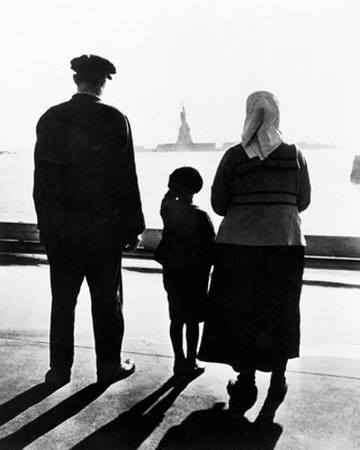
This week on “The Lost Chord,” we’ll get a little perspective, courtesy of composer Peter Boyer. From 1892 to 1954, more than 12 million immigrants passed through Ellis Island in search of a better life. More than 40 percent of the U.S. population – over 100 million Americans – can trace its roots to someone who came to this country along that route.
Boyer’s “Ellis Island: The Dream of America” incorporates texts from testimonials archived as part of the Ellis Island Oral History Project. They are real words of real people telling their own stories. The work is performed by actors, rather than speakers or narrators, who deliver their monologues in the first person. In a powerful epilogue, each of them comes together to recite a stanza from Emma Lazarus’ poem, “The New Colossus.” It’s so effective – and affecting – I get a little choked up just thinking about it.
You will, too, if you join me for “Spirits of Independence,” on “The Lost Chord,” now in syndication on KWAX Classical Oregon!
——-
Clip and save the start times for all three of my recorded shows:
PICTURE PERFECT, the movie music show – Friday at 8:00 PM EDT/5:00 PM PDT
SWEETNESS AND LIGHT, the light music program – Saturday at 11:00 AM EDT/8:00 AM PDT
THE LOST CHORD, unusual and neglected rep – Saturday at 7:00 PM EDT/4:00 PM PDT
Stream them, wherever you are, at the link!
https://kwax.uoregon.edu
——-
BONUS: The hour will open with Jerry Goldsmith’s “Fireworks.” Happy 4th! -
Stephen Foster and Louis Moreau Gottschalk on “Sweetness and Light”
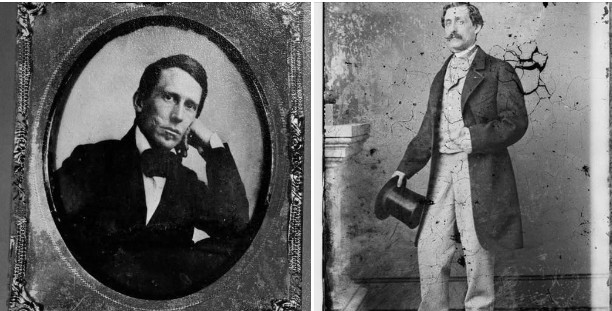
This week on “Sweetness and Light,” on this Independence Day, we’ll have music inspired by two seminal American composers – Stephen Foster and Louis Moreau Gottschalk.
Rejected out of hand by the Paris Conservatory, Gottschalk nevertheless gained the esteem of Chopin and Liszt. The barnstorming pianist spent much of his abbreviated life hopscotching around Latin America, after a scandalous affair forced him to flee the United States. Nevertheless, he always identified himself with New Orleans, the city of his birth.
Gottschalk died in Rio de Janeiro in 1869, under characteristically dramatic circumstances, after collapsing during a recital, having only just completed a performance of his piano work, “Morte!” or “Death!” He was 40 years old.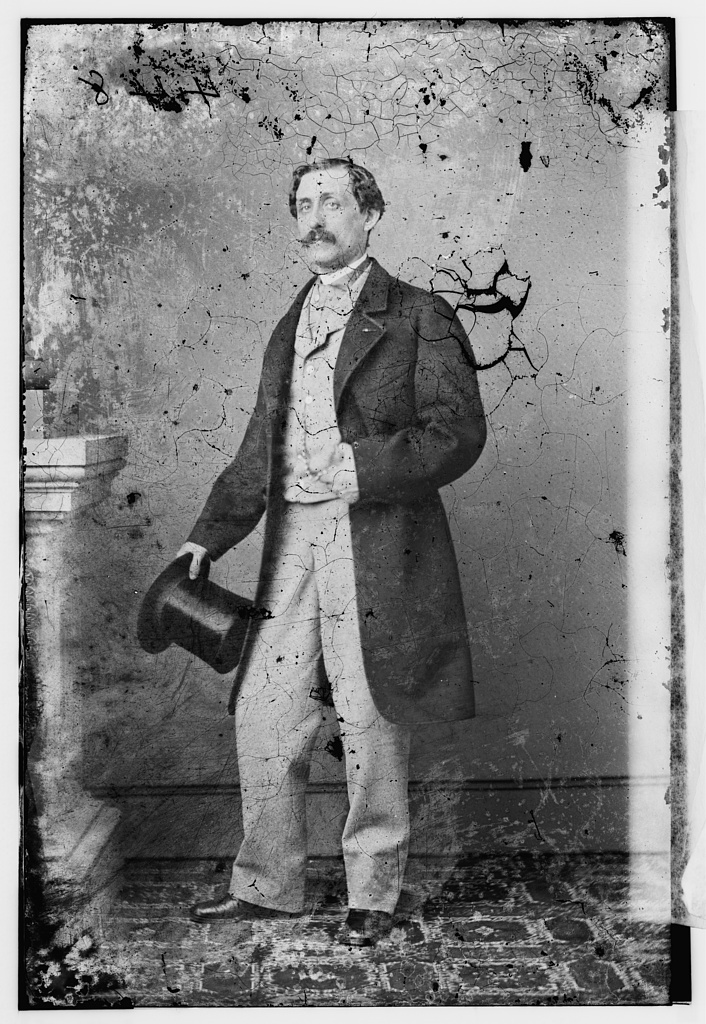
A number of his works were arranged by Philadelphia composer Hershy Kay for the New York City Ballet in 1951, as “Cakewalk.” We’ll hear a classic recording, with the Boston Pops conducted by Arthur Fiedler.
As an encore, we’ll hear Eugene List play Gottschalk’s “The Banjo,” in which the composer emulates banjo techniques and pays homage to Stephen Foster’s “Camptown Races.”
Foster was born in Pittsburgh on this date 200 years ago, July 4, 1826. The composer of more than 200 songs of which a great many of them are still very well-known today.
“Camptown Races” also inspired pianist Earl Wild to undertake his “Doo-Dah Variations.” The work received its world premiere in 1992, with the forces we’ll hear this morning, Joseph Giunta conducting the Des Moines Symphony Orchestra, and the composer, Earl Wild, the soloist.
Alas, Foster too suffered an untimely death, after gashing himself in a fall against a porcelain wash basin. He was only 36 years old.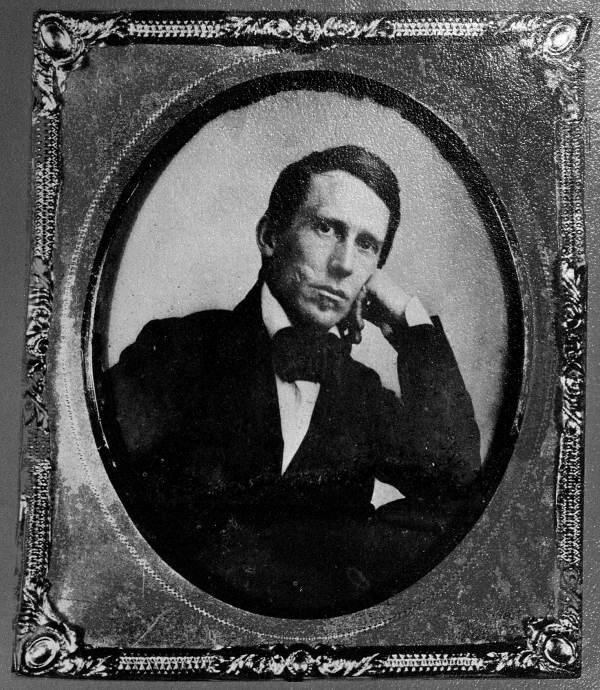
Handmade Software, Inc. Image Alchemy v1.11
Combined, Foster and Gottschalk had an incalculable influence on our nation’s cultural development that extended well beyond the field of “art music,” at a time when American composers couldn’t simply attend the local conservatory – because there weren’t any!
Join me this morning as we remember them (how could we forget?) on “Sweetness and Light,” exclusively on KWAX Classical Oregon!
Stream it, wherever you are, at the link:
https://kwax.uoregon.edu/ -
250 Years of Independence, and All I Got Was “Picture Perfect”
Tomorrow is Independence Day, so it seems appropriate this week on “Picture Perfect” to treat the subject of music from movies related to the birth of our nation.
We’ll hear selections from the 2000 Mel Gibson film, “The Patriot,” in which slow-burning pacifist Mel is pushed too far by ruthless British officer Jason Isaacs and reverts to his bloody French and Indian War ways. By the end of the film, he is literally waving the flag to John Williams’ triumphant score.
Then we’ll hear a suite from the 1942 Jack Benny-Ann Sheridan fixer-up comedy, “George Washington Slept Here,” based on the play by Moss Hart and George S. Kaufman – not really about the Revolution, beyond the fact that the ramshackle Pennsylvania farm house purchased by a transplanted New York couple is alleged to have been a resting place for the Continental Army’s most famous general. The music is by Adolph Deutsch.
The 1985 film, “Revolution,” seemed to have everything going for it. The director was Hugh Hudson, whose “Chariots of Fire” was the big winner at the 1981 Academy Awards; its star was Al Pacino; and its composer was John Corigliano, who went on to win the Pulitzer Prize for Music for his Symphony No. 2 and an Academy Award for “The Red Violin.” Yet “Revolution” bombed horribly – so horribly that Pacino gave up making movies for the next four years. James Galway plays the flute and pennywhistle on the film’s soundtrack.
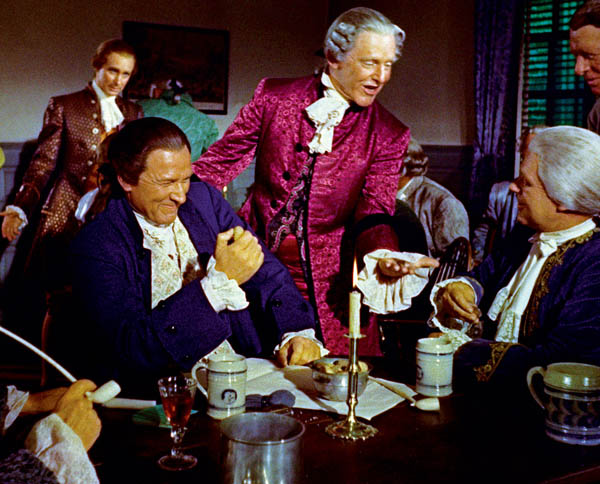
Finally, we’ll hear music from the longest continuously-shown film in cinematic history, “Williamsburg: The Story of a Patriot,” created exclusively for the tourist attraction of Colonial Williamsburg. The film features future “Hawaii Five-O” star Jack Lord, and the score is by none other than Bernard Herrmann. Peppered with recognizable patriotic tunes from the Revolutionary era, the charming suite includes quotations from “Yankee Doodle” and the William Billings hymn “Chester.”
Stick a feather in your hat and call it macaroni. Then join me for “Picture Perfect,” music for the movies, now in syndication on KWAX!
——-
Clip and save the start times for all three of my recorded shows:
PICTURE PERFECT, the movie music show – Friday at 8:00 PM EDT/5:00 PM PDT
SWEETNESS AND LIGHT, the light music program – Saturday at 11:00 AM EDT/8:00 AM PDT
THE LOST CHORD, unusual and neglected rep – Saturday at 7:00 PM EDT/4:00 PM PDT
Stream them, wherever you are, at the link!
https://kwax.uoregon.edu
——-
PHOTO: George Washington wagers he can crack a walnut with his bare hand in “Williamsburg: The Story of a Patriot”
Tag Cloud
Aaron Copland (94) Beethoven (95) Composer (114) Film Music (149) Film Score (143) Film Scores (255) Halloween (98) John Williams (197) KWAX (232) Leonard Bernstein (105) Marlboro Music Festival (125) Movie Music (164) Mozart (91) Opera (215) Philadelphia Orchestra (90) Picture Perfect (174) Princeton Symphony Orchestra (110) Radio (90) Ross Amico (244) Roy's Tie-Dye Sci-Fi Corner (290) The Classical Network (101) The Lost Chord (269) Vaughan Williams (107) WPRB (397) WWFM (881)