Category: Daily Dispatch

  • Alban Berg’s Lulu of an Opera

    Alban Berg’s Lulu of an Opera

    If one were to bake a birthday cake for Alban Berg, one would be forgiven for rendering a handgun in icing and hollowing out the layers to make room for prostitutes and madmen.

    When Berg came to write his sordid, darkly humorous, ultimately bloodcurdling masterpiece “Lulu,” he based it on the plays of Frank Wedekind. However, significantly, the influence of film also permeates the work.

    I don’t know that it’s ever been proved, but the composer had to have seen Louise Brooks’ sensational performance in G.W. Pabst’s “Pandora’s Box” (1929). The scandalous silent film classic, based on the same material, was an international triumph, and to this day, stage Lulus frequently emulate Brooks’ iconic style.

    Also, at the very center of the opera is a filmed interlude. The composer was obsessed with symmetry and palindromes. They pervade the opera, so much so that in the cinematic centerpiece, a silent film that dramatizes the events surrounding Lulu’s incarceration and escape, the music reads the same backwards and forwards.

    In a piece that’s so aggressively contemporary in its decadence and cynicism, it’s unsurprising that Berg would embrace modern technology. One wonders what he would have made of the digital age.

    Love, eroticism, and death were nothing new to opera, but there is something about “Lulu” that’s especially disturbing and transgressive. It’s subversive, sleazy, squalid, and calculated to shock. It’s not for nothing that Lulu, the protagonist, is introduced by a lion tamer!

    But Lulu is just being Lulu. The title of the first of Wedekind’s plays is “Erdgeist” – “Earth Spirit.” Lulu is plucked from the streets, and her raw sexuality has devastating effects on both the men and women in her life. Moral confusion abounds. Sure, she makes some monstrous choices. But we’re left to wonder, as with Jessica Rabbit, is she bad, or did society just draw her that way?

    Lulu in her amorality is the product of in an inauthentic world. After three acts of unfettered destruction, she dies at the hands of Jack the Ripper. Serialism’s greatest heroine falls prey to history’s most notorious serial killer.

    Berg composed his opera between 1929 and 1935. The ‘30s were a fraught time in Europe. It goes without saying, the Nazis did not like “Lulu.” Berg himself may not have been Jewish, but his teacher, Arnold Schoenberg, high priest of dodecaphony, was. Berg’s twelve-tone idiom alone would have been enough to get his opera banned. And his reputation had already been made with the equally disturbing “Wozzeck,” given its first performance in Berlin in 1925. He was added to the Nazi catalogue of “entartete” composers in 1933.

    The composer did not live to see the Führer’s furor over “Lulu.” He died of blood poisoning, the result of an insect sting, on Christmas Eve 1935. He was 50 years-old.

    At the time of his death, the opera was not yet quite complete. He was well along on the piece when two things occurred:

    First, he learned from Wilhelm Furtwängler that the climate in Berlin was unfavorable to a performance there. So he broke off on orchestrating the opera to develop some of the music into a “Lulu Suite,” which he hoped to have played in concert. Erich Kleiber, who had introduced “Wozzeck” in 1925, programmed the suite at the Berlin State Opera. After the performance, he was forced to resign and basically run out of the country.

    Berg paused a second time to compose his Violin Concerto for Louis Krasner. This he dedicated to the memory of 18 year-old Manon Gropius, one of Berg’s muses, whom he and his wife had come to view as their own daughter. Manon’s birth parents were Alma Mahler, Gustav’s widow, and Walter Gropius. The concerto would go on to become Berg’s best-loved work.

    At some point, the composer wrote to Anton Webern to let him know that “Lulu” was essentially complete. He anticipated he would need only two or three weeks to overhaul it before he started in on its orchestration.

    After his death, it was found he had managed to complete most of it. The parts he did not were left in short score, with detailed indications as to his plans for filling out the orchestration. Nevertheless, Schoenberg, Webern, and Zemlinsky, all friends of Berg, declined to take up its completion. Berg’s widow was left with the impression that the task must have been impractical, if not impossible. It was only after her own death in 1976 that Friedrich Cerha moved ahead with plans to finish it.

    “Lulu” received its premiere, incomplete, in Switzerland, in 1937. Cerha’s edition was first staged soon after its publication in 1979. This was rapturously received, and it is now the preferred version.

    Berg was always considered the Romantic among serialists. One critic dubbed him “the Puccini of twelve-tone music.” “Lulu” is freely-composed, but makes use of the twelve-tone technique promulgated by Schoenberg. Fascinatingly, each character in the opera gets his or her own tone row, so that each of the rows serves the purpose of a leitmotif – a fragmentary slip of music, bearing extramusical associations – as in the works of Richard Wagner. But if there is an opera further from Wagner’s Valhalla than “Lulu,” I don’t know it!

    Interestingly, there was nothing at all sordid about Berg the man. There was no violence or scandal in his life. He was intellectual and well-spoken, and he didn’t consort with criminals and prostitutes. He just knew a good succès de scandale when he saw one.

    “Lulu” has long since taken its place in the standard repertoire, alongside Berg’s “Wozzeck.” I can’t say it’s the most pleasant night at the theater, but it is an absorbing one, and it still retains its modern edge.

    Happy birthday, Alban Berg!

    ———

    Berg’s “Lulu Suite”


    The Violin Concerto


    Louise Brooks as Lulu


    “Lulu”… by Lou Reed and Metallica?

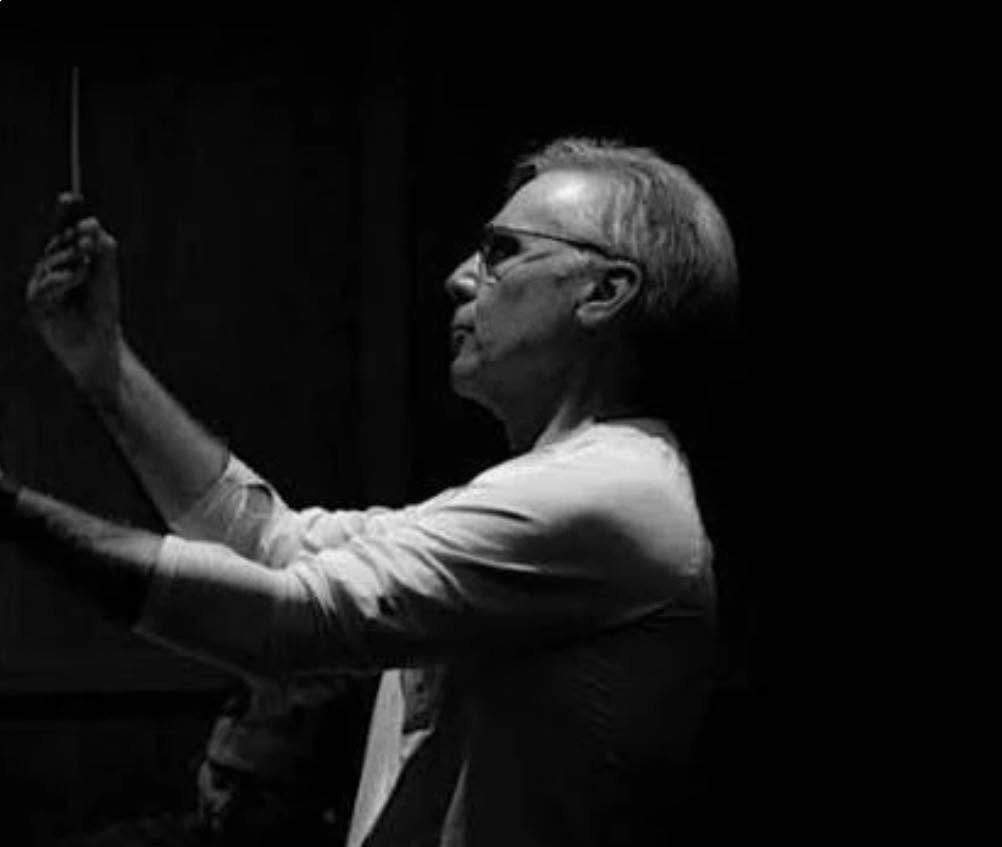
  • On His 94th Birthday, John Williams Continues to Inspire

    On His 94th Birthday, John Williams Continues to Inspire

    Who cares about the Super Bowl, when it’s John Williams’ birthday? Williams is 94 years-old today.

    John Williams is everywhere right now. His Piano Concerto, written for Emanuel Ax – and given its world premiere with the Boston Symphony Orchestra at Tanglewood this past summer – is making the rounds, with performances by the New York Philharmonic later this month and the Philadelphia Orchestra next season. His score for the film “Disclosure Day” – his 30th collaboration with director Steven Spielberg –will arrive in theaters on June 12th. (Allegedly, he just recorded it.) And right now, selections from his Olympic fanfares are being played as segues and bumpers throughout broadcasts of the games from Milano Cortina.

    Williams hasn’t written anything new for this year’s Olympics, nor for that matter, for tonight’s Super Bowl (unless there’s a new trailer for “Disclosure Day”). However, on at least one occasion, possibly more, his “NBC Sunday Night Football Theme” has opened the broadcast.


    In 2023, Williams composed music for the telecast of ESPN’s College Football Playoff Championship. Set the athletic mood with “Of Grit and Glory.”


    I just remembered: Williams also wrote the score for the 1977 thriller “Black Sunday,” in which Robert Shaw races to prevent Bruce Dern from blowing up the Super Bowl – with the Goodyear blimp!


    The indelible “Olympic Fanfare and Theme,” composed for the 1984 summer games in Los Angeles and part of Olympic broadcasts ever since


    Also frequently heard: the fanfare from “Summon the Heroes,” written for the 1996 Atlanta games


    When we listen to John Williams, we can imagine a better, more inspiring world.

    Thank you, and happy birthday, John Williams!

    ——-

    BONUS: Ten-minute Williams interview with Variety, filmed when the composer was 92


  • Giving Kay His Say on “The Lost Chord”

    Giving Kay His Say on “The Lost Chord”

    The time is ripe for the return of Ulysses.

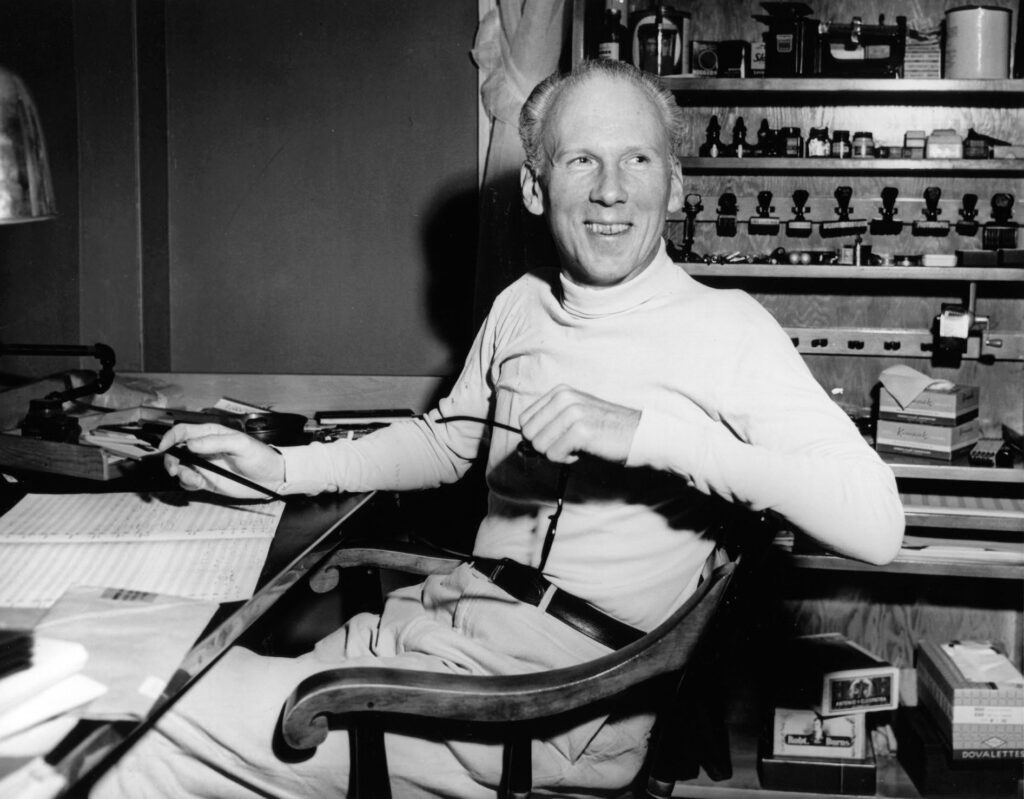
    In determining his life’s course, Ulysses Kay (1917-1995), received encouragement from his uncle, King Oliver, and William Grant Still. Among his teachers were Howard Hanson, Paul Hindemith, and Otto Luening. He also attended the American Academy in Rome.

    A longtime resident of Teaneck, NJ, he composed music in all genres. This week on “The Lost Chord,” we’ll sample “Tromba” for trumpet and piano, his Concerto for Orchestra, a suite from the semi-documentary “The Quiet One,” and “Six Dances for String Orchestra.”

    I hope you’ll join me for “Giving Kay His Say.” Ulysses strings his bow, on “The Lost Chord,” now in syndication on KWAX Classical Oregon!

    ———-

    An interview with Kay conducted by Bruce Duffie:

    http://www.bruceduffie.com/kay.html

    ———-

    PHOTO: Kay gets Lucky!
  • Going for the Gold on “Sweetness and Light”

    Going for the Gold on “Sweetness and Light”

    Citius! Altius! Fortius!

    With our heads still spinning from the surreality of the opening ceremony of the Winter Olympics in Milan – with its bobble headed salutes to Rossini, Verdi, and Puccini, and Andrea Bocelli singing “Nessun dorma” – we’ll be downing espresso in our most stylish shoes on “Sweetness and Light.”

    We’ll go for the gold with a winning playlist that will include music evocative of downhill skiing, stir memories of skating legends Michelle Kwan and Torvill & Dean, and glisten with Olympic fanfares.

    Pull up a chair and pour yourself some Wheaties. It’s a breakfast of champions, on “Sweetness and Light,” this Saturday morning at 11:00 EDT/8:00 PDT, exclusively on KWAX Classical Oregon!

    Stream it, wherever you are, at the link!

    https://kwax.uoregon.edu/

  • Music Propels the Action on “Picture Perfect”

    Music Propels the Action on “Picture Perfect”

    This week on “Picture Perfect,” we take flight with music from movies about airports and airplanes.

    In the original “Airport” (1970), producer Irwin Allen established the prototype for disaster movies of all stripes by placing an all-star, aging cast in spectacular peril. Burt Lancaster! Dean Martin! George Kennedy! Jean Seberg! Jacqueline Bisset! Helen Hayes! The list goes on and on, longer than the longest runway. The bongo-laden theme is by veteran film composer Alfred Newman,” from the last of his over 200 scores.

    Another movie with something of the same feel is “The V.I.P.s” (1963), allegedly inspired by the real-life love-triangle of Vivien Leigh, Laurence Olivier, and Peter Finch. The story is set at London Heathrow Airport, where flights are delayed because of a dense fog. The film was written by Terrence Rattigan and the parts cast from another laundry list of stars, including Elizabeth Taylor, Richard Burton, Louis Jourdan, Maggie Smith, Rod Taylor, and Orson Welles, with Margaret Rutherford in an Academy Award-winning performance. The music is by Miklós Rózsa.

    By contrast, Steven Spielberg’s “The Terminal” (2004) is an (intentionally) comic take on the predicament of a hapless Eastern European who finds himself in a kind limbo, trapped in an international arrivals terminal in New York, after his country erupts into civil war, so that his passport and other documentation are no longer valid. His plight mirrors that of real-life Mehran Karimi Nasseri, an Iranian who lived for 17 years in a terminal at Charles de Gaulle Airport.

    Tom Hanks plays the unfortunate traveler, who makes the terminal his home, and Catherine Zeta-Jones the airline attendant with whom he strikes up a relationship. The music is by regular Spielberg collaborator John Williams (whose 94th birthday it is on Sunday), and I think you’ll find it quite different from the Williams known for his work on “Star Wars” and “Indiana Jones.”

    Finally, we’ll turn to the Alfred Hitchcock thriller “North by Northwest” (1959), a film in which Cary Grant encounters love and danger in, on, and from a variety of planes, trains, and automobiles. Planes are particularly significant. During the course of the film, it’s revealed that the title is in reference to a Northwest Airlines flight; Eve Kendall (Eva Marie Saint) must do all she can to avoid getting on a plane with Phillip Vandamm (James Mason); and of course, Roger Thornhill (Grant) flees from a strafing crop duster. Bernard Herrmann’s opening fandango propels us into the adventure.

    FUN FACT: The film’s most iconic scene (pictured) is actually played without music.

    Rush more to Rushmore! Music propels the action on “Picture Perfect,” music for the movies, now in syndication on KWAX Classical Oregon!

    ——–

    Clip and save the start times for all three of my recorded shows:

    PICTURE PERFECT, the movie music show – Friday at 8:00 PM EST/5:00 PM PST

    SWEETNESS AND LIGHT, the light music program – Saturday at 11:00 AM EST/8:00 AM PST

    THE LOST CHORD, unusual and neglected rep – Saturday at 7:00 PM EST/4:00 PM PST

    Stream them, wherever you are, at the link!

    https://kwax.uoregon.edu

Tag Cloud

Aaron Copland (92) Beethoven (95) Composer (114) Film Music (123) Film Score (143) Film Scores (255) Halloween (94) John Williams (187) KWAX (229) Leonard Bernstein (101) Marlboro Music Festival (125) Movie Music (138) Opera (202) Philadelphia Orchestra (89) Picture Perfect (174) Princeton Symphony Orchestra (106) Radio (87) Ralph Vaughan Williams (85) Ross Amico (244) Roy's Tie-Dye Sci-Fi Corner (290) The Classical Network (101) The Lost Chord (268) Vaughan Williams (103) WPRB (396) WWFM (881)

DON’T MISS A BEAT

Receive a weekly digest every Sunday at noon by signing up here


RECENT POSTS