
It’s the first day of summer! Only three more months until autumn. Happy Father’s Day!
Category: Daily Dispatch
-

“Day of the Dad” on “The Lost Chord”
It is the eve of Father’s Day. Both my folks are gone, and I had a rather complex relationship with my biological father, who died of cancer in 2018. Still, toward the end, I visited him a lot, and we kind of became friends. At least I developed a better, or more rounded, understanding of him, though we still had a few adventures that reminded me of why it was probably a good thing that my mother herded us out of the nest when she did.
My old man could be an amusing personality if he were a work of fiction, or if he could be taken in at a safe remove. Also, in his way, he had a kind heart. His circle included a remarkable number of outsiders and societal cast-offs, and he managed to take care of many of them, after his fashion. But he was not one to be bound by rules or, more strictly speaking, the law. At best, he could be considered a bit of a scapegrace; at worst, he was an ardent hellraiser, especially in his prime.
But spending time with him later in life, it was fascinating to discover that, whether he knew it or not, he did live by a kind of code. Also, given his nature, I learned that a lot of what the rest of us had resented all these years was probably not entirely his fault. He just wasn’t cut out to raise a family. You can’t really fault a striped hyena for not being able to fly.
I could tell you stories about my dad that would make you howl with laughter or make your blood curdle, but instead I’ll just tie this in with my program today on “The Lost Chord,” which will consist of two pieces by American composers, written in loving memory of their fathers – with perhaps just a transitional bit of advice to get to know your parents, for better or worse, while there’s still time.
In 1999, composer Eric Ewazen was commissioned by an oboist-friend, Linda Strommen, who had recently lost her father, to write a new work as a kind of memorial tribute. Having recently experienced the death of his own father, the composer embarked on the project with a special sense of poignancy. He recollected that the day his father passed – Christmas Day, 1997 – an essay had appeared in the Cleveland Plain Dealer, by Richard Feagler. It consisted of funny, heartfelt stories of relatives and parents, long since departed. Near the end of the essay, titled “Christmas Past Comes Alive at Aunt Ida’s,” Feagler describes those beloved souls, “moving, though they can’t feel the current, down a river of time.”
Ewazen borrowed this image for the title of his concerto, “Down a River of Time,” a contemplation of that inexorable, rushing river – the first movement influenced by its ebbs and flows, hopes and dreams; the second attempting to convey emotions felt during times of loss, sorrow, resignation, tenderness, and peace in remembrance of happier, distant times. In the final movement, happier memories prevail, and feelings of strength and determination dominate.
Ewazen studied at, among other places, the Eastman School of Music. Howard Hanson had been director there for some 40 years. Along with the opera “Merry Mount,” Hanson came to regard his Symphony No. 4 as a personal favorite, a purely orchestral requiem, dedicated to the memory of his father. It falls into four movements, each bearing a Latin subtitle – “Kyrie,” “Requiescat,” “Dies Irae,” and “Lux Aeterna.” The work was given its first performance in 1943, with the composer conducting the Boston Symphony. It was awarded the Pulitzer Prize for Music in 1944.
It sure as hell beats another necktie. Spare a thought for the Old Man, and then join me for “Day of the Dad,” on “The Lost Chord,” now in syndication on KWAX Classical Oregon!
——-
Clip and save the start times for all three of my recorded shows:
PICTURE PERFECT, the movie music show – Friday at 8:00 PM EDT/5:00 PM PDT
SWEETNESS AND LIGHT, the light music program – Saturday at 11:00 AM EDT/8:00 AM PDT
THE LOST CHORD, unusual and neglected rep – Saturday at 7:00 PM EDT/4:00 PM PDT
Stream them, wherever you are, at the link!
https://kwax.uoregon.edu
——-PHOTO: Father knows beast
-
Enjoy Some Dad Time on “Sweetness and Light”
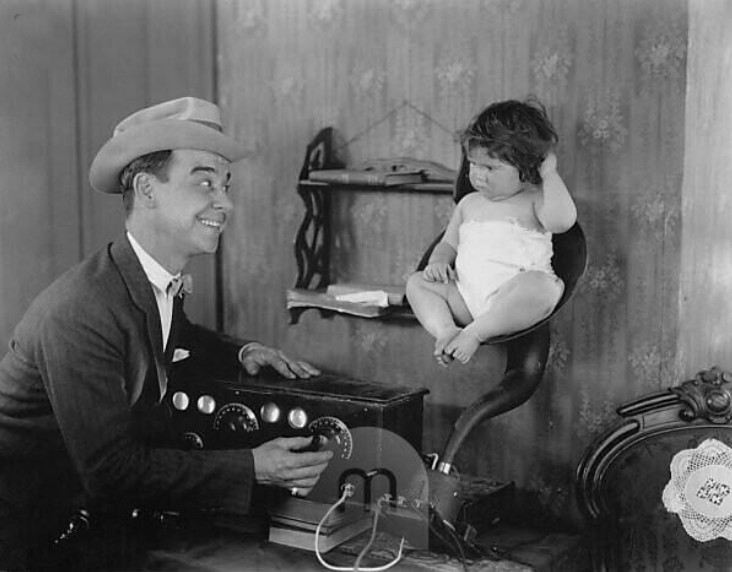
This week on “Sweetness and Light,” on the eve of Father’s Day, it’s a good time for Dad to share his love of radio.
Humor the old man by enjoying a program of works by composers from classical music dynasties, music performed by composers’ offspring, performer-families making music together, music dedicated by father to son and vice versa, and the odd piece written specifically about fathers and family.
There will be plenty of time to rap that necktie later. Put a smile on your face. Dad’s got some listening to do, to “Sweetness and Light,” this Saturday morning at 11:00 EDT/8:00 PDT, exclusively on KWAX, the radio station of the University of Oregon!
Stream it wherever you are at the link:
-
“Disclosure Day” Disclosed on “Picture Perfect”
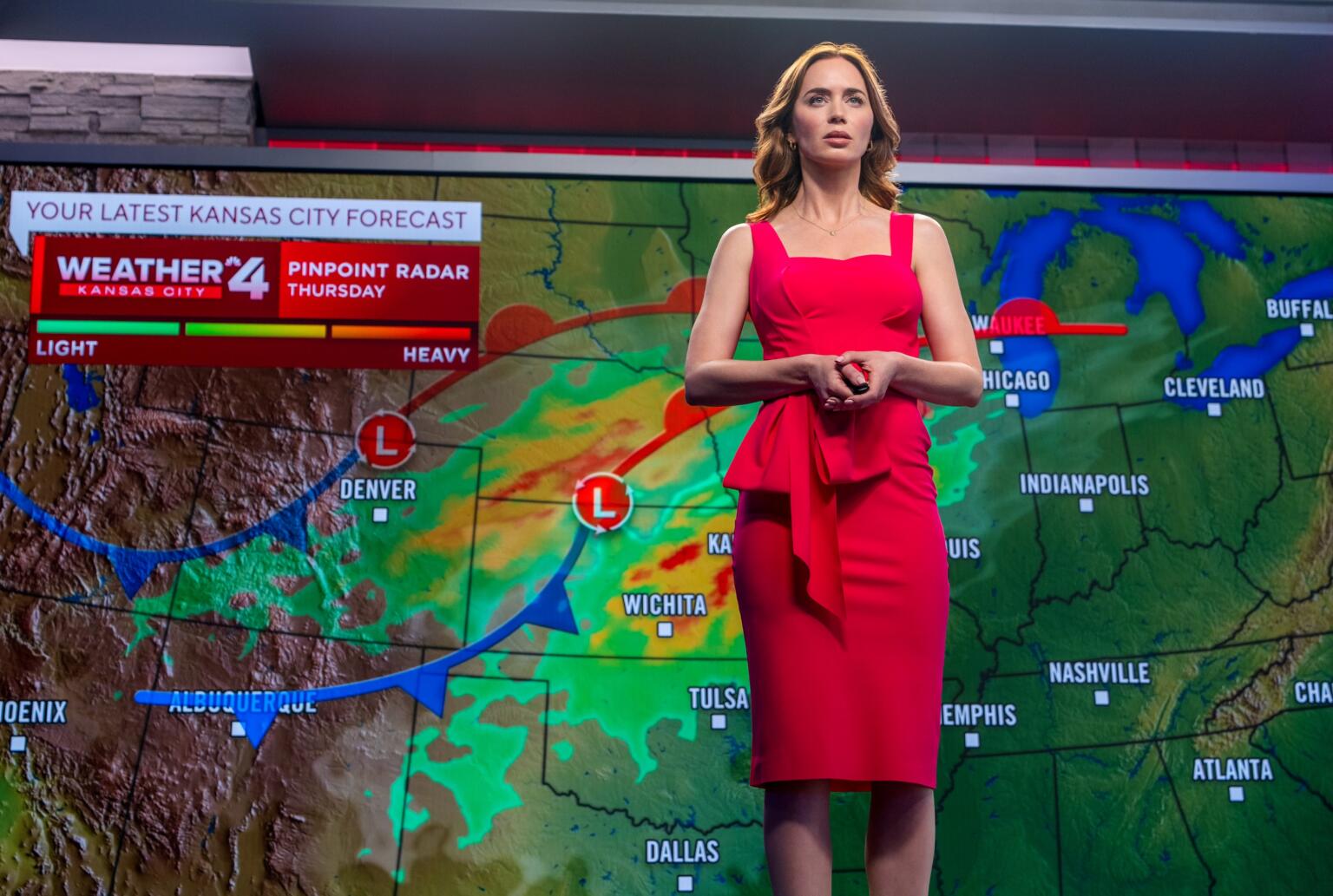
This week on “Picture Perfect” we disclose John Williams’ latest.
“Disclosure Day” will be at the heart of the program, which will feature music from all four of Steven Spielberg’s cinematic musings on intelligent life from other worlds. Has there been another director so fixated on extraterrestrials? Regardless of what one may think of the latest film – for a movie pushing unity, reactions have been unusually polarized – new music by John Williams is always cause for celebration.
We’ll hear 18 minutes from this, his 30th score for Spielberg (composed at the age of 93 & 94!), alongside musical selections from the director’s other otherworldly films, “Close Encounters of the Third Kind,” “War of the Worlds,” and “E.T. The Extra-Terrestrial.”
“Disclosure Day” proves you can’t go home – unless, of course, you’re E.T. – but the music can still be out of this world on “Picture Perfect,” now in syndication on KWAX Classical Oregon!
——-
Clip and save the start times for all three of my recorded shows:
PICTURE PERFECT, the movie music show – Friday at 8:00 PM EDT/5:00 PM PDT
SWEETNESS AND LIGHT, the light music program – Saturday at 11:00 AM EDT/8:00 AM PDT
THE LOST CHORD, unusual and neglected rep – Saturday at 7:00 PM EDT/4:00 PM PDT
Stream them, wherever you are, at the link!
https://kwax.uoregon.edu
——-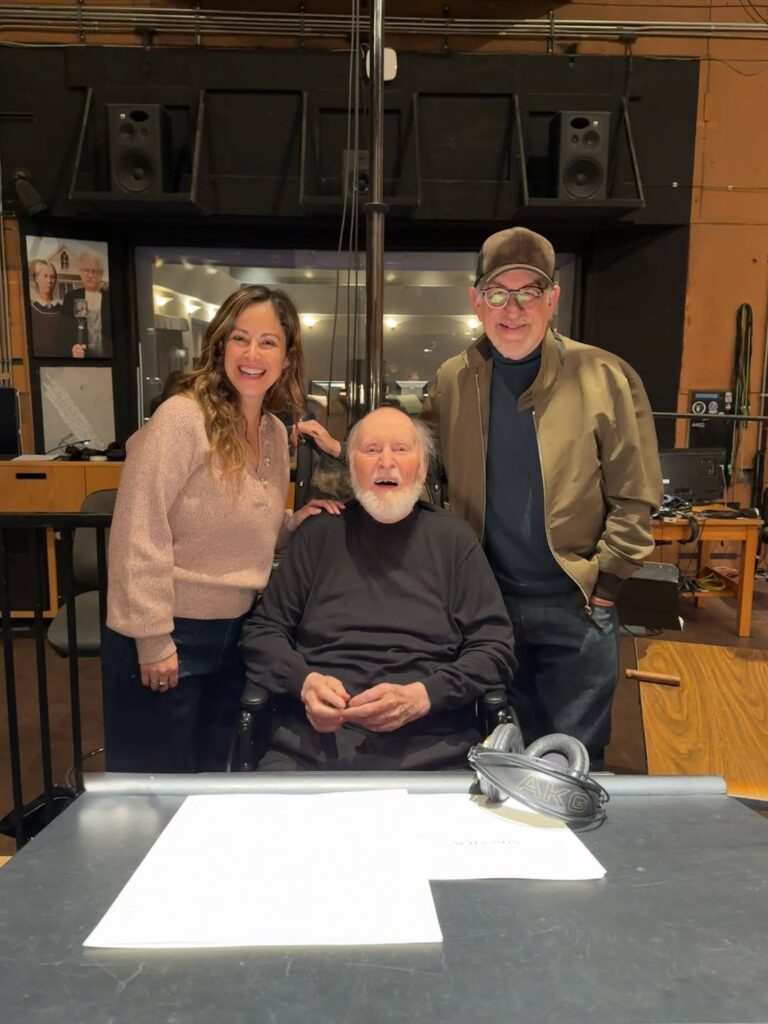
PHOTO: Williams and Spielberg with soprano Holly Sedillos
-
By George! A New Documentary by H. Paul Moon
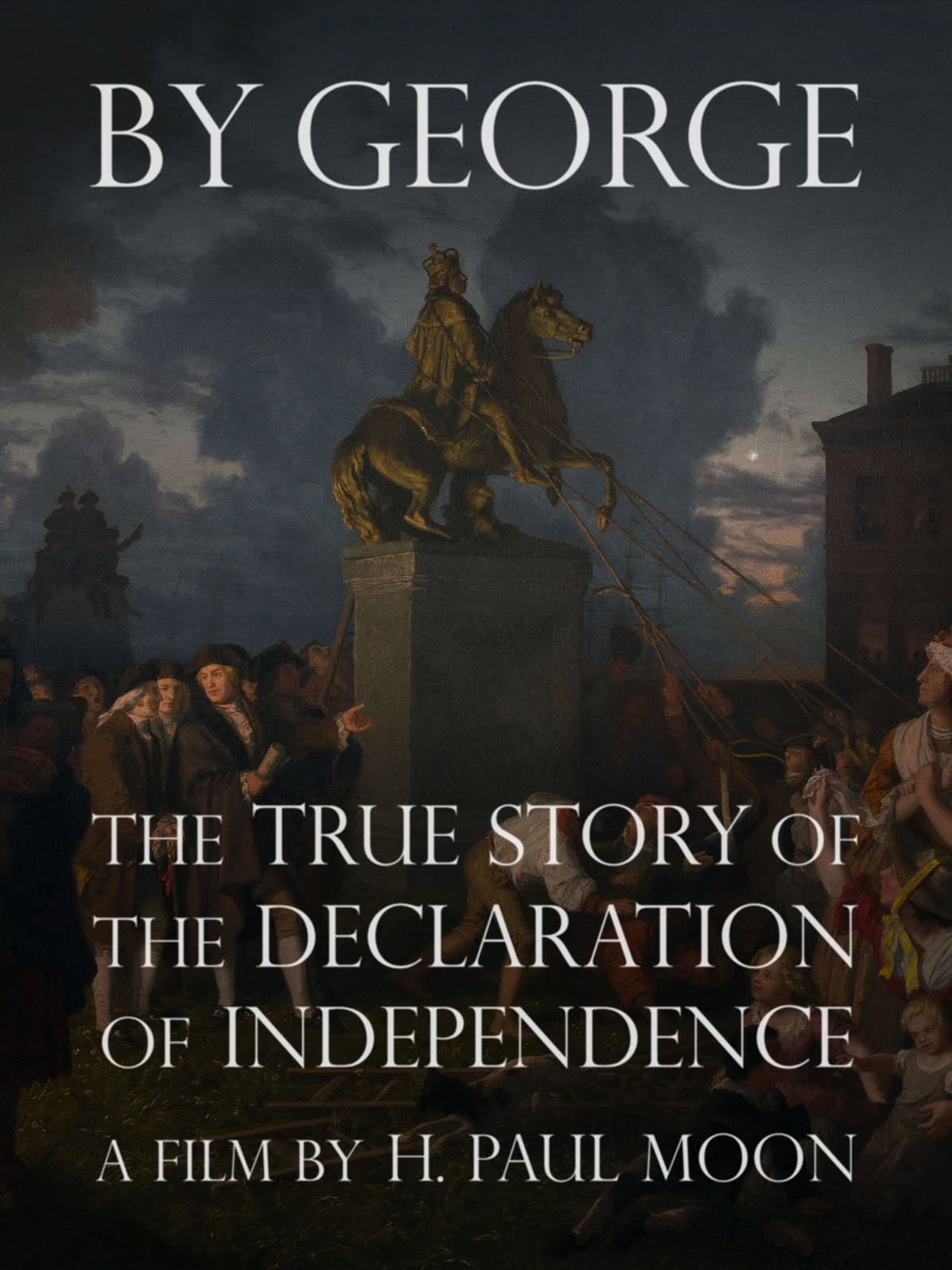
If you’re in DC or NYC, you’re in prime position to catch “By George: It All Comes Down,” a new film by H. Paul Moon for America’s Semiquincentennial.
On July 9, 1776, following the first public reading of the Declaration of Independence, New Yorkers toppled a statue of King George III that stood in Bowling Green. Among other things, the statue was melted down into musket balls to defend the American cause.
You can learn more about this one-hour documentary and the context of its New York premiere (on July 9, 2026, 250 years to the day later), a special outdoor screening just about a stone’s throw from the former location of the actual statue, by following the link. If you’re interested, you’ll also be able to reserve a free ticket.
nyc.july9th.com
In the meantime, the film is showing in a special four-screen immersive version at Dupont Underground (beneath Dupont Circle), in Washington, DC. Hourly showings take place every hour on the hour, weekends through July 5.
You can learn more about that here:
dc.july9th.com
I know Paul has worked long and hard on this project. I’ve already reserved my spot at the Battery. I hope you will join me in supporting it!
Yet more information, with stills from the film, here:
https://zenviolence.com/bygeorge
Tag Cloud
Aaron Copland (94) Beethoven (95) Composer (114) Film Music (149) Film Score (143) Film Scores (255) Halloween (98) John Williams (197) KWAX (232) Leonard Bernstein (105) Marlboro Music Festival (125) Movie Music (164) Mozart (91) Opera (215) Philadelphia Orchestra (90) Picture Perfect (174) Princeton Symphony Orchestra (110) Radio (90) Ross Amico (244) Roy's Tie-Dye Sci-Fi Corner (290) The Classical Network (101) The Lost Chord (269) Vaughan Williams (107) WPRB (397) WWFM (881)