No more stuffing phone booths or goldfish swallowing contests or taking the dean’s car apart and reassembling it in his living room. In the words of the poet: All good things must come to an end.
This morning on “Sweetness and Light,” for graduation season, it’s a hazy recollection of the world of higher education, as we salute another successful batch of cogs about to enter the work force.
Join me for a program of processionals and scenes from campus life – including a shocking number of works based on student drinking songs. Composers represented will include Jean Sibelius, Johannes Brahms, Franz Liszt, Johann Strauss II, Sigmund Romberg, Nikolai Rimsky-Korsakov, and of course Sir Edward “Pomp and Circumstance” Elgar.
Hide the empties from the folks and join me in cap and gown. We’ll be churning out responsible citizens as they reel to the platform to claim their parchment on the next “Sweetness and Light,” this Saturday morning at 11:00 EDT/8:00 PDT, exclusively on KWAX Classical Oregon!
Stream it, wherever you are, at the link:
https://kwax.uoregon.edu/
Category: Daily Dispatch
-

It’s Graduation Season on “Sweetness and Light”
-
Get Lost on “Picture Perfect”
This week on “Picture Perfect,” I invite you to get lost! It’s all music from movies about lost worlds and forgotten civilizations.
While the concept of the “Lost World” dates at least as far back as Plato’s Atlantis, it wasn’t until the Victorian Era that the idea really blossomed in the public consciousness. At the time, of course, lost civilizations were genuinely being discovered – which might help explain, in part, the incredible success of “King Solomon’s Mines.” The author, H. Rider Haggard, wrote the book on a bet that he could churn out an adventure story half as good as Robert Louis Stevenson’s “Treasure Island,” which had been published two years earlier.
“King Solomon’s Mines” became the literary sensation of 1885. Its protagonist, Allan Quatermain, is a direct ancestor of Indiana Jones. The book inspired reams of sequels and at least five film adaptations.
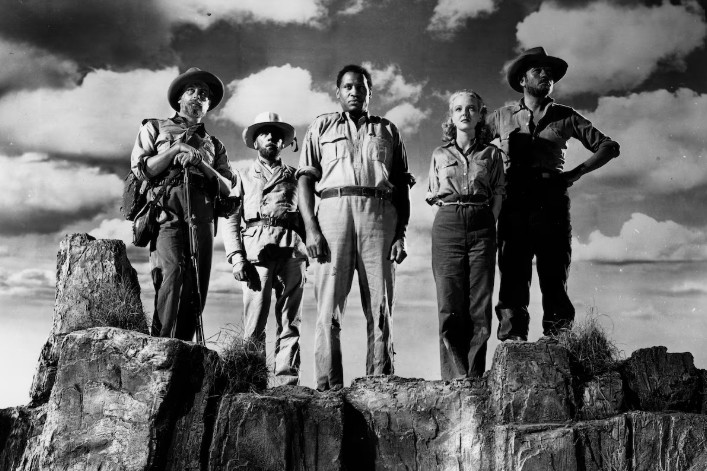
The two best known starred Stewart Granger, in 1950, and Paul Robeson, in 1937. Robeson, who played Umbopa, a king in disguise, received top billing. The score was by Mischa Spoliansky.
Haggard achieved another “Lost World” hit with “She,” first issued in book form in 1887 – another adventure about Europeans in Africa, who meet a seemingly immortal white queen known as the all-powerful She, or She-Who-Must-Be-Obeyed.
“She” has been adapted to film six times. The 1965 version starred Ursula Andress, Peter Cushing, and Christopher Lee. The music was by Hammer Studios house composer, James Bernard. It’s nice to hear Bernard, who mostly wrote horror scores for the likes of Dracula and Frankenstein, provide something a little more nuanced for a change.
Rudyard Kipling’s “The Man Who Would Be King,” published in 1888, was clearly influenced by the writings of Haggard. In this case, two British adventurers in India strike out for a remote corner of Afghanistan to set themselves up as kings. The story was made into one of the great adventure films of the 1970s, directed by John Huston, and starring Sean Connery and Michael Caine. That Christopher Plummer appears as Kipling himself is only icing on the cake. Maurice Jarre wrote the rousing score.
Finally, James Hilton’s “Lost Horizon,” published in 1933, imagines Shangri-La, a Utopian society nestled in a sheltered valley somewhere in the mountains of Tibet. A British diplomat is one of a handful of passengers who survives a plane crash to be taken into the lamasery.
“Lost Horizon” was made into a film twice. The less said about the 1973 version, a musical with songs by Burt Bacharach, the better. Frank Capra directed the classic 1937 version, which starred Ronald Colman, Jane Wyatt, and outstanding character actors of the day, people like Edward Everett Horton, Thomas Mitchell, Sam Jaffe, and H.B. Warner.
The score, Dimitri Tiomkin’s first major contribution, was also one of his most ambitious. Seldom was it so obvious that he had studied at the St. Petersburg Conservatory under Alexander Glazunov.
I hope you’ll lose yourself in music for lost civilizations this week, on “Picture Perfect,” music for the movies, now in syndication on KWAX Classical Oregon!
——-
Clip and save the start times for all three of my recorded shows:
PICTURE PERFECT, the movie music show – Friday at 8:00 PM EDT/5:00 PM PDT
SWEETNESS AND LIGHT, the light music program – Saturday at 11:00 AM EDT/8:00 AM PDT
THE LOST CHORD, unusual and neglected rep – Saturday at 7:00 PM EDT/4:00 PM PDT
Stream them, wherever you are, at the link!
https://kwax.uoregon.edu
——-
PHOTO: Paul Robeson headlines “King Solomon’s Mines” -

100 Years of Carlisle Floyd
When someone lived as long as Carlisle Floyd, it seems as if no time has passed when we come to mark his centenary. Floyd, one of the most successful opera composers this country ever produced, died in 2021 at the age of 95.
In 1955, even as tonality was slipping out of fashion, Floyd achieved something quite wonderful. He transplanted the Apocryphal tale of Susannah and the Elders to rural Tennessee – writing libretto and music while on the piano faculty at Florida State University – and rendered it with touching, tuneful simplicity. He was not yet 30, when he enticed soprano Phyllis Curtin and baritone Mack Harrell to Tallahassee to sing in the world premiere.
The work’s success soon spread to New York City, and “Susannah” became one of the most frequently performed of American operas, said to be second only to Gershwin’s “Porgy and Bess.” It does feature two heart-melting arias that remain favorites of aspiring American sopranos: “Ain’t It a Pretty Night” and “The Trees on the Mountain.” The directness of the drama and the uncluttered musical language struck a chord with both performers and audiences.
Emboldened by his success, Floyd went on to compose ten more operas, all of them on his own librettos, drawing inspiration from such diverse sources as Emily Brontë’s “Wuthering Heights,” Robert Louis Stevenson’s “Markheim,” John Steinbeck’s “Of Mice and Men,” and Robert Penn Warren’s “All the King’s Men.”
“Cold Sassy Tree,” based on the novel of Olive Ann Burns, was given its premiere in 2000. The composer had intended it to be his swan song. He had become too busy caring for his wife, who was suffering from Alzheimer’s disease, to devote much further thought to composition. But following her death, he found the inspiration for one last hurrah. The result was “Prince of Players,” about 17th century actor Edward Kynaston, which was given its premiere at Houston Grand Opera in March 2016, when the composer was 90-years-old.
For his centennial year, there are more than 30 productions of his operas scheduled, as well as a Carnegie Hall celebration later this month. It’s heartening that his significance has not been overlooked.
Ain’t it a pretty night for Carlisle Floyd!
——–
Dawn Upshaw breaks hearts with “Ain’t It a Pretty Night,” from “Susannah”
Cheryl Studer sings “The Trees on the Mountain,” from a complete recording of the work
Samuel Ramey as the Reverend Olin Blitch
A taste of “Prince of Players” from Little Opera Theater of New York
The 2021 Grammy-nominated recording (Best Opera Recording; Best Contemporary Classical Composition; Producer of the Year, Classical)
Carlisle Floyd speaks
“Cold Sassy Tree”——–
PHOTO: Floyd in 2009, outside the house in Tallahassee, FL, in which he composed “Susannah” -
John Williams’ “Disclosure Day”: Film Music’s Last Crusade?
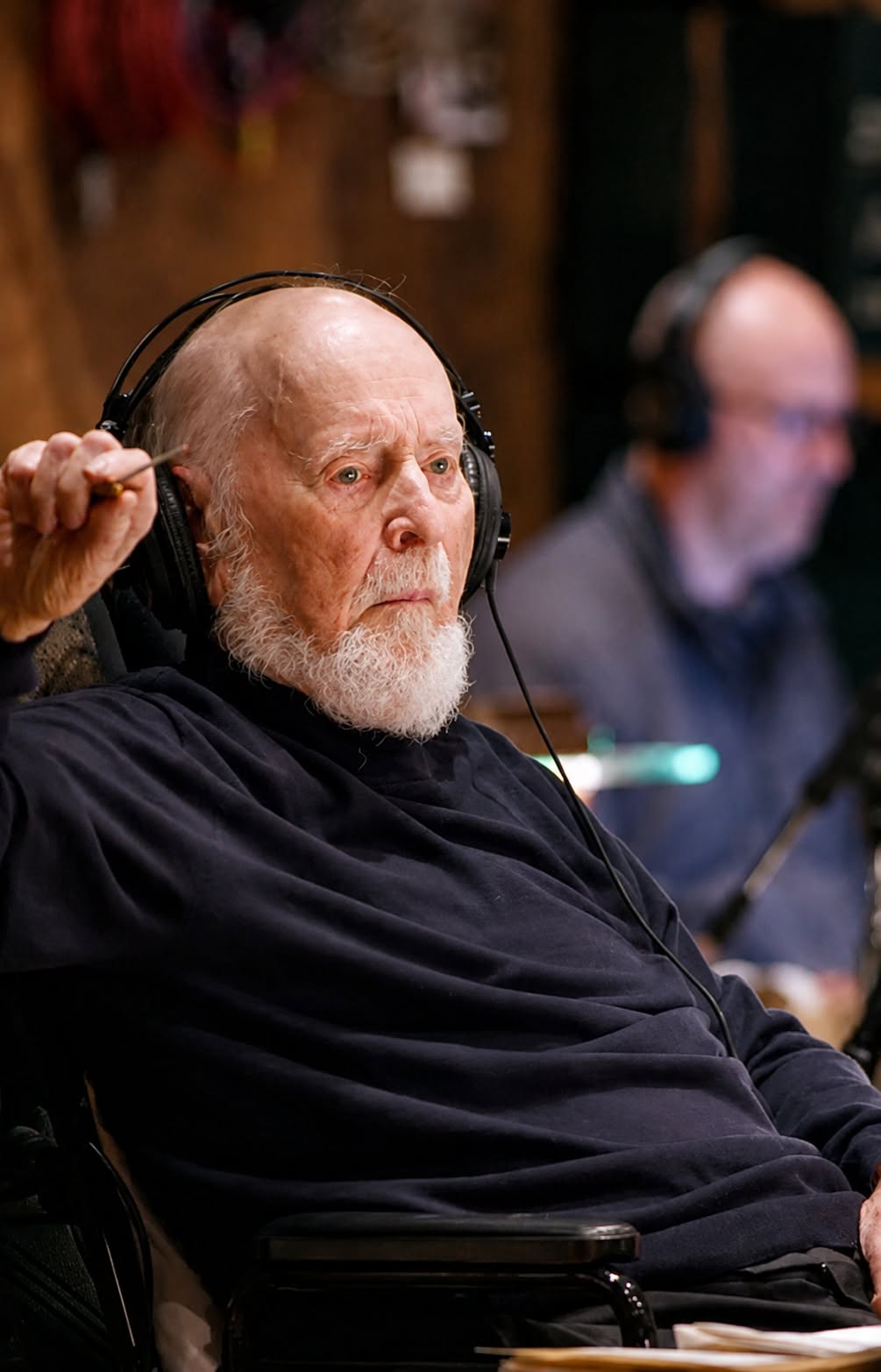
For some reason, the powers-that-be were unusually cagey about the score to Steven Spielberg’s imminent extraterrestrial opus, “Disclosure Day.” I mean, it was common knowledge that John Williams would be writing the music, but when someone at one of the recording sessions posted a video clip of Williams conducting, it was swiftly taken down – as if someone had shared irrefutable evidence of an actual close encounter, and it needed to be covered-up. Why? Naturally, the conspiracy mill was set churning. The truth is out there!
Personally, I wondered if perhaps, on account of his advanced age (Williams is 94-years-old), there was concern that he might not have had the energy to follow-through on the project, or that his work would reveal that he had simply lost his touch. The first trailer for the film transparently did not use Williams’ music, but rather employed what sounded like generic tracks from the studio library – no sense of the Williams magic anywhere – and for me, there was no doubt that its absence diminished it.
Then I thought, there’s got to be a new trailer for the Super Bowl, and this one will definitely feature Williams. There was, and it didn’t. How could I not think that the producers were panicking or that the bean-counters hated the music and that there was scrambling going on behind the scenes to find competent hands to make sense of whatever superannuated Williams had produced?
In the past, there have been a few instances where Williams was assisted by now 77-year-old William Ross (“Harry Potter and the Chamber of Secrets,” “Star Wars: The Rise of Skywalker,” and “Indiana Jones and the Dial of Destiny”), but Ross has always been the first to admit that Williams did all the actual composing. Recent Williams biographer Tim Greiving insists that the new score is substantial, and that John Williams wrote every note.
I won’t watch the most recent trailer, as I don’t want to know any more about the movie until I see it, so I can’t speak to whether or not Williams’ music has finally been utilized in the film’s marketing. But not long ago, someone leaked a minute of the music online, and it’s gorgeous. A few days later, a three-minute teaser for the film’s soundtrack was posted, which turned out to include that minute clip. I’ve been playing it over and over again. This is the kind of film music I have so been missing. It doesn’t hurt that its atmosphere is very much akin to that of Vaughan Williams of the Tallis Fantasia and “A London Symphony.”
This exposure to new John Williams music and the prospect of making it the soundtrack of my summer lifted my heart, but also filled me with trepidation about the physical release of the score. The world has moved on from the 20th century, and wide distribution of a compact disc release is no longer guaranteed. I mean, look at how poorly Disney handled the “Dial of Destiny” soundtrack, with its preorder, limited quantity BS. It took me over a year to luck into a shrink-wrapped overstock copy, which I was able to purchase from a third party for about 50 bucks. THIS IS JOHN WILLIAMS, PEOPLE. Wake up! There is still a market for his music!
Fortunately, Disney has no connection to the current film, a Universal release, with the soundtrack being distributed by Waxwork Records. I had a moment of panic when corresponding with Mather Pfeiffenberger about it. It looked to me like it was only going to be made available as a digital download, with a limited vinyl run. Mather did an A.I. search to confirm my worst fear: that it would not be coming to CD. Naturally, I exploded like Mount Etna (it’s my Sicilian blood), but thankfully I looked further into it, and it will indeed be released on compact disc in July – weeks after the release of the film, which is not ideal, but hey, at least it will be available. (Another epic fail for A.I. Don’t trust it!) It remains to be seen what retailers will be carrying it and how easy it will be to get a copy. I don’t want to be put through the Disney mangler again.
Of course, this poses an issue for “Picture Perfect,” my film music show, as I would have loved to have been able to share some of the music this week. But a phone call to Waxwork revealed that I would have to go through Universal to get permission, and I just didn’t want to deal with it. I believe the digital download will be available on Friday. I’ll pick up what I need for next week, and then buy the CD when it’s available.
Things were so much simpler in the old days. Soundtrack albums were usually in stores well in advance of a movie’s release, and I’d be listening to the music before I even saw the film, scrupulously avoiding reading the titles of the tracks. Life was good then.
At any rate, what we have to enjoy now is the three minutes at the link below, and I’m loving it. Although he continues to do his best to keep himself sharp by composing every day, it’s entirely possible this will be John Williams’ final film score. But he’s been surprising us again and again for the last twenty years. I’m just thankful that if it is his last film, it’s not “Star Wars” or Indiana Jones. The ship should have sailed on those franchises in the ‘80s.
This is the 30th collaboration between Williams and Spielberg, and surely it will bring the composer his 55th Academy Awards nomination. It won’t win, but it will further solidify Williams’ standing as the most nominated person alive. If it comes to pass, he would only need three more nominated scores to match the all-time nominations champ, Walt Disney! He could have done it, too, had he not had periods when he took a few years off. But we can’t begrudge him that. In the words of Charles Ives, “Prizes are for boys, and I’m all grown up.”
Thank you, John Williams, for all the beauty and inspiration you’ve brought to the world. I am deeply grateful for this opportunity to enjoy one last remnant of a great era. -
Expanding My Horizons with Carl Nielsen
When I first heard Carl Nielsen’s Symphony No. 3, I was sweating it out in a one-room efficiency in West Philadelphia that I shared with two of my classmates, while making up a math course I had flubbed at Temple University.
It was the summer of ’85, there was no air conditioning, and I studied and slept in a netted hammock suspended from two bicycle hooks I had screwed into the door frames to prevent being surprised by mice. There was always movement in the lone trash bag that sat exposed on the linoleum in the corner of the kitchenette, and to prove a point once I lobbed a sneaker into it, from the safety of my resting place, so that the rodents poured out of it and scurried around the apartment, sending one of my roommates, the one whose name was on the lease, shrieking into his bunk. He had a job canvasing for a political organization, so he was gone all day and would stagger back every night after last-call to sketch with intensity under a bright, exposed lightbulb that shone down in my face. Somewhere along the way, he brought home a turtle, which he kept in the bathtub and fed raw hamburger, until I couldn’t take its imprisonment any longer and finally released it into Fairmount Park.
The other roommate had the good sense to get a girlfriend, so he was never there. His contribution was a makeshift bunk bed hastily assembled from planks he had plucked from the garbage. The top bunk was usually vacant, due to his absence, and the bottom bunk was where my politically-motivated, alcohol-fueled, musky, mulchy-footed friend slept between me and the sole window fan.
Occasionally, I’d glimpse a cockroach making its way down one of the ropes of my hammock, and I’d start rocking about, trying to dislodge it. More than once, one of the bike hooks let go. The roaches were everywhere. There were even roaches in the freezer.
It was under these circumstances, one boxed-in, sweltering afternoon, that I first experienced Carl Nielsen’s Symphony No. 3, subtitled “Sinfonia espansiva.” It was broadcast on WFLN, Philadelphia’s classical music station for nearly 50 years (sadly, now defunct). Nielsen’s aspirational music opened up horizons for me and offered glimpses of larger things.
The recording was conducted by Leonard Bernstein. For those of you who aren’t familiar with him, Carl Nielsen is Denmark’s most celebrated composer. Yet, internationally, his music has struggled to take root in the shadow of that other great bard of the North, Jean Sibelius. This is a shame, since, far from being a Sibelius knock-off, Nielsen forged his own, immediately-recognizable style. Bernstein believed Nielsen’s rightful place was as Sibelius’ equal.
“I think many people are in for pleasant surprises as they get to know Nielsen,” he said at a centennial celebration of the composer’s birth, “his rough charm, his swing, his drive, his rhythmic surprises, his strange power of harmonic and tonal relationships – and especially his constant unpredictability – all these are irresistible. I feel confident that Nielsen’s time has come.”
Hey, he was right about Mahler. But that was in 1965, and Lenny’s prophetic lightning failed to strike twice. Sixty-one years on, with many more recordings and performances to choose from, Nielsen’s music remains, stubbornly, an acquired taste, if a rewarding one. There really is nothing else quite like it – the puckish wit, the ambiguities, the quirky juxtaposition of seemingly disparate melodies, harmonies, and key signatures, all very often shot through with a sense of hope and optimism that rises above the chaos.
I only lived in that hell hole for about a month, one summer session, thankfully, just long enough to make-up my credits, and then it was off to the greenery of my hometown to detox. But I was in the process of selling my soul for a piece of parchment, a degree, so in the fall it was back to Philadelphia.
After the purchase of my first CD-player, in order to feed my habit, I took a part-time job as a clerk at Sam Goody, a record shop then located at 11th and Chestnut Streets, which at the time had the most extensive classical music section in the city. (This was before the arrival of Tower Records.) It was there that I acquired Neeme Järvi’s Prokofiev cycle, Bernard Haitink’s Shostakovich cycle, Adrian Boult’s Vaughan Williams cycle, and my first recording of Nielsen’s Symphony No. 3. Essentially, I signed my paycheck back over to the company in exchange for CDs. I remember my frustration that so much of the good stuff was still only on LP.
The Nielsen recording was not the classic Leonard Bernstein performance I had heard on the radio – which had yet to be transferred to compact disc – but a newer, digital recording with Myung-Whun Chung and the Gothenburg Symphony Orchestra, on the BIS label. And I have to say, giving all credit to Bernstein for his advocacy of Nielsen’s music, I believe Chung’s recording outshines his in every way. To this day, I find it to be one of the most satisfying Nielsen recordings. It must have been within my first ten CD purchases. I remember when I had so few, I could keep them all in a shoebox. Now I’ve got a library of a good 10,000. You might say it has gone “espansiva.”
What exactly did Nielsen mean by that choice of subtitle? Robert Simpson wrote that the use of “espansiva” suggests an “outward growth of the mind’s scope.” There is certainly a sensation of expanding horizons about the piece, which includes a pastoral slow movement complete with wordless solos for soprano and baritone. According to Nielsen, the symphony concludes with “a hymn to work and the healthy activity of living.” All I know is that it fills me with optimism and happiness.
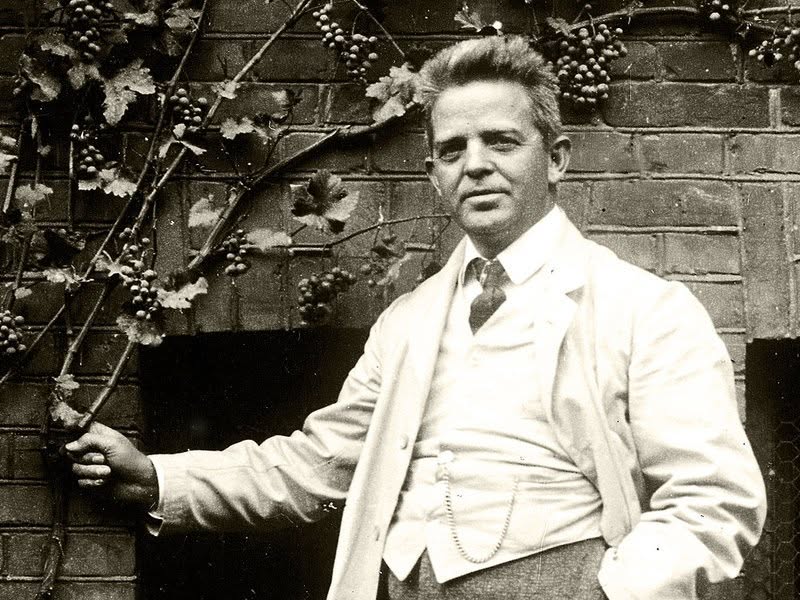
A tip of the blond brush cut to Carl Nielsen on his birthday. Perhaps his time will come. For me, it arrived in a very different climate from that of Copenhagen, in tropical West Philadelphia, in the summer 1985.
——–
Leonard Bernstein conducts the Royal Danish Orchestra on its own turf
https://www.youtube.com/watch?v=VNNP_4TYnV4
Myung-Whun Chung and the Gothenburg Symphony
https://www.youtube.com/watch?v=IS_-K_w9wdM
“Espansiva: A Portrait of Carl Nielsen”
https://www.youtube.com/watch?v=r0a1CPcTDEA&t
Tag Cloud
Aaron Copland (94) Beethoven (95) Composer (114) Film Music (149) Film Score (143) Film Scores (255) Halloween (98) John Williams (197) KWAX (232) Leonard Bernstein (105) Marlboro Music Festival (125) Movie Music (164) Mozart (91) Opera (215) Philadelphia Orchestra (90) Picture Perfect (174) Princeton Symphony Orchestra (110) Radio (90) Ross Amico (244) Roy's Tie-Dye Sci-Fi Corner (290) The Classical Network (101) The Lost Chord (269) Vaughan Williams (107) WPRB (397) WWFM (881)