Category: Daily Dispatch

  • Ernest Fanelli’s Lost Mummy Masterpiece

    Ernest Fanelli’s Lost Mummy Masterpiece

    By the time his music was performed publicly, it had been 18 years since the composer had stopped writing.

    Ernest Fanelli is one of those poor, unsung prophets of music history who wrote works brimming with colorful ideas, expressed well ahead of their time. He was underappreciated, unnoticed, or fell short of his overall potential, yet later masters capitalized, either wittingly or unwittingly, on his remarkable innovations. Others undoubtedly lifted his discoveries to greater heights, but that doesn’t change the fact that Fanelli got there first.

    This week on “The Lost Chord,” with Halloween only days away, we rediscover this forgotten composer and exhume his seminal masterpiece, “The Romance of the Mummy.”

    It’s fairly obvious that Fanelli’s unpublished manuscript fueled the imagination of Claude Debussy, who in turn not only influenced the course of French music, but also changed the way artists and audiences thought about music heading into 20th century. That’s not to say that Fanelli was of the same caliber as Debussy. But like Hans Rott, whose lone symphony clearly influenced Mahler, he is an essential footnote in the history of a new kind of music.

    Episodes from “The Romance of the Mummy” anticipate not only Debussy and Ravel, but also Paul Dukas and Florent Schmitt, Holst, Sibelius, Respighi, Richard Strauss and even Stravinsky, a figure Fanelli would not have known. Not all of these composers were familiar with Fanelli’s work – in many cases, it’s simply a matter of music history finally catching up – but Debussy most probably was. When Fanelli’s “Mummy” was finally given its first public hearing, Debussy did his best to distance himself from the composer. He was even known to have done an about-face if he happened to walk into a café and saw Fanelli sitting at the piano.

    Fanelli lived from 1860 to 1917. A French composer of Italian descent, he studied at the Paris Conservatory for a stint – allegedly under Charles-Valentin Alkan (although it’s unlikely, since Alkan had already quit the Conservatory by the time he entered). Later, he returned to study under Léo Delibes. Fanelli was unable to complete either course, due to lack of funds. In the meantime, he eked out a career as a percussionist.

    He was seeking employment as a copyist in 1912, when he showed Gabriel Pierné an example of his handwriting from one of his unpublished manuscripts, written some 30 years earlier. Pierné was so taken by the actual music that he arranged for the “Mummy’s” belated premiere.

    “The Romance of the Mummy,” based on a novel by Théophile Gautier, tells the tale of an English archaeologist, who exhumes and falls in love with – well, a mummy. Papyrus rolls in her mausoleum reveal her back-story and fate. She is Tahoser, who falls in love of Poeri, a handsome Hebrew. The Pharaoh (unnamed, though it would have been Ramses II) desires Tahoser for himself. However, the lovely young woman falls ill when she finds Poeri is in love with Rachel. She is healed by the prophet Moses, who initiates her into the cult of Jehovah. Pharaoh becomes an enemy of the Jewish people and abducts Tahoser. When he dies in the Red Sea, in circumstances described in the Book of Exodus, Tahoser is crowned Queen of Egypt. Hence, her presence in the pharaoh’s tomb.

    The first set of tableaux is titled “Thebes,” and is made up of the subsections “Before Tehoser’s Palace,” “On the Nile,” and “Triumphal Return of the Pharaoh.”

    It was the conductor Adriano who discovered a second set of tableaux in the music library of Radio France, titled “Festivities in the Pharaoh’s Palace.” The three subsections of the second set are called “In a Room in the Palace – The Naked Jugglers,” “Grotesque Dance of the Egyptian Jesters,” and “Triumphant Hymns – Orgy.” The music received its first performance only in 2002 for this release, issued on the Marco Polo label.

    Is it love or infatuation? Peer behind the bandages of music history on “Mummy Dearest,” on “The Lost Chord,” now in syndication on KWAX, the radio station of the University of Oregon!


    Remember, KWAX is on the West Coast, so there’s a three-hour difference for the Trenton-Princeton area. Here are the respective air-times of my recorded shows (with East Coast conversions in parentheses):

    PICTURE PERFECT, the movie music show – Friday on KWAX at 5:00 PACIFIC TIME (8:00 PM EDT)

    THE LOST CHORD, unusual and neglected rep – Saturday on KWAX at 4:00 PACIFIC TIME (7:00 PM EDT)

    Stream them here!
    https://kwax.uoregon.edu/

  • Exorcist Curse Strikes Rescheduled Discussion

    Exorcist Curse Strikes Rescheduled Discussion

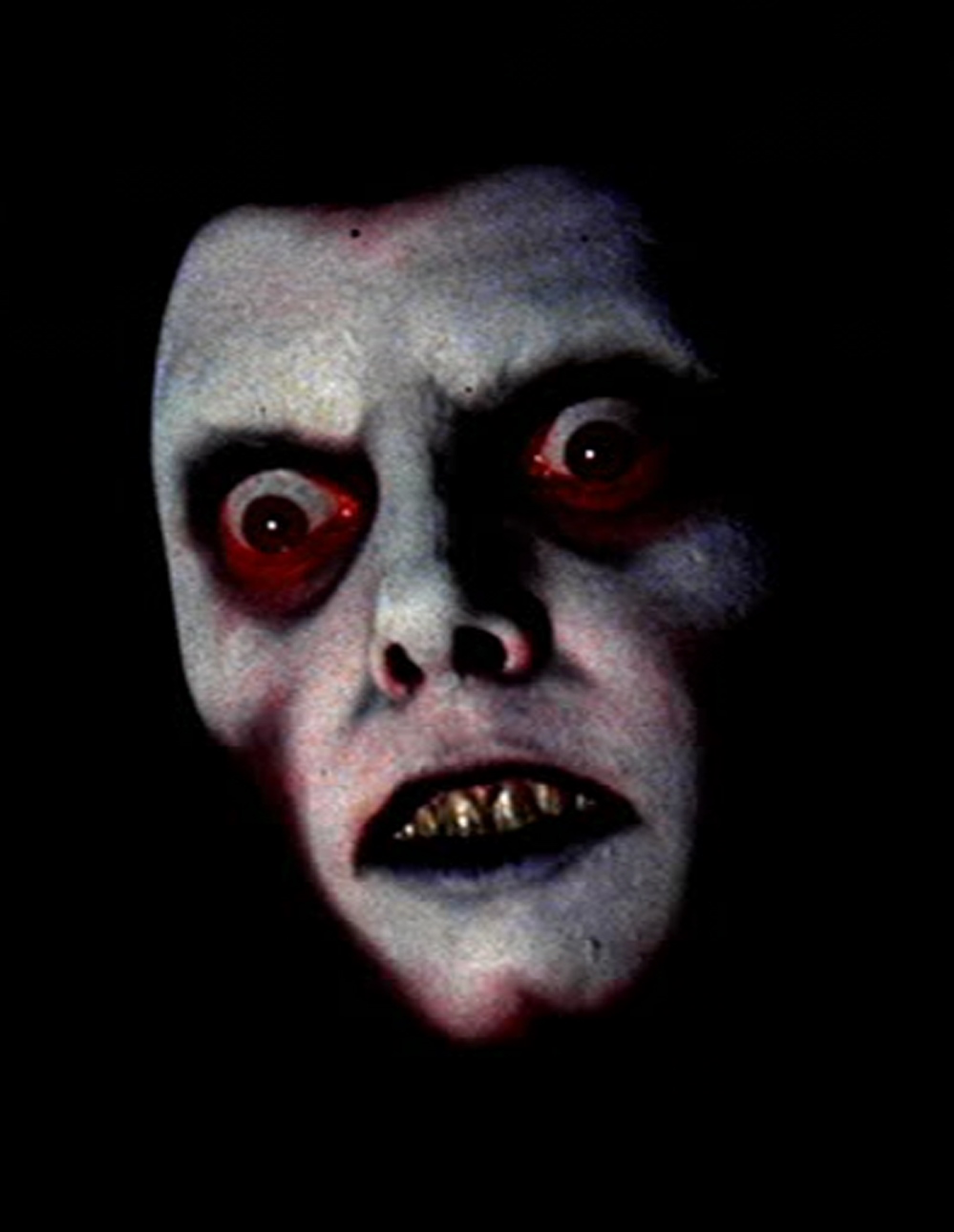
    In case you haven’t heard yet, our discussion about “The Exorcist,” which was to have taken place tonight on Roy’s Tie-Dye Sci-Fi Corner, has had to be rescheduled. Roy and I are now planning our palaver about Pazuzu for this Sunday. If there was ever any doubt, the “Exorcist curse” is real! Be sure to join us in the comments section. Captain Howdy will be our moderator, when we livestream on Facebook, YouTube, etc., this Sunday evening at 7:00 EDT!

    https://www.facebook.com/roystiedyescificorner

    Actually, now you’re free to listen to “Picture Perfect,” my film music show, on KWAX tonight at 8:00 EDT!

    Stream it here:

    https://kwax.uoregon.edu/

  • Charles Ives Halloween Music Birthday Tribute

    Charles Ives Halloween Music Birthday Tribute

    For Charles Ives’ birthday, here are two Halloween-related pieces. And you can listen to them both in just over three minutes.

    First, my favorite recording of “Hallowe’en” (1907), in its original version for string quartet and piano, since it actually includes the bass drum. Ives later orchestrated the work, but it just ain’t the same. The composer wrote, “It’s a take-off of a Halloween party and bonfire – the elfishness of the little boys throwing wood on the fire, etc., etc… it is a joke even Herbert Hoover could get.”

    And then this wisp of a song, “Slugging a Vampire” (1902). The music was originally composed to Rudyard Kipling’s poem “Tarrant Moss,” but permission to use Kipling’s text had not been obtained by the time Ives’ “114 Songs” were to go to press. So Ives just included the first few words and left the rest of the voice-part blank.

    “114 Songs” went through two editions and was reprinted in 1975, all without Kipling. When the composer later published “Nineteen Songs” in 1935, he decided to reuse the music, but this time he made up his own text. The result is like having consumed tainted Smartees from your trick-or-treat loot before your parents had a chance to check your candy.

    This is a guy who really understood Halloween. Happy birthday, Charles Ives!

  • War of the Worlds & H.G. Wells on Picture Perfect

    War of the Worlds & H.G. Wells on Picture Perfect

    This week on “Picture Perfect,” with Halloween only days away, my thoughts turn to Grover’s Mill, the community located not far outside of Princeton, NJ, that became the focal point of Orson Welles’ notorious radio adaptation of H.G. Wells’ “The War of the Worlds.”

    On October 30, 1938, Welles’ Mercury Theatre presented the classic’s dramatization after the manner of “breaking news,” with simulated live reports interrupting a program of regularly scheduled dance music. What the alleged reports described was chilling – a Martian invasion of rural America by hostile aliens bearing fiery weapons and poisonous gas. The whole story was authenticated, in real time, by a “Professor Richard Pierson of Princeton Observatory.”

    Those who tuned in late or were only half-listening completely freaked out, and reacted in a manner unimaginable in an era of social media. Panicked mobs choked the streets, phone lines were jammed, and police flooded CBS Studios. Welles had dropped the biggest firecracker right in the middle of a United States already on edge, thanks to widespread access to radio reports of mounting tensions in Europe.

    You might say Welles’ (and Wells’) fame skyrocketed. Orson Welles would match his early notoriety a few years later with his Hollywood debut, as producer, director, co-writer, and star of “Citizen Kane,” which inflamed William Randolph Hearst, while H.G. Wells’ novel has remained his most popular, the work having been adapted to film several times.

    To mark the 85th anniversary of the radio broadcast and the 125th anniversary of the publication of the novel, we’ll hear music from a classic film, released 70 years ago, in 1953, produced by George Pal, with music by Leith Stevens; also, from the Steven Spielberg blockbuster, from 2005 (titled, simply, “War of the Worlds”), with music by John Williams.

    The remainder of the hour will be devoted largely to other Wells creations, including “First Men in the Moon,” from 1964, with music by Laurie Johnson; “The Shape of Things to Come,” from 1936, with music by Arthur Bliss; and “The Time Machine,” from 1960, with music by Russell Garcia.

    The capper will be a loosely-related thriller from 1979, called “Time After Time,” which is not actually based on any of Wells’ writings; however, Wells appears in the film as a character, and his Time Machine plays a very important role.

    The screenplay is by Nicholas Meyer, who also directed. Meyer knew a thing or two about having fun with revisionist takes on well-worn, even iconic material, as evidenced by his earlier novel, “The Seven Percent Solution,” a new Sherlock Holmes adventure, which was made into a film, directed by Herbert Ross, in 1976.

    Here, H.G. Wells pursues Jack the Ripper across time to modern day San Francisco. Malcolm MacDowell plays Wells, David Warner the Ripper, and Mary Steenburgen, the banker who assists Wells in the present. The music is by Miklós Rózsa, a brilliant choice, and the composer provides one of the better scores from the twilight of his career.

    All’s well that’s based on Wells this week, on “Picture Perfect,” music for the movies, now in syndication on KWAX, the radio station of the University of Oregon!


    Remember, KWAX is on the West Coast, so there’s a three-hour difference for the Trenton-Princeton area. Here are the respective air-times of my recorded shows (with East Coast conversions in parentheses):

    PICTURE PERFECT, the movie music show – Friday on KWAX at 5:00 PACIFIC TIME (8:00 PM EDT)

    THE LOST CHORD, unusual and neglected rep – Saturday on KWAX at 4:00 PACIFIC TIME (7:00 PM EDT)

    Stream them here!

    https://kwax.uoregon.edu/

  • Exorcist 50th Anniversary Tie-Dye Sci-Fi Horror

    Exorcist 50th Anniversary Tie-Dye Sci-Fi Horror

    This week on Roy’s Tie-Dye Sci-Fi Corner, we’ll lend some pizzazz to Pazuzu, with a discussion of one of the most disturbing horror movies ever made.

    When “The Exorcist” was released 50 years ago, the shock was so intense that there were widespread reports of viewers becoming physically ill, fainting, or fleeing theaters. My stepfather still thinks it’s the scariest thing he’s ever seen and recalls that he couldn’t stop shaking. Of course, you can’t buy that kind of publicity, and people lined up around the block in all weather for Warner Brothers’ hottest ticket.

    Critical reaction was mixed, and it’s interesting to read some of the contemporary reviews now, with those who disliked it dismissing it as exploitation and those who praised it wondering why on earth anyone would ever want to put themselves through it.

    William Friedkin’s transgressive masterpiece became the highest-grossing film of 1973 and established itself as the horror highwater mark of the decade. While the subject matter may be repellent, I challenge anyone to look away. It’s a resonant film, and a haunting one, particularly for those who remember seeing it at the time.

    Now, I fear, audiences have become so jaded and desensitized, and so irreverent, that they may not be as impressed or even take it entirely seriously. Funny to see Roger Ebert expressing his concern about our thickening skins all the way back in 1973: “Are people so numb they need movies of this intensity in order to feel anything at all?” I don’t know, maybe I’ve become a little inured myself. When reading William Peter Blatty’s novel that inspired it, decades after the fact, I found to my surprise that it was not at all scary.

    I stand by the movie, though, which is most effective in its theatrical cut.

    The greatest trick the Devil ever pulled was convincing the world he doesn’t exist. It will be split pea soup for dinner, as Roy and I mark 50 years of blasphemy and obscenity with a conversation about “The Exorcist.” Bring your Ouija boards to the comments section. The power of Tie-Dye compels you, when we livestream on Facebook, YouTube, etc., this Friday evening at 7:00 EDT!

    https://www.facebook.com/roystiedyescificorner

Tag Cloud

Aaron Copland (94) Beethoven (95) Composer (114) Film Music (151) Film Score (143) Film Scores (255) Halloween (102) John Williams (198) KWAX (233) Leonard Bernstein (105) Marlboro Music Festival (125) Movie Music (166) Mozart (91) Opera (215) Philadelphia Orchestra (90) Picture Perfect (174) Princeton Symphony Orchestra (110) Radio (90) Ross Amico (244) Roy's Tie-Dye Sci-Fi Corner (290) The Classical Network (101) The Lost Chord (269) Vaughan Williams (107) WPRB (397) WWFM (881)

DON’T MISS A BEAT

Receive a weekly digest every Sunday at noon by signing up here


RECENT POSTS