Category: Daily Dispatch

  • Iceland’s Terrifying Yule Lads & Christmas Monsters

    Iceland’s Terrifying Yule Lads & Christmas Monsters

    Before people started to pretty much anesthetize themselves with electronics, there must have been little else to fill their time, as the days grew shorter, beyond getting all liquored up and terrorizing the kids. How else to explain the Icelandic Yule Lads?

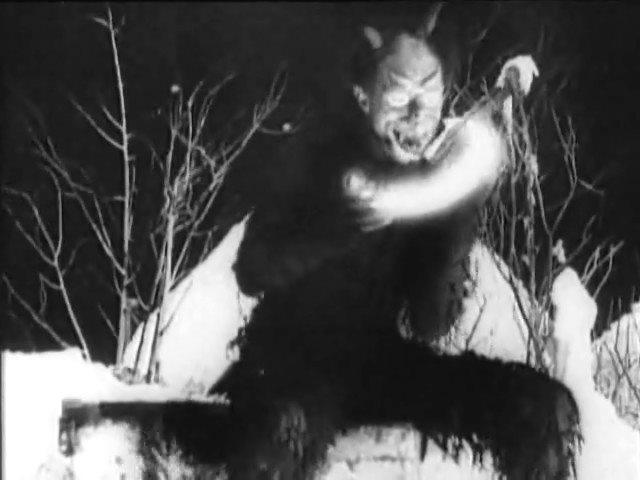
    Not the modern-day bevy of affable, ersatz Santas, mind you – the ones who reward the good with welcome gifts and penalize the naughty with rotten potatoes – but rather the amoral pranksters and homicidal trolls who devour children.

    According to Icelandic lore, the Lads are thirteen in number. Mostly they harass and steal from Icelandic farmers. They descend from the mountains, staggering their arrivals and departures, beginning thirteen nights before Christmas. For those who can’t be bothered to do the math, that would be December 12.

    Each has his own exasperating speciality, whether it be harassing sheep, stealing milk, eating crust out of pans, licking spoons, stealing leftovers, licking bowls, slamming doors, eating skyr (a kind of Icelandic yogurt), stealing sausages, peeping through windows, sniffing for bread, stealing meat with a hook, or eating candles.

    For Tolkien fans, surely the Lads are the basis for the thirteen Dwarves [sic] who visit Bilbo Baggins, in the process eating him out of house and home and imperiling his dishes.

    Their mother is the ogress Grýla, who seeks children to boil in her cauldron. If you happen to find yourself in her gnarled claws, remember, she has to release you if you repent!

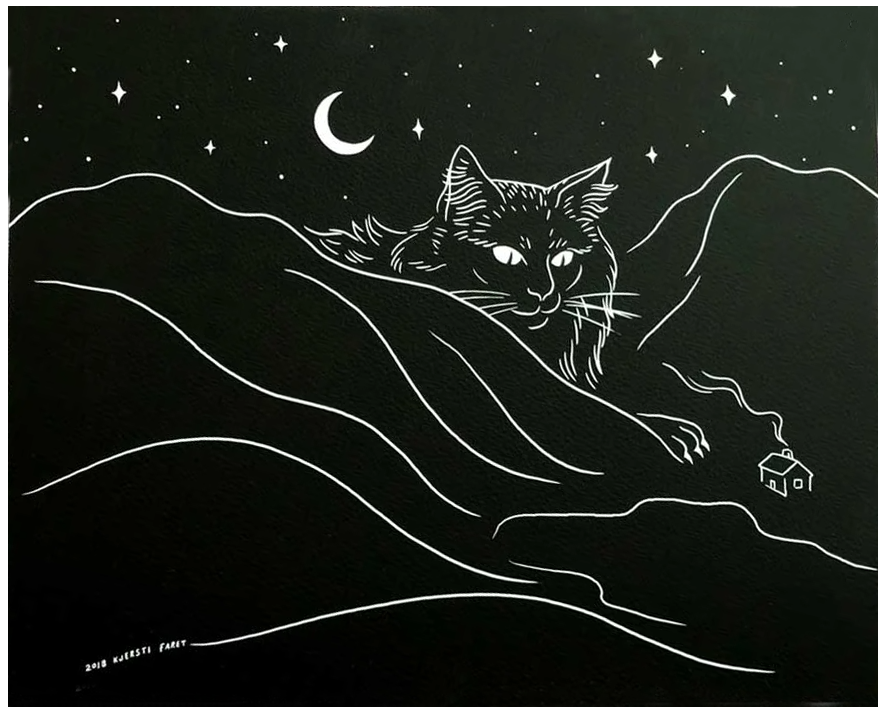
    The Yule Lads are frequently accompanied by the Yule Cat. The cat eats those who don’t receive new clothes before Christmas. This is tied in to the Icelandic work ethic. In the old days, if farm hands processed their autumn wool in a timely fashion, they were rewarded with new garments. If not, they received nothing, thereby leaving them vulnerable to the Yule Cat. Better sheer them sheep!

    In 1746, the practice of parents tormenting their children with Christmas monster stories was officially banned.

    Get festive in the way only Icelanders can, with these “Icelandic Folk Dances” by Jón Leifs.

    And remember – only 13 days of folklore and paganism until Christmas!

  • Roy’s Sci-Fi: Christmas Carol, Star Trek, Wonka

    We’ll be taking off this weekend, since Roy is involved with Country Gate Players’ virtual performances of “The Christmas Carol Murders,” Saturday at 8 pm & Sunday at 2 pm. These Zoomed entertainments are free, but registration is required, at billscurato.com.

    Before you misattribute your Seasonal Affective Disorder to “Roy’s Tie-Dye Sci-Fi” separation anxiety, here’s the video of last Sunday’s show, all about “Star Trek: The Motion Picture” (1979). Just a few minutes should be enough to cure you of any romantic delusions.

    We’ll be back next Friday, to take a bite out of “Willy Wonka and the Chocolate Factory” (1971), and next Sunday, to choose-up sides for “Santa Claus Conquers the Martians” (1964).

    You’ll want to be on the winning team. Roy’s Tie-Dye Sci-Fi Corner livestreams on Facebook most Fridays & Sundays at 7pm EST.

    https://www.facebook.com/roystiedyescificorner

  • Dickens Movie Music on Picture Perfect

    Dickens Movie Music on Picture Perfect

    Humbug!

    This week on “Picture Perfect,” it’s music from movies inspired by the writings of Charles Dickens. Tune in for selections from “Nicholas Nickleby” (1947) by Lord Berners, “Oliver Twist” (1948) by Sir Arnold Bax, “David Copperfield” (1969) by Sir Malcolm Arnold, and “A Christmas Carol” (1951) by Richard Addinsell.

    Blame it on an undigested bit of beef, a blot of mustard, a crumb of cheese, a fragment of an underdone potato. There will be more of gravy than of the grave about it. Have a Dickens of a time on “Picture Perfect,” this Saturday evening at 6:00 EST, on WWFM – The Classical Network and wwfm.org.

  • Rimsky-Korsakov’s Wild Ukrainian Christmas

    Rimsky-Korsakov’s Wild Ukrainian Christmas

    Definitely don’t go into it expecting Clement Moore’s jolly old elf!

    Nikolai Rimsky-Korsakov’s “Christmas Eve” was given its first performance at St. Petersburg’s Mariinsky Theater on this date in 1895.

    The opera is based on a story from Nikolai Gogol’s collection, “Evenings on a Farm Near Dikanka” (which I finally got around to reading this year). Part fairy tale and part farce, “Christmas Eve” is steeped in Ukrainian folk traditions.

    In Ukraine, Christmas Eve is a solemn occasion, marked by fasts and sacred services. Meatless dishes are served for Holy Night supper. But there are also carols. And the caroling is no simple singing of Christmas songs! Similar to the mumming traditions of the British Isles, there is also some play involved, with ritualistic dancing and even the participation of a live goat. As in the West, pre-Christian symbols and rituals are embraced in the celebration of Christmas, to lend cheer to the shortest days and hope for a fertile spring.

    With this in mind, is it any surprise that Gogol’s story features such incidentals as the theft of the moon by the Devil, amorous peasants secreting themselves in burlap sacks, and a ride through the air, on the Devil’s back, to collect the Tsarina’s slippers?

    “Christmas Eve” was adapted musically by both Rimsky-Korsakov and Tchaikovsky. The two composers shared a complicated relationship. In public, each was supportive of the other, but in private both were tormented by suspicion and envy. Tchaikovsky felt sufficiently threatened that he demanded secrecy of his publisher over his use of the then newly-minted celesta. This was to supply the fairy-dust magic for his Sugar Plum Fairy in “The Nutcracker,” and he was full of anxiety that Rimsky might learn of the instrument and steal his thunder.

    Equally wary of Tchaikovsky, Rimsky held off on adapting “Christmas Eve” until 1895. Tchaikovsky had set his own version of the story ten years before – a revision of an even earlier Tchaikovsky opera, “Vakula the Smith,” composed in 1871. By the time Rimsky’s version received its premiere, his rival had been safely in the grave for two years.

    Z Rizdvom Khrystovym! Good triumphs over evil, but the devil gets his due!


    Still my preferred recording of Rimsky-Korsakov’s “Christmas Eve,” from 1948, conducted by Nikolai Golovanov.

    An animated version of Gogol’s tale, incorporating some of Rimsky’s music:

    https://www.youtube.com/watch?v=TvtQQlb3-pw

    A fun live-action version from 1961:

    https://www.youtube.com/watch?v=q71uPvuQ2NA

    A 1913 silent version (but you’ll have to provide your own soundtrack):

  • Hanukkah Music Lost Chord Festival of Lights

    Hanukkah Music Lost Chord Festival of Lights

    Hanukkah begins at sunset. Kick off the Festival of Lights with a little musical sustenance, in this archived episode of “The Lost Chord,” originally broadcast last December.

    The program begins with David Ludwig’s “Hanukkah Cantata.” Ludwig, who studied with Richard Danielpour, Jennifer Higdon, and Ned Rorem at the Curtis Institute of Music, and John Corigliano at Juilliard, is the nephew of pianist Peter Serkin, the grandson of Rudolf Serkin, and the great-grandson of Adolf Busch. That’s quite a pedigree! The text of his cantata, compiled by Cantor Dan Sklar, is sung in English and Hebrew. The work falls into eight movements, wholly befitting for this eight-day celebration.

    That’s followed by Ludwig Altman’s “Theme and Variations on ‘Ma’oz Tzur,’” the Hanukkah melody also known as “Rock of Ages.” Altman was born in what was once Breslau, Germany (now Wroclaw, Poland). He studied at the University of Breslau, and then at Berlin’s State Academy for Sacred Music. The rise of the National Socialist Party meant that he was restricted to employment in Jewish organizations.

    In 1936, he emigrated to the United States, settling in San Francisco, where he became organist and choral director at Congregation Emanu-El. For over three decades, he was also organist of the San Francisco Symphony. Altman’s variations on a Hanukkah theme are performed by another composer of note, Barbara Harbach, at the console.

    The hour concludes with “A Klezmer Nutcracker” – with apologies to Peter Ilych Tchaikovsky – in a lively recording made by the Boston-based ensemble Shirim. Kazatsky ‘til you dropsky!

    It’s a “sound” foundation for eight days of fried food, sugar, and cheese. Click the link for “Latke Tonic,” music of substance for Hanukkah.

    https://www.wwfm.org/post/lost-chord-december-22-latke-tonic

    Then tune in to “The Lost Chord” this Sunday night at 10:00 EST for more, including Ofer Ben-Amots’ Klezmer Concerto, on “Pieces of Eight.”

    There’s oil to burn, on WWFM – The Classical Network and wwfm.org.

Tag Cloud

Aaron Copland (93) Beethoven (95) Composer (114) Film Music (136) Film Score (143) Film Scores (255) Halloween (94) John Williams (195) KWAX (229) Leonard Bernstein (103) Marlboro Music Festival (125) Movie Music (151) Mozart (88) Opera (208) Philadelphia Orchestra (89) Picture Perfect (174) Princeton Symphony Orchestra (108) Radio (88) Ross Amico (244) Roy's Tie-Dye Sci-Fi Corner (290) The Classical Network (101) The Lost Chord (268) Vaughan Williams (103) WPRB (396) WWFM (881)

DON’T MISS A BEAT

Receive a weekly digest every Sunday at noon by signing up here


RECENT POSTS