Diane Wittry will be stepping down as music director of the Allentown Symphony Orchestra in 2028. Wittry will have served in that capacity for 33 years – surpassing the tenure of the ensemble’s founding music director, Donald Vorhees, who led the orchestra from 1951 to 1983. In between, the position was held by William Smith, associate conductor of the Philadelphia Orchestra, whose engagements were curtailed by his final illness in 1993.
Wittry will conduct her last concert as music director in the fall of 2027. For further details and a broader sense of her accomplishments, see the organization’s press release, shared below.
For as often as I do it, I don’t really relish writing concert reviews, as they always become more involved than I anticipate. My thoughts begin to stampede, and it’s all I can do to get them into the corral. Later, I’ll go back and look at them, and I’m seldom satisfied – all I can see is the sweat – and then nobody reads them. If I post one, I’ll get maybe 5 or 6 likes. Facebook is not the forum for a “slog through the bog.”
Of course, you can always check out whatever I write at my website (ever under construction, but all my posts are there) at rossamico.com. That said, in my experience, lengthy reviews are so much more pleasurable to read in actual print.
I worked pretty hard at a review of Wittry conducting Vaughan Williams’ “Dona nobis pacem” last season, but never smoothed it out. Perhaps in tribute to her, I’ll search for it, brush it down, and feed it some sweet grass, with the intention of exhibiting this prize cow in the near future. Or maybe I’ll take one look at it and my soul will leave my body.
Either way, big thanks to Diane Wittry. It’s a solid orchestra she’s built, and I’ve enjoyed the programs I’ve been able to attend.
—–
DIANE WITTRY ANNOUNCES PLANS TO CONCLUDE TENURE AS MUSIC DIRECTOR AND CONDUCTOR IN 2028
ALLENTOWN, PA — (January 22, 2026) — The Allentown Symphony Association (ASA) announced today that Diane Wittry has decided to step down as Music Director and Conductor in 2028, which will conclude an extraordinary 33-year tenure leading the Allentown Symphony Orchestra. Wittry will conduct her final concert in the fall of 2027 but will continue to serve as Music Director through May 2028, working closely with the Board of Directors and staff to ensure a smooth and successful artistic leadership transition.
The ASA Board of Directors has begun forming a search committee to lead a national search for the orchestra’s next Music Director and Conductor.
Wittry’s tenure will be the longest in the orchestra’s history, surpassing that of Donald Voorhees, who served as Music Director and Conductor for 32 years from its founding in 1951 to 1983.
Wittry leaves a deep and enduring legacy of artistic excellence, innovation, and growth. Since the start of her tenure in 1995, she has championed adventurous programming that paired underperformed masterworks with new and contemporary compositions. From the outset, she raised artistic standards by challenging the orchestra musically and increasing rehearsal and preparation expectations, attracting highly accomplished musicians to audition from across the region, including New York, New Jersey, Maryland, and Delaware.
An early adopter of immersive concert experiences, Wittry expanded the orchestra’s creative reach by integrating lighting, visual design, video, actors, dancers, and vocalists into performances—broadening audience engagement while reimagining the orchestral concert experience.
In the 1996–97 season, following a major bequest from brothers Leigh and Edwin Schadt, Wittry helped establish the National Schadt String Competition, now widely recognized as one of the premier string competitions in the United States. Under her leadership, the orchestra experienced sustained expansion, including expanding the Classical concerts to double performances, the addition of Pops Concerts, Family Concerts, and a landmark partnership with the Repertory Dance Theatre to present The Nutcracker annually each December. Many of these performances were led by the Symphony’s Associate/Pops Conductor Emeritus Ronald Demkee who himself retired from the Orchestra in 2024.
Additional milestones during Wittry’s tenure include the formal re-establishment of the Allentown Symphony Chorus in 2014 and the launch of the Holiday Pops concert in 2021, which has virtually sold out every year since its inception.
A passionate advocate for new music, Wittry led the Orchestra in commissioning and performing more than 36 world premieres, including four of her own compositions. In 2020, she helped launch both the Composer-in-Residence program and the Composer Collaborative, further reinforcing the orchestra’s commitment to living composers and contemporary voices.
Education and community engagement have remained central to Wittry’s vision. She introduced the “Meet the Artist” luncheon series, launched the Conducting Fellows program in 2010, and spearheaded El Sistema Lehigh Valley in 2011—an intensive music education initiative that now serves approximately 150 students from more than 20 schools throughout the region. In 2024, the ASA formed its Latin Leadership Committee to deepen engagement with Allentown’s growing Latin community and hired its first Musician-in-Residence, who is required to be a bilingual in Spanish and English, in 2025.
Among the most ambitious and far-reaching projects of her tenure was a landmark Beethoven’s Ninth Symphony initiative that extended orchestral performance well beyond the concert hall. Beethoven’s Ninth was presented in two distinct performances at Miller Symphony Hall—one recorded for a regional broadcast in partnership with PBS39, and a second recorded to create Become a Musician: Beethoven’s Ninth Finale, an immersive interactive exhibit launched in January 2026 at the Da Vinci Science Center. Together, these performances transformed a single artistic vision into lasting public resources, introducing thousands of people to orchestral music through broadcast, education, and hands-on participation in a manner believed to be the first permanent orchestral exhibit of its kind in the United States.
Reflecting on her decision, Wittry said, “After many years of heartfelt music making, I have decided to retire from my position as Music Director and Conductor of the Allentown Symphony in the spring of 2028. Together, we have built an orchestra of exceptional professional quality, expanded our concert offerings, championed new music, and deepened our partnerships throughout the Lehigh Valley. I am profoundly proud of what we have accomplished and grateful for the unwavering support of the musicians, board, staff, and community. I remain fully committed to working closely with the Board during this transition, and I look forward to the inspiring music we will continue to make together in the seasons ahead.”
“Diane Wittry’s impact on the Allentown Symphony Orchestra is both profound and lasting,” said Jack Bury, President of the Allentown Symphony Association Board of Directors. “For more than three decades, she has led with extraordinary artistic vision, integrity, and commitment—raising the orchestra to the highest professional standards while expanding its reach through education, new music, and deep community engagement. With the formation of a search committee now underway, we are grateful for Diane’s partnership in ensuring a thoughtful transition and are confident the orchestra is well positioned for continued artistic excellence and growth.”
Al Jacobsen, Executive Director of the Allentown Symphony Association, added, “Working alongside Diane Wittry has been one of the great privileges of my professional life. Her artistic leadership has elevated the Allentown Symphony Orchestra in every dimension—from performance quality and innovative programming to education, community partnerships, and national recognition. Diane has built not only an exceptional orchestra, but a culture of excellence, collaboration, and service. We are deeply grateful for her leadership and for her continued partnership as we thoughtfully prepare for the orchestra’s next chapter.”
Today, Wittry is internationally respected as both a conductor and educator. She has conducted performances in more than eleven countries, including Russia, China, Japan, Bosnia, Slovakia, Italy, and Canada. She is the author of two award-winning books published by Oxford University Press—Beyond the Baton: What Every Conductor Needs to Know and Baton Basics: Communicating Music through Gesture—both considered foundational texts in the conducting profession. In 2015, she was named one of Musical America’s Top 30 Professionals in Music.
Under Diane Wittry’s leadership, the Allentown Symphony Orchestra has become one of the Lehigh Valley’s leading cultural institutions, recognized for artistic excellence, educational impact, and deep community connection. Her extended transition timeline allows the organization to honor her legacy while positioning the orchestra for continued success in its next chapter.
Category: Daily Dispatch
-
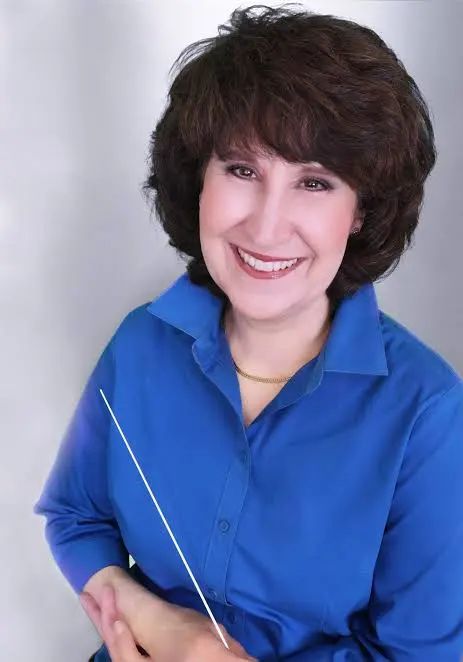
Diane Wittry to Wrap It Up in Allentown, PA
-
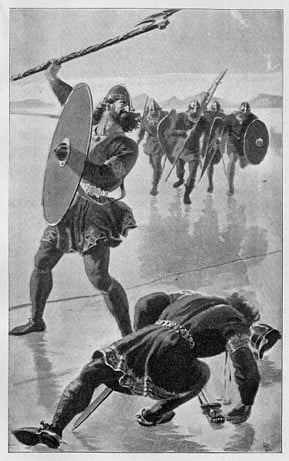
Liking the Viking on “The Lost Chord”
This week on “The Lost Chord,” brace yourself for Icelandic composer Jon Leif’s “Saga Symphony.” Scored for tuned anvils, stones, whip, shields of iron, leather, and wood, great wooden casks played by large hammers, and six ancient long horns, or lurs, the work is an intriguing blend of extravagance and austerity.
Leifs studied in Leipzig and wound up stranded in Nazi Germany for much of World War II. You’d think the National Socialists would have gone ape for this musical advocate of Norse heroism, but two things worked against him: the modernist language of much of his output, and the fact that his wife and children were Jewish. Also, he found Wagner repellent, asserting that Wagner completely misunderstood the essence and artistic tradition of the North. Public performances of Leif’s works were discouraged (and would have been impractical anyway). Under the circumstances, he preferred to attract as little attention to himself as possible. He found escape in rereading the Icelandic sagas, even as he was used for propaganda purposes to strengthen Germany’s relations with Scandinavia.
Leifs finally managed to obtain permission to leave Germany in 1944. Unfortunately, suspicion of Nazi associations further hindered acceptance of his music abroad. It was only with a series of compact disc recordings released on the Swedish label BIS, beginning in the 1990s, that Leifs – who died in 1968 – was revealed to be Iceland’s most important composer, with a voice as distinctive as any of his time.
Iceland of a hundred years ago was a very different place than it is now. Leifs didn’t hear his first orchestra until he traveled to Leipzig. The “Saga Symphony” is a direct response to Franz Liszt’s “A Faust Symphony,” a performance of which sent the young composer into ecstasies. He went home and immediately began work on the piece we’ll hear tonight. However, his own approach is quite different from Liszt’s. In terms of symphonic development, there is none to speak of. In its place are evocative fields of static harmonies.
Each of the work’s five movements is a character portrait of a hero from the Norse sagas: the vitriolic warrior Skarphéðinn Njálsson (Njál’s Saga), who hacks and hews with his battle axe; the strong-willed Guðrún Ósvífsdóttir (Saga of the Laxardals), who avenges herself against her husband’s killer; the latently heroic comic braggart and coward Björn of Mörk, who takes shelter behind the swashbuckler Kári Sölmundarson, as Kári avenges the deaths of Njál and his sons; Grettir Ásmundarson, who vanquishes the ghost of Glámr in a wrestling match, only to be haunted ever after; and the warrior-poet Tormod Kolbrunarskald (The Foster Brother’s Saga), who pulls an arrow from his heart and even in the throes of death formulates an intricate poem.
Greet your fate with courage and stoicism. Join me for “Liking the Viking,” on “The Lost Chord,” now in syndication on KWAX Classical Oregon!
——–
Clip and save the start times for all three of my recorded shows:
PICTURE PERFECT, the movie music show – Friday at 8:00 PM EST/5:00 PM PST
SWEETNESS AND LIGHT, the light music program – Saturday at 11:00 AM EST/8:00 AM PST
THE LOST CHORD, unusual and neglected rep – Saturday at 7:00 PM EST/4:00 PM PST
Stream them, wherever you are, at the link!
https://kwax.uoregon.edu -

Let It Snow on “Sweetness and Light”
It’s funny, when you’re a kid, there’s nothing more exciting than snow. You stay up half the night, waiting for the first flake, and then in the morning you’re out the door making snowballs and building forts until your mom calls you back for lunch (grilled cheese sandwiches and tomato soup), and your gloves are wet and your fingers are frozen and you’re half-blind as you knock the snow out of the wales of your corduroys, and Mom tells you to take off your boots and not get snow on the carpet.
When you’re an adult, you put away childish things, and freak out.
This week on “Sweetness and Light,” we’ll keep calm and carry on, with a program designed to boost your serotonin and minimize your chionophobia (snow anxiety). We’ll welcome what comes with a playlist of snow-inspired works by Ronald Binge, Frederick Delius, Georgy Sviridov, Sergei Prokofiev, Angela Morley, Edward Elgar, Nikolai Rimsky-Korsakov, and Adam Saunders.
Tune in and drop out – in front of the fireplace with a hot beverage of your choice. There’s no music like snow music, on “Sweetness and Light,” this Saturday morning at 11:00 EST/8:00 PST, exclusively on KWAX Classical Oregon!
Stream it, wherever you are, at the link:
https://kwax.uoregon.edu/
———
IMAGE: Princeton’s own Patrick McDonnell tells it like it is -

Fantastic Adventures in the 18th Century on “Sweetness and Light”
The Enlightenment isn’t exactly remembered for its flights of fancy. If the odd novel embraced a fantastic tone, it was frequently in the service of satire, an entertaining means to send-up contemporary mores and pursuits or to mock authority figures and good old reliable human frailty. This week on “Picture Perfect,” we’ll explore a few of these fantastic adventures of the 18th century.
“The Surprising Adventures of Baron Munchausen” (1785) pokes fun at one Hieronymus Karl Friedrich, Freiherr von Münchhausen, a German nobleman and veteran of the Russo-Turkish War, whose reputation for telling outrageous tall tales is lampooned by Rudolf Erich Raspe. Raspe, looking to avoid a libel suit, published the work anonymously, with the result that it was commonly believed that the Baron actually dictated the tales himself. Naturally, the real-life Munchausen was upset by the unwanted attention. Thanks to Raspe, his very name came to be associated with feigned illness and pathological lying.
The book has been adapted to film several times, beginning with a silent version by Georges Méliès, all the way back in 1911. We’ll be listening to music from two subsequent adaptations. The first, “Münchhausen” (1943), is undeniably entertaining and exceptionally well-made. However, undermining one’s enjoyment is a sense of unease in the knowledge that the film was a pet project of Joseph Goebbels, who wanted to celebrate the 25th anniversary of the UFA film studio by producing a lavish spectacle worthy to stand toe-to-toe with foreign efforts like “The Wizard of Oz” and “The Thief of Bagdad.”
Considering the source, one would have to look awfully hard to come up with anything resembling Nazi propaganda. The entire exercise comes across as a pastoral escape from the horrors of totalitarianism, total war, and the Final Solution. The elegant music, by Georg Haentzschel, would not be out of place in the concert hall. Haentzschel is regarded as perhaps the last representative of a generation of Middle European light music composers.
More than 40 years later, director Terry Gilliam undertook another production design-driven adaptation that resembles nothing if not a series of Doré illustrations brought to life. Contrary to received wisdom, “The Adventures of Baron Munchausen” (1988) managed to pull in a respectable amount of per-screen capital. The film was a casualty of a management turnover at Columbia Pictures, with the new regime eager to bury the projects of the old. Hence, it was never seen theatrically beyond a very limited release. The score, by Michael Kamen, while in a romantic heroic style, wittily contains abundant allusions to music of the 18th century.
“The Manuscript Found in Saragossa” (1805) is a transitional work, with its ecstatically lurid opening chapter – replete with gypsy storytellers, highwaymen, dueling skeletons, lesbian vampires, and a couple of corpses dangling in a gibbet – dragging the Enlightenment kicking and screaming into the Romantic age. It starts out as a masterpiece of surrealism, by way of Gothic convention, but the spell is eventually broken, sadly, by a large, cold bucket of Enlightenment water, in the form of a perfectly rational explanation at the end. But until then, the author, Jan Potocki, gets an A for effort. The interlocking structure, with stories inside stories inside stories looks ahead to postmodern experiments by writers like Italo Calvino and John Barth, to say nothing of Jorge Luis Borges.
The book was made into an acclaimed Polish film, “The Saragossa Manuscript,” in 1965. Its cult status led to a restoration financed by Jerry Garcia, Martin Scorsese, and Francis Ford Coppola that was released on VHS and DVD in 2001.
Who else could provide the perfect soundtrack to such a hallucinogenic experience but Krzysztof Penderecki? Penderecki intersperses spooky passages with neo-classical and baroque interludes.
Finally, we’ll hear music from one of the many adaptations of Jonathan Swift’s “Gulliver’s Travels” (1726). “The Three Worlds of Gulliver” (1960) simplifies the book’s narrative and dispenses with a great deal of the misanthropic humor in favor of children’s fantasy. You won’t catch Gulliver extinguishing a fire in the Lilliputian Emperor’s palace with his urine in this version. What you will find is a good deal of technical wizardry and a delightful score by Bernard Herrmann.
What, you doubt my veracity? Then surely the music must speak for itself. Join me for fantastic adventures in the 18th century, now in syndication on KWAX Classical Oregon!
——–
Clip and save the start times for all three of my recorded shows:
PICTURE PERFECT, the movie music show – Friday at 8:00 PM EST/5:00 PM PST
SWEETNESS AND LIGHT, the light music program – Saturday at 11:00 AM EST/8:00 AM PST
THE LOST CHORD, unusual and neglected rep – Saturday at 7:00 PM EST/4:00 PM PST
Stream them, wherever you are, at the link!
https://kwax.uoregon.edu
——–
PHOTO: A fancy flight with Baron Munchausen -

Aural Enjoyment with Aurèle Nicolet
The great Swiss flutist Aurèle Nicolet was born 100 years ago today. Nicolet served as principal flute of the Berlin Philharmonic during the 1950s. He was appointed by Wilhelm Furtwängler and remained through the early Karajan years, before striking out to become a renowned soloist and an influential teacher. Composers who dedicated music to him include Toru Takemitsu, Josef Tal, György Ligeti, Aribert Reimann, and Edison Denisov. Among his pupils was the Berlin Philharmonic’s current principal flute, Emmanuel Pahud. Nicolet died in 2016 at the age of 90.
Remember him and put a spring in your step with some C.P.E. Bach.
Tag Cloud
Aaron Copland (94) Beethoven (95) Composer (114) Film Music (149) Film Score (143) Film Scores (255) Halloween (98) John Williams (197) KWAX (232) Leonard Bernstein (105) Marlboro Music Festival (125) Movie Music (164) Mozart (91) Opera (215) Philadelphia Orchestra (90) Picture Perfect (174) Princeton Symphony Orchestra (110) Radio (90) Ross Amico (244) Roy's Tie-Dye Sci-Fi Corner (290) The Classical Network (101) The Lost Chord (269) Vaughan Williams (107) WPRB (397) WWFM (881)