Category: Daily Dispatch

  • Piano Madness Movie Music on WWFM

    Piano Madness Movie Music on WWFM

    If the definition of insanity is doing the same thing over and over and expecting a different result, then surely Hanon etudes are a ticket to the madhouse.

    This week on “Picture Perfect,” get keyed-up with music from movies about madness and the piano.

    Whenever he hears a loud, discordant sound, unhinged pianist-composer Laird Cregar is compelled to commit murder, in the 1945 film “Hangover Square.” Bernard Herrmann wrote the moody, romantic score, which includes a piano concerto, played by Cregar’s character during the film’s conflagration finale.

    Peter Lorre is an unstable musicologist who is haunted by the disembodied hand of a murdered pianist with a penchant for Brahms’ arrangement of Bach’s Chaconne, in “The Beast with Five Fingers,” from 1946. Max Steiner was the composer. The piano is played on the film’s soundtrack by Victor Aller, the brother-in-law of Felix Slatkin – also Leonard Slatkin’s uncle.

    Alan Alda plays a frustrated pianist who falls in with a ring of Satanists, in “The Mephisto Waltz” from 1971. This time, Jerry Goldsmith blends Franz Liszt with amplified instruments and electronics to memorably eerie effect. Five years later, Goldsmith would win his only Academy Award for his music to “The Omen.”

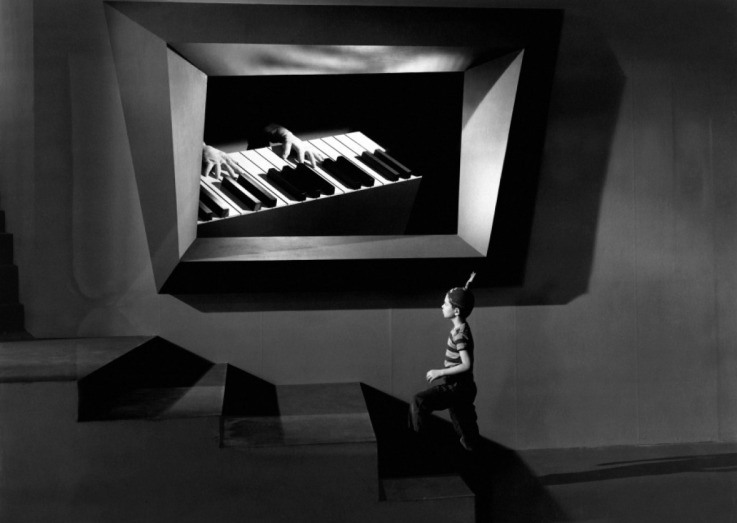
    Finally, Hans Conried plays a dictatorial pedagogue in “The 5000 Fingers of Dr. T,” released in 1953. “5000 Fingers” holds the distinction of being the only feature ever written by Dr. Seuss. The film sports an outrageous production design (including a gargantuan keyboard for 500 enslaved boys) and whimsical songs.

    The composer was Frederick Hollander. Born in London, Hollander attained fame in Germany as Friedrich Hollander. His best-known international success was “The Blue Angel,” starring Marlene Dietrich, who introduced his song, “Falling in Love Again.” With the rise of the Nazis, Hollander fled to the United States, where he worked on over 100 films.

    That’s music from movies about madness and the piano this week, on “Picture Perfect.” Practice makes psychotic, THIS SATURDAY EVENING AT 6:00 EDT, on WWFM – The Classical Network and wwfm.org.
  • Trilogy of Terror Zoom Rescheduled

    Trilogy of Terror Zoom Rescheduled

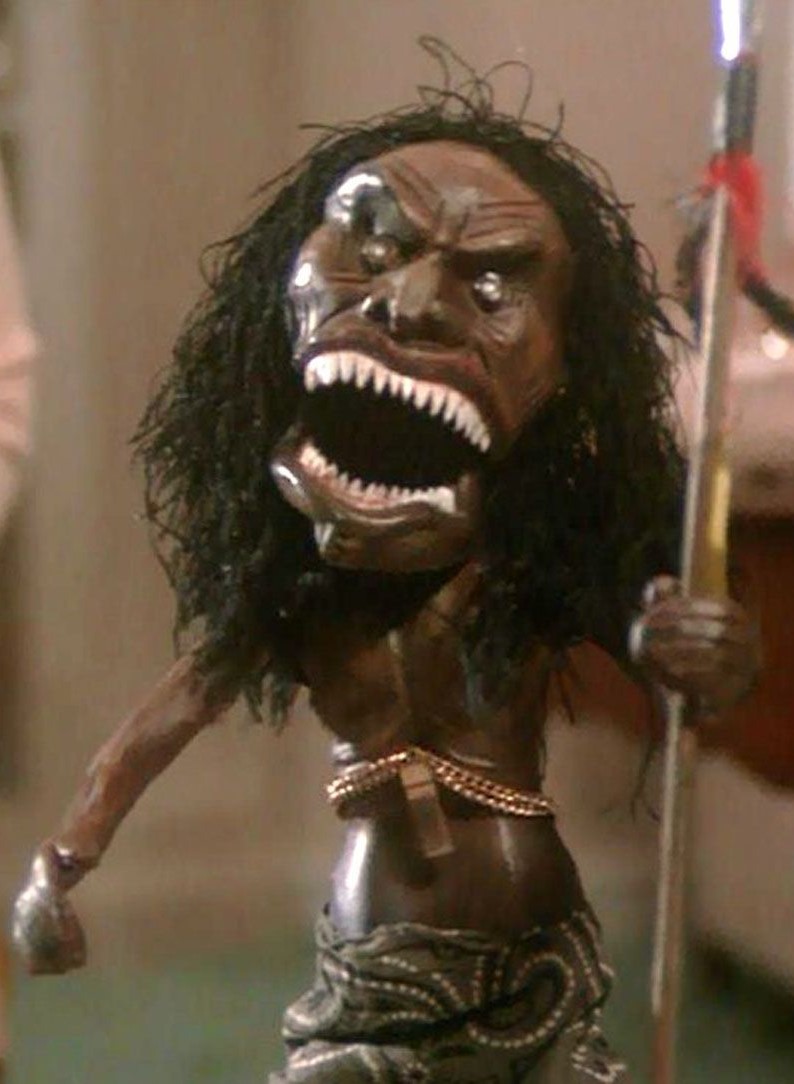
    FOR THE LAST TIME (I hope), Roy and I will be Zooming with the Zuni.

    Due to last week’s connectivity issues, our deconstruction of “Trilogy of Terror” (1975) has been rescheduled for this Friday evening at 7:00 EDT.

    We’ll be coming your way TWICE every weekend in October to spoil your favorite movies. “Roy’s Tie-Dye Sci-Fi Corner: The Halloween Edition” is livestreamed on Facebook. Follow the link below at the appointed time:

    https://www.facebook.com/roystiedyescificorner/

    On deck for Sunday night – also at 7:00 EDT – “Invasion of the Body Snatchers” (1978).

    We’ll save you a pod.


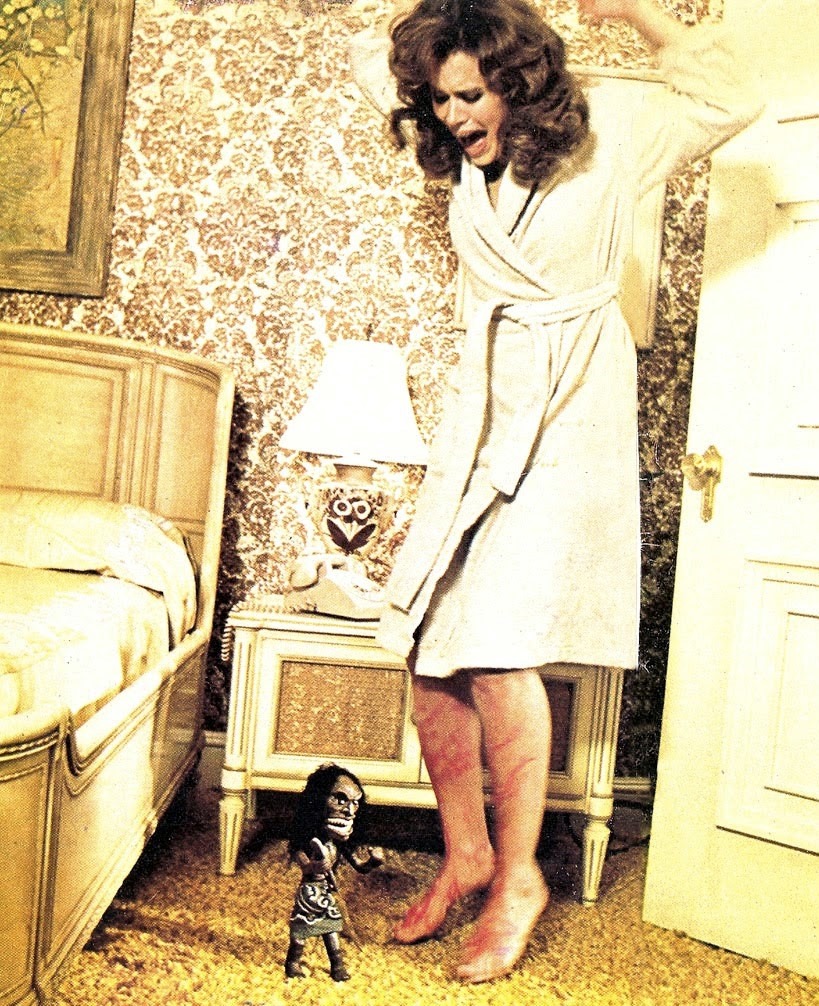
    PHOTO: There is only one thing worse than Zuni being talked about… and that is Zuni not being talked about

  • Horror Movies Double Feature Halloween Month

    Horror Movies Double Feature Halloween Month

    In a month of two full moons, and with Mars closer to the earth than it will be for another 15 years, sci-fi becomes “SCYTHE-fi,” as Roy and my focus this month will be on horror movies. Yayyyyyyyyyy!

    Or perhaps I should say, AAAaaaaaOOOOOOOOOOOOOOO…

    Unfortunately, we had a problem with our Zuni fetish doll last week, which caused some connectivity issues, so our coverage of “Trilogy of Terror” (1975) had to be postponed until tomorrow evening.

    The good news is, we’ve had time to discuss what else we’d like to do, and after careful negotiation, we now have a schedule in place for both Fridays AND Sundays through Halloween. That’s right, we’ll bookend EVERY WEEKEND this month, and spoil twice as many movies.

    I hope you’ll join us tomorrow for a dissection of Karen Black’s horror television triptych. The conversation begins – and, as always, your insights are welcome – this Friday evening at 7:00 EDT.

    Then on Sunday, the seed is planted… terror grows! Our topic will be “Invasion of the Body Snatchers” (1978), surely one of the most satisfying remakes ever filmed.

    Don’t fall asleep! Roy’s Tie-Dye Sci-Fi Corner live-streams on Facebook every Friday and Sunday at 7 p.m.

    https://www.facebook.com/roystiedyescificorner

    Happy Halloween, everyone!


    PHOTOS: Zuni fetish doll (left); and the infamous “Body Snatchers” man-faced dog

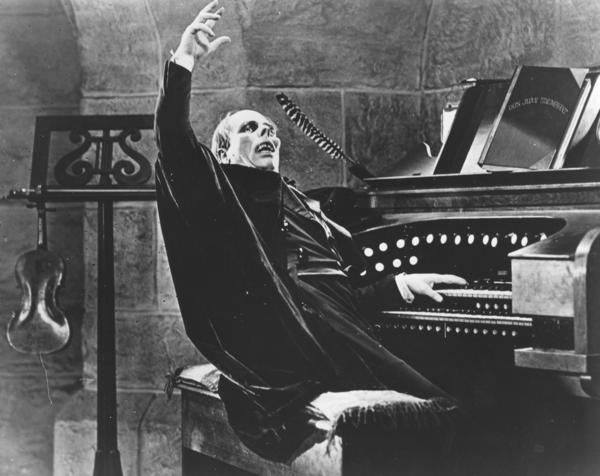
  • Vierne at 150 A Phantom of the Opera Organist?

    Vierne at 150 A Phantom of the Opera Organist?

    In all his time beneath the Opéra Garnier, I wonder if the Phantom ever encountered any of Louis Vierne’s organ music?

    They would have had to have been early works, to be sure. Gaston Leroux’s potboiler was first serialized in 1909. According to the narrative, the Phantom would have been dead for decades, perhaps since the 1880s, or so it is believed (unless you’re Andrew Lloyd Webber). So it is much more likely for Vierne to have encountered the Phantom than the other way around.

    In any case, Vierne’s home was Notre-Dame de Paris, Quasimodo’s sanctuary – a respectable distance from the Palais Garnier – and he didn’t become resident organist there until 1900. Prior to that, he was Widor’s assistant at Église Saint-Suplice, even further from the Phantom’s base of operations. But the sewers of Paris hold many mysteries, no doubt. Vierne would serve at Notre-Dame until his own death, at the console, in 1937.

    That said, the purpose of this post is not to linger on the colorful circumstances of his passing, but rather to thank those who commemorate his achievements, since today happens to mark the 150th anniversary of Vierne’s birth. To celebrate the composer-performer’s artistry and influence, organists everywhere are pulling out the stops.

    In our own backyard, Princeton University organist Eric Plutz will undertake a mammoth marathon of all of all Vierne’s symphonies for the instrument, presented on the Skinner organ of Princeton University Chapel. Each of the six works will be presented, in succession, beginning at the top of every hour. This event is free and will be live-streamed, starting at 4 p.m. EDT, at facebook.com/SevenEightArtists.

    In the meantime, catch up on Christopher Houlihan’s “Vierne at 150” online festival. Houlihan, who is organist and director of chapel music at Trinity College in Hartford, Connecticut, has been hosting and posting Vierne-related material all week, including conversations with Notre-Dame organist Olivier Latry, noted scholar and organist Rollin Smith, author of “Louis Vierne: Organist of Notre-Dame Cathedral,” and artist manager Phillip Truckenbrod, who talks about his 50-year career. Yesterday, Houlihan shared a preconcert lecture and demonstration.

    The series will culminate in a recital of Vierne’s music by Houlihan on the college’s chapel organ. This will take place at 7 p.m. EDT. If by then you’re already well-invested in Plutz’s marathon, Houlihan’s videos are being archived for later on-demand enjoyment, at http://www.christopherhoulihan.com/schedule.

    As for Plutz, if you find you have to take a break for dinner, or perhaps you’d just like a souvenir, he’s recorded all the Vierne organ symphonies for future release on the Affetto Records label.

    You don’t have to be a subterranean, lovestruck, psychopathic stalker to enjoy organ music. Vierne’s output could ennoble even a Rue Morgue ourang-outang. He is to be remembered with gratitude. Joyeux sesquicentenaire, Louis Vierne!


    For the edification of Ralph Fisher, and to demonstrate Vierne’s versatility as a composer of wider achievement, here are a few additional links.

    Vierne’s Cello Sonata:

    His Piano Quintet:

    And, in case you missed it in my post the other day (which also goes into a lot of the composer’s challenges and misfortunes), his purely orchestral Symphony in A minor:

  • Dorothy Howell’s Haunting Lamia

    Dorothy Howell’s Haunting Lamia

    With Halloween lurking right around a withered cornfield, in my cheerful morbidity, my thoughts drift to Keats’ “Lamia.” I’ve long been familiar with the symphonic poem on the subject by the American pianist and composer Edward MacDowell, he of MacDowell Colony fame. But this one is entirely new to me: a symphonic poem by Dorothy Howell.

    Howell, born in Birmingham in 1898, was a private student of Granville Bantock. Bantock was founder of the City of Birmingham Symphony Orchestra and an active composer himself. He was also a conductor. He led the first performance of Delius’ “Brigg Fair” and was the dedicatee of Sibelius’ Third Symphony.

    These studies laid the foundation for her acceptance into the Royal College of Music at the age of 15. Howell achieved fame early, with her symphonic poem, in 1919, at the age of 21. Sir Henry Wood premiered “Lamia” at The Proms and repeated it no less than five times within a single season. Subsequently, it was revived by Wood in 1921, 1923, 1924, 1926, 1930, and 1940. The work then fell into neglect, essentially for a lifetime, until it was resurrected, also at The Proms, in 2010. It received another, centenary performance there last year.

    Howell, who was brought up musically (she began composing at the age of 13), received her formal education at a convent school. It’s interesting, then, that her greatest success would be a musical response to a shapeshifting seductress, and a serpent no less!

    Following the premiere of “Lamia,” Howell was declared a genius and hounded by the press. Her family was disconcerted by her sudden celebrity, but she appeared to take it all in stride. She continued to compose until at least mid-century – a time when many tonal composers found it difficult to secure performances – and taught at the Royal Academy for 46 years, retiring in 1970. After that, she continued to give private instruction. She died in Malvern, weeks before he 84th birthday, in 1982. She is buried near Sir Edward Elgar, whose grave she tended.

    In her lifetime, Howell received the nickname “The English Strauss,” a comparison that I think does neither composer justice.

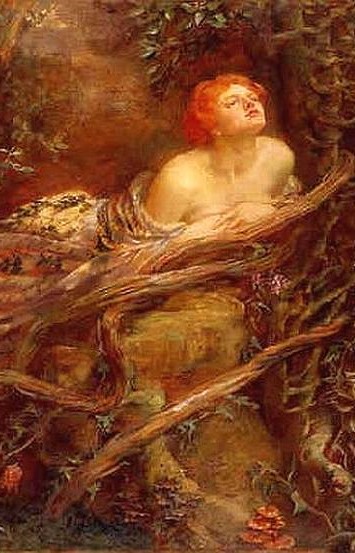
    Keats’ Lamia is a serpent woman, who has the power to send her spirit abroad. On one of these spiritual journeys, she espies a lovely Corinthian youth, by the name of Lycius. She assumes human form and places herself in his path, and it isn’t long before they are living together as man and wife. Lycius wants to make it legal, but Lamia resists. Finally, with reluctance, she consents, but only if Lycius agrees not to invite the philosopher Apollonius. All seems to go well. Lamia uses her enchantments to oversee preparations for a lavish nuptial feast. Unfortunately, then Apollonius crashes. He recognizes Lamia for who she is, the feasting and music stop, Lamia vanishes, and Lycius falls lifeless. Thanks a lot, Apollonius.


    Howell’s “Lamia”:

    Her Piano Concerto, in its first public performance since 1925:

    Rehearsing “Two Pieces for Muted Strings”


    Dorothy Howell (right) with detail from “Lamia, the Serpent Woman” (1906), by Anna Léa Merritt (American painter), 1844-1930

    View complete the painting and learn more about Merritt here:

Tag Cloud

Aaron Copland (93) Beethoven (95) Composer (114) Film Music (137) Film Score (143) Film Scores (255) Halloween (94) John Williams (195) KWAX (229) Leonard Bernstein (103) Marlboro Music Festival (125) Movie Music (152) Mozart (88) Opera (208) Philadelphia Orchestra (89) Picture Perfect (174) Princeton Symphony Orchestra (108) Radio (88) Ross Amico (244) Roy's Tie-Dye Sci-Fi Corner (290) The Classical Network (101) The Lost Chord (268) Vaughan Williams (103) WPRB (396) WWFM (881)

DON’T MISS A BEAT

Receive a weekly digest every Sunday at noon by signing up here


RECENT POSTS