Category: Daily Dispatch

  • Berlioz Smithson and a Symphony of Obsession

    Berlioz Smithson and a Symphony of Obsession

    You might say Hector Berlioz was a man easily governed by his passions.

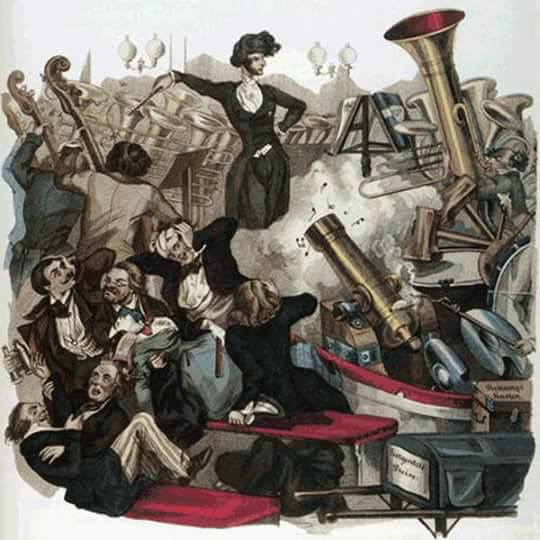
    When denied by the object of his affection, the Irish Shakespearean actress Harriet Smithson, he responded by furiously scrawling his “Symphonie fantastique,” an opium-induced fever dream that imagines his own execution for her murder. She then reappears during the course of a witches’ sabbath to mock his corpse. Perhaps counterintuitively, Smithson went for this in a big way, and the two were married on this date in 1833. Franz Liszt was one of the witnesses. Hardly surprising, but the union would not be a happy one.

    Here’s a knock-out recording of “Dream of a Witches’ Sabbath,” from “Symphony fantastique,” led by Argentinean powder keg Carlos Païta:

    The witches’ sabbath quotes from the portentous “Dies irae,” a medieval plainchant still widely familiar thanks to its continued use in countless horror movies (including the opening credits of “The Shining”).

    Liszt also used this theme as the basis for a set of variations for piano and orchestra, which he titled “Totentanz” (“Dance of Death”). Marvel here at the mercurial György Cziffra, captured live in concert:

    Damn, if these Romantics weren’t so Halloween…
  • Trilogy of Terror Karen Black and Zuni Doll Fears

    Trilogy of Terror Karen Black and Zuni Doll Fears

    Just as last week there were no vampires in “Planet of the Vampires,” this week there is no sci-fi in “Roy’s Tie-Dye Sci-Fi Corner.” Or, for that matter, will there be very much terror, although our topic will be “Trilogy of Terror,” a 1975 made-for-television ABC Movie of the Week.

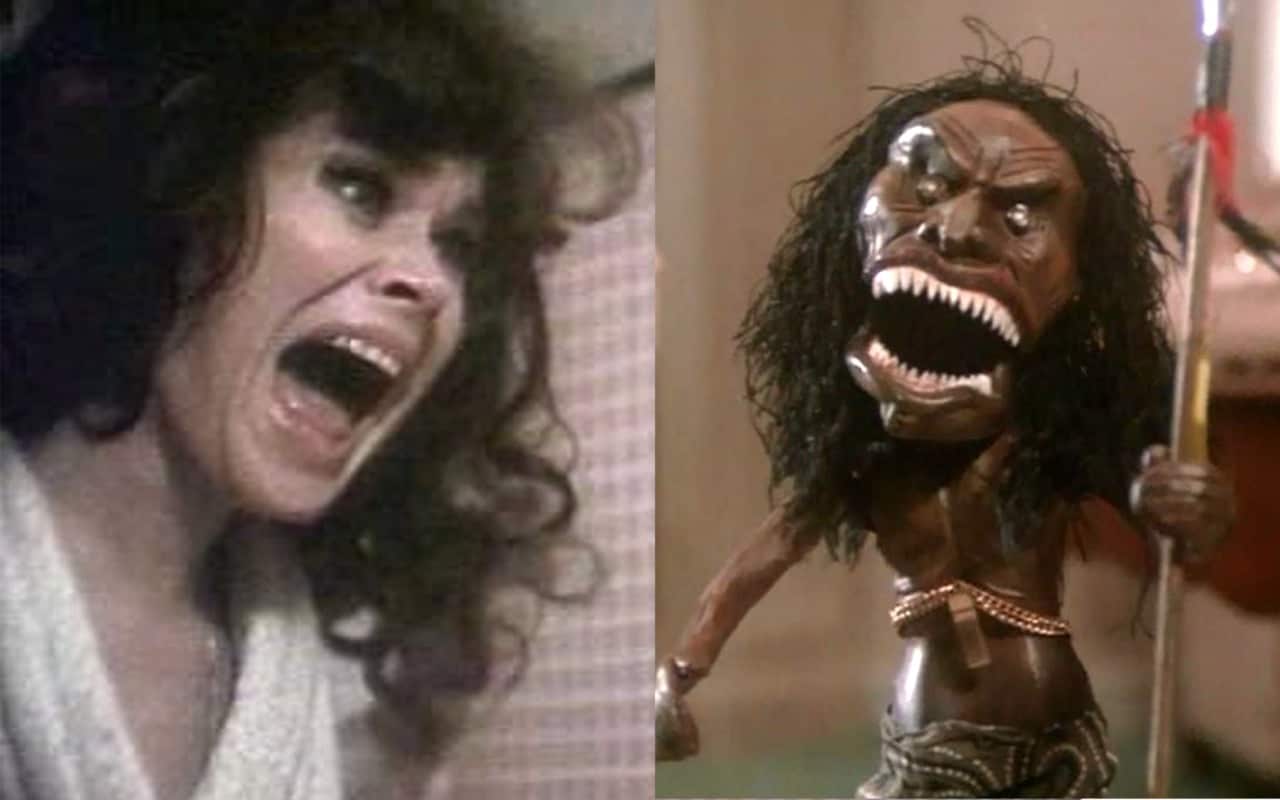
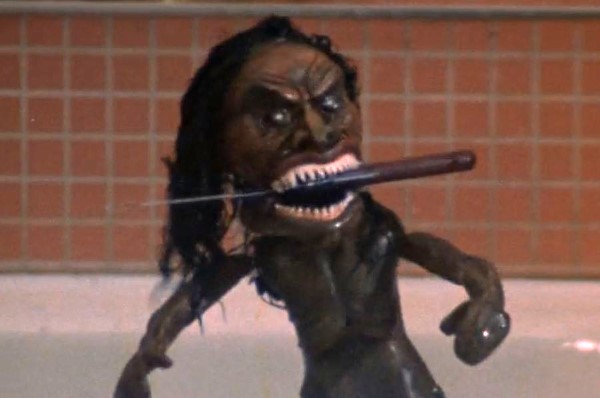
    Roy Bjellquist and I will look back with amusement at our younger selves, and the universal boyhood apprehension of walking across a darkened bedroom, only to be ambushed by a raging Zuni fetish doll. Karen Black is at the heart of these blackened tales, the kinds of stories that, with a little more refinement, might have turned up on “The Twilight Zone” or “Alfred Hitchcock Presents.” It’s no coincidence that the screenplay was adapted from three stories by Richard Matheson, the guy who first envisioned a gremlin standing on an airplane wing outside William Shatner’s window.

    FUN FACT: The original Zuni fetish doll sold at auction last year for over $200,000. I’m hoping that’s considered valuable enough that he’s now locked up in some vault somewhere, minimizing the threat of my getting stabbed in the ankles on nocturnal trips to the bathroom.

    Share your Karen Black-related neuroses in the comments section of the next Roy’s Tie-Dye Sci-Fi Corner. Our group-therapy will commence, live-streamed on Facebook, this Friday evening at 7:00 EDT.

    https://www.facebook.com/roystiedyescificorner/

  • Circus Movie Music Picture Perfect on WWFM

    Circus Movie Music Picture Perfect on WWFM

    Ladies and gentlemen! Boys and girls! Children of all ages! May I have your attention, please?

    Step right up! This week on “Picture Perfect,” it’s music from movies about the circus!

    In 1964, George Pal produced and directed an adaptation of Charles G. Finney’s dark fantasy novel, “The Circus of Dr. Lao.” “7 Faces of Dr. Lao” was envisaged as a real showcase for its star, Tony Randall, who plays not only the mysterious proprietor of an itinerant Old West circus, but also Merlin the Magician, the great god Pan, a Serpent, the fabled monster Medusa, the blind fortune-teller Appolonius of Tyana, and the Abominable Snowman!

    The unusual score is by Leigh Harline, who freshens up tropes of the American Western by applying some Eastern spice. We’ll hear selections from the film’s original elements, remastered for the Film Score Monthly label.

    We’ll also have music from two Academy Award winners: Cecil B. DeMille’s “The Greatest Show on Earth,” voted Best Picture of 1952, with a score by Victor Young, and Federico Fellini’s “La Strada,” Best Foreign Language Film of 1956, with music by Nino Rota.

    Malcom Arnold wrote the music for “Trapeze,” Carol Reed’s 1956 love triangle on high (with Burt Lancaster, Tony Curtis, and Gina Lollobrigada), and Danny Elfman understands that every day’s a circus for Paul Reubens in “Big Top Pee-Wee,” from 1988. I know you are, but what am I?

    Finally, with Halloween right around the corner, I couldn’t resist including a suite from Hammer Film Productions’ “Vampire Circus,” from 1972. The composer is David Whitaker, of “The Sword and the Sorcerer” cult status.

    Music for the circus takes center ring, on “Picture Perfect,” music for the movies, now at its new time, this SATURDAY EVENING AT 6:00 EDT, on WWFM – The Classical Network and wwfm.org.

  • Karen Black Trilogy of Terror Horror Review

    Karen Black Trilogy of Terror Horror Review

    There were few actresses in the 1970s who were as omnipresent as Karen Black.

    She worked with Jack Nicholson, Robert Redford, Robert Duvall, Gene Hackman, Gene Wilder, Christopher Plummer, Alfred Hitchcock, and Robert Altman. Also, Kris Kristofferson, George Segal, Richard Benjamin, Elliot Gould, Lee Van Cleef, Dennis Hopper, and Fabian. She was even nominated for an Academy Award for Best Supporting Actress for her work in “Five Easy Pieces” and for a Grammy for her singing and songwriting in “Nashville.”

    But to those of a certain age, Karen Black will probably always be linked with a certain Zuni fetish doll.

    This week on “Roy’s Tie-Dye Sci-Fi Corner,” October is upon us. Roy Bjellquist and I will kick off a month of tricks and treats with a horrifying discussion of “Trilogy of Terror” (1975). For once, Karen Black really gets to exploit her range, in three creepy, campy segments – as a blackmailed, hypercorrect school marm; as hostile rival sisters (one’s been sucking on lemons, and the other is a free-spirited Satanist); and as the terryclothed target of a possessed anthropological artifact that sounds an awful lot like the Tasmanian Devil.

    It may have been a made-for-TV, “ABC Movie of the Week,” and the “twists” may have all subtlety of an anvil, but the stories are by sci-fi, fantasy, and horror legend Richard Matheson, and they’re directed by Dan Curtis of “Dark Shadows” fame.

    Black is the new black! Help us exorcise ourselves of the loony Zuni. Leave your comments and insights during the Facebook live-stream of Roy’s Tie-Dye Sci-Fi Corner, this Friday evening at 7:00 EDT!

    https://www.facebook.com/roystiedyescificorner/

  • Paul Dukas Beyond The Sorcerer’s Apprentice

    Paul Dukas Beyond The Sorcerer’s Apprentice

    Welcome to another 31 DAYS OF HALLOWEEN… and Paul Dukas’ birthday.

    When we think of Dukas, we generally think of one thing: “The Sorcerer’s Apprentice.” And when we think of “The Sorcerer’s Apprentice,” we think of Mickey Mouse.

    Dukas was an intensely self-critical artist, who wound up destroying most of his own works. Eventually he gave up composition altogether. Rather, like Shakespeare’s Prospero, he broke his staff and drowned his book to become a respected teacher of music, taking up posts at the Paris Conservatory and the École Normale de Musique. Among his students were Carlos Chávez, Maurice Duruflé, Olivier Messiaen, Manuel Ponce and Joaquin Rodrigo.

    Would that this creator of such vivid, brilliantly orchestrated works had left us more. But since all anyone knows is “The Sorcerer’s Apprentice,” I suppose it hardly matters.

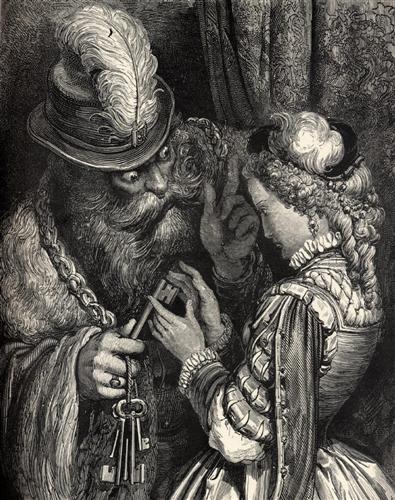
    Here’s a suite from his rarely-heard opera, “Ariane et Barbe-Bleue,” after the Bluebeard story. Bluebeard, of course, is the fairy tale uxoricide whose castle rooms reveal increasingly horrible secrets. But since Dukas’ libretto was taken from a play by Maurice Maeterlinck – whose “Pelléas et Mélisande” Debussy was only just in the process of finishing up – there is less blood, and more layers of airy ambiguity. In fact, Maeterlinck essentially turns the tale on its head, making Ariane a pluckily resourceful, would-be liberator.

    Arturo Toscanini conducts the NBC Symphony and Princeton’s own Westminster Choir:

    “O mes clairs diamants” (“O my clear diamonds”):

    Those expecting a darker, more disturbing, psychologically twisted account of the fairy story should stick with Bartók’s Bluebeard.

    Zut alors! Look what I found! Silent film master Georges Méliès’ adaptation of Bluebeard:

    Mommy! Where’s Mickey Mouse???

    Why, right here, Billy…

    https://video.disney.com/watch/sorcerer-s-apprentice-fantasia-4ea9ebc01a74ea59a5867853

    Happy birthday, Paul Dukas (1865-1935)!


    PICTURED: The key to a dysfunctional marriage

Tag Cloud

Aaron Copland (93) Beethoven (95) Composer (114) Film Music (137) Film Score (143) Film Scores (255) Halloween (94) John Williams (195) KWAX (229) Leonard Bernstein (103) Marlboro Music Festival (125) Movie Music (152) Mozart (88) Opera (208) Philadelphia Orchestra (89) Picture Perfect (174) Princeton Symphony Orchestra (108) Radio (88) Ross Amico (244) Roy's Tie-Dye Sci-Fi Corner (290) The Classical Network (101) The Lost Chord (268) Vaughan Williams (103) WPRB (396) WWFM (881)

DON’T MISS A BEAT

Receive a weekly digest every Sunday at noon by signing up here


RECENT POSTS