Category: Daily Dispatch

  • Fantastic Voyage Roy’s Tie-Dye Sci-Fi Corner

    Fantastic Voyage Roy’s Tie-Dye Sci-Fi Corner

    Between my being without electricity and Roy being without internet, this week has truly been a fantastic voyage. It couldn’t be more appropriate, then, that we’ll talk about “Fantastic Voyage” (1966), on the next “Roy’s Tie-Dye Sci-Fi Corner.”

    “Fantastic Voyage,” of course, is the ultimate exploration of “inner space” – the recesses of the human body, as experienced from the viewpoint of a corpuscle – a perspective never witnessed before. A miniaturized Stephen Boyd, Raquel Welch, Arthur Kennedy, and Donald Pleasence embark on a trippy submarine trek through the heart and lungs to perform literal micro-surgery on the injured brain of a defecting scientist. They have exactly one hour to do so, before they begin to grow!

    Get ready for some really small talk, about “Fantastic Voyage,” on “Roy’s Tie-Dye Sci-Fi Corner,” to be live-streamed on Facebook this Friday evening at 7:00 EDT!

    https://www.facebook.com/roystiedyescificorner/

  • Ray Bradbury’s Martian Chronicles: A Warning for Today

    Ray Bradbury’s Martian Chronicles: A Warning for Today

    In the wake of Isaias, it was as if someone had upset a giant chess board. Only, trees were the bishops and rooks that toppled across power lines and plunged Princeton into darkness. A very close knight was spent, then, pawn at my beard, as I was reduced, basically, to sleeping in a window. Checkmate!

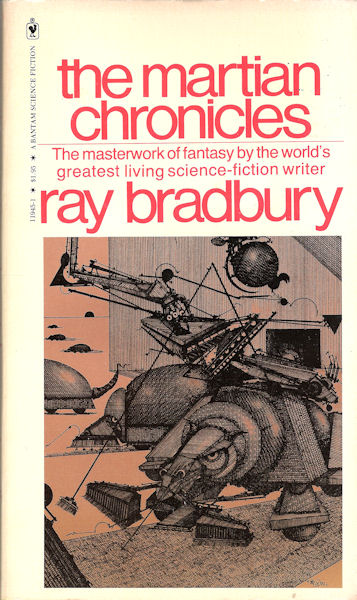
    Since I do not own a smart phone, it resulted in an enforced fasting from the internet, driving me to the nearest book I could find, which happened to be Ray Bradbury’s “The Martian Chronicles,” an old, pleasantly pulp-scented paperback I’ve owned since the late 1970s. That also happens to be the last time I opened it. I finished my second reading by flashlight on Tuesday night.

    Bradbury’s virtuosic and comprehensive exploration of themes surrounding Martian colonization, and all that that might imply, traces the parallel fates of Martians and mankind. Hovering somewhere between novel and short story collection (the author cites Sherwood Anderson’s “Winesburg, Ohio” as a principal influence), the book is wonderfully strange, weirdly poetic, at times humorous, frequently ironic, unusually disturbing, and often startlingly dark. And in terms of human nature, unfortunately it all rings true.

    Bradbury, who lived from 1920 to 2012, would probably shake his head, but not be at all surprised by today’s world, with its twisting of facts, distortion and denial, “fake news,” censorship, historical revisionism, ignorance, fear, and lack of respect. The earth continues on its mad course, becoming more and more “science fiction” every day. Bradbury lived through the perils of Fascism, Communism with a capital C, the Cold War, and the Red Scare. Did he see today coming? Or, in his heart of hearts, did he believe in our better natures, despite our mad, self-destructive impulses? Did he intend “The Martian Chronicles” as speculative fiction, the literary exorcising of nightmares, a kind of thought-provoking what if? Or as an inevitability, given who we are?

    “The Martian Chronicles” itself has been subject to censorship, with one chapter, in particular, “Way in the Middle of the Air,” omitted from the 2001 Doubleday and 2006 William Morrow/Harper Collins reprints, even though the story serves as a critique of the racism now evidently misattributed to the author. How stupid are we? How afraid? How fragile our civilization, so quick to outrage we are? In a world of sound bites, surfaces, and bold absolutes, there is little room for nuance, contemplation, and reasoned discussion. The world of “Fahrenheit 451,” sadly, chillingly, is not so far-fetched.

    One of the most satisfying stories in the book must be “Usher II,” in which an Edgar Allan Poe admirer exacts gruesome revenge on those “Moral Climate Monitors” who, in their righteous zealotry, make it their lives’ missions to censor and destroy. Here’s a selection:


    “Does the name Usher mean nothing to you?”

    “Nothing.”

    “Well, what about this name: Edgar Allan Poe?”

    Mr. Bigelow shook his head.

    “Of course.” Stendahl snorted delicately, a combination of dismay and contempt. “How could I expect you to know blessed Mr. Poe? He died a long while ago, before Lincoln. All of his books were burned in the Great Fire. That’s thirty years ago – 1975.”

    “Ah,” said Mr. Bigelow wisely. “One of those!”

    “Yes, one of those, Bigelow. He and Lovecraft and Hawthorne and Ambrose Bierce and all the tales of terror and fantasy and horror and, for that matter, tales of the future were burned. Heartlessly. They passed a law. Oh, it started very small. In 1950 and ‘60 it was a grain of sand. They began by controlling books of cartoons and then detective books and, of course, films, one way or another, one group or another, political bias, religions prejudice, union pressures; there was always a minority afraid of something, and a great majority afraid of the dark, afraid of the future, afraid of the past, afraid of the present, afraid of themselves and shadows of themselves.”

    “I see.”

    “Afraid of the word ‘politics’ (which eventually became a synonym for Communism among the more reactionary elements, so I hear, and it was worth your life to use the word!), and with a screw tightened here, a bolt fastened there, a push, a pull, a yank, art and literature were soon like a great twine of taffy strung about, being twisted in braids and tied in knots and thrown in all directions, until there was no more resiliency and no more savor to it. Then the film cameras chopped short and the theaters turned dark. and the print presses trickled down from a great Niagara of reading matter to a mere innocuous dripping of ‘pure’ material. Oh, the word ‘escape’ was radical, too, I tell you!”

    “Was it’?”

    “It was! Every man, they said, must face reality. Must face the Here and Now! Everything that was not so must go. All the beautiful literary lies and flights of fancy must be shot in mid-air. So they lined them up against a library wall one Sunday morning thirty years ago, in 1975; they lined them up, St. Nicholas and the Headless Horseman and Snow White and Rumpelstiltskin and Mother Goose – oh, what a wailing! – and shot them down, and burned the paper castles and the fairy frogs and old kings and the people who lived happily ever after (for of course it was a fact that nobody lived happily ever after!), and Once Upon a Time became No More! And they spread the ashes of the Phantom Rickshaw with the rubble of the Land of Oz; they filleted the bones of Glinda the Good and Ozma and shattered Polychrome in a spectroscope and served Jack Pumpkinhead with meringue at the Biologists’ Ball! The Beanstalk died in a bramble of red tape! Sleeping Beauty awoke at the kiss of a scientist and expired at the fatal puncture of his syringe. And they made Alice drink something from a bottle which reduced her to a size where she could no longer cry ‘Curiouser and curiouser,’ and they gave the Looking Glass one hammer blow to smash it and every Red King and Oyster away!”

    He clenched his fists. Lord, how immediate it was! His face was red and he was gasping for breath.

    As for Mr. Bigelow, he was astounded at this long explosion. He blinked and at last said, “Sorry. Don’t know what you’re talking about. Just names to me. From what I hear, the Burning was a good thing.”

    “Get out!” screamed Stendahl. “You’ve done your job, now let me alone, you idiot!”


    Beginning with the 1997 edition, the chronology of the narrative, which spans 1999 to 2026, was advanced 31 years. That annoys me almost as much as the excised chapter. It’s not as if science fiction as a genre is not rife with day-after-tomorrow speculation. The fact that Bradbury’s “future,” as he envisioned it, is already upon us does not change the truths expressed. Whether it’s 1950 (the date of the book’s publication), 1978 (when I likely first read it), or 2020, man is man – now, in “correct” circles, perhaps too generously labeled “humanity.”

    We pursue our visions of utopia in ignorance or denial. And history repeats. Every day I wake up and wonder, am I the one living on Mars?

  • Leon Fleisher: A Legend Remembered

    Leon Fleisher: A Legend Remembered

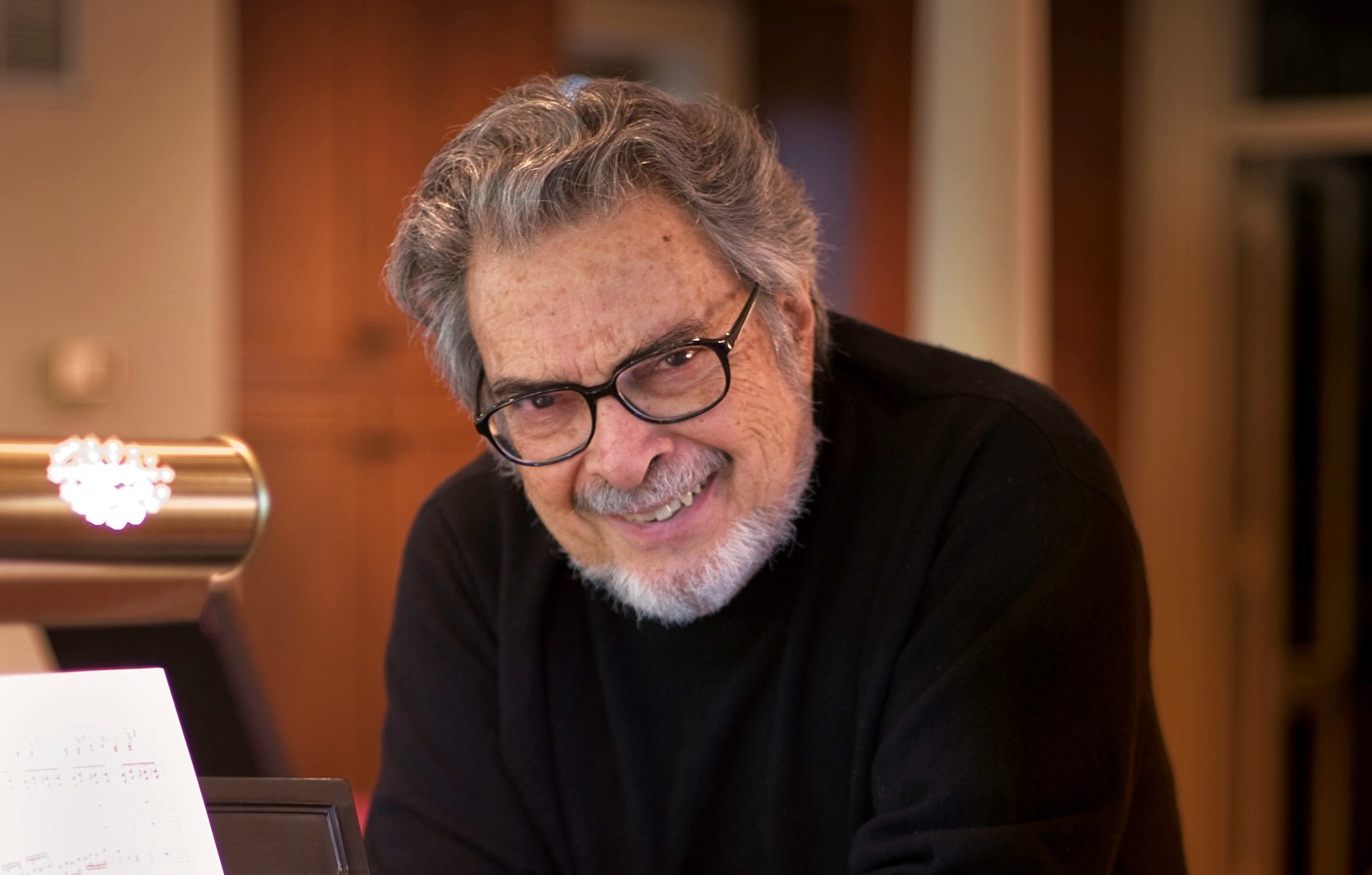
    The word legend gets bandied a lot at times like these, but rarely has it been so completely deserved. Leon Fleisher has died at 92. He leaves us not only as one of the greatest pianists of his time, but also as one of the greatest all-around artists. The man exuded music, and he did so with genuine humility and unusual generosity.

    Fleisher’s career as an interpreter of the standard, two-handed repertoire may have been cut short by focal dystonia at the age of 37 – by the mid-1960s, it had caused two of his fingers on his right hand to curl into his palm – but already he had distinguished himself as a lion of the keyboard. His prowess as a young man is preserved in benchmark recordings of works by Brahms, Beethoven, Rachmaninoff, and others.

    But even with his dexterity diminished, Fleisher’s intelligence remained unimpaired. His recordings of music for the left hand alone, again, are some of the finest in existence. By the late ‘60s, he also turned to conducting – he became associate conductor of the Baltimore Symphony Orchestra and music director in Annapolis – but it was his generous spirit as a teacher that perhaps best reflected the man. Fleisher taught at the Peabody Institute since 1959. He also had ties to the Curtis Institute, the Royal Conservatory of Music in Toronto, and the Tanglewood Music Center, and he oversaw countless master classes.

    He himself had been a pupil of Artur Schnabel, who had been a student of Theodor Leschetizky, who in turn had studied with Carl Czerny, who had learned directly from Beethoven. And Fleisher gave as good as he got. His benign influence sent off tendrils that now circle the globe. In his life’s work, Fleisher realized Schnabel’s maxim, that music came first, piano second.

    As a performer, whenever Fleisher came near a piano in the middle of his career, it was to champion music for the left hand. Fortunately, the repertoire is substantial, and Fleisher added to it, as composers flocked to write new pieces for him.

    Then, three decades after he was forced to give it up, suddenly he resumed performance of the two-handed repertoire, to an extent, thanks to Botox injections. He went on to record several more acclaimed albums, of both left-hand and two-handed works, later in life.

    I had the privilege to hear him perform several times, including at the East Coast premiere of Paul Hindemith’s “Piano Music with Orchestra” at Philadelphia’s Kimmel Center for the Performing Arts. The work was written for Paul Wittgenstein, of Ravel concerto fame, who had lost his right arm during the First World War. Wittgenstein, who had somewhat conservative tastes, never played Hindemith’s concerto publicly, but it remained in his possession and was rediscovered, among his widow’s belongings, in a Pennsylvania farm house only in 2002! Fleisher gave the world premiere of the work, with the Berlin Philharmonic, in 2004.

    Our delayed face-to-face meeting occurred several years after we had chatted by telephone. An earlier attempt had been thwarted by illness, but we finally got to shake hands and say hello following a recital at the Kimmel’s Perleman Theater. For a figure of his stature, you couldn’t have found a humbler, nicer man. At the time of our earlier interview, in 1987, when I called at the appointed hour, Fleisher – the legend – was only just driving home from work at Peabody, and he couldn’t have been more apologetic. The man who had studied with Schnabel, who at 16 was proclaimed by Pierre Monteux “the pianistic find of the century,” the artist who fearlessly collaborated with George Szell in some of the most revered music in the entire repertoire, was sorry to be late for our interview. Clearly, he was a person who put on no airs.

    But judge for yourself. Here’s the raw audio of that interview, which came to pass about a half hour later. The occasion was the release of his new album of left-hand piano works, “All the Things You Are,” on the Bridge Records, Inc., that remains one of the finest of his later years. Keep in mind that the conversation would be edited into sequence for use, with musical interludes, on my Sunday night program, “The Lost Chord.”

    Needless to say, I am very sorry to be cut off by COVID-19 from access to WWFM – The Classical Network’s production studios, or I would re-edit this material for a posthumous tribute.

    Leon Fleisher was one of the most genuine people I ever met, totally without pretense – a great artist, yes, but also a gracious and lovely man.


    Fleisher plays Beethoven with Szell and the Cleveland Orchestra:

    Erich Wolfgang Korngold, “Suite for 2 Violins, Cello, and Piano Left-Hand;” the fourth movement “Lied,” about 25 minutes in, must be one of the loveliest things I’ve ever heard:

    The West Coast premiere of Hindemith’s “Klaviermusik mit Orchester” (for piano left-hand):

    Brahms’ left-hand arrangement of the Bach “Chaconne”:


    PHOTOS (counterclockwise from top): Leon Fleisher; with Artur Schnabel; with George Szell; and with Classic Ross Amico

  • Forbidden Planet Sci-Fi Crossover Tonight

    Forbidden Planet Sci-Fi Crossover Tonight

    Gams and robots!

    Roy and I will be joined by Marybeth and Michael, from SciFi Distilled, for a special crossover episode, on which we’ll explore “Forbidden Planet.” 2,000 centuries of Krell civilization, down the drain!

    The show will be live-streamed on Facebook tonight at 7:00 EDT on Roy’s Tie-Dye Sci-Fi Corner.

    Beware Monsters from the Id!

  • Inner Emigration Composers Under the Nazis

    Inner Emigration Composers Under the Nazis

    Is it really “emigration” when you don’t go anywhere?

    This Sunday night on “The Lost Chord,” we’ll have music by flagrantly anti-fascist composers who remained in Germany during the Nazi regime. This type of opposition was described by Thomas Mann as “inner emigration.”

    There were plenty of opportunists who joined the Nazi Party as a means to curry favor, in the hopes of securing prominent posts. Then there were those who, while critical of the Nazis, nevertheless joined the Party to protect their families and to continue working.

    A group which seems to have faded from memory is that made up of composers who remained, opposed the regime, and yet somehow survived. These artists were condemned by the Nazis, their music labeled degenerate and banned from performance. They were either prevented from escape or remained of their own accord. Some justified the decision to stay as an act of social consciousness. Some were active in resistance circles. Others simply withdrew into ostentatious silence.

    Reinhard Schwarz-Schilling is not a terribly well-known composer, largely for the reasons I just mentioned. Schwarz-Schilling had been a professor of music at the Berlin Academy of Music. During Hitler’s reign, his family was subjected to frequent interrogations by the Gestapo. Luckily, it was never found out that Schwarz-Schilling’s wife, the concert pianist Dusza von Hakrid, was of Jewish descent. It was only through the beneficence and courage of a sympathetic official who falsified documents that the Schwarz-Schillings escaped arrest.

    Schwarz-Schilling may have survived the Nazis, but following the war, he had to deal with the musical establishment, which had grown hostile to such flagrantly tonal music. Something like his Violin Concerto of 1953 couldn’t be taken seriously. It starts out sounding a bit like Hindemith, but embraces Korngoldian sentiment at its candy core. If you can’t stick around for the whole show, I hope at least you’ll stay tuned for the gorgeous slow movement of this concerto.

    We’ll also hear music by Karl Amadeus Hartmann, regarded in some circles as the most important German symphonist of the mid-20th century, yet is now largely overlooked. In his 30s, Hartmann was viewed as politically undesirable in his homeland. He completely withdrew from musical life during the Nazi era. On the rare occasion any of his works would have been permitted performance, Hartmann would not allow it. Alas, most of his greatest champions were also his contemporaries. Therefore, performances of his music nearly died with them.

    After the war, Hartmann was one of the few prominent surviving anti-fascists in Bavaria whom the Allied Forces could promote to a position of responsibility. Hartmann used that trust to reintroduce the world to music which had been banned since 1933 under National Socialist aesthetic policy. He remained in Munich for the rest of his life, where his administrative duties cut heavily into what would have been his compositional time and energy. He died in 1963. We’ll hear Hartmann’s Symphony No. 6, composed between 1951 and 1953.

    I hope you’ll join me for “Staying Power” – music by anti-fascist composers who remained in Nazi Germany – this Sunday night at 10:00 EDT, on WWFM – The Classical Network and wwfm.org.

Tag Cloud

Aaron Copland (93) Beethoven (95) Composer (114) Film Music (137) Film Score (143) Film Scores (255) Halloween (94) John Williams (195) KWAX (229) Leonard Bernstein (103) Marlboro Music Festival (125) Movie Music (152) Mozart (88) Opera (208) Philadelphia Orchestra (89) Picture Perfect (174) Princeton Symphony Orchestra (108) Radio (88) Ross Amico (244) Roy's Tie-Dye Sci-Fi Corner (290) The Classical Network (101) The Lost Chord (268) Vaughan Williams (103) WPRB (396) WWFM (881)

DON’T MISS A BEAT

Receive a weekly digest every Sunday at noon by signing up here


RECENT POSTS