Summer is a great time to catch up on your reading. Rain or shine, this week’s Classic Ross Amico crossword celebrates two of life’s great pleasures – books and music!
To fill out the puzzle, follow the link and select “solve online” at the bottom of the page. You’ll then be able to type directly into the squares. Once you feel you’ve exhausted the puzzle, you’ll find the solutions by clicking on “Answer Key PDF.”
Reuniting with Roy and my cousin Joe was definitely a close encounter of the nerd kind. Here, we jawbone about Steven Spielberg’s sublime extraterrestrial essay, on last night’s “Roy’s Tie-Dye Sci-Fi Corner.”
Enjoy a double-dollop this weekend. Roy and I will be joined by Marybeth and Mike of SciFi Distilled, for a discussion about the 1956 classic “Forbidden Planet.” Robby the Robot meets Shakespeare’s “The Tempest.” Beware monsters from the id!
It will be a tempest in a tea pot, and we’ll all be high on rocket fuel. Join us for the Facebook live-stream, this Sunday night at 7:00 EDT.
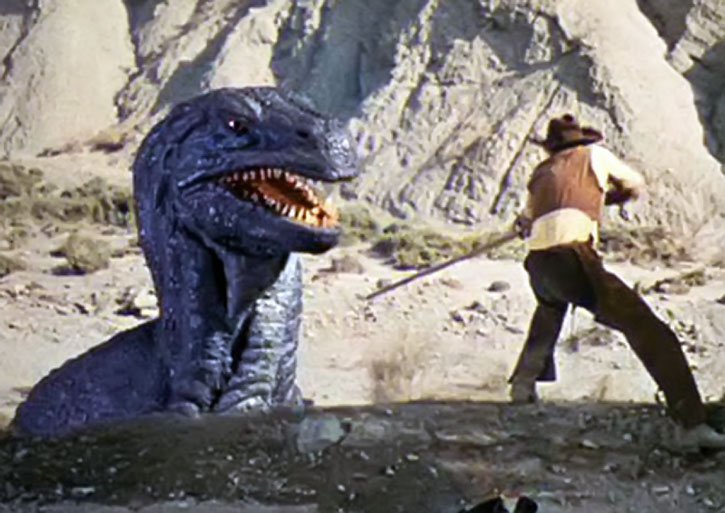
You’re right. The idea of cowboys lassoing an Allosaurus so that they can show it off in their Wild West show is totally preposterous. But not to worry, we’ll rinse the taste out of our mouths with a three-way bull session devoted to a movie about extraterrestrials who fly around in ice cream cones.
That’s right, it’s another Classic Ross Amico double feature!
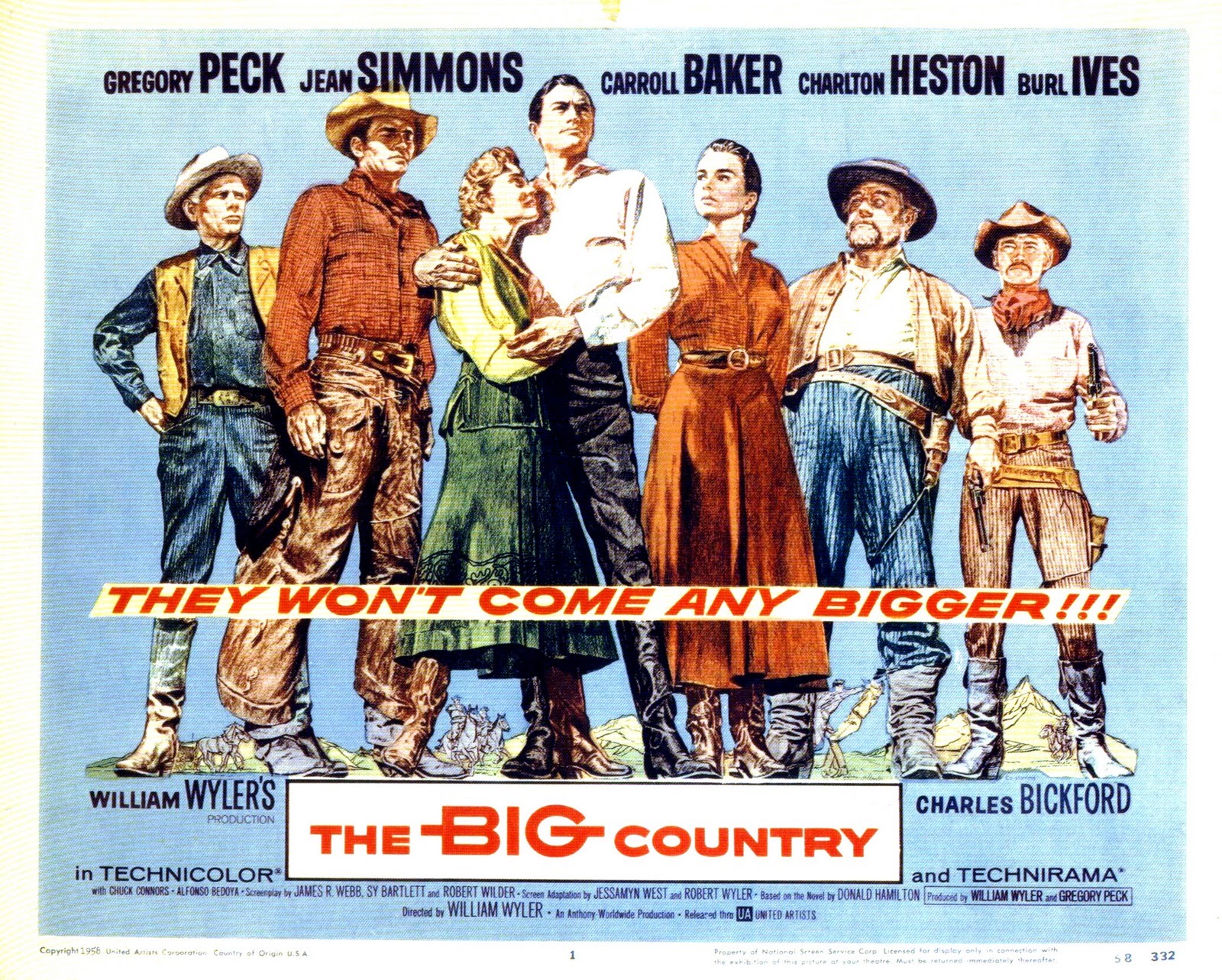
Join me this Friday evening at 6:00 EDT, for an hour of music from the western scores of Jerome Moross on “Picture Perfect” – including selections from “The Big Country,” “The Proud Rebel,” “The Jayhawkers,” and “The Valley of Gwangi” – on WWFM – The Classical Network and wwfm.org.
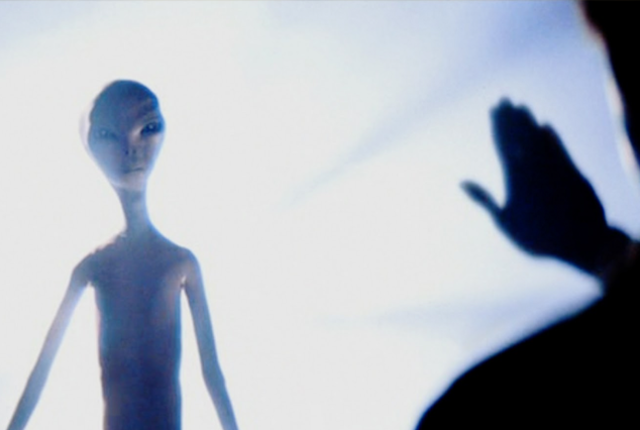
Then at 7:00 EDT, Roy Bjellquist and I will be joined by Joe Metz (my cousin, whom I have not seen in about 35 years) for an in-depth discussion about a movie that influenced us all, Steven Spielberg’s UFO blockbuster “Close Encounters of the Third Kind.”
You can bet your mashed potatoes that the hour will not pass without some discussion of music, which permeates the film on multiple levels.
Catch the Facebook live-stream, and by all means, participate in the running commentary. We look forward to reading your thoughts and reactions.
Roy’s Tie-Dye Sci-Fi Corner
Watch us. Watch the skies. When we see you there, we’ll know, truly… we are not alone!
“[A]s we hit the Plains I got so excited,” recollected composer and pianist Jerome Moross. It was 1936 and, at George Gershwin’s invitation, he was en route to Los Angeles to participate in the West Coast premiere of “Porgy Bess.” When he stepped off the bus in Albuquerque, it changed him forever. “…I got to the edge of town and then walked out onto the flat land with a marvelous feeling of being alone in the vastness, with the mountains cutting off the horizon. The whole thing was just too much for me… it was marvelous, and I just fell in love with it.”
He would recall this powerful communion with the American West decades later when he came to write his best-known music, the Academy Award-nominated score for “The Big Country” (1958). Indeed, the “western” sound would color many of his future film and concert works, with the energetic syncopations of his native New York City supporting an easy lyrical gift that could easily pass for genuine American folk music.
This week on “Picture Perfect,” we’ll saddle up for selections from four of Moross’ big screen westerns. The success of “The Big Country” put Moross much in demand as Hollywood’s troubadour of the great outdoors. The trail was still fresh when he was enlisted for “The Proud Rebel” (1958). The film starred Alan Ladd, as a Civil War veteran with a troubled past, and the late Olivia De Havilland, as the ranch owner who takes responsibility for him. Tensions mount as a corrupt landowner and his sons attempt to drive the woman off her ranch.
While “The Proud Rebel” tapped into predictable western archetypes, “The Valley of Gwangi” (1969) exploded all expectations. A cross-genre western that might best be described as “Annie Get Your Gun” meets “King Kong,” the film’s premise hinges on the discovery by an enterprising band of cowboys of an Allosaurus in a lost valley in Mexico, which of course they press into service at their Wild West show. What could possibly go wrong? In a time before starships and superheroes dominated the cinematic landscape, “Gwangi” must have been very heady stuff for six-year old boys everywhere.
The project was conceived decades earlier by Willis O’Brien, the special effects legend who created Kong. But it was left to his protégé, the great Ray Harryhausen, to bring the film to fruition. The result, while never scaling the operatic heights of “Kong,” is a fascinating mélange, a movie that is part cowboy, part creature-runs-amok.
For those of a certain age, one of Moross’ most recognizable melodies must surely be the theme to the television series “Wagon Train.” Unfortunately, that music was soon discovered to bear a striking resemblance to a secondary theme in “The Jayhawkers” (1959). Fortunately for Moross, competing studios were willing to look the other way. “The Jayhawkers,” which starred Jeff Chandler and Fess Parker, is set in the days of Bleeding Kansas.
We are borne west on music of great vitality. Breathe the open air with Jerome Moross, on “Picture Perfect,” music for the movies, this Friday evening at 6:00 EDT, on WWFM – The Classical Network and wwfm.org.
Is “Close Encounters of the Third Kind” the most musical non-musical blockbuster ever made?
I don’t know at what point I recognized Zoltán Kodály’s contribution to “CE3K.” It was certainly not as an 11-year-old boy, which is how old I was at the time I was first spooked and awed by Steven Spielberg’s UFO masterpiece. But somewhere along the way, Kodály took on more significance than simply an exotic-looking name on a chart.
In addition to being one of Hungary’s most respected composers – with his friend, Béla Bartók, at the forefront of the whole Hungarian nationalist movement – Kodály was extremely influential in the field of music education. The hand signals employed by François Truffaut’s Claude Lacombe, when he addresses a conference of UFO scientists and researchers, correspond to specific musical tones. The signals are an integral part of the Kodály method, and they contribute to the film’s memorable climax. Millions who have never heard of Kodály outside the context of “CE3K” will be familiar with the five-signal sequence.
Of course, music imbues just about every aspect of Spielberg’s storytelling. Composer John Williams went through over 300 permutations of the five-notes-to-a-theme before arriving at the now-iconic motive that ties the whole film together. There was no “aha! moment.” It was only after Spielberg learned there were over 130,000 possibilities that they just settled on a sequence they thought would be effective. A significant portion of the score for the last half hour of “CE3K” would be recorded in advance of the actual filming. It’s a rare luxury for composers to have a film cut to their music, as opposed to the other way around, but this is what was done, necessarily, for the film’s climactic encounter.
At the time, Williams’ “CE3K” theme was widely parodied and likely as well recognized as his theme for “Jaws.” His score would be nominated for an Academy Award in 1978. He actually wound up losing to himself, for “Star Wars.” A banner year for John Williams!
Interestingly, the composer tailored a cello solo specifically for Eleanor Aller Slatkin, formerly of the legendary Hollywood String Quartet. Aller was the widow of violinist Felix Slatkin and the mother of conductor Leonard Slatkin. She had been active in Hollywood since the 1940s, introducing Erich Wolfgang Korngold’s Cello Concerto in the film “Deception,” with Bette Davis and Claude Rains. Paul Henreid “played” the concerto onscreen.
French pianist and educator Odette Gartenlaub, a Messiaen pupil and solfège authority who taught at the Paris Conservatory, has a cameo during the climactic extraterrestrial communication scene.
And of course, “When You Wish Upon a Star” is heard on a music box early in the narrative, only to be picked up in Williams’ underscore during the film’s apotheosis. Spielberg said that he relied on the spirit of the song as a kind of guide for the overall feeling he wanted “CE3K” to convey.
“Close Encounters” is a work of great humanity, wonder and hope. Is it any wonder that music would play such an important role? In a story in which so many of the human characters experience frustration in their spoken interactions, running up against all kinds of barriers to effective communication, the key to universal understanding turns out to be music. It is one of the most satisfying and uplifting movies about music ever made. Unusually, it also seems to get everything right.
There were many experienced hands involved in the writing of the film, but in the end it was Spielberg who received the sole screen credit. Somebody really knew their music. I wonder who directed Spielberg to Kodály?
For further reflections on “CE3K,” join Roy Bjellquist and me – with a special appearance by my brilliant cousin, Joseph R. Metz – on the next “Roy’s Tie-Dye Sci-Fi Corner,” to be live-streamed on Facebook this Friday evening at 7:00 EDT.