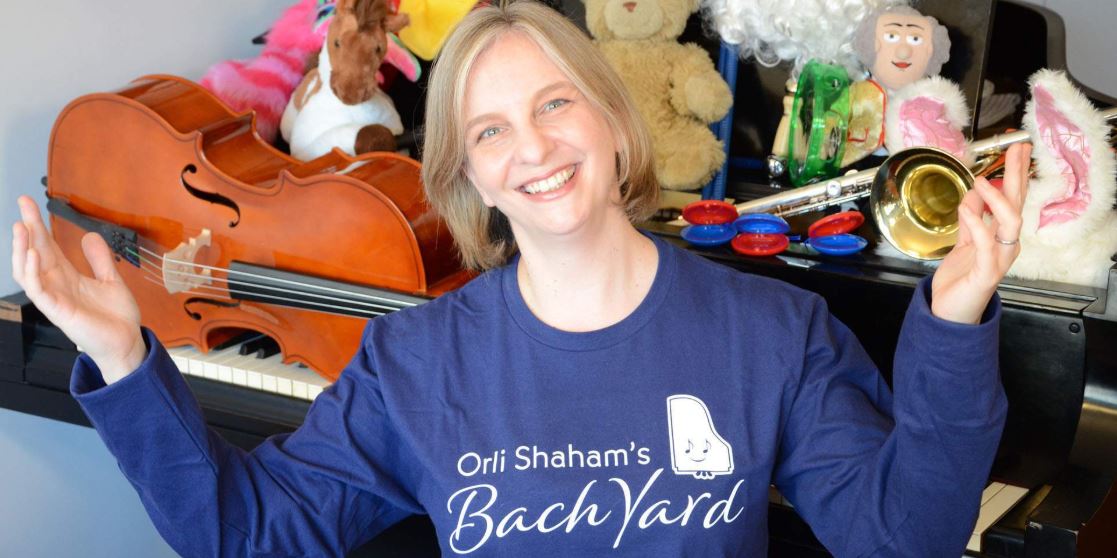
Musicians continue to formulate ways to communicate during these challenging times. Naturally, Orli Shaham’s “Bach Yard Playdates,” in their live incarnation, have had to be postponed because of COVID-19.
But Shaham has come up with an inventive workaround. Beginning this Sunday at 11 a.m., she will present 10-minute interactive music segments to be streamed on the website of Kaufman Music Center (kaufmanmusiccenter.org) and social media channels (Facebook, Instagram, Twitter, and YouTube).
“Bach Yard Playdates” are aimed toward kids up through early elementary. Each episode will feature story times, interactive works in which children can participate from home, and selections designed to develop listening skills. Shaham will introduce each episode, and will be joined by guest musicians from Ensemble Connect, The Westerlies, and others for the performances.
The series will begin with Bach and continue with an interactive piece called “Curious Engine,” with music by Beata Moon. Shaham will narrate two original stories: “Dance of the Goat,” with music by Arthur Honegger (and the goat played by Wilden Dannenberg of Ensemble Connect), and “The Trout Family’s New Friend,” with music by Franz Schubert.
The season will run to ten episodes, through June 28. To learn more about “Bach Yard Playdates,” and for more fun musical activities to share with your kids, visit bachyard.org.
A reminder also that Shaham is in the process of sharing tracks from her forthcoming Mozart album, with a new file posted every Wednesday at her website, orlishahammozart.com. It’s an offering she’s dubbed “MidWeek Mozart.” Shaham is in the process of recording all of the Mozart sonatas for the Canary Classics label.
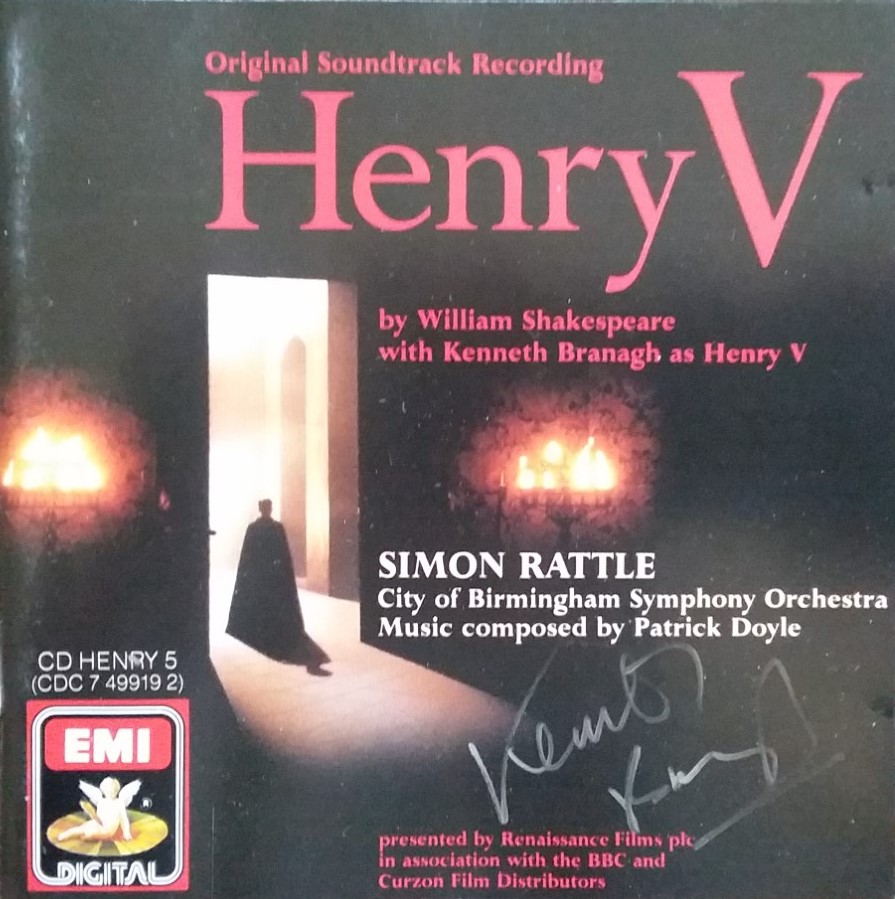
Here’s a glimpse of my soundtrack to Patrick Doyle’s “Henry V.” I had the booklet signed by Kenneth Branagh. At the time, Branagh had just been hired by Marvel to direct “Thor,” and I was hoping to talk him into casting Brian Blessed as Odin and Derek Jacobi as Loki. Alas, it was not to be… not that I ever thought it would be!
Enjoy selections from Branagh’s “Henry V,” alongside Doyle’s music for “As You Like It,” “Hamlet,” and “Much Ado About Nothing.”
Branagh meets the Bard on “Picture Perfect,” this Friday evening at 6:00 EDT, on WWFM – The Classical Network and wwfm.org.
This week on “Picture Perfect,” between the surmised date of Shakespeare’s birth (April 23, 1564) and his baptismal date (April 26), we’ll make much ado about Patrick Doyle, with selections from his scores written for the films of Kenneth Branagh.
In 1987, Doyle joined Branagh’s Renaissance Theatre Company, for which he provided incidental music. Two years later, Branagh – and by extension, Doyle – made a leap to the big screen, where they achieved a remarkable feat, rethinking Shakespeare’s “Henry V.” Remember, this is the play that propelled Laurence Olivier to worldwide fame in 1944, both as a filmmaker and the Bard’s most celebrated interpreter, and William Walton’s score is regarded as one of the best of all time.
Branagh’s version is quite different. Though equally rousing, it doesn’t shy away from Henry’s more complicated nature and the grittier aspects of what it means to go to war. It was a bold gamble, but one that paid off. Not only did this revisionist “Henry” receive nearly universal acclaim, the film was a box office success, and Branagh would be nominated for two Academy Awards, like his predecessor, in the categories of Best Actor and Best Director. Certainly the film’s score deserved to be recognized – but in the year of “The Little Mermaid,” it failed even to secure an Academy Award nomination.
An interesting footnote: Doyle himself is the baritone who introduces “Non nobis Domine,” a prayer of thanksgiving, following the Battle of Agincourt.
In 2006, Branagh directed an adaptation of “As You Like It.” As has become his custom, he took a celebrity approach to its casting, although perhaps not so widely uneven as some of the cameos in his big screen “Hamlet.” Kevin Kline appears as Jacques; Alfred Molina is the fool, Touchstone; and Branagh regulars, Brian Blessed and Richard Briers appear, as well.
The most radical liberty taken with the play is that Branagh transplants the action to 19th century Japan. The language remains firmly rooted in Shakespeare’s text, although there are striking cross-cultural elements, including ample kimonos, kabuki theatre, ninjas, and a sumo wrestler. Still, it’s a long way off from the astounding bomb that was Branagh’s American Songbook-interpolated “Love’s Labour’s Lost.”
While Olivier’s “Hamlet” won four Academy Awards in 1948, including those for Best Picture and Best Actor, Branagh’s 1996 version is cinema’s first adaptation of the complete text. It is, perhaps, an uneven interpretation, with some puzzling casting choices – including walk-ons by Jack Lemmon, Robin Williams and Gerard Depardieu – but there are enough merits, certainly, to make the four-hour trek worthwhile.
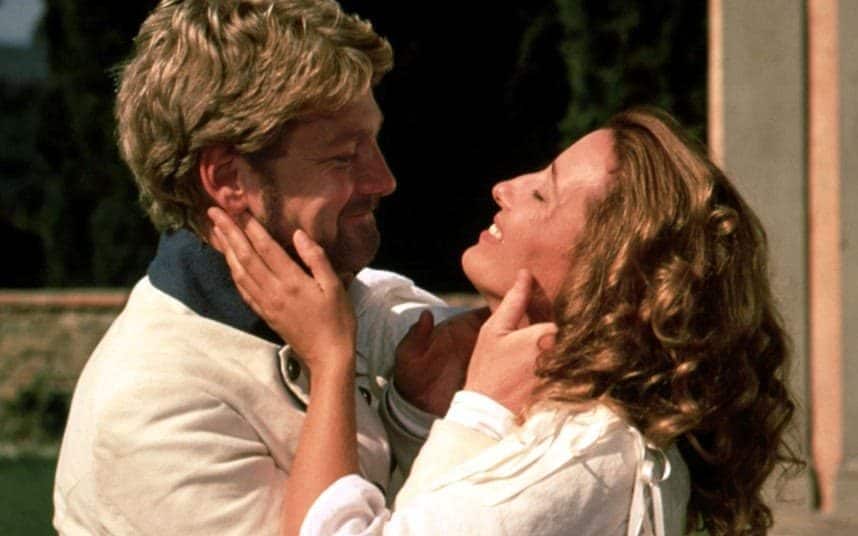
Finally, Branagh teamed with his then-wife, Emma Thompson, for a “merry war” of wits, as Benedick and Beatrice, in his 1993 adaptation of “Much Ado About Nothing.” Again, the film features an eclectic supporting cast of classically trained actors and pop Hollywood phenomena. Briers, Blessed, and Imelda Staunton share screen time with Denzel Washington, Michael Keaton and Keanu Reeves. Yet, somehow, despite the different nationalities, ethnicities, and accents, the entire enterprise works. There is an exuberance to the over-the-top opening sequence which sets up a momentum that carries through the rest of the film.
Sigh no more, but join me for the Shakespeare scores of Patrick Doyle on “Picture Perfect,” this Friday evening at 6:00 EDT, on WWFM – The Classical Network and wwfm.org.
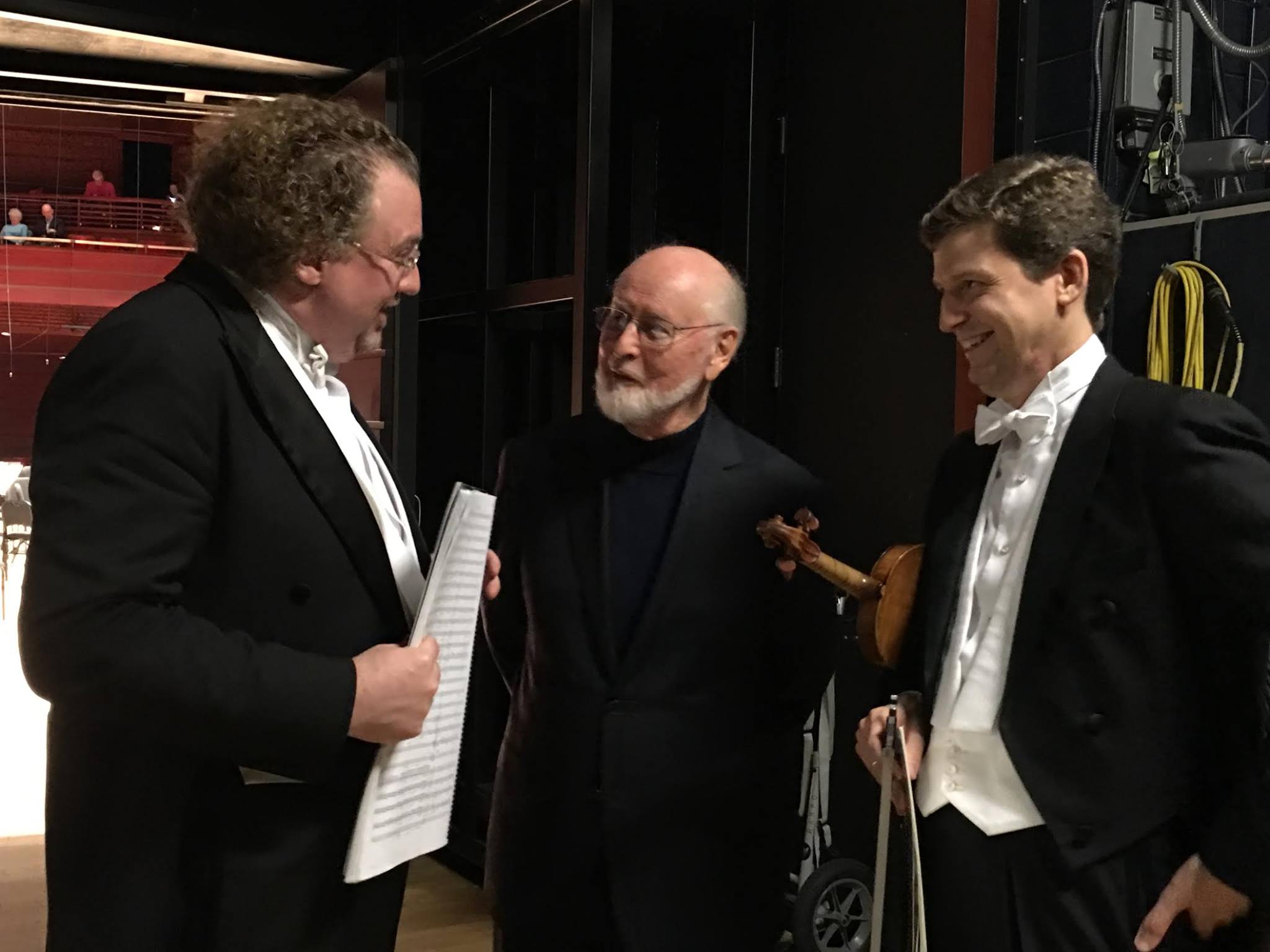
The Philadelphia Orchestra will stream one of its “neighborhood concerts” tonight at 8 p.m. The program, which was performed at the Kimmel Center for the Performing Arts on July 30, 2015, will include music by John Williams, Jennifer Higdon, Leonard Bernstein, Hector Berlioz, and Maurice Ravel. Also promised is a never-before-seen conversation between John Williams and conductor Stéphane Denève.