Category: Daily Dispatch

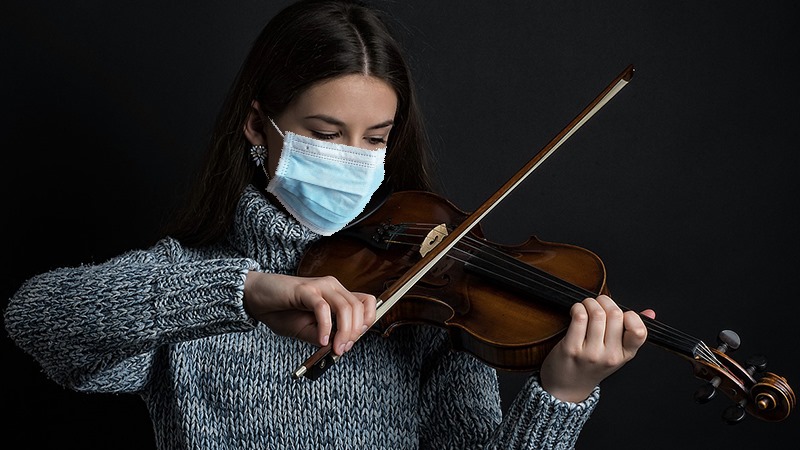
  • WWFM: Coronavirus, Remote Ops & Classical Music

    WWFM: Coronavirus, Remote Ops & Classical Music

    Any weekend that begins with Friday the 13th and ends with the Ides of March is bound to bring bad news.

    Last night, I received notification that, because of Coronavirus concerns, Mercer County Community College will shift to remote operations beginning on Monday. The move will coincide with spring break and will span an initial period of two weeks, with extensions, obviously, as necessary.

    WWFM, which makes its home on the MCCC campus, will continue its operations, but with a skeletal staff, so you may notice a temporary increase in syndicated and remote programming. Also during the period, it is possible that only the most urgent phone calls, messages, and email will receive immediate responses. Communication with our listeners is important to us, and we always try to get back to you as soon as we can, but under the circumstances we appreciate your patience and understanding.

    Over the past two weeks, it became increasingly evident that our community was at risk for a health emergency. I was asked to pull together five weeks’ worth of recorded shows for “Picture Perfect” and “The Lost Chord,” to be aired in the event of an extended shut-down and to be sent out into syndication. The first of these shows will air on Friday, March 20 (Picture Perfect), and Sunday, March 22 (The Lost Chord). Should the state of emergency continue, there is enough fresh material to last through April 20. It is unclear whether these shows will be posted as webcasts, or if that will have to wait until my return. “Music from Marlboro” will be suspended for the duration of my absence.

    These actions should come as little surprise, as schools and places of gathering have been shut down all across the United States in an attempt to stem the spread of Coronavirus.

    It would be vain of me to expect that my absence from the air waves will cause panic in the streets. You’ll still get your classical music, albeit in other forms. I just wanted to let you know that, for now, I remain healthy, and I am an inveterate handwasher.

    Though I will certainly miss our time together, I will use the break to work on another long-term project, for which I’ve been accumulating information over the past several months, and which I will announce here eventually.

    In terms of the newspaper, I’ve already had one article go to print with a disclaimer that the subject, a concert, had been cancelled, and a second article consigned to the Phantom Zone, to be resurrected when another event is rescheduled, hopefully, for a future season.

    It’s probably not the best time to ask for money, but I do want to point out that WWFM’s Bach 500 campaign is still ongoing. I’m not sure at this point what we can promise in terms of wall-to-wall Bach on Bach’s birthday (March 21), but your contribution will still help us to achieve financial success. Best now to make that donation online at wwfm.org. As of Saturday morning, we are halfway to our goal of 500 contributions. Remember, you can make that donation in any amount. It doesn’t matter how much you give. We make our goal when 500 of you step up.

    For now, stay healthy, everyone. Enjoy what you can. Hopefully we’ll meet up again in a few weeks, and I’ll be back to sharing my usual blend of music and unintentional comedy.

    Thank you for your understanding, thank you in advance for your concern, and thank you for your support of WWFM – The Classical Network.

  • Irish Film Scores on Picture Perfect

    Irish Film Scores on Picture Perfect

    It’s Friday the 13th. Bad luck for Victor McLaglen. Still four days away, but John Wayne will pound his face so hard that he’ll still be spitting teeth on St. Patrick’s Day.

    McLaglen gets his lathering in the epic climax of John Ford’s “The Quiet Man.” Victor Young’s score will be one of the highlights this week, on “Picture Perfect,” which will be devoted to films with Irish settings and Irish themes.

    “The Luck of the Irish” (1948) features Tyrone Power as an American journalist who travels to Ireland, where he gets in touch with his roots – and a full-size leprechaun, played by Cecil Kellaway.

    No “Darby O’Gill”-style special effects here. Kellaway is just some guy in a leprechaun hat. When Power comments, “Say, aren’t you rather large for a leprechaun?,” Kellaway responds, “That’s a page of me family history I’d rather we not go into.” It was hoped that Barry Fitzgerald would have taken the role – and how perfect would that have been? – but he couldn’t be secured. In the event, Kellaway was nominated for an Academy Award for Best Supporting Actor.

    The music is by the English-born Cyril J. Mockridge, who was Alfred Newman’s assistant at 20th Century Fox. Mockridge is probably best known for his score to “Miracle on 34th Street.” “The Luck of the Irish” is full of Celtic-style folk melodies and some shimmering leprechaun music, but why it quotes “Greensleeves” is anybody’s guess. Probably at the request of a producer. (Green = Irish, right?)

    John Williams wrote a gorgeous, melancholy score for “Angela’s Ashes” (1999), adapted from Frank McCourt’s bestselling memoir. It’s refreshing to hear Williams give free rein to his lyrical side, beyond the context of lightsabers, magic wands and rampaging dinosaurs. The recording we’ll hear is from the difficult-to-acquire international release. The version issued stateside was marred by dialogue from the film. (Why do they do that?)

    You can’t have an hour of Irish film music without including something with The Chieftains. “Circle of Friends” (1995) is based on the novel by Maeve Binchy, about three childhood friends, who reunite in college, and their adventures with the young men they find there. The film stars Minnie Driver, Chris O’Donnell, Alan Cumming and Colin Firth. Michael Kamen wrote the score, but it’s The Chieftains, obviously, that lend it an air of authenticity.

    Finally, Victor Young’s palette is all green in “The Quiet Man” (1952). John Wayne, Maureen O’Hara, Barry Fitzgerald, Victor McLaglen, Mildred Natwick, Ward Bond, and a Mulligan stew of Irish character actors flesh out what must be John Ford’s most delightful film. It earned him his fourth Academy Award for Best Director, and the film itself was nominated for Best Picture.

    The alternately romantic and boisterous, folk-inflected score perfectly complements Ford’s tone of sustained whimsy, for what is essentially a love story unfolding in the face of cultural differences. Also the face of Victor McLaglen.

    Shamrocks will shake amidst the blarney rubble, on “Picture Perfect,” music for the movies, this Friday evening at 6:00 EDT, on WWFM – The Classical Network and wwfm.org.

  • Louise Farrenc NPR Theme Rediscovered

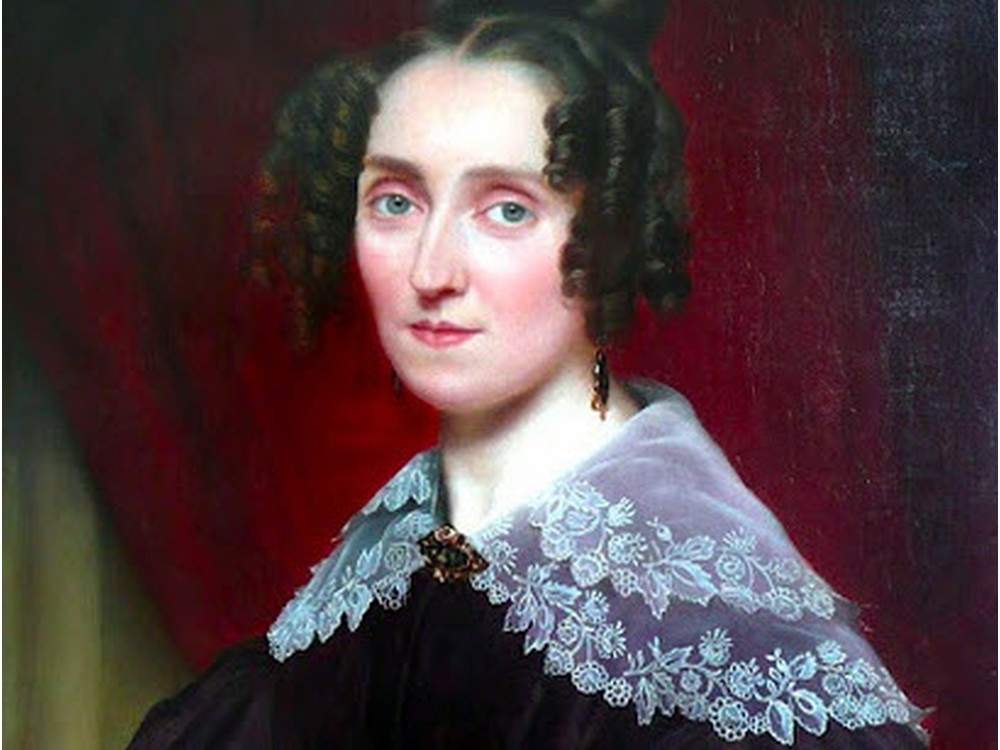
    Louise Farrenc NPR Theme Rediscovered

    I leave many windows open on my computer. Dozens. Whenever I read anything of interest, I am more likely just to leave it up and open another screen than to bookmark, since bookmarking virtually guarantees I will never again return to whatever it is I’ve saved.

    Be that as it may, I was just cleaning out some of those open screens, when I came across this article on Louise Farrenc, which I probably read around the time the Philadelphia Orchestra performed her Second Symphony. I’ve always been fond of Farrenc’s music, but I was unfamiliar with her Piano Quintet No. 2. The writer makes the astute observation that one of the themes eerily anticipates that for NPR’s “All Things Considered.”

    https://www.iowapublicradio.org/post/1840-she-wrote-all-things-considered-theme-louise-farrenc-how-female-genius-can-flourish#stream/0

    Here’s a link to the entire piece. The “All Things Considered” theme appears for the first time at the 47-second mark.

    Farrenc, a virtuoso pianist, was the only female professor at the Paris Conservatory in the whole of the 19th century. Of course, she was only allowed to teach women – and just piano, not composition.

    She and her husband, the flutist Aristide Farrenc, founded Éditions Farrenc, for almost 40 years one of the leading music publishers in France. Together, they edited the successful series, “Le trésor des pianistes,” which included works originally written for harpsichord by Bach, Couperin, Handel, Rameau, Scarlatti, and others, and sonatas for pianoforte by C.P.E. Bach, Beethoven, Chopin, Clementi, Dussek, Haydn, Hummel, and Weber.

    Following Aristide’s death in 1865, Louise continued to oversee the series until its 20th and final volume in 1872. Later, three additional volumes were added of music which had previously been published in the early 19th century.

    She was a remarkable figure. Do yourself a favor and familiarize yourself with her Symphony No. 3, recorded at least three times under studio conditions. This is but an excerpt conducted by Johannes Goritzki, whose commercial recording on CPO is very good.

  • Catalan Composer Celebrated on The Classical Network

    Catalan Composer Celebrated on The Classical Network

    Following up on my series of posts about his family’s fascinating bookplates (on February 23, February 27, and March 5), Xavier Montsalvtage finally gets his day. Join me this afternoon on The Classical Network, as I’ll celebrate the great Catalan composer’s birthday with his “Concerto breve.”

    We’ll also hear music by three American originals: Henry Cowell, Carl Ruggles, and “The Beethoven of Kentucky” (and one of the founders of the New York Philharmonic), Anthony Philip Heinrich. AND a work for guitar and bandoneón by Argentinian master Astor Piazzolla.

    At 6:00, it’s another “Music from Marlboro.” The highlight this evening will be the String Sextet No. 2, by a young and ardent Johannes Brahms.

    We’re always passionate about music, from 4 to 7 p.m. EDT, on WWFM – The Classical Network and wwfm.org.


    PHOTOS: Xavier Montsalvatge (left), with (top to bottom) Henry Cowell, Carl Ruggles, and Anthony Philip Heinrich

  • Brahms’ American Sextet at Marlboro

    Brahms’ American Sextet at Marlboro

    Brahms, the American composer?

    Brahms’ String Sextet No. 2 in G major was given its first performance in Boston in 1866. Actually, Brahms composed most of the work in the bucolic setting of Lichtental, near Baden-Baden, in 1864-65. This transatlantic sextet will be my featured work on this week’s “Music from Marlboro.”

    Brahms, ever in love, concealed the name of his most recent crush, Agathe von Siebold, in the first movement. She’s represented by the notes A-G-A-H-E. (In German, “H” is B-flat.) The move may have been a little tacky, since at the time he happened to be staying with his other crush, Clara Schumann. But he was, after all, 33 years-old. Brahms being Brahms, nothing came of either infatuation – at least that we know of.

    Brahms’ Sextet received its European premiere the next month in Zurich, but I’m claiming it as American music.

    We’ll hear it performed at the 1967 Marlboro Music Festival by violinists Pina Carmirelli and John Toth, violists Philipp Naegele and Caroline Levine, and cellists Fortunato Arico and Dorothy Reichenberger.

    Brahms puts the “sex” in “sextet,” on this week’s “Music from Marlboro,” this Wednesday evening at 6:00 EDT, on WWFM – The Classical Network and wwfm.org.

    Marlboro School of Music and Festival: Official Page


    PHOTO: Brahms, rocking a widow’s peak, in 1866

Tag Cloud

Aaron Copland (93) Beethoven (95) Composer (114) Film Music (137) Film Score (143) Film Scores (255) Halloween (94) John Williams (195) KWAX (229) Leonard Bernstein (103) Marlboro Music Festival (125) Movie Music (152) Mozart (88) Opera (208) Philadelphia Orchestra (89) Picture Perfect (174) Princeton Symphony Orchestra (108) Radio (88) Ross Amico (244) Roy's Tie-Dye Sci-Fi Corner (290) The Classical Network (101) The Lost Chord (268) Vaughan Williams (103) WPRB (396) WWFM (881)

DON’T MISS A BEAT

Receive a weekly digest every Sunday at noon by signing up here


RECENT POSTS