For International Trombone Week, a great way to start the day – here’s Eric Ewazen’s Triple Concerto for Three Trombones, written for the Buffalo Philharmonic Orchestra.
Did you know that Marlboro Music had a YouTube channel? There are some real gems on there, including documentaries about Pablo Casals and Marlboro co-founder Marcel Moyse (“He was the only musician I knew who could play the flute and smoke a pipe at the same time,” according to Claude Frank).
In addition, you’ll find an interview with Pina Carmirelli, Library of Congress performances of music by Haydn, Webern, Brahms, and the late Krzysztof Penderecki, and a beautiful promotional video showing off the idyllic splendor of the Marlboro grounds.
For a hit of the Marlboro Music Festival, look here:
“Music from Marlboro” is on hiatus from WWFM – The Classical Network until we get the all-clear from COVID-19, but Marlboro Music is still very much in our thoughts!
Marlboro School of Music and Festival: Official Page
Meira Warshauer’s Symphony No. 1, “Living, Breathing Earth,” reflects the composer’s love and concern for the environment, from the perspectives of both her home in Columbia, South Carolina, and her travels in Peru.
The work falls into four movements:
In the first, “Call of the Cicadas,” the composer emulates the insects’ natural rhythms and sounds, as heard in her back yard. The textures reflect the summer air and the thickness of the summer heat.
The second movement, “Tahuayo River at Night,” was inspired by a Peruvian canoe ride, with fireflies along the riverbank connecting stars to earth, the starfield reflected on the surface of the water.
The third, “Wings in Flight,” is evocative of the daytime activity of Peruvian butterflies as they twirl around in the sunlight.
The fourth movement lends the symphony its title, “Living, Breathing Earth.”
This music was first performed in 2007 and released on the Navona Records label (PARMA Recordings) in 2011.
Jewish composer Eric Zeisl fled Austria following the Anschluss in 1938. He went first to Paris, and then New York City. He finally settled in Hollywood, where he found work on a studio assembly line, contributing (often uncredited) to film scores like “The Postman Always Rings Twice” and “Abbott and Costello Meet the Invisible Man.”
At last, he was able to secure some academic appointments that allowed him to return to serious composition. Zeisl’s uplifting “Requiem Ebraico” (1944-5), a setting of Psalm 92, is dedicated to the memory of his “dear father and other victims of the Jewish tragedy in Europe.”
The piece is about 22 minutes in length, but is posted on YouTube in multiple segments. The files should run continuously, one into another, when you follow the link. Hopefully you won’t be bedeviled by ads.
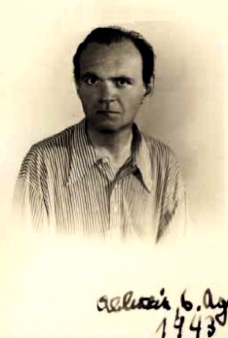
Marcel Tyberg was a forgotten casualty of the Holocaust. A devout Catholic, Tyberg was targeted because one of his grandmother’s great-grandfathers was Jewish (comprising a mere 1/16th of his genetic make-up). The fact was made known only when his mother registered with the German authorities then occupying their hometown, Abbazia, in what was then northern Italy (now Opatija, Croatia).
It’s unclear whether Tyberg himself had any prior knowledge of his great-great grandfather’s ethnicity, but four generations’ remove was not enough to pacify the Nazis. Tyberg was transported to Auschwitz, where his death was recorded on New Year’s Eve, 1944.
Tyberg’s music alone should not have attracted unfavorable notice from the authorities. There is nothing in his compositional output that might have frightened the Führer. Quite apart from the modernism being explored by many of the composers interned in the “artists’ camp” of Terezin – the kind of music the Nazis branded “degenerate” – Tyberg’s symphonies are very much in the Austro-German romantic tradition.
With the likelihood of arrest looming, Tyberg entrusted his manuscripts to his friend, Milan Mihich, an Italian doctor and music-lover. Mihich in turn passed them on to his son. In 2005, Dr. Enrico Mihich, then a specialist at the Roswell Park Cancer Institute in Buffalo, NY, brought the scores to the attention of JoAnn Falletta, music director of the Buffalo Philharmonic Orchestra.
Falletta, in her examination of the manuscripts, discerned what she thought to be real musical worth and gave the first performance of Tyberg’s Symphony No. 3 in 2008. She has since also performed and recorded the Second Symphony – unheard since Rafael Kubelik conducted it back in the 1930s.
Tyberg’s Third Symphony should appeal especially to admirers of Bruckner and Mahler; yet it stands alone as a work of outstanding beauty and, somehow, especially when colored by a knowledge of its history, an expression of hope.