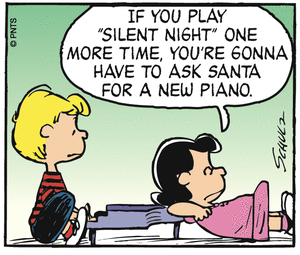
Generally it’s “The Twelve Days of Christmas” that puts me over the edge.
Category: Daily Dispatch
-
Christmas Movie Music from Classic Books
Remember when movies used to be inspired by books (as opposed to TV shows and Marvel comics)?
This week on “Picture Perfect,” enjoy an hour of music from movies adapted from novels and short stories on Christmas themes, or with memorable Christmas moments.
We’ll begin with Alfred Newman’s score for “O. Henry’s Full House,” a 1952 anthology based on five separate O. Henry stories, each presented by a different screenwriter and director. The film is doubly literary in that each of its segments is introduced by none other than John Steinbeck. We’ll hear music from the final portion, based on the classic Christmas tale “The Gift of the Magi.”
Louisa May Alcott’s “Little Women” sports a memorable Christmas chapter, in which the March family helps out a neighbor-in-need by donating their Christmas breakfast – only to be rewarded later in the day with a feast of their own. “Little Women” has been adapted to film at least six times. With the latest version now in theaters, we’ll look back to its 1994 incarnation, with Winona Ryder and Susan Sarandon, and featuring an Academy Award-nominated score by Thomas Newman (son of Alfred).
Miklós Rózsa won his third Academy Award his music for the 1959 version of “Ben-Hur” (now filmed three times). We’ll hear the prologue and Nativity scene. General Lew Wallace’s novel, published in 1880, became the bestselling work of American fiction for the next 50 years. Its streak was broken in 1936 with the appearance of Margaret Mitchell’s “Gone with the Wind.”
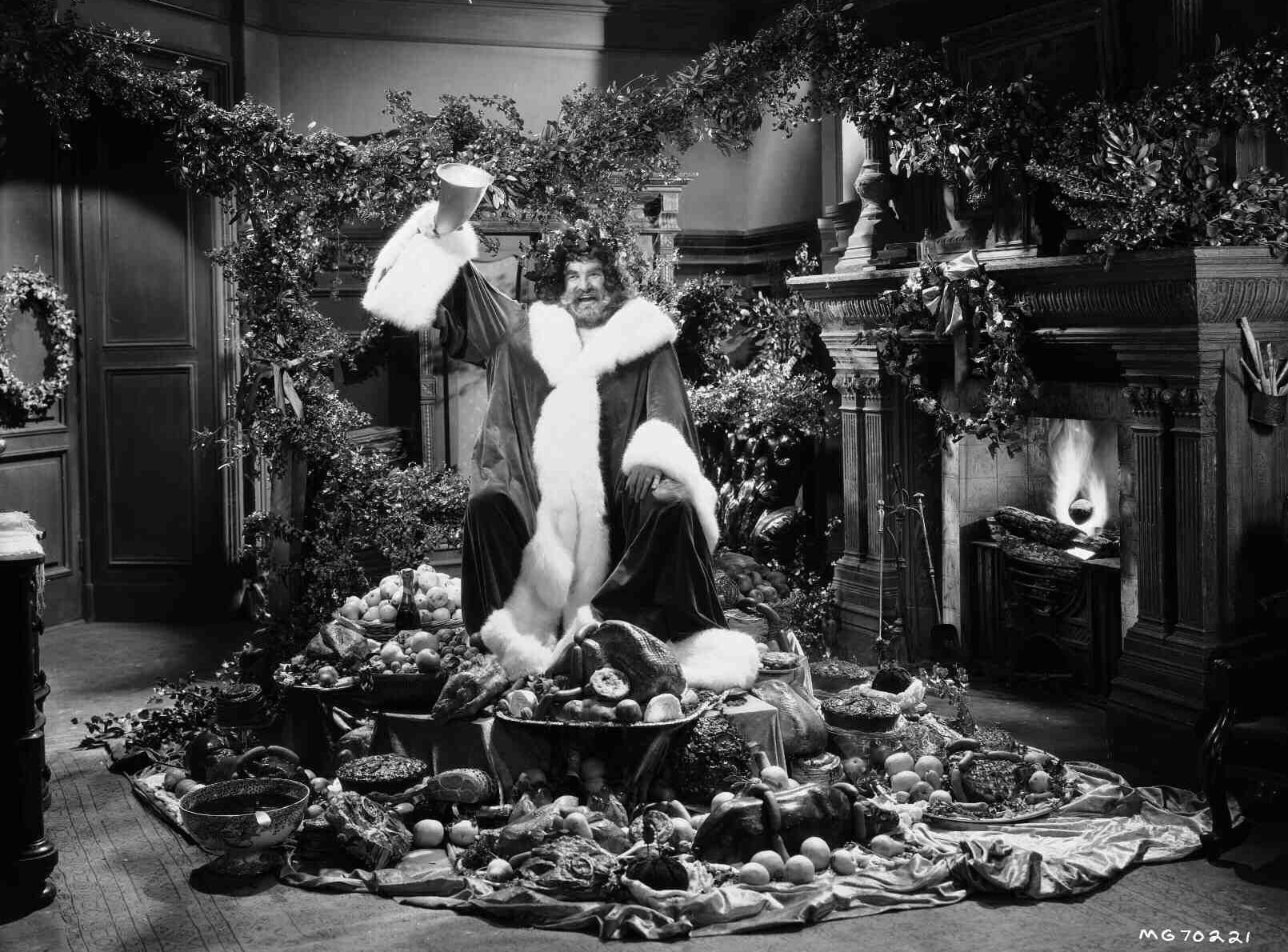
Finally, we’ll turn to a suite from a 1951 adaptation of Charles Dickens’ “A Christmas Carol” (released in the UK as “Scrooge”). I can’t even count how many times that one’s been filmed. This particular version stars the great Alastair Sim. The music was composed by Richard Addinsell – he of the “Warsaw Concerto” fame – and the performance is conducted by Alfred Newman’s OTHER musical son, David.
Take a break from the holiday hurly-burly, and cozy in for a library of Christmas classics, on “Picture Perfect,” this Friday evening at 6:00 EST, on WWFM – The Classical Network and wwfm.org.
-

Beethoven Week on The Classical Network
When Inon Barnatan joins the Princeton Symphony Orchestra tonight at 8:00, for a special radio broadcast of Beethoven’s Piano Concertos Nos. 3 & 5, it will commence The Classical Network’s annual celebration of this King of Composers.
December 16 marks the anniversary of Beethoven’s birth, in 1770. So as not to leave any concertos on the vine, Carl Hemmingsen and I will do what we can tomorrow, from about 3 to 6 p.m., to work through most of the remaining works for solo instrument(s) and orchestra.
Then on Monday, Beethoven’s actual natal day, we will hear all of the symphonies, in sequence, including a knockout performance of the Symphony No. 9.
All this will come your way with limited interruptions this year. No breaking in between movements or playing highlights from the major works – pure, unadulterated Beethoven, as the composer intended.
Of course, we hope that you will be moved to support it. We’ll be reminding you of our phone number in between the symphonies on Monday, hoping to take your calls. But you can also support us anytime by donating at our website, wwfm.org. You’ll find a nice array of incentives there when you head over to contribute.
In this season of giving, make a gift for “Ludwig van.” Beethoven is the beating heart of WWFM – The Classical Network and wwfm.org. Thank you for your help in keeping great music on the air!
-
Icelandic Yule Lads Dark Christmas Folklore
Sheesh. Where does the time go? Only 13 days of folklore and paganism until Christmas.
Gävle, Sweden, has already constructed its 40-foot Yule Goat. Krampus has hurled all the wicked children into hellfire. Black Peter has stirred the ire of Dutch protesters.
But, no time to be wistful. It’s December the 12th. Here come the Yule Lads!
These days, the Yule Lads are usually personified as a bevy of affable Santa Clauses. Except, being Icelandic, not only do they leave gifts for the nice; the naughty get rotten potatoes. That’s the sanitized version. You don’t have to dig too deeply to discover their true selves.
The Lads are thirteen in number. In Icelandic lore, they are annoying pranksters at best; at worst, they are homicidal trolls who devour children. Mostly they steal from and harass Icelandic farmers.
The Lads descend from the mountains, staggering their arrivals and departures, beginning thirteen nights before Christmas.
Each has his own exasperating speciality, whether it be harassing sheep, stealing milk, eating crust out of pans, licking spoons, stealing leftovers, licking bowls, slamming doors, eating skyr (a kind of Icelandic yogurt), stealing sausages, peeping through windows, sniffing for bread, stealing meat with a hook, or eating candles.
Their mother is the ogress Grýla, who descends from the mountains in search of children to boil in her cauldron. If you happen to find yourself in her gnarled claws, remember, she has to release you if you repent.
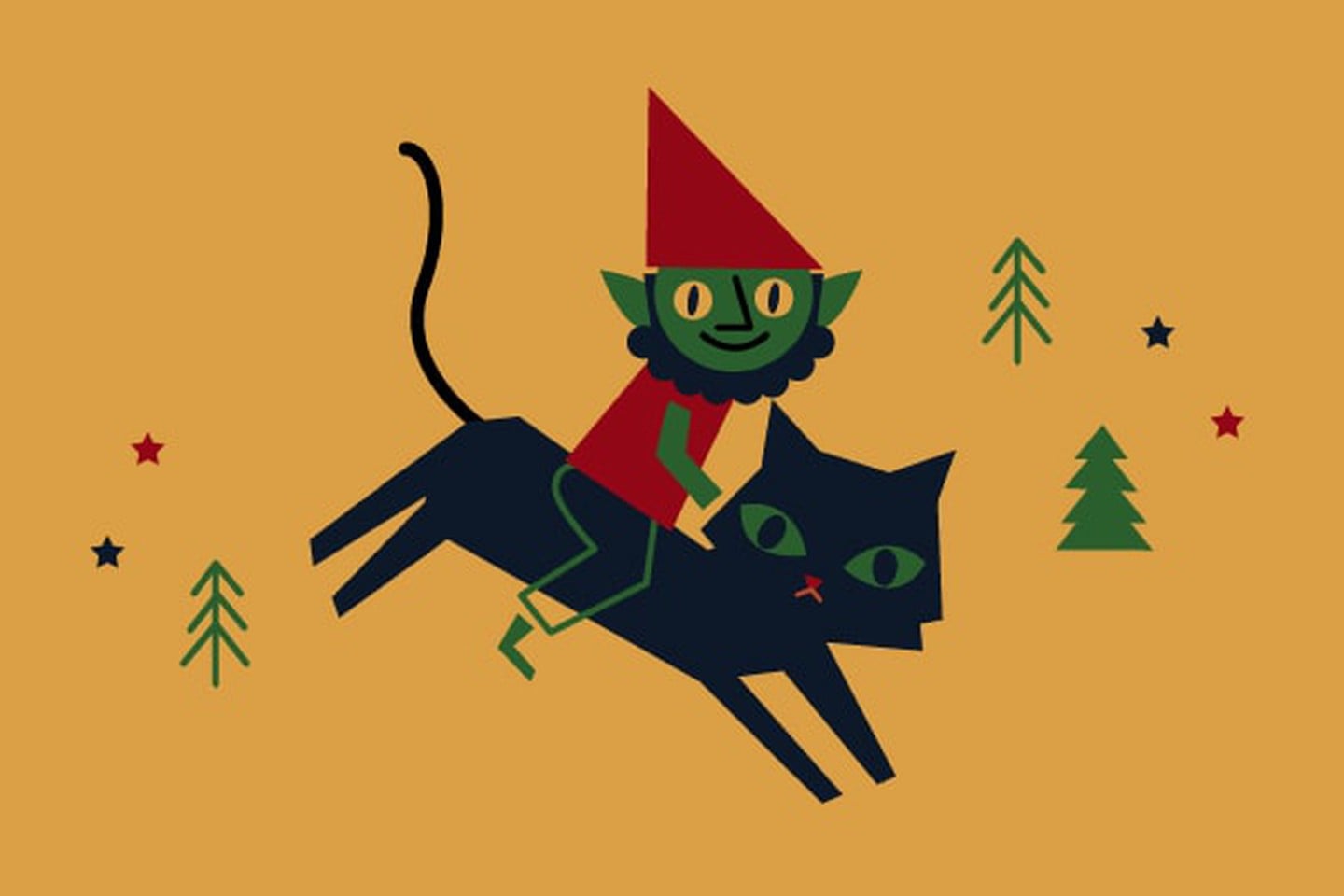
The Yule Lads are frequently accompanied by the Yule Cat. The cat eats children who don’t receive new clothes before Christmas. This is tied in to the Icelandic work ethic. In the old days, if farm hands processed their autumn wool in a timely fashion, they were rewarded with new clothes. If not, they received nothing, leaving them fair game for the Yule Cat. Better sheer them sheep!
In 1746, the practice of parents tormenting their children with Christmas monster stories was officially banned.
To my knowledge, there has been no classical music written about the Yule Lads. As with Krampus, some enterprising composer could make a real killing. All you need is one Christmas hit, and then every year you can kick back and collect those sweet holiday royalties.
Here is a selection of Yule Lad songs I found on YouTube. You can see that the bar has been set awfully low.
https://www.youtube.com/watch?v=BJ4nSFe32ys
How “My Darling Clementine” got over there is anyone’s guess. Maybe Leif Erikson brought it back with him.
-

Beethoven at Marlboro Music Festival
On this week’s “Music from Marlboro, we’ll hear Beethoven, early and late (maybe), performed by Marlboro artistic directors, past and present.
It is clear from the Quintet for Piano and Winds, Op. 16, that Beethoven was an admirer of Mozart. The work, written when the composer was in his mid-20s, is evidently modeled on Mozart’s K. 452, scored for the same instrumental combination. It’s even written in the same key (E-flat).
Beethoven’s Quintet will be performed at the 2012 Marlboro Music Festival by pianist Jonathan Biss, oboist Mary Lynch, clarinetist Tibi Cziger, hornist Wei-Ping Chou, and bassoonist Natalya Rose Vrbsky. Biss was appointed co-artistic director of the school and festival, joining Mitsuko Uchida, in 2018.
When exactly did Beethoven composer his “Kakadu Variations?” The last of his piano trios was published in 1824. However, the first full manuscript dates from 1816. It’s possible its genesis lay even a good deal earlier than that. Was it a slip when Beethoven wrote to his brother and described the piece as having been composed in 1803? Or on another occasion, when he described it as “among my early works?”
In any case, it’s thought that the piece underwent substantial revisions. In 1824, Beethoven was churning out masterpiece after masterpiece, including the “Diabelli Variations,” the “Missa solemnis,” and the Ninth Symphony.
It is curious that the trio opens with such protracted air of solemnity, given its source material. The work’s Papageno-like theme is borrowed from the song “Ich bin der Schneider Kakadu” (“I am Kakadu the tailor”), from Wenzel Müller’s 1794 singspiel “Die Schwestern von Prag” (“The Sisters from Prague”). Müller’s opera had been revived in Vienna in 1814.
The trunk of Beethoven’s trio is full of whimsy, a series of variations on Müller’s theme. Toward the end, however, the work slips back into a minor key and begins to take on renewed gravitas. The final variation exhibits on an unexpected depth, rigor and maturity, as Müller’s ditty is subjected to an incongruous display of chromatic and contrapuntal complexity.
We’ll hear the “Kakadu Variations” performed by pianist Rudolf Serkin, violinist Yuzuko Horigome, and cellist Peter Wiley, who played the work at Marlboro in 1983. Serkin, of course, was Marlboro’s founding artistic director, from 1951.
You can’t beat Beethoven. The composer takes wing, on the next “Music from Marlboro,” this Wednesday evening at 6:00 EST, on WWFM – The Classical Network and wwfm.org.
Marlboro School of Music and Festival: Official Page
Tag Cloud
Aaron Copland (93) Beethoven (95) Composer (114) Film Music (137) Film Score (143) Film Scores (255) Halloween (94) John Williams (195) KWAX (229) Leonard Bernstein (103) Marlboro Music Festival (125) Movie Music (152) Mozart (88) Opera (208) Philadelphia Orchestra (89) Picture Perfect (174) Princeton Symphony Orchestra (108) Radio (88) Ross Amico (244) Roy's Tie-Dye Sci-Fi Corner (290) The Classical Network (101) The Lost Chord (268) Vaughan Williams (103) WPRB (396) WWFM (881)