Category: Daily Dispatch

  • Beyond String Quartets: Marlboro’s Chamber Music Hour

    Beyond String Quartets: Marlboro’s Chamber Music Hour

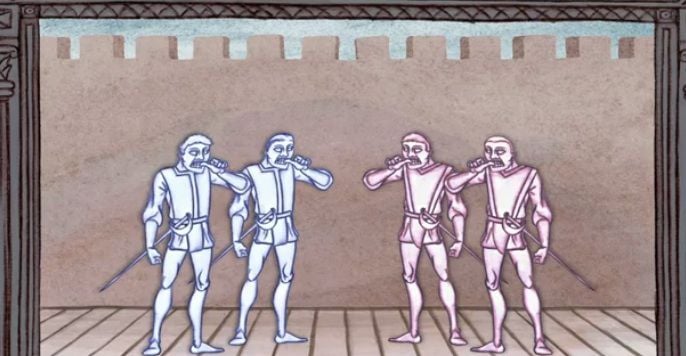
    String quartets, we bite our thumbs at thee!

    On this week’s “Music from Marlboro,” we smash the hegemony of chamber music’s most prevalent foursome to bring you an hour of contumely quartets.

    Wolfgang Amadeus Mozart spent five months in Mannheim in 1777, hoping to chase down a steady position there. He didn’t get the job, but he did receive a fistful of commissions from gentleman-flutist Willem van Britten Dejong. The 21 year-old composer was broke, in love, and, as usual, being badgered by his old man to make something of himself already. These external pressures may explain, in part, Mozart’s alleged aversion to the flute. He certainly responded to the new commissions as if they were more of a burden than a godsend. Still, he had too much integrity not to lend the works his usual polish.

    We’ll hear the Flute Quartet No. 1 in D major, K. 285, performed at the 1989 Marlboro Music Festival, by flutist Marina Piccinini, violinist Scott St. John, violist Christof Huebner, and cellist Peter Wiley.

    Bernard Garfield was longtime principal bassoonist of the Philadelphia Orchestra. He served with the orchestra for 43 years, from 1957 to 2000. Concurrently, he taught at Temple University and, for over three decades, at the Curtis Institute of Music. He also founded the New York Woodwind Quintet.

    It’s hardly surprising that a career bassoonist would write music for his own instrument. Garfield composed three bassoon quartets. We’ll hear the first of these, from 1950. It was performed at Marlboro in 2010 by bassoonist Natalya Rose Vrbsky, violinist David McCarroll, violist Dmitri Murrath, and cellist Judith Serkin.

    Finally, Carl Maria von Weber earned his place in the history books as one of the progenitors of German Romantic opera. With its lurid Wolf’s Glen sequence, “Der Freischutz” reverberated in its nightmarish extravagance, making it one of the most influential operas of the 19th century.

    Twelve years before “Freischutz,” in 1809, Weber, then 22, wrote a comparatively benign Piano Quartet in B flat major. His model was clearly Mozart, but already his head had grown too hot for his tricorn, as he also indulges in flights of post-Beethovenian temperament.

    We’ll hear Weber’s quartet, as played at Marlboro in 1989, by pianist Igor Ardašey, violinist Takumi Kubota, violist Ulrich Eichenauer, and cellist Siegfried Palm.

    Strike a blow against the tyranny of the string quartet! It’s an hour of revolting chamber music on the next “Music from Marlboro,” this Wednesday evening at 6:00 EDT, on WWFM – The Classical Network and wwfm.org.

    Marlboro School of Music and Festival: Official Page
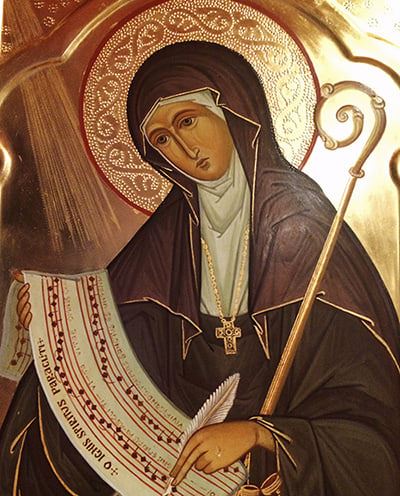
  • Hildegard von Bingen Renaissance Woman

    Hildegard von Bingen Renaissance Woman

    She was a true renaissance woman – before there was even a Renaissance!

    Hildegard von Bingen, the 12th century abbess, mystic, visionary, philosopher, scientist, medical theorist, artist, writer, poet, composer, and saint, was a pioneer who excelled in so many fields, it’s a wonder she wasn’t burned at the stake. Where ever did she come from, and why did she have no successors?*

    We’ll celebrate this extraordinary figure this afternoon on The Classical Network, as I continue to highlight the work of female composers, a month-long exploration precipitated by the Clara Schumann bicentennial. Tune in to experience music by Hildegard, interleaved with tributes by contemporary composers Aaron Jay Kernis and Christopher Theofanidis. The rest of the afternoon’s playlist will consist entirely of works by women.

    First, I hope you’ll join me for today’s Noontime Concert. Mezzo-soprano Chrystal E. Williams and pianist Laurent Philippe will perform songs by Robert Schumann, Federico Garcia Lorca, Benjamin Britten, George Gershwin, Jerome Kern, Harry T. Burleigh, and Hall Johnson.

    The concert was recorded this past May in Merkin Hall at Kaufman Music Center, 129 West 67th Street, in New York City. Merkin’s Tuesday Matinees series presents a new generation of critically acclaimed performers in a concert hall admired for its near-perfect acoustics. To learn more about this season’s offerings, visit kaufmanmusiccenter.org.

    Then belly up to the bar for Hildegard’s Feast Day. The table is set for great music, from 12 to 4 p.m. EDT, on WWFM – The Classical Network and wwfm.org.


    *Interestingly, in reading up on Hildegard, I happened to come across a history of Kassia, a Byzantine abbess and composer who flourished three centuries earlier!

    https://blogs.bl.uk/digitisedmanuscripts/2016/03/kassia.html

  • Nadia Boulanger Birthday & Legacy

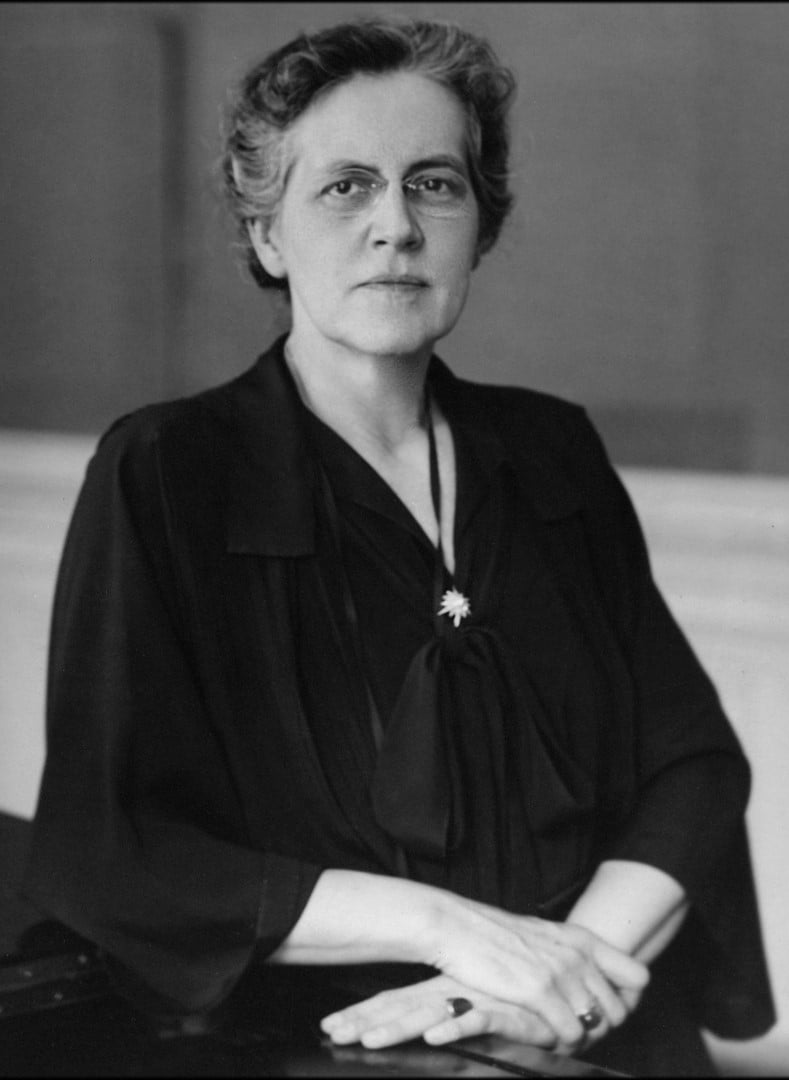
    Nadia Boulanger Birthday & Legacy

    September is really a banner month for female composers. Amy Beach (9/5), Isabella Leonarda (9/6), Joan Tower (9/6), Clara Schumann (9/13), Francesca Caccini (9/18), Vivian Fine (9/28), and who knows how many others, were all born in September. But you’d have to go a long way, in terms of the influence of women on music, to beat today, the anniversary of the birth of Nadia Boulanger.

    Nadia Boulanger’s strong will, infallible objectivity, and blunt assessments made her perhaps the greatest – certainly the most influential – musical pedagogue of the 20th century.

    Her influence on American music, in particular, is incalculable. She taught composers from Aaron Copland and Virgil Thomson to Philip Glass and even Rob Kapilow. It was Thomson who quipped, “She was a one-woman graduate school, so powerful and permeating that legend credits every United States town with two things: a five and dime and a Boulanger pupil.” The five and dimes may have faded, but not so the legacy of the “Boulangerie.”

    Hopefuls flocked to her American Conservatory at Fontainebleau, where she accepted applicants from all backgrounds, provided they were determined to learn. When some failed to show up for their lessons during the Stavisky Riots of 1934, as demonstrators were being shot in the Place de la Concorde, she remarked dismissively that they didn’t take music seriously enough.

    Her methods engendered surprising loyalty and affection in those she taught. In certain respects, she could be quite conservative, drilling her students in the “Well-Tempered Clavier,” rejecting the dodecaphony of Schoenberg and his followers, and displaying all the sartorial splendor of Whistler’s mother.

    However, dodecaphony aside, she was accepting – perhaps astonishingly so – of a broad panoply of styles. She was unusually generous to students who displayed innate talent, and she nurtured their individuality. It’s to be remembered that among her pupils were Astor Piazzolla, Quincy Jones, and Michel Legrand.

    As a woman, she was a first in many respects, not only as a teacher, but as conductor and a performer. She was the first woman to conduct the Boston Symphony Orchestra, the New York Philharmonic (at Carnegie Hall), the Philadelphia Orchestra, and the National Symphony Orchestra. Even during the Cold War, she was welcomed everywhere. She was invited to the White House by the Kennedys and to Moscow to jury the International Tchaikovsky Competition.

    Curiously, her own views on women’s rights were about as current as her manner of dress. Though she performed on a couple of concerts in support of women’s equality in the early 1920s, she expressed bitter disappointment whenever a female student dropped out of school to get married. Those who did complete their studies included such important figures as Grazyna Bacewicz, Louise Talma, and Thea Musgrave.

    Later in life Boulanger came down hard in opposition to “feminism,” going so far as to state that women should not have the right to vote, because they lacked the necessary political sophistication. That was in the 1970s! A complex and outspoken personality, to be sure.

    But her actions belie her words. Beneath those grey hairs and pince-nez lurked an iron will that brooked no nonsense and recognized no impediments.

    Join me this afternoon for music and music-making by a mere handful of Boulanger’s hundreds of notable pupils, including composer and conductor Igor Markevitch, pianist Dinu Lipatti, and her exceptionally gifted sister, the sadly short-lived Lili Boulanger.

    We’ll hear Nadia Boulanger as pianist and conductor. We’ll also hear two works premiered by her. When Igor Stravinsky was sidelined with tuberculosis, she conducted the first performance of his “Dumbarton Oaks Concerto.” She was also the soloist for the first performances of Aaron Copland’s “Symphony for Organ and Orchestra,” a work about which the conductor, Walter Damrosch, famously – and one hopes facetiously – remarked, “If a gifted young man can write a symphony like that at the age of 23, within five years he will be ready to commit murder.”

    Boulanger has been described as the most influential teacher since Socrates. The Boulangerie will be baking overtime today, as we celebrate her on her birthday, from 4 to 7 p.m. EDT, on WWFM – The Classical Network and wwfm.org.

  • Music for Casals Friends & Colleagues

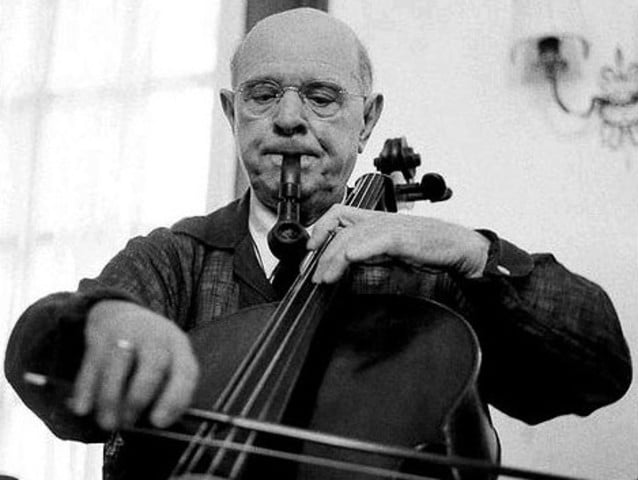
    Music for Casals Friends & Colleagues

    It’s hardly surprising that anyone would be moved to write music for Pablo Casals. Regarded by many as the greatest cellist of his time, perhaps ever, he was certainly a giant-of-an-artist and of a man. Born in Catalonia, he stood up to the Franco regime, entering into self-imposed exile and refusing to perform in countries that recognized Franco’s authority. He rediscovered the Bach cello suites in a secondhand bookshop and made them famous. Over the span of his career, he played for both Queen Victoria and John F. Kennedy.

    As a conductor and administrator, he founded the Prades Festival and Casals Festival. He established the Puerto Rico Symphony and Conservatory. He gave master classes, conducted and recorded at Marlboro. He was even a talented composer.

    This Sunday night on “The Lost Chord,” we’ll hear works dedicated to Casals by three of his friends and colleagues.

    Ralph Vaughan Williams wrote his seldom-heard “Fantasia on Sussex Folk Tunes” around the time he was at work on his Piano Concerto and “Job: A Masque for Dancing.” Casals performed the piece in 1930. It was not heard again until 1983, the year of its world-premiere recording (featuring Julian Lloyd Webber). The composer later undertook a full-scale concerto for Casals. It was never completed, but the sketches for its slow movement were realized for a 2010 performance at the BBC Proms, under the title “Dark Pastoral.”

    Donald Francis Tovey, who would achieve fame as a musicologist and writer on music, wrote quite a lot of music himself, most of it now forgotten. In 1935, he composed a concerto for Casals. At nearly an hour in length, the work may be the longest cello concerto ever written.

    In 1912, Tovey was a houseguest of Casals and cellist Guilhermina Suggia, at their summer home at Playa San Salvador on the Mediterranean coast. There, he played tennis, swam and performed chamber music with the likes of Enrique Granados and Mieczyslaw Horszowski. He also made great strides on his opera, “The Bride of Dionysus.” As a show of thanks, he composed for his hosts a Sonata for Two Cellos in G major, which became part of the evenings’ entertainments. The work’s second movement is a set of variations on a Catalan folk song. We’ll hear it performed by Marcy Rosen and Frances Rowell, from a Bridge Records, Inc. release.

    Finally, Arnold Schoenberg, himself an amateur cellist, had done editorial work on three pieces by the 18th century composer Georg Matthias Monn for inclusion in the publication “Monuments of Music in Austria.” When Casals invited Schoenberg to conduct his orchestra in Barcelona, the composer set about arranging a “new” concerto, based upon a harpsichord work by Monn, written in 1746. We’ll hear Schoenberg’s transformation of the piece performed by Yo-Yo Ma.

    I hope you’ll join me for “Casals’ Pals” – music written for Casals by notable composers, friends and colleagues – this Sunday night at 10:00 EDT, on WWFM – The Classical Network and wwfm.org.

  • Unfinished Symphonies & Classical Glory

    Unfinished Symphonies & Classical Glory

    Beethoven’s 10th. Tchaikovsky’s 7th. Elgar’s 3rd. The path to classical music glory is strewn with completions of unfinished symphonies. Very few of these completions actually work.

    I can understand the temptation to bring to light a lost symphony by a beloved master. What I wouldn’t give to hear Sibelius’ 8th, as the composer intended. (Alas, his grandson told me he was in the room when the manuscript was tossed into the fire.) However, as a rule, it is more prudent in these matters to emulate Odysseus and stop our ears, lest we be dashed against the rocks and our vessels shattered to pieces.

    For all the joy and affirmation our favorite composers have given us, the dignity of eternal rest is the least we owe them. Let the scholars pore over the unfinished manuscripts, by all means issue recordings for the curious, but please don’t act like your Frankenstein is canon.

    One of the few completions that seems to have actually been accepted, in some circles, is Deryck Cooke’s of Mahler’s Symphony No. 10. Previously known only for its devastating Adagio – which, if I’m to opine, is perfectly satisfying in itself – Cooke’s edition is an intriguing realization of Mahler’s sketches. Of course, the symphony, as I understand it, was near completion at the time of Mahler’s death, albeit in a very rough form, and only the first movement had been orchestrated.

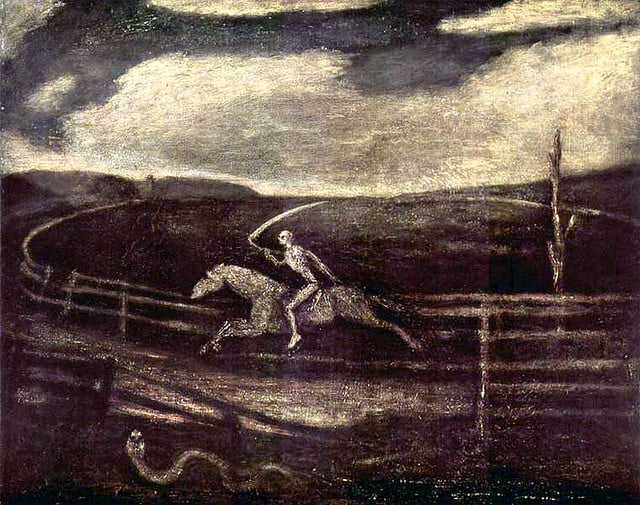
    Mahler finished nine symphonies in full score. The story goes that he deliberately avoided designating “Das Lied von der Erde” a symphony, coming as it did on the heels of his Symphony No. 8, in order to sidestep the “Curse of the Ninth.” Beethoven, Schubert, Bruckner, Dvorak and too many others all died following the completion of their ninth symphonies. “Das Lied” was, in effect, a stay of execution. But, like something out of the “Final Destination” series, with his next numbered symphony, sure enough, the Reaper found him out.

    Observed Arnold Schoenberg, “It seems that the Ninth is a limit. He who wants to go beyond it must pass away. It seems as if something might be imparted to us in the Tenth, for which we are not ready.”

    The reason I mention it at all is because today would have been Deryck Cooke’s 100th birthday. Others have tried their hands at completing Mahler’s 10th – Cooke himself would have been the first to admit his was not the last word on the subject (over the years, he revised his thoughts at least three times) – but his is the one that seems to have retained the widest currency.

    Early in his career, Cooke himself was a composer. He later became a respected musicologist and broadcaster for the BBC.

    Bruno Walter, Leonard Bernstein, Rafael Kubelik, and Pierre Boulez all rejected the idea of a completed Mahler 10th. Schoenberg, Shostakovich, and Britten refused to have a hand in its completion. Personally, I can’t come to accept the piece as canon, but with 19 recordings in the current catalogue, it looks as if it’s here to stay.

    Happy birthday, Deryck Cooke.

Tag Cloud

Aaron Copland (93) Beethoven (95) Composer (114) Film Music (137) Film Score (143) Film Scores (255) Halloween (94) John Williams (195) KWAX (229) Leonard Bernstein (103) Marlboro Music Festival (125) Movie Music (152) Mozart (88) Opera (208) Philadelphia Orchestra (89) Picture Perfect (174) Princeton Symphony Orchestra (108) Radio (88) Ross Amico (244) Roy's Tie-Dye Sci-Fi Corner (290) The Classical Network (101) The Lost Chord (268) Vaughan Williams (103) WPRB (396) WWFM (881)

DON’T MISS A BEAT

Receive a weekly digest every Sunday at noon by signing up here


RECENT POSTS