Category: Daily Dispatch

  • Brahms’ “A German Requiem” on The Classical Network

    Brahms’ “A German Requiem” on The Classical Network

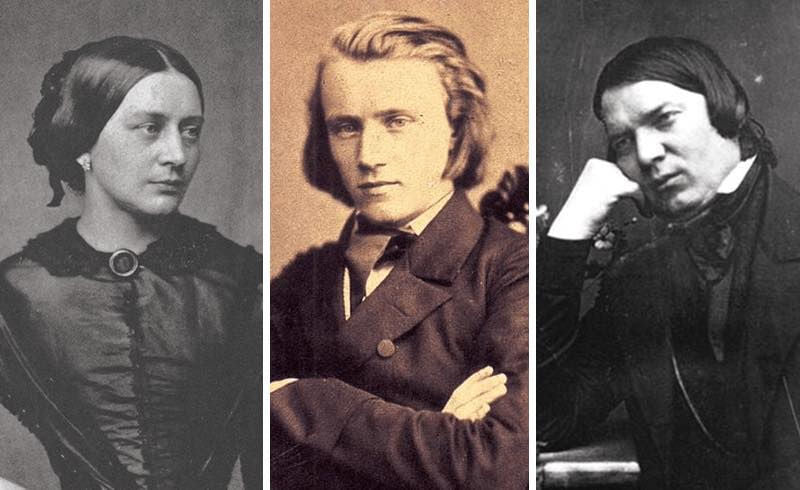
    Johannes Brahms had suffered a fair amount of loss at the time he embarked on his Requiem in 1865. His mother died in February of that year, and the death of his friend, Robert Schumann in 1856 also continued to resonate.

    On today’s Noontime Concert on The Classical Network, we’ll hear a performance of Brahms’ “Ein deutsches Requiem” by the New Jersey Master Chorale under the direction of William P. Gorton. Soprano Andrea Lauren Brown and baritone Timothy Renner will join organist Matt Smith and members of The Philadelphia Orchestra. The concert took place at Haddonfield United Methodist Church this past April.

    Brahms assembled the texts of the Requiem himself, eschewing the standardized Latin of the Roman Catholic Requiem Mass in favor of the vernacular German of the Luther Bible. He forgoes anything suggestive of terror, wrath, and hellfire, or even redemption through the sacrifice of Christ, to arrive at something more tender and humane. The modifications promote an atmosphere of solace and hope.

    Brahms may have titled his work “Ein deutsches Requiem” – “A German Requiem” – but there was nothing nationalistic intended by the designation. Rather he was suggesting something more direct and at the same time universal. In fact, he commented on one occasion that he would just as happily have called it “A Human Requiem.” The work is as much for the living, those who mourn, as it is for those who have passed.

    The second movement incorporates material composed as early as 1854, the year of Robert Schumann’s mental collapse and attempted suicide, when Brahms moved to Düsseldorf to be with Clara Schumann and her children. Brahms presented Clara with a four-hand piano version of the Requiem in 1866.

    Friday marks the 200th anniversary of Clara’s birth. We’ve been sampling some of her music during the course of my air shifts this month and celebrating the legacy of women composers in general. We’ll certainly continue in that vein this afternoon. Among today’s featured works will be the Piano Quintet No. 1 by Grazyna Bacewicz and the Violin Concerto of Margaret Brouwer.

    First, following close on the heels of the Requiem broadcast, we’ll enjoy a symphony dedicated to Brahms by his friend, Schumann student Albert Dietrich.

    I hope you’ll join me for “Ein deutsches Requiem” and more. In the end is our beginning, from 12 to 4 p.m. EDT, on WWFM – The Classical Network and wwfm.org.


    MÉNAGE À TRIPTYCH: Shoehorned between two Schumanns
  • Clara Schumann Bicentennial & Women Composers

    Clara Schumann Bicentennial & Women Composers

    Friday marks the bicentennial of the birth of Clara Schumann. Though her achievements as a pianist and a teacher outstripped her success as a composer, she, it must be remembered, was the product of a time when women did not receive the same advantages, in terms of education, opportunity, and acceptance, as their male counterparts.

    Be that as it may, Schumann proved to be a dynamo, caring for a family of eight children and a mentally ill husband, while earning the respect of her peers as a musician of impeccable taste and one of the outstanding keyboard interpreters of her day.

    To honor the contribution of women in music, I’ll be sharing recordings of works by female composers all month long, as part of my regularly scheduled air shifts. Tune in today to hear music by Vítězslava Kaprálová, Louise Talma, and Phyllis Tate.

    We’ll gain a little clarity for Clara, from 4 to 7 p.m. EDT, on WWFM – The Classical Network and wwfm.org.


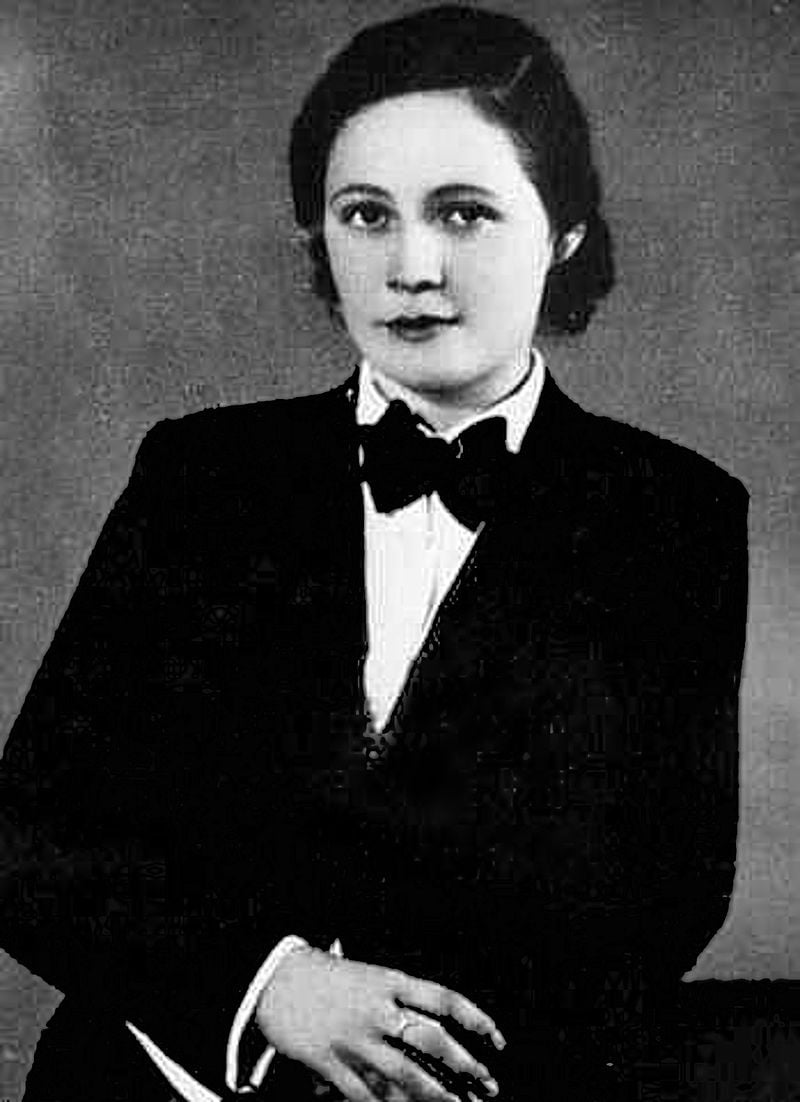
    CLOCKWISE FROM LEFT: Vítězslava Kaprálová, Phyllis Tate and Louise Talma

  • Scarlatti’s Legacy: Musical Duels & Tributes

    Scarlatti’s Legacy: Musical Duels & Tributes

    It seems as if it was only a matter of time before any Baroque musician of merit would become embroiled in a musical duel.

    In the case of Domenico Scarlatti, he was challenged by none other than George Frideric Handel, in Rome. The resulting contest led to Handel being judged superior to his rival on the organ; however, on the harpsichord Scarlatti was deemed to be supreme. In fact, Scarlatti’s unusual facility at the keyboard has had artists “keyed up” for centuries.

    Born in Naples in 1685 – the same year as Handel and Bach – Scarlatti spent much of his career in the service of the Portuguese and Spanish royal families. He wrote 555 keyboard sonatas, which have been admired by composer-performers from Frederic Chopin to Marc-André Hamelin.

    This Sunday night on “The Lost Chord,” we’ll enjoy several works written in tribute to this Baroque master.

    Charles Avison, whose life overlapped Scarlatti’s own (he was born in 1709, when Scarlatti was 23 years-old), arranged a number of his elder colleague’s keyboard works into a set of 12 concerti grossi. We’ll sample one of those, Avison’s Concerto No. 10 in D.

    Then we’ll turn to American composer Norman Dello Joio. Dello Joio was the recipient of the Pulitzer Prize for Music in 1957 for his “Meditations on Ecclesiastes.” From 1979, we’ll hear his four-movement piano work, “Salute to Scarlatti.”

    Dmitri Shostakovich arranged two of Scarlatti’s keyboard sonatas for small wind ensemble and percussion. We’ll enjoy performances of these by members of the former USSR Ministry of Culture Symphony Orchestra conducted by Gennady Rozhdestvensky.

    Finally, Alfredo Casella’s 1926 suite for piano and orchestra, “Scarlattiana,” draws its inspiration from dozens of Scarlatti sonatas. Though unquestionably high-spirited, it was not originally intended for the dance – but since it unabashedly recalls Stravinsky’s “Pulcinella,” it is hardly surprising that some clown decided to choreograph it.

    I hope you’ll join me for a mixed salad of Scarlatti tributes, on “Italian Dressing,” this Sunday night at 10:00 EDT, on WWFM – The Classical Network and wwfm.org.


    PHOTO: Wladimir Skouratoff (levitating) and Jacqueline Moreau in a 1954 production of “Scarlattiana”

  • Conan’s Score How Music Elevates Silly Films

    Conan’s Score How Music Elevates Silly Films

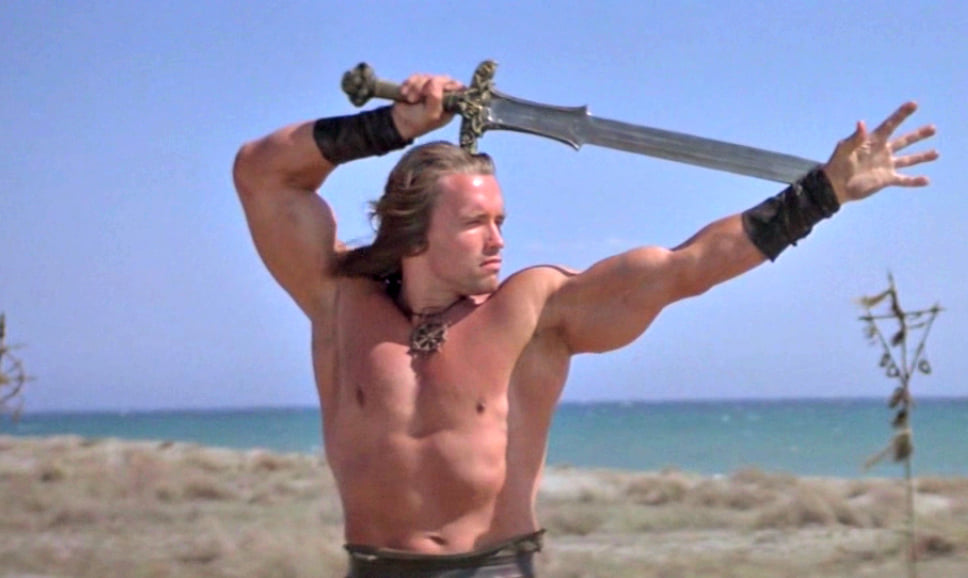
    How a good film score can improve a very silly movie: Basil Poledouris conducts “Battle of the Mounds” from “Conan the Barbarian,” with the film, in Spain, on July 22, 2006. Poledouris, who always got a charge out of conducting this music, would succumb to cancer less than four months later.

    For anyone who actually tuned in a little before “Picture Perfect” yesterday hoping to hear an amazing organ transcription of Poledouris’ “Conan,” as advertised, I apologize. The disc actually disappeared into the bottom of my radio bag, and I thought I had forgotten it at home. Fortunately, that too can be found on YouTube.

    “Crom, I have never prayed to you before. I have no tongue for it. No one, not even you, will remember if we were good men or bad. Why we fought, or why we died. All that matters is that two stood against many. That’s what’s important! Valor pleases you, Crom… so grant me one request. Grant me revenge! And if you do not listen, then to HELL with you!”

  • Women Composers Leonarda Tower & More

    Women Composers Leonarda Tower & More

    With the Clara Schumann bicentennial only a week away, we’ll continue to celebrate the legacy of female composers. (This month, by the way, also sports the birthdays of Amy Beach and Nadia Boulanger!)

    Today, we salute Baroque composer Isabella Leonarda and Joan Tower, who turns 81, on the anniversary of their births. We’ll also hear a concerto by Australian composer Peggy Glanville-Hicks. Their music will be among my featured selections, from 4 to 6 p.m. EDT.

    Then descend into the man cave for scores from barbarian films inspired by the writings of pulp master Robert E. Howard on “Picture Perfect” at 6.

    Enjoyment of worthwhile music always transcends perceived gender differences, on WWFM – The Classical Network and wwfm.org.


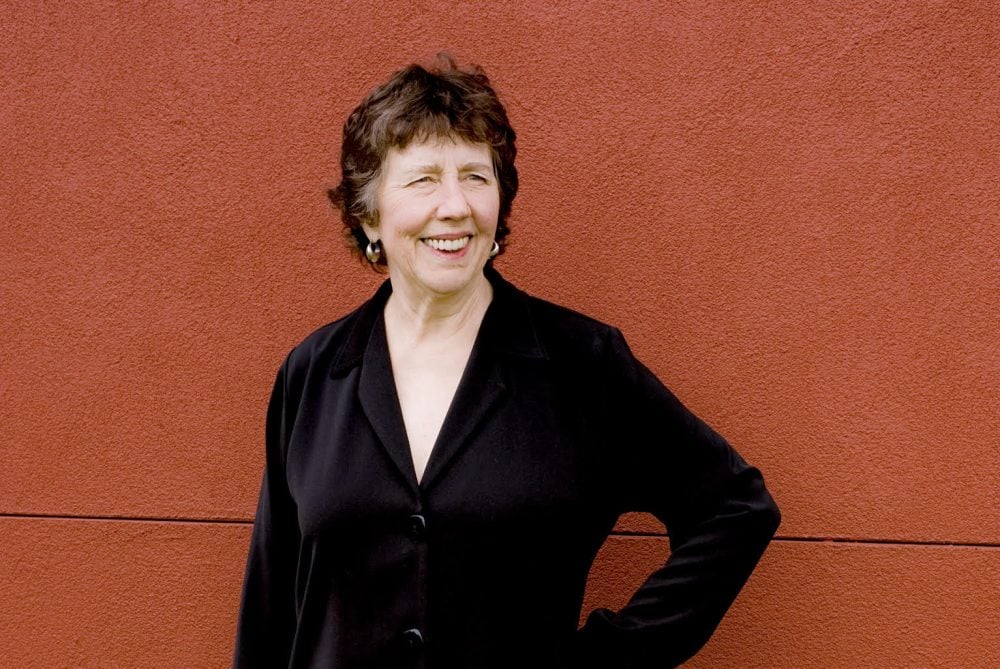
    CLOCKWISE FROM TOP: Joan Tower, Isabella Leonarda, and Peggy Glanville-Hicks (moonlighting as a music critic at the New York Herald-Tribune)

Tag Cloud

Aaron Copland (93) Beethoven (95) Composer (114) Film Music (137) Film Score (143) Film Scores (255) Halloween (94) John Williams (195) KWAX (229) Leonard Bernstein (103) Marlboro Music Festival (125) Movie Music (152) Mozart (88) Opera (208) Philadelphia Orchestra (89) Picture Perfect (174) Princeton Symphony Orchestra (108) Radio (88) Ross Amico (244) Roy's Tie-Dye Sci-Fi Corner (290) The Classical Network (101) The Lost Chord (268) Vaughan Williams (103) WPRB (396) WWFM (881)

DON’T MISS A BEAT

Receive a weekly digest every Sunday at noon by signing up here


RECENT POSTS