Category: Daily Dispatch

  • Jacques Offenbach 200th Birthday Celebration

    Jacques Offenbach 200th Birthday Celebration

    Here comes the “Can Can” man!

    Today marks the 200th anniversary of the birth of Jacques Offenbach.

    Like Victor Herbert, who was born 40 years later, Jacques Offenbach was a master of operetta who gained experience as a cellist in theater orchestras. (Herbert even made it as far as the Metropolitan Opera.)

    In Offenbach’s case, he finally attained a permanent position at Paris’ Opéra-Comique. Of course, his temperament was such that he was always getting busted down in pay for playing pranks. Once, he rigged everyone’s music stands to collapse in mid-performance.

    Nevertheless, he managed to make a favorable impression on composer and conductor Fromental Halévy, who gave him private lessons in composition and orchestration. (Offenbach had left the Paris Conservatory out of boredom a year into his formal studies.)

    With the help of Friedrich von Flotow, another future luminary of the musical stage, Offenbach gained access to the salon circuit. In this way, he bolstered his reputation as a performer and a composer. He toured France and Germany, performing with musicians such as Liszt and Anton Rubinstein. In England, he met Mendelssohn and Joseph Joachim.

    Upon his return to Paris, he subtly altered his image from a cellist who happened to compose to a composer who played the cello. When the salons began to dry up, Offenbach gained employment as the musical director of the Comédie Française. There, he gained valuable experience actually writing for the stage, though his success did not transfer to the Opéra-Comique. Debussy noted that the musical establishment of the time had difficulty coping with the composer’s sense of irony.

    By the time Offenbach finally did crack the Opéra-Comique with “The Tales of Hoffmann,” he was already in the grave. Though he died before putting the finishing touches on his opera, the orchestration was completed by other hands, and the work has not been out of the repertoire since.

    Somewhere in heaven, undoubtedly, Offenbach is sawing half-way through the columns of the harps and enjoying the last laugh.

    Happy birthday, Jacques Offenbach!


    The scherzo from Offenbach’s Cello Quartet:

    His greatest hit:

    The lovely “Barcarolle:”
  • John Adams Nixon in China at Princeton Festival

    John Adams Nixon in China at Princeton Festival

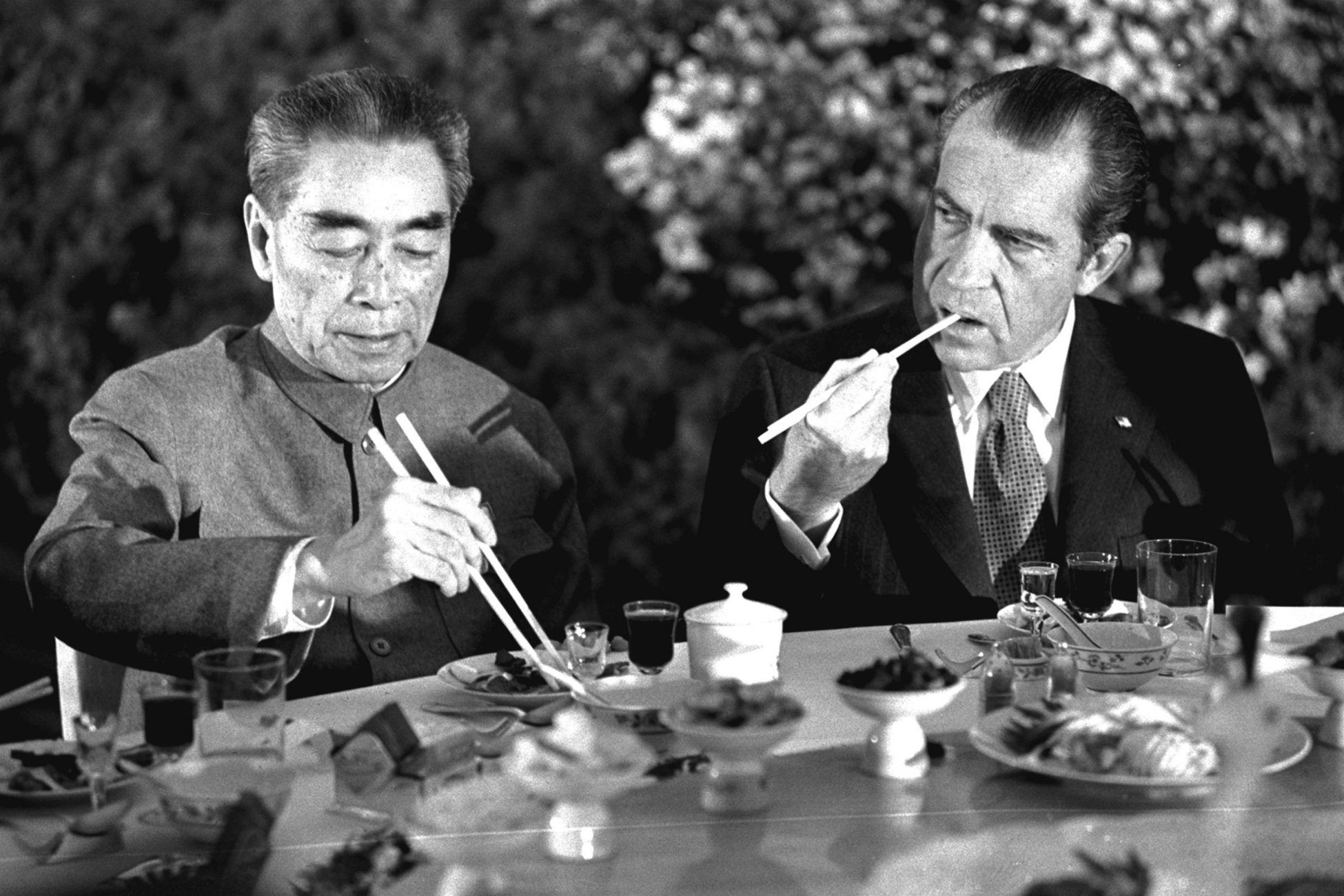
    A composer who happens to share a name with at least one president writes an opera about another. John Adams’ “Nixon in China” is the centerpiece of this year’s The Princeton Festival. Check out my unimpeachable preview in this week’s U.S. 1 Newspaper – PrincetonInfo, out today.

    https://princetoninfo.com/modern-opera-brings-nixon-era-to-princeton-festival/

  • Elgar & Vaughan Williams Quintets Marlboro

    Elgar & Vaughan Williams Quintets Marlboro

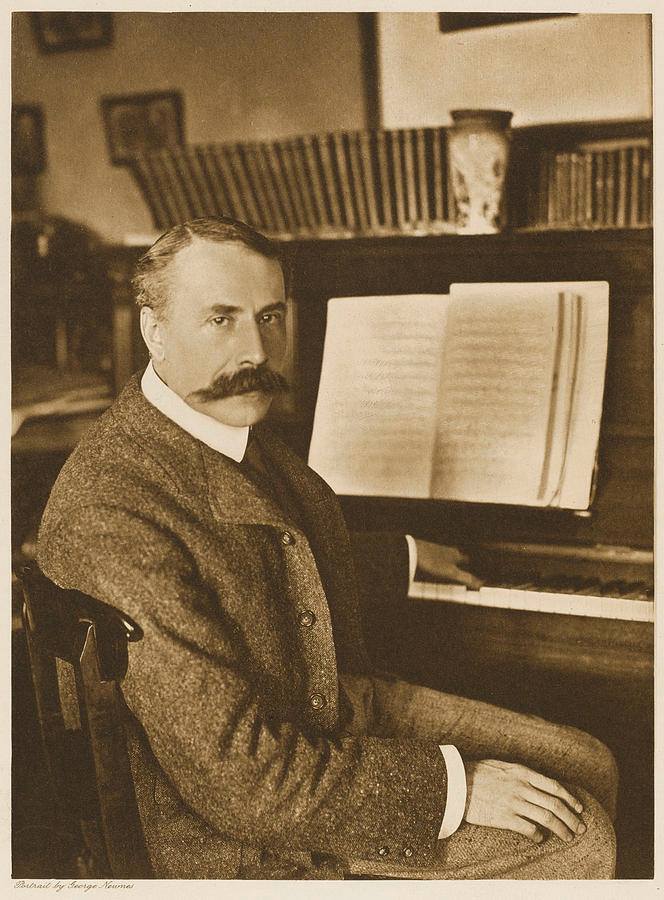
    English music is more than simply ham, lamb, and strawberry jam. On the next “Music from Marlboro,” we’ll highlight one of the most deeply personal utterances of perhaps Albion’s most respected composer.

    In the spring of 1918, Sir Edward Elgar underwent an operation in London to have an infected tonsil removed. At the time, this was considered a dangerous operation for a 61 year-old man. When the composer regained consciousness, the first thing he did was ask for a piece of paper, and he jotted down the opening theme of what was to become his last major work, the Cello Concerto in E minor.

    The Elgars retired to Brinkwells, a thatched cottage that was their summer home near Fittleworth, in Sussex, so that they could have time to relax and recover from their ailments. Even in this idyllic setting, with its trees and farmland, the guns could be heard at night rumbling across the Channel. The First World War had a profound effect on Elgar, as it did on everyone, but most especially those of the older generation, who had regarded the Boer War as a yardstick against which the cost and loss of armed conflict had been measured.

    Nevertheless, by August, Elgar was composing again. In quick succession came the Violin Sonata in E minor, the Piano Quintet in A minor, and the String Quartet in E minor. All three works were given their first performances one hundred years ago, in May of 1919, at which point Elgar launched into the Cello Concerto, which was to be his final masterpiece.

    Elgar labored with great intensity, rising at 4 or 5:00 every morning. His music from this period is spare and almost confessional in nature, colored by nostalgia, introspection, and a kind of sad beauty.

    But when it came time to play through the quintet, the composer was surrounded by some of his closest confidantes, and he couldn’t have been happier. These included W.H. Reed, with whom he had worked on the Violin Concerto; Albert Sammons, who would make the concerto’s first complete recording, and Felix Salmond, who would assist him on the Cello Concerto.

    We’ll hear a performance of Elgar’s Piano Quintet from the 2002 Marlboro Music Festival, featuring pianist Jeremy Denk, violinists Erin Keefe and Bradley Creswick, violist Teng Li, and cellist Joel Noyes.

    That will be prefaced by another quintet, from 1912, by Ralph Vaughan Williams. Vaughan Williams’ “Phantasy Quintet” was one of a number of works commissioned from England’s great composers by Walter Wilson Cobbett, a businessman and amateur musician whose dual passions were chamber music and music of the Elizabethan era. (“Phantasy” was Cobbett’s preferred spelling.)

    Vaughan Williams’ quintet is full of Tudor inflections and stamped by the composer’s tell-tale love of folk music. RVW doubles his violas, and the instrument is heard to great effect throughout the piece. We’ll enjoy it in a 1975 performance from Marlboro, featuring violinists James Buswell and Sachiko Nakajima, violists Philipp Naegele and Caroline Levine, and cellist Anne Martindale.

    I hope you’ll join me for the quintessence of English quintets – and one fantastic phantasy – on the next “Music from Marlboro,” this Wednesday evening at 6:00 EDT, on WWFM – The Classical Network and wwfm.org.

    Marlboro School of Music and Festival: Official Page

  • Vaughan Williams’ London Symphony on WWFM

    Vaughan Williams’ London Symphony on WWFM

    It’s a rainy day in Princeton town. Join me this afternoon on The Classical Network, as I’ll pay tribute to our meteorological sister city – London!

    It was George Butterworth who suggested to Ralph Vaughan Williams that he compose a purely orchestral symphony. Of course, RVW had already composed “A Sea Symphony,” on texts of Walt Whitman, but that work was as much a cantata as anything else. Vaughan Williams told Butterworth it was never in his thoughts to write a symphony, but privately the suggestion got his gears turning.

    The result was Vaughan Williams’ second symphony, advertised as “A London Symphony.” The piece would prove to be the first of RVW’s eight purely orchestral essays in the form that would go on to become some of the most frequently-played by any English composer. Unfortunately, Butterworth would not live to witness his friend’s enduring success. He would be killed by sniper fire on the Somme in 1916.

    Vaughan Williams’ symphony underwent numerous revisions from its original version of 1914-15 to the final form of 1936 that we know today. The original, revived only in 2001, with the permission of the composer’s widow, Ursula, is a remarkable achievement in its own right. Like an x-rayed painting by an Old Master, the work reveals aspects of its creation previously undreamed of by even the most ardent RVW admirer.

    Over time, Vaughan Williams not only revised the music, but also seemingly his thoughts on the piece, gradually transforming it from a nostalgic portrait of London to what he liked to refer to as a “Symphony by a Londoner.” In this way, he could downplay the descriptive elements of the work and push for its acceptance as “absolute” music.

    Along the way, he jettisoned about a third of the original music. Heard as it was originally conceived, the piece is revealed to be more ambitious, darker perhaps, containing, as RVW later grumbled to Bernard Herrmann, “some horrible modern music – awful stuff.”

    The composer dedicated the piece to George Butterworth, without whom it would not have been composed. The original version of “A London Symphony” will form the centerpiece of this afternoon’s playlist.

    First, it’s off to New York town, for our Noontime Concert. The period instrument ensemble Juilliard415 will present a concert titled, appropriately enough, “Eye of the Storm.” The program will include works by Heinrich Ignaz Franz von Biber, Johann Joachim Quantz, Francois Couperin, and Jean-Marie Leclair.

    It’s another concert brought to us by Gotham Early Music Scene, or GEMS. GEMS’ Midtown Concerts series is held at the chapel of St. Bartholomew’s Church, 325 Park Avenue, in New York City. Free concerts take place at St. Bart’s on Thursdays at 1:15 p.m. For more information, visit GEMS’ website, gemsny.org, and click on the events calendar.

    Have an umbrella on hand and get ready to slip into a nice cup of tea, from 12 to 4 p.m. EDT, on WWFM – The Classical Network and wwfm.org.


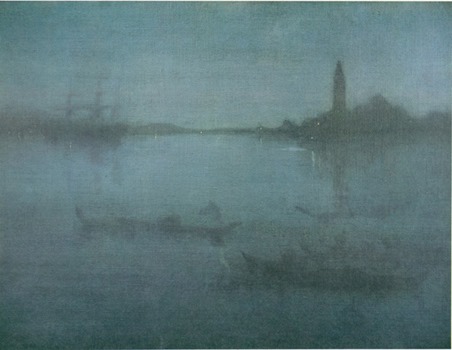
    “There was no fog in London until Whistler started painting it.” – Oscar Wilde

  • Stravinsky’s Money Music WWFM Birthday

    Stravinsky’s Money Music WWFM Birthday

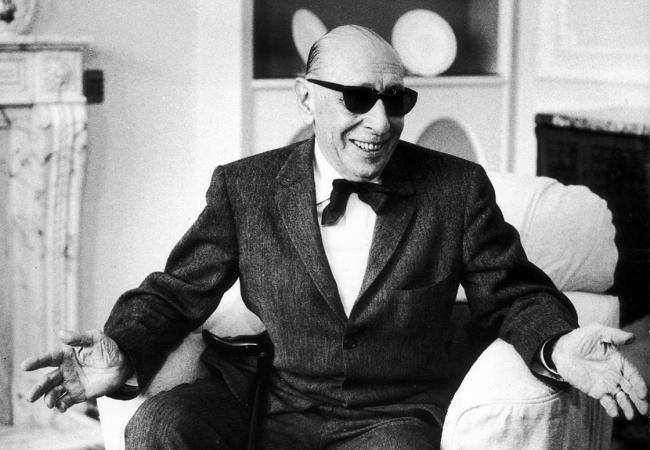
    No applause, please! Just throw money.

    There’s plenty to cheer about on the birthday of Igor Stravinsky, even if the composer could be a mite transparent in his focus on the bottom line. In a practice that would later become commonplace in rap, Stravinsky adopted a dollar sign for use in his monogram.

    Join me today on The Classical Network, as we celebrate one of the greatest composers of the past century. He was certainly one of the best-marketed.

    You can bet your bottom dollar on $travinsky, among our featured composers, from 4 to 7 p.m. EDT, on WWFM – The Classical Network and wwfm.org.

Tag Cloud

Aaron Copland (93) Beethoven (95) Composer (114) Film Music (137) Film Score (143) Film Scores (255) Halloween (94) John Williams (195) KWAX (229) Leonard Bernstein (103) Marlboro Music Festival (125) Movie Music (152) Mozart (88) Opera (208) Philadelphia Orchestra (89) Picture Perfect (174) Princeton Symphony Orchestra (108) Radio (88) Ross Amico (244) Roy's Tie-Dye Sci-Fi Corner (290) The Classical Network (101) The Lost Chord (268) Vaughan Williams (103) WPRB (396) WWFM (881)

DON’T MISS A BEAT

Receive a weekly digest every Sunday at noon by signing up here


RECENT POSTS