Category: Daily Dispatch

  • Brahms’ Intense Piano Quintet at Marlboro Music

    Brahms’ Intense Piano Quintet at Marlboro Music

    Don’t expect anything too drowsy on this week’s “Music from Marlboro,” when the focus will be on Johannes Brahms’ unusually intense Piano Quintet in F minor.

    This is not music of wistful reflection. The quintet is often tempestuous and even tragic, fueled by all the passion and earnestness of an excitable young man. Brahms began his quintet in 1862. He was 29 years-old.

    That’s not to say the composer ever teeters over into sentiment or excess of a kind common to his fin-de-siècle successors. Even in his 20s, Brahms was too much himself ever to allow that to happen.

    Instead he takes the prototype of the piano quintet – established by his friend and mentor, Robert Schumann – and fashions it into something unsettled and at times downright sublime. We are in the presence of something great, but also perhaps a little terrifying.

    This masterpiece of Brahms’ early maturity began life as a string quintet, written under the spell of Schubert’s famous Quintet in C. Brahms showed the work in this form to Clara Schumann and his friend, the violinist Joseph Joachim. Both were full of praise, at least at first, but gradually their compliments became outpaced by their suggestions. Joachim, in particular, admired the work’s power, but confessed he found little in it to charm.

    Undaunted, Brahms took the piece and arranged it for two pianos in 1863-64, consigning the original version, for strings alone, to flames of woe. This two-piano reworking was more politely than enthusiastically received, and Clara, thinking it sounded more like a transcription now than an original composition, begged him to recast it once more.

    The third time proved to be a charm. The resulting quintet, which achieved its final state in the summer of 1864, was met with resounding acclaim. At last, the piece had arrived at a perfect marriage of expression and form.

    While Brahms retains the classical poise for which is so well known, he stiffens the sinews and conjures the blood, so to speak. In fact, there are times when he ratchets up the tension so effectively it seems the music might just fly off the rails.

    We’ll hear an exciting performance from the 2007 Marlboro Music Festival, featuring pianist Richard Goode, violinists Augustin Hadelich and Benjamin Beilman, violist Samuel Rhodes, and cellist Amir Eldan.

    Proceed at your own risk. Safety gear will not be provided, on this week’s “Music from Marlboro,” this Wednesday evening at 6:00 EDT, on WWFM – The Classical Network and wwfm.org.

    Marlboro School of Music and Festival: Official Page

  • Strings Music Festival Steamboat on WWFM

    Strings Music Festival Steamboat on WWFM

    Once again, we’re off to a Rocky start. But that’s not necessarily a bad thing, when you consider we’re talking about the Rocky Mountains and the Strings Music Festival Steamboat Springs, CO.

    On today’s Noontime Concert on The Classical Network, enjoy highlights from a recital given by Cliburn silver medalist Kenny Broberg. The program will include César Franck’s Prélude, Fugue et Variation, Op. 18; Beethoven’s Piano Sonata No. 24 in F major “À Thérèse;” and Bach’s Toccata in C minor, BWV 911. We’ll also hear pianist Benjamin Hochman perform Bach’s French Suite in G major, BWV 816.

    The Strings Music Festival is a summer series that presents music of the highest quality in a picturesque mountain setting. Each year, a genre-spanning lineup is performed by classical musicians from the nation’s top orchestras and chart-topping contemporary artists, all of whom appear in an intimate 569-seat pavilion nestled at the base of the mountains around Steamboat Springs.

    This summer will mark Strings’ 32nd season. The festival’s nearly 60 events will embrace orchestral and chamber music, instrumental soloists, world music, blues, jazz, rock, a youth and family series, and free community programs.

    The opening classical concert will take place on June 22 and will feature Wagner’s “Siegfried Idyll,” Grieg’s “Holberg Suite,” and Beethoven’s Symphony No. 4. The orchestra will be conducted by Michael Sachs. For more information and a complete schedule, look online at stringsmusicfestival.com.

    Following today’s concert broadcast, stay tuned for more mountain music. Among the featured works will be Carter Pann’s “Slalom” – inspired by a family skiing trip to Steamboat Springs!

    Go tell it on the mountain. We’ll present quite a range, from 12 to 4 p.m. EDT, on WWFM – The Classical Network and wwfm.org.

  • Khrennikov Shostakovich and Soviet Power

    Khrennikov Shostakovich and Soviet Power

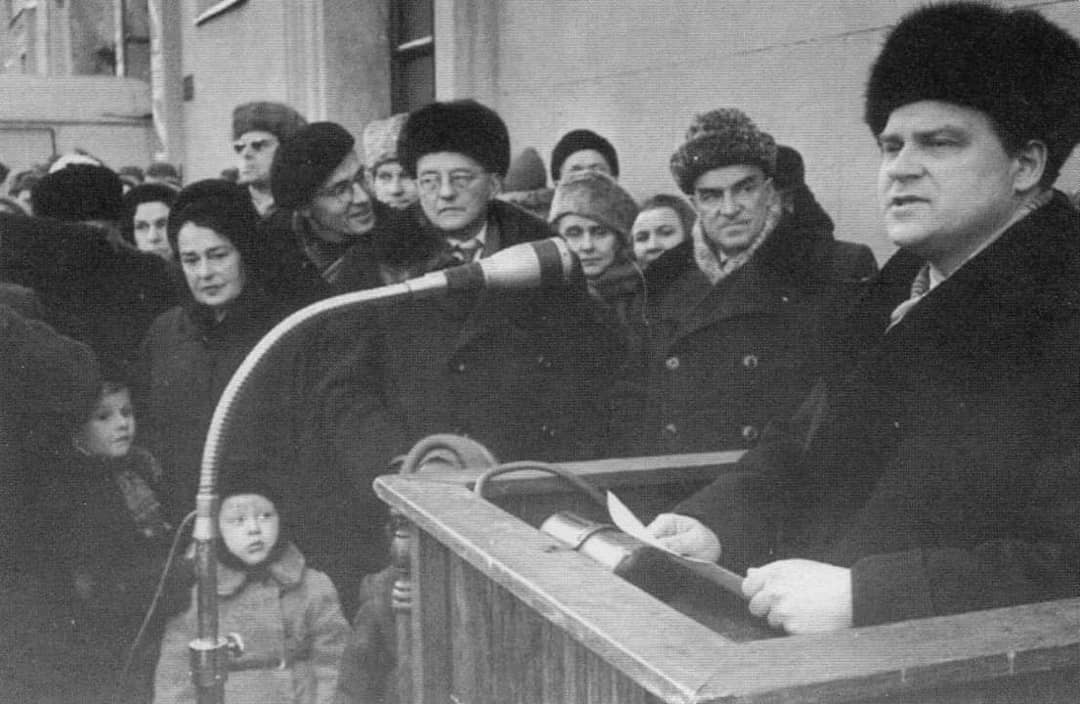
    Tikhon Khrennikov, in his role as Secretary of the Union of Soviet Composers, made life miserable for many of his more talented colleagues, especially Dmitri Shostakovich, Sergei Prokofiev, and Mieczyslaw Weinberg. In fact, cellist Mstislav Rostropovich, who was a big man, once stormed into Khrennikov’s office and gave him a good shaking by his lapels for being such an A-one a-hole.

    But Khrennikov was also one of the great survivors. Following the death of Stalin in 1953, he managed to ride out each successive regime for four more decades, holding on to his influential post until the collapse of the Soviet Union.

    There were some who claimed that Khrennikov was actually quite the sensitive fellow, who used his influence to quietly protect some of his more vulnerable colleagues. Whether or not that is true, I cannot say. He was a controversial figure, no doubt.

    Just because Khrennikov was an artist doesn’t mean he was a nice person. All the same, I hope you’ll join me as I sample some of his music this afternoon, alongside that of his fellow birthday celebrants Heinrich von Herzogenberg and Frederick Loewe.

    We’ll be seeing Red, between 4 and 7 p.m. EDT, on WWFM – The Classical Network and wwfm.org.


    PHOTO: Khrennikov talks; Shostakovich listens

  • Dvořák’s Dark Side Erben’s Spooky Tales

    Dvořák’s Dark Side Erben’s Spooky Tales

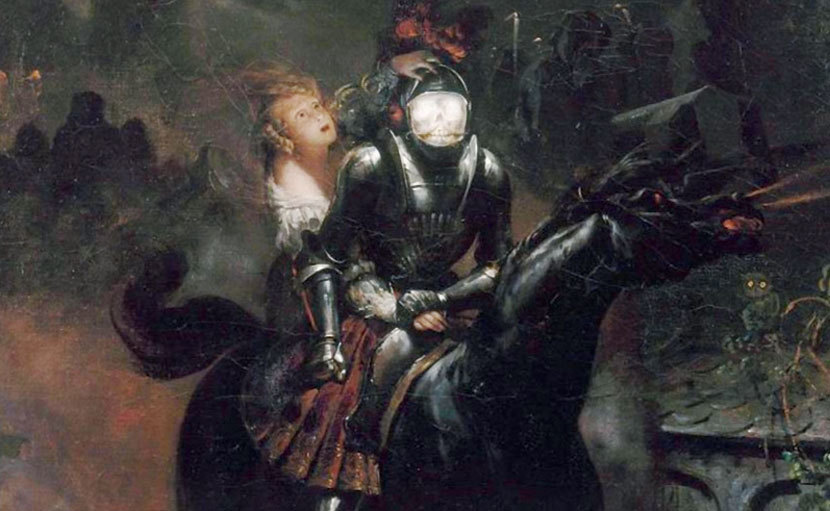
    Hot on the heels of Rusalka Week – a time when Slavic naiads roam free, luring unsuspecting men to a watery grave – we cast a wary eye upon Karl Jaromir Erben.

    Erben (1811-1870) served as a kind of Brothers Grimm to the Czech people, synthesizing works based on folkloric themes into gruesome ballads full of witches, goblins, and ghosts. Most of these were collected into a lurid, if poetic, little volume titled “Kytice,” or “Bouquet.” The tales, recited by generations of schoolchildren, were embraced as a kind of celebration of Czech national identity.

    Antonín Dvořák was most susceptible. Bohemia’s greatest composer wrote a surprising number of pieces inspired by Erben’s grisly tales, including the symphonic poems “The Water Goblin,” “The Noon Witch,” and “The Wood Dove.” Erben’s influence also looms over Dvořák’s most famous opera, “Rusalka.”

    This Sunday night on “The Lost Chord,” we’ll salute Erben with two selections by Dvořák: the symphonic poem “The Golden Spinning Wheel” and the spine-tingling graveyard scene from the dramatic cantata “The Spectre’s Bride.”

    “The Golden Spinning Wheel” is a Cinderella story gone very, very wrong, as a wicked stepmother and stepsister not only murder, but dismember an unfortunate maiden favored by the king. Naturally – or perhaps supernaturally – they overplay their hand, and the titular appliance proves their undoing.

    “The Spectre’s Bride” is another of the seemingly infinite variations on the tale of a young woman borne away by the ghost of her lover. The climax of Dvořák’s cantata deposits the heroine in a cottage besieged by howling spirits, as a corpse on the table, prepared for burial, stirs to do their bidding.

    It’s a long, long way from Dvořák’s “Slavonic Dances.” Join me for “Erben Legends” – a celebration of Karel Jaromir Erben – this Sunday night at 10:00 EDT, on WWFM – The Classical Network and wwfm.org.

  • Godzilla & Dinosaur Movie Music

    Godzilla & Dinosaur Movie Music

    How many dinosaurs have atomic breath? Have you ever woken up next to one?

    I know, I know, strictly speaking, Godzilla is not a dinosaur. Don’t give me any guff. All I’m looking for is an hour’s worth of “fearfully great lizards” (from the Greek), and I don’t care how I get them.

    This week on “Picture Perfect,” with Godzilla back in theaters, I thought it would be a good time for Godjira to rise from the surf yet again for another day of sand and fun.

    We’ll hear music from the film that kicked off the latest American attempt at a Godzilla franchise, titled, simply and leanly, “Godzilla” (2014), a “reboot” of the long-running Toho series. Since every Hollywood blockbuster these days seemingly aspires to emulate comic books, the film was planned as the cornerstone of yet another cinematic Tower of Babel. Reportedly, next year Godzilla will finally fight Kong (again). I kind of miss when he was just a guy in a suit, though…

    As these things go, “Godzilla” was not too bad, with at least some show of restraint in not revealing too much of the titular monster too soon (some felt it couldn’t be soon enough), especially in the film’s marketing. Also, the producers managed to assemble an A-list cast, including Bryan Cranston, Academy Award winners Juliette Binoche and David Straitharn, Japanese Academy Award winner Ken Watanabe, and soon-to-be Best Actress (for “The Shape of Water”) Sally Hawkins. The music was by Alexandre Desplat, in recent years everywhere at once.

    Of course, Godzilla is not the only pre-historic being to sport fashionable beachwear. “One Million Years B.C.” (1966) featured special effects by the legendary Ray Harryhausen and an equally legendary fur bikini, worn by Raquel Welch.

    Not to be confused with the recent “10,000 B.C.,” this was actually a Hammer Studios remake of a 1940 Hollywood film, “One Million B.C.” – a fact as little known as the well-kept historical secret that man and dinosaurs did indeed co-exist. With its stop-motion dinosaurs, fur bikinis, and Peter Brady-style volcanoes, this cheese ball classic is a guilty pleasure indeed. The music was by Mario Nascimbene, who wrote one of my favorite scores for Kirk Douglas, “The Vikings.”

    Some kinder, gentler fare will be served up by way of the animated film “The Land Before Time” (1988). Executive produced by Steven Spielberg, George Lucas, Kathleen Kennedy, and Frank Marshall – all of whom were involved with “Raiders of the Lost Ark” – this Don Bluth-directed opus about anthropomorphized dinosaurs spawned a profitable franchise, with at least 12 direct-to-video sequels. The music for the original was by James Horner.

    Spielberg turned to B-movie source material for his visual inspiration for “Jurassic Park” (1993), based on the novel by Michael Crichton. The herky-jerky dinosaur effects of yore were replaced with state of the art computer-generated effects, in this story of a safari park gone wrong.

    The premise this time takes advantage of the most recent scientific thinking, albeit filtered through a prism of speculative wonder and horror – DNA extracted from mosquitoes trapped in amber, cloning, and the theory that dinosaurs were not lizards, after all, but rather birds.* John Williams music proved to be the Tyrannosaurus rex among his film scores of the 1990s.

    Join Godzilla and me for a dinosaur clambake, on “Picture Perfect,” Friday evening at 6:00 EDT, on WWFM – The Classical Network and wwfm.org.


    *If we’re going to drag science into the thing, here’s an amusing article I discovered in Smithsonian Magazine, in which paleontologists speculate what dinosaurs may have been a part of Godzilla’s DNA. Before his radioactive mutation that is.

    https://www.smithsonianmag.com/science-nature/what-kind-of-dinosaur-is-godzilla-45639768/?no-ist&fbclid=IwAR30oAV7CkYpOA7cksEA9mymnwXbBkzHq2p7GZ6-RtX0k-pvmbmpnHTfXPk

Tag Cloud

Aaron Copland (93) Beethoven (95) Composer (114) Film Music (137) Film Score (143) Film Scores (255) Halloween (94) John Williams (195) KWAX (229) Leonard Bernstein (103) Marlboro Music Festival (125) Movie Music (152) Mozart (88) Opera (208) Philadelphia Orchestra (89) Picture Perfect (174) Princeton Symphony Orchestra (108) Radio (88) Ross Amico (244) Roy's Tie-Dye Sci-Fi Corner (290) The Classical Network (101) The Lost Chord (268) Vaughan Williams (103) WPRB (396) WWFM (881)

DON’T MISS A BEAT

Receive a weekly digest every Sunday at noon by signing up here


RECENT POSTS