Category: Daily Dispatch

  • Siegfried Wagner’s Shadow

    Siegfried Wagner’s Shadow

    They can’t all be Richard Strauss, Johann Strauss II, or Wolfgang Amadeus Mozart. In fact, it’s more often the case that they turn out to be Franz Xaver Mozart, Soulima Stravinsky, or Siegfried Wagner.

    The latter were all musicians who strained to find their place in the sun, but in the end there was no escaping the enormous shadows of their old men.

    You certainly couldn’t fault Siegfried Wagner for not trying. In his quest to continue the family business, he wrote no less than 18 operas. And the ones I have heard are not bad! Unfortunately, most of them seem to be in the tradition of Engelbert Humperdinck, whose most famous opus, of course, is “Hansel und Gretel.” But I happen to be easily charmed by fairy tale operas, so count me in!

    “Der Bärenhäuter” (“The Bear-Skin Man”), “Der Kobold” (“The Goblin”), “Schwarzshwanenreich” (“Realm of the Black Swan”), and “An Halle ist Hütchen schuld” (“Hattie is to Blame for It All”) all contain fantastic or supernatural elements, but none of them bear the archetypal resonance of the “Ring Cycle,” much less push music into bold new harmonic territory like “Tristan und Isolde.” You have to admit, that’s a tough row to hoe, and none of Siegfried’s operas have entered the standard repertoire.

    Of course, being a Wagner, everything was tied up with the old man. Siegfried was director of the Bayreuth Festival from 1908 to 1930. There is a delicious irony in the fact that Papa Wagner, an über-nationalist, anti-Semite, and all-around amoral satyr – whose bludgeoning music dramas fairly seethe with an obsessive focus on the redemptive power of women – would sire a child who would turn out to be homosexual. Perhaps he tempted fate by giving him such a butch name. A far cry from Wagner’s prototype of the he-man without fear, Siegfried became affectionately known to family as “Fidi.”

    In the wake of a national scandal involving accusations of homosexual behavior among certain aristocrats in the Kaiser’s circle, the Wagners thought it was high time for Siegfried to take a bride. At the age of 45, he married 17 year-old Winifred Klindworth, who would later become a fanatical admirer of Adolf Hitler. She bore Siegfried four children. All of them would be closely involved with the workings of Bayreuth and uncomfortably close to the Nazi Party. The youngest of Siegfried’s children, Verena Wagner Lafferentz, died only weeks ago, at the age of 98.

    Marriage did not “cure” Siegfried of his proclivity for the company of men. He died in 1930. At the very least, Nazism is one controversy he managed to avoid.

    Happy birthday, Siegfried Wagner, on the 150th anniversary of your birth. You were certainly the nicest of the Wagners. You may not have been a chip off the old block, but in the Wagner family, to have been so would have been somewhat more than a mixed blessing.


    The overture to “Der Bärenhäuter” (“The Bear-Skin Man”):


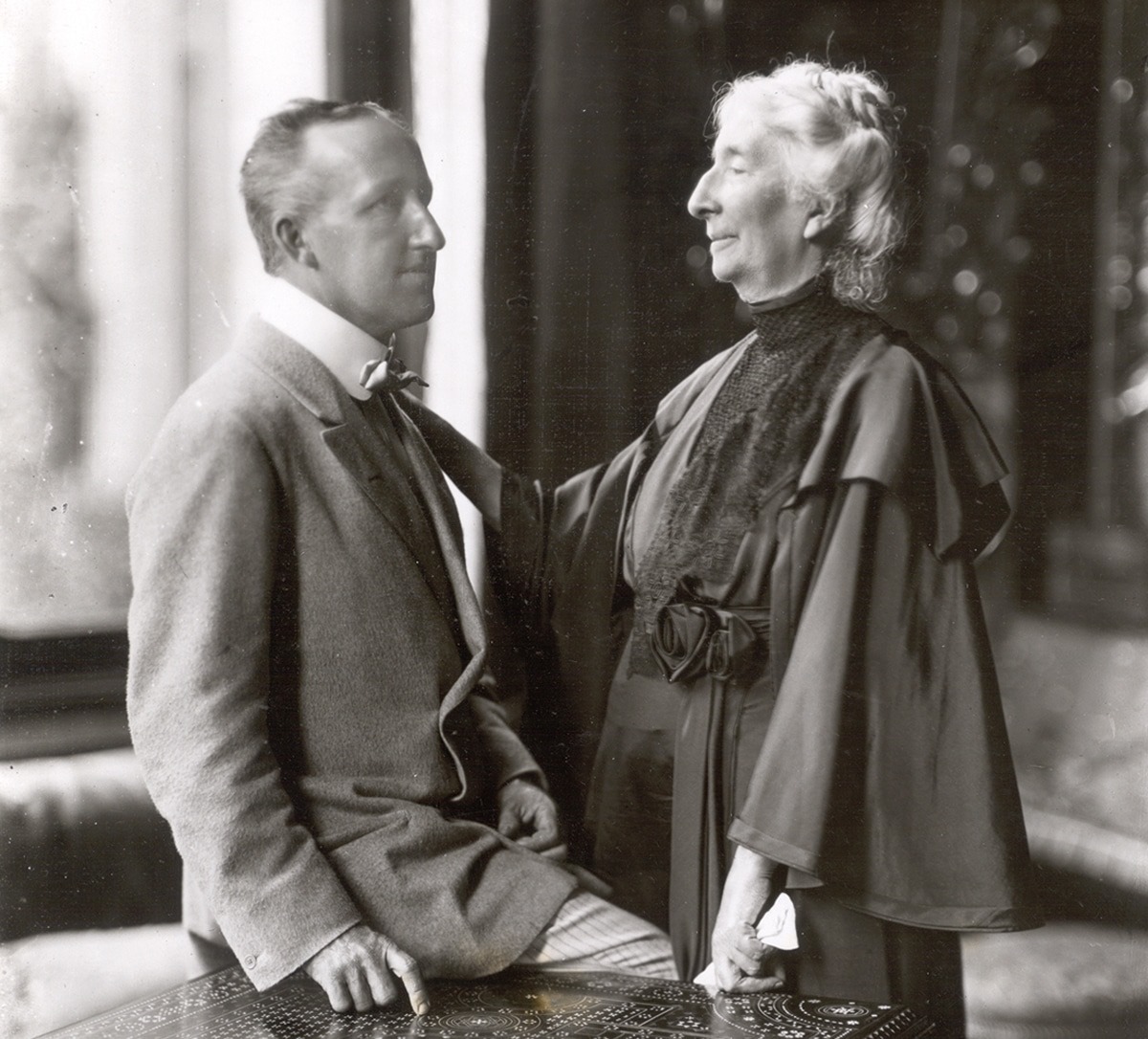
    PHOTO: Siegfried Wagner, with his mother, Cosima
  • Siegfried Wagner Idyll Story & Recording

    Siegfried Wagner Idyll Story & Recording

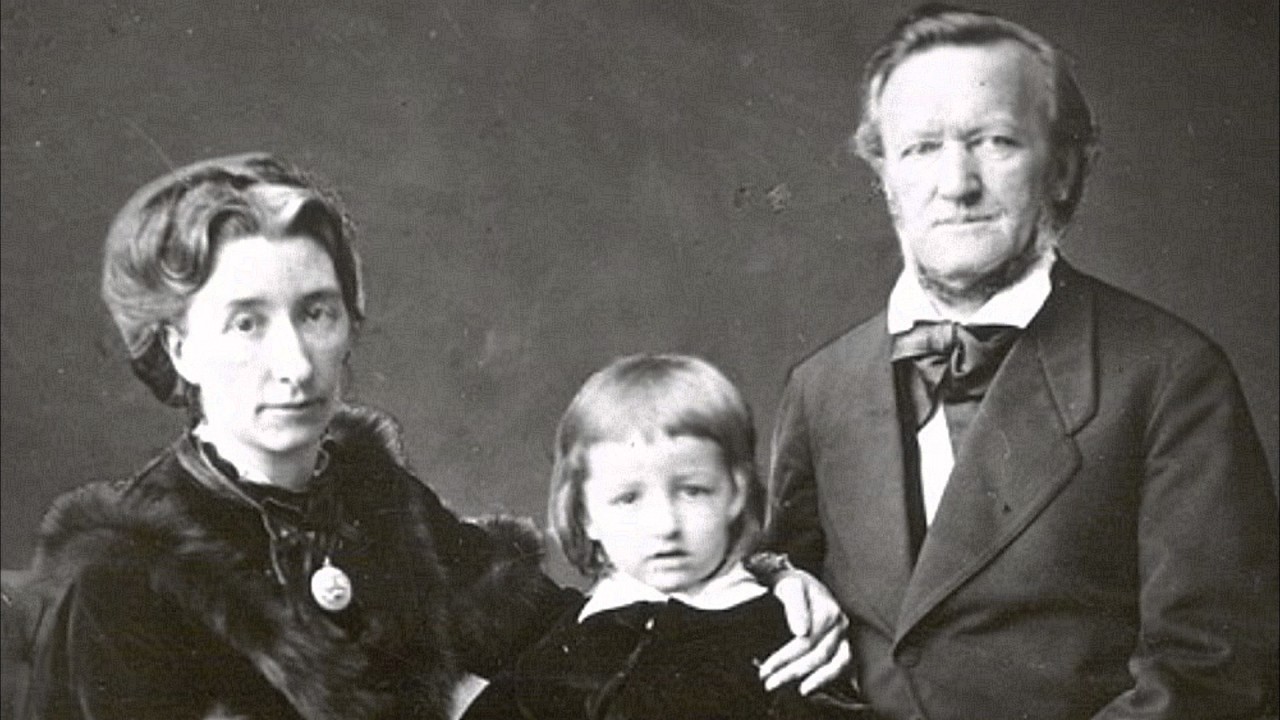
    Even as a child, Siegfried Wagner seemed out of step with his parents.

    Nevertheless, here’s the charming story behind the “Siegfried Idyll,” a work named for him by his father.

    The idyll was composed shortly after Siegfried’s birth, in1869, and presented as a surprise gift by the composer to Siegfried’s mother, Wagner’s new bride, Cosima (recently divorced from conductor Hans von Bülow, a Wagner champion, who had tolerated their affair).

    In a supreme romantic gesture, Wagner unveiled the work on Christmas morning, with his musicians arrayed along the stairs leading to the master bedroom of their Swiss villa. Wagner had it played for Cosima every year as an expression of his love. It had been his original intention to keep it private, within the family, but then cash ran short, as it almost always did, and he was willing to change his mind. Themes from the work would also be reused in the Ring Cycle.

    The original title of the piece was not quite so snappy. At the time the music was first presented, the score bore the inscription: “Triebschen Idyll, with Fidi’s birdsong and the orange sunrise, as symphonic birthday greeting. Presented to his Cosima by her Richard.” Fidi, of course, was the Wagners’ nickname for their son, born 150 years ago today.

    Hear Siegfried conduct the serenade named for him by his father, in this 1927 recording.

  • 400 Facebook Likes Thank You!

    400 Facebook Likes Thank You!

    Well, dog my cats… I’m at 400 likes! That’s one for every year I’ve been on Facebook!

    But seriously, folks… Thank you all for taking the time each day to read my musings. Your thumbs-ups, feedback, and horrifying emojis do so much to brighten my sad existence.

    Now if I can only get the other 59 people who FOLLOW the page to actually LIKE it. Maybe I’m just the classical music guy people love to hate? Quit stalking me, already, and make yourselves known!

    To celebrate this milestone, here’s the “Kiss Waltz,” Op. 400, by Johann Strauss the Younger:

    Thanks again, and here’s to the next 400!

  • Shostakovich’s Misery Marlboro’s Joy

    Shostakovich’s Misery Marlboro’s Joy

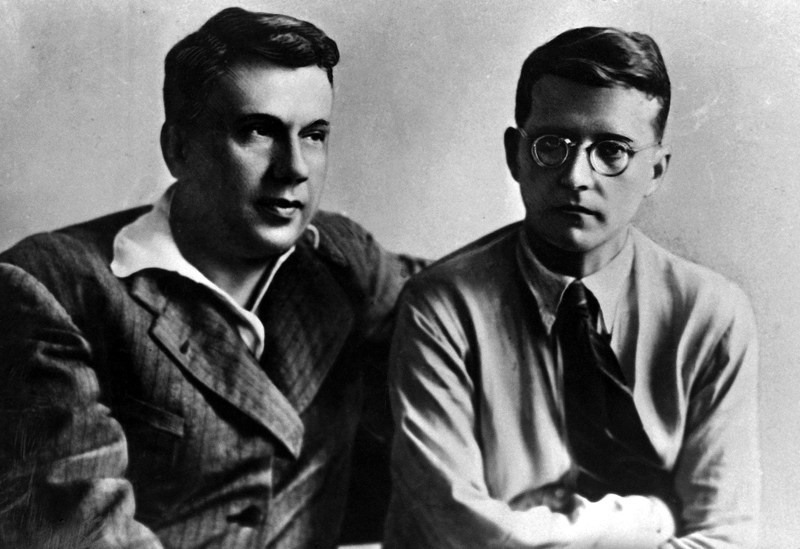
    Dmitri? DMITRI! Pull yourself together. Don’t look so miserable.

    This week on “Music from Marlboro,” we’ll be featuring your Piano Trio No. 2 in E minor. Sure, it’s dedicated to Ivan Sollertinsky, a close friend of yours who died an untimely death, and it was given its premiere in Leningrad in 1944, not the cheeriest place in the months following a years-long siege that killed probably a million and a half people, maybe two, created subhuman conditions, and instilled unfathomable desperation in the populace.

    This is the piece that lent your String Quartet No. 8 its inexorable, klezmer-influenced “danse macabre.” After all, among Sollertinsky’s many other talents and enthusiasms – as a musicologist, a critic, a linguist, a professor, and the artistic director of the Leningrad Philharmonic – he was an ardent enthusiast of the music of Gustav Mahler. Sollertinsky had been evacuated during the siege. Unfortunately, he died suddenly of a heart attack in Siberia at the age of 41.

    With Sollertinsky’s death, the barricades of misery were shattered, and you mourned as only you could. It’s not exactly uplifting music, but boy does it make an impression.

    We’ll hear it performed at the 2011 Marlboro Music Festival by pianist Bruno Canino, violinist Ying Fu, and cellist Matthew Zalkind.

    Then Alexander Glazunov – representative of an earlier generation, oblivious, and perhaps not entirely sober – will clear the air with his String Quintet in A major. Glazunov knew you well, did he not? As director of the Petrograd Conservatory, he saw to it that you were allowed to bypass preparatory theoretical courses and enter directly into the conservatory’s composition program.

    What a nice guy! Too bad you were lukewarm on his music. But you did have kind things to say about the man, and even opined that his scherzos weren’t too bad.

    Glazunov’s quintet is full of serene lyricism, generously melodic and quite beautiful. Then again, Glazunov never had to worry about Nazis and probably never had to eat anyone to survive. We’ll hear it performed at Marlboro in 1982, with violinists Sylvie Gazeau and Ernestine Schor, violist Toby Hoffman, and one-and-future cellists of the Guarneri Quartet, David Soyer and Peter Wiley.

    That’s a dazed piano trio, with a glaze of Glazunov, on the next “Music from Marlboro,” this Wednesday evening at 6:00 EDT, on WWFM – The Classical Network and wwfm.org.

    RAINY DAY ACTIVITY: Post your most miserable photo of Shostakovich in the comments section below.

    Marlboro School of Music and Festival: Official Page


    PHOTOS: Sollertinsky (upper left) and the many moods of Shostakovich

  • Ballets Russes Treasures on The Classical Network

    Ballets Russes Treasures on The Classical Network

    Serge Diaghilev, impresario of the Ballets Russes, commissioned some of the most enduring ballet scores of the 20th century, from such composers as Claude Debussy (“Jeux”), Maurice Ravel (“Daphnis and Chloe”), Manuel de Falla (“The Three-Cornered Hat”), and especially Igor Stravinsky (“The Firebird,” “Petrushka” and “The Rite of Spring”).

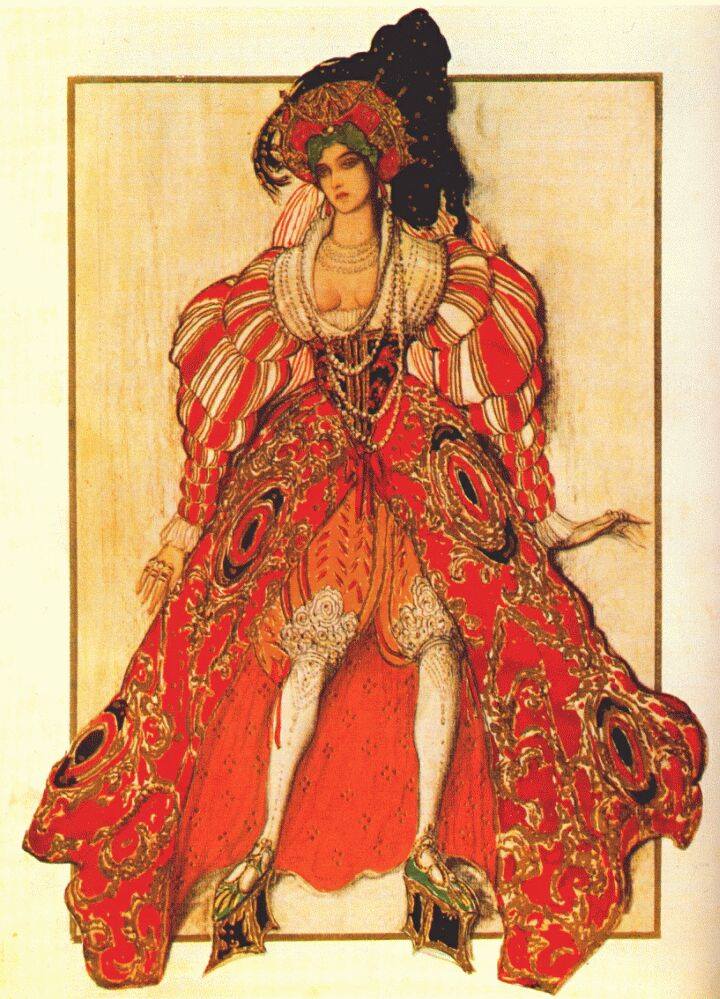
    This afternoon on The Classical Network, we’ll have a chance to enjoy some of the lesser-known fruits of this partnership, including “Narcisse et Echo” by Nikolai Tcherepnin – written one year before “Daphnis,” though with some striking similarities – and the complete ballet “The Triumph of Neptune” – one of only two works composed for the company by an English composer, in this case Lord Berners. The suite, not exactly overplayed, was a great favorite of Sir Thomas Beecham (he recorded it several times), but the complete ballet is never done. We’ll also hear Richard Strauss’ music for the bombastic biblical spectacle “Josephslegende” (“The Legend of Joseph”) in its entirety.

    First, on today’s Noontime Concert, it’s music for voice and viol, courtesy of Gotham Early Music Scene, or GEMS. Mezzo-soprano Ashley Mulcahy and viola da gambist James Perretta of the duo Lyracle will present works for this distinctive combination from the late 16th and early 17th centuries.

    These performances were captured at GEMS’ Midtown Concerts series, held at the chapel of St. Bartholomew’s Church, 325 Park Avenue, in New York City. Free concerts take place at St. Bart’s on Thursdays at 1:15 p.m. For more information, visit GEMS’ website, gemsny.org, and click on the events calendar.

    Join me for a mix of GEMS and flawed diamonds from the Ballets Russes, from 12 to 4 p.m. EDT, on WWFM – The Classical Network and wwfm.org.


    IMAGE: Potiphar’s wife got it goin’ on!

Tag Cloud

Aaron Copland (93) Beethoven (95) Composer (114) Film Music (137) Film Score (143) Film Scores (255) Halloween (94) John Williams (195) KWAX (229) Leonard Bernstein (103) Marlboro Music Festival (125) Movie Music (152) Mozart (88) Opera (208) Philadelphia Orchestra (89) Picture Perfect (174) Princeton Symphony Orchestra (108) Radio (88) Ross Amico (244) Roy's Tie-Dye Sci-Fi Corner (290) The Classical Network (101) The Lost Chord (268) Vaughan Williams (103) WPRB (396) WWFM (881)

DON’T MISS A BEAT

Receive a weekly digest every Sunday at noon by signing up here


RECENT POSTS