
Category: Daily Dispatch

  • Father’s Day Reflections Loss & Legacy

    Father’s Day Reflections Loss & Legacy

    It’s Father’s Day. Both my folks are gone, and I had a rather complex relationship with my biological father, who died of cancer a little over a year ago. Still, toward the end, I visited him a lot, and we kind of became friends. At least I developed a better, or more rounded, understanding of him, though we still had a few adventures that reminded me of why it was probably a good thing that my mother herded us out of the nest when she did.

    My old man could be an amusing personality if he were a work of fiction, or if he could be taken in at a safe remove. Also, in his way, he had a kind heart. His circle included a remarkable number of outsiders and societal cast-offs, and he managed to take care of many of them, after his fashion. But he was not one to be bound by rules or, more strictly speaking, the law. At best, he could be considered a bit of a scapegrace; at worst, he was an ardent hellraiser, especially in his prime.

    But spending time with him later in life, it was fascinating to discover that, whether he knew it or not, he did live by a kind of code. Also, given his nature, I learned that a lot of what the rest of us had resented all these years was probably not entirely his fault. He just wasn’t cut out to raise a family. You can’t really fault a striped hyena for not being able to fly.

    I could tell you stories about my dad that would make you howl with laughter or make your blood curdle, but instead I’ll just tie this in with my program tonight on “The Lost Chord,” which will consist of two pieces by American composers, written in loving memory of their fathers – with perhaps just a transitional bit of advice to get to know your parents, for better or worse, while there’s still time.

    In 1999, composer Eric Ewazen was commissioned by an oboist-friend, Linda Strommen, who had recently lost her father, to write a new work as a kind of memorial tribute. Having recently experienced the death of his own father, the composer embarked on the project with a special sense of poignancy. He recollected that the day his father passed – Christmas Day, 1997 – an essay had appeared in the Cleveland Plain Dealer, by Richard Feagler. It consisted of funny, heartfelt stories of relatives and parents, long since departed. Near the end of the essay, titled “Christmas Past Comes Alive at Aunt Ida’s,” Feagler describes those beloved souls, “moving, though they can’t feel the current, down a river of time.”

    Ewazen borrowed this image for the title of his concerto, “Down a River of Time,” a contemplation of that inexorable, rushing river – the first movement influenced by its ebbs and flows, hopes and dreams; the second attempting to convey emotions felt during times of loss, sorrow, resignation, tenderness, and peace in remembrance of happier, distant times. In the final movement, happier memories prevail, and feelings of strength and determination dominate.

    Ewazen studied at, among other places, the Eastman School of Music. Howard Hanson had been director there for some 40 years. Along with the opera “Merry Mount,” Hanson came to regard his Symphony No. 4 as a personal favorite, a purely orchestral requiem, dedicated to the memory of his father. It falls into four movements, each bearing a Latin subtitle – “Kyrie,” “Requiescat,” “Dies Irae,” and “Lux Aeterna.” The work was given its first performance in 1943, with the composer conducting the Boston Symphony. It was awarded the Pulitzer Prize for Music in 1944.

    It sure as hell beats another necktie. Spare a thought for the Old Man, and then join me for “Day of the Dad,” this Sunday night at 10:00 EDT, on WWFM – The Classical Network and wwfm.org.
  • Exploring Nordic Classical Music Nørholm & Sandström

    Exploring Nordic Classical Music Nørholm & Sandström

    “A symphony must be like the world,” Gustav Mahler once famously declared, “It must embrace everything.”

    Turning that on its head, “the world” becomes a useful metaphor for classical music itself, since the realm music occupies is so broad, so deep, and so varied, it’s impossible for any one of us to possess more than a passing familiarity with even the tiniest fraction of its immeasurable mysteries. That’s part of what I find so appealing. The frontiers are limitless; the content inexhaustible. You can travel as far outside the standard repertoire as your legs or ears will carry you, or you can dig deeply into a symphony by Mozart or Beethoven to marvel at the tiniest cells of their creation.

    It’s fortuitous, perhaps, that Mahler made his observation while on a walk with Jean Sibelius, the All-Father of Nordic music.

    Every once in a while I’ll note the obituary of some vaguely familiar musician, and it will spur me to check out what I can of his or her recorded output. In the case of Danish composer Ib Nørholm, who died on Sunday at the age of 88, his was a name I distantly recollected, probably from a rich vein of LPs, numbering in the hundreds, I inherited back in the days when I ran a used book business in Philadelphia.

    I was remiss in not exploring any of his works, that I can recall, until only this past week. A pupil of Vagn Holmboe, Nørholm composed 13 symphonies. So far, I have listened to Numbers 4, 5 & 9. Number 4, subtitled “Decreation,” is interesting, in that its avant-garde gloss – complete with quasi-sprechtstimme, possibly aleatoric chorus – can’t obscure the work’s Sibelian pedal tones. The recording, on the Kontrapunkt label, also features the composer reciting poetry (in Danish) in the symphony’s final movement.

    Number 5, subtitled “The Elements,” is twelve-tone, and I suppose a little on the severe side, but for anyone with a predilection for the austerity of a certain vein of Nordic music, surprisingly listenable.

    But it is Number 9 that hits the sweet spot for me. Here Nørholm has settled in with a new lyricism, and he feels totally comfortable in his own skin. Not being familiar (as yet) with the rest of his output, this is what I would recommend as a good starting point.

    On the same day, the music world lost Swedish composer Sven-David Sandström. I gather he is mostly known for his works for voice. Perhaps this would be more to your liking:

    Sandström was 76 years-old.

    Neither of these works may be your cup of vodka. But if you clear your head, close your eyes, and just go with them, you may be surprised to discover that you actually find the music rewarding. As a certain quotable Dane once remarked, “There are more things in heaven and Earth, Horatio, than are dreamt of in your philosophy.”


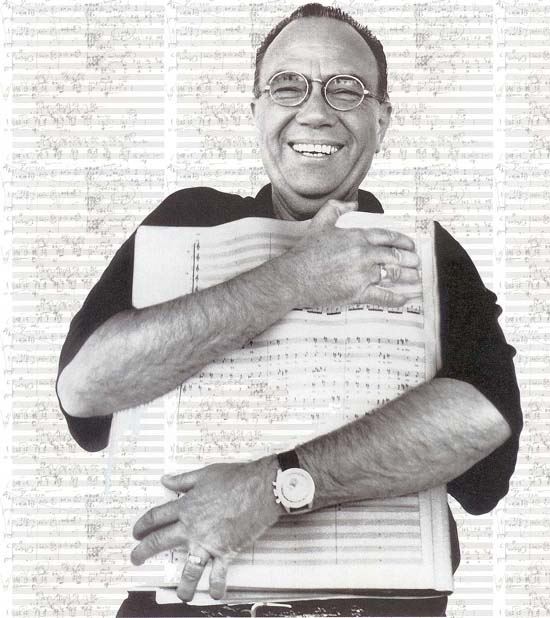
    PHOTO: Sven-David Sandström embraces music

  • City Mouse Country Mouse Movies

    City Mouse Country Mouse Movies

    There are of course many, many movies about “city mice” and “country mice” – those from the city displaced to a rural setting and those from the country dazzled by the city. These often take the form of fish-out-of-water comedies. But a trip the country can also be restorative, or even have redemptive qualities. Though in the end, more often than not, the central characters return to their place of origin.

    “Witness” (1985) employs elements of both “city mouse” and “country mouse.” The plot is set in motion by the witness of a murder by an Amish boy at Philadelphia’s 30th Street Station. The investigation reveals a vein of corruption in the Philadelphia Police Department, forcing a wounded detective, John Book (played by Harrison Ford), to lay low among the Amish. There are certainly comic elements, but also fascinating dramatic possibilities, in throwing together these figures from two very different cultures.

    The music was by Maurice Jarre. Jarre is best known for his scores presented on large orchestral canvases, for films like “Lawrence of Arabia” and “Dr. Zhivago.” But by the 1980s, he was experimenting with electronic music in films like “The Year of Living Dangerously,” “Mosquito Coast,” and “Dead Poets Society.” The approach worked particularly well in “Witness.”

    Another police thriller, “On Dangerous Ground” (1952), throws together a detective with definite anger management issues (played by Robert Ryan) with the backwoods father of a murder victim (played by Ward Bond) for a wild mountain manhunt. Ryan finds redemption through his interactions with the suspect’s blind sister, played by Ida Lupino. Bernard Herrmann wrote the music. If you find yourself trying to identify the solo string instrument, it’s actually a viola d’amore, an instrument rarely heard outside of the Baroque.

    “George Washington Slept Here” (1942), based on the play by Moss Hart and George S. Kaufman, is a “fixer-up” comedy, kind of a precursor to “Mr. Blandings Builds His Dream House” and “The Money Pit,” with perhaps a touch of “Green Acres” thrown into the mix. Jack Benny and Ann Sheridan play a Manhattan couple fed up with city living. They transport their family to a dilapidated Bucks County farmhouse, with predictably disastrous results.

    The somewhat cartoonish music is by English-born composer Adolph Deutsch, one of the less remembered names of Hollywood’s Golden Age, although he scored such high profile films as “The Maltese Falcon” and “Some Like It Hot.” His is an old fashioned approach – at any moment you might expect to hear a “sad trombone” – but it’s wholly appropriate in a film that features abundant pratfalls.

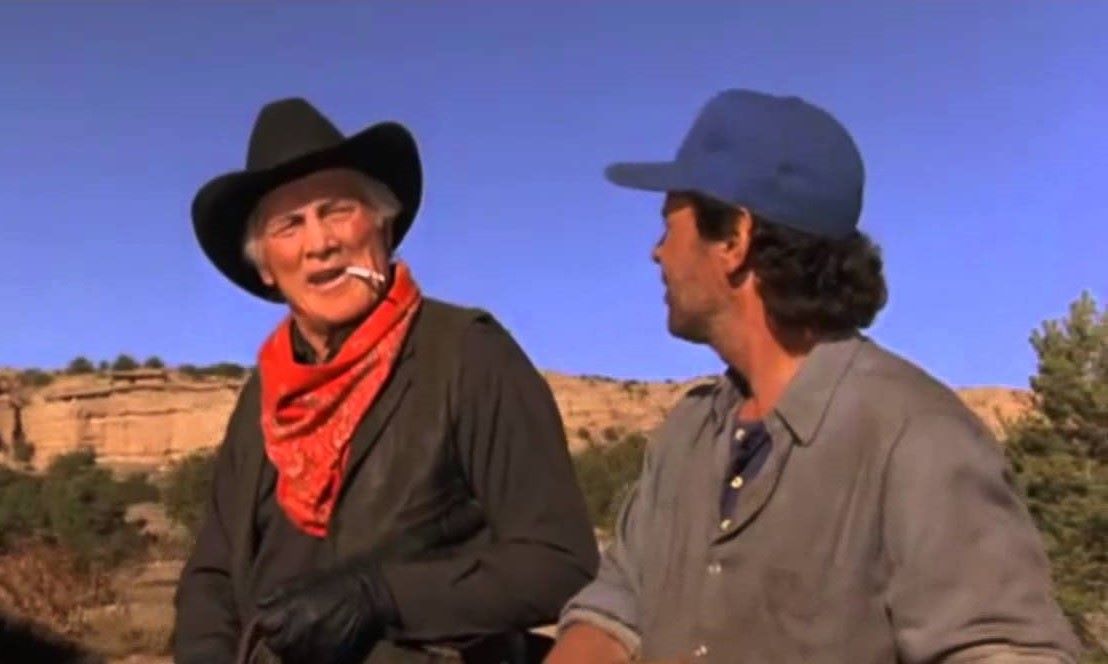
    Finally, the Billy Crystal comedy “City Slickers” (1991) is built on the premise of three middle-aged Manhattanites who find renewal and purpose at a kind of cowboy fantasy camp. Jack Palance gives an Oscar-winning performance as the intimidating trail boss. The music is by Marc Shaiman. Shaiman has also written for Broadway. He may be best known for his scores for the musicals “Hairspray” and “The Book of Mormon.”

    Whether you’re on the lam or on the lamb, the fresh air will do you good, as “city mice” go to the country this week, on “Picture Perfect,” music for the movies, this Friday evening at 6:00 EDT, on WWFM – The Classical Network and at wwfm.org.

  • Leif Kayser Danish Composer Centenary

    Leif Kayser Danish Composer Centenary

    Composer, organist, pianist, conductor, priest, husband, teacher – Leif Kayser was certainly a multifaceted individual.

    Born in Copenhagen on this date in 1919, Kayer began his studies at the Royal Danish Academy of Music in 1936. In Stockholm, he studied composition with Hilding Rosenberg and conducting with Tor Mann. In 1941, he made his debut as a pianist, in Copenhagen, and as a conductor, in Gothenburg.

    As a composer, he emerged as one of Denmark’s most promising young symphonists. However, following theological studies in Rome, Kayser was ordained in 1949. He largely abandoned concert music – but you can’t keep a good composer down.

    Over time, he began to write for the organ and gradually he produced another symphony. He served as pastor and organist of St. Ansgar Roman Catholic Cathedral until 1964. Then he left the Church to marry and to teach at his alma mater, the Royal Danish Academy of Music.

    Kayser died in 2001. He is still regarded as one of the leading organ composers of Denmark.

    We’ll remember Leif Kayser, on the 100th anniversary of his birth, with a performance of his Symphony No. 2. It will serve as the spire atop a cathedral in sound, as we also observe the birthdays today of Antonín Vranický (1761-1820), Anton Eberl (1765-1807), and Carlos Chávez (1899-1978).

    That will be me in the cowl, enacting the ol’ switcheroo with David Osenberg, from 4 to 7 p.m. EDT, on WWFM – The Classical Network and wwfm.org.
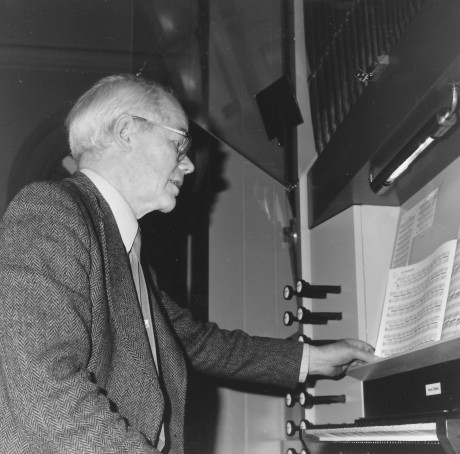

    PHOTO: Kayser pulls out all the stops for his centenary

  • Marlboro Music Change Beethoven Tchaikovsky Sextets

    Marlboro Music Change Beethoven Tchaikovsky Sextets

    MAY I HAVE YOUR ATTENTION, PLEASE!

    Last minute programming change for this week’s “Music from Marlboro:”

    Due to circumstances beyond our control, we will not be able to bring you Brahms’ Piano Quintet in F minor, as previously announced. In its place, we’ll lose ourselves in wild abandon over Beethoven’s Sextet for Winds in E-flat major, Op. 71, and Tchaikovsky’s Sextet for Strings in D minor, “Souvenir de Florence.”

    I hope you’ll join me for the joy of sextets on the next “Music from Marlboro,” this Wednesday evening at 6:00 EDT, on WWFM – The Classical Network and wwfm.org.

    Marlboro School of Music and Festival: Official Page

Tag Cloud

Aaron Copland (93) Beethoven (95) Composer (114) Film Music (137) Film Score (143) Film Scores (255) Halloween (94) John Williams (195) KWAX (229) Leonard Bernstein (103) Marlboro Music Festival (125) Movie Music (152) Mozart (88) Opera (208) Philadelphia Orchestra (89) Picture Perfect (174) Princeton Symphony Orchestra (108) Radio (88) Ross Amico (244) Roy's Tie-Dye Sci-Fi Corner (290) The Classical Network (101) The Lost Chord (268) Vaughan Williams (103) WPRB (396) WWFM (881)

DON’T MISS A BEAT

Receive a weekly digest every Sunday at noon by signing up here


RECENT POSTS