Category: Daily Dispatch

  • Carl Nielsen’s Delightful Wind Quintet

    Carl Nielsen’s Delightful Wind Quintet

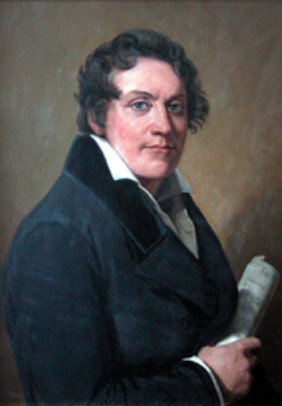
    Like “The Ugly Duckling” of his compatriot, Hans Christian Andersen, Carl Nielsen emerged from humble beginnings to blossom into Denmark’s national composer. Internationally, Nielsen has flitted in and out of the seemingly inescapable shadow of Finnish master Jean Sibelius. Both men were born in 1865. In fact, Nielsen was six months older. But it is an unfair comparison, not so much apples and oranges; more like kipper and pickled herring.

    The very fact that Nielsen is not referred to reductively as “The Sibelius of Denmark” is attributable to an unusually strong individual voice. His music is modern, yet traditional; Scandinavian, yet Germanic. Most important, it is full of personality, freshness and vitality.

    Nielsen’s Wind Quintet of 1922 reflects the composer’s optimism and good humor. These he retained despite great personal, professional, and global turmoil. Each part of the quintet was tailored to the personality of the individual performer for which it was written (all members of the Copenhagen Wind Quintet). There is also something of the outdoors about the piece. Nielsen was always fascinated by nature, and there are ample suggestions of bird song woven into the texture of the work’s pastoral neoclassicism.

    Even so, I find something appealing about musicians standing and playing the piece indoors, especially if it happens to be inside a tastefully-appointed, classically-proportioned art gallery. Here it is, performed by the ensemble CARION (nothing to do with dead animals, presumably) at the Carlsberg Museum in Copenhagen.

    I would have preferred that the filmmaker’s cuts had been handled a little more sensitively. Maybe I’m a little sensitive myself (I have been known to verge on the irritable), but if the edits aren’t “musical,” they give me tiny, disruptive jolts. The tendency now is to shake things in front of everybody’s eyeballs like they’re little babies that need to be distracted.

    I venture to guess everyone’s here to listen to the music, right? Just play it, CARION, because you do so beautifully!

    But video is their thing, and they’ve won prizes for it, so what do I know? It was mainly the jumps in the first few minutes that were making me cranky. I don’t care so much about the panning, but after a while it does start to get a little silly. Panning is a technique, not a prop. It should be used as such and not diluted.

    Anyway, here’s their website, if you’d like more of the same.

    Home EN

    Oh yeah, and happy birthday, Carl Nielsen!

  • Krazy Kat Schumann and Devilish Tunes

    Krazy Kat Schumann and Devilish Tunes

    Any other fans of vintage cartoons out there?

    Here, from 1935, Krazy Kat is seduced by the Devil into claiming ownership of Robert Schumann’s “Träumerei.”

    The stage is set from the beginning, as we witness various anthropomorphized Tin Pan Alley tunesmiths, desperate for a hit, ruthlessly plagiarizing from one another. Krazy, however, has higher standards. Clearly he’s a fan of the classics, as a bust of Schumann is seen perched on a cabinet in the background. His superior attitude makes him a perfect mark for Mephisto. Frustration builds, as he paces a hole in the floor, racking his brain for inspiration.

    “Good artists borrow, great ones steal” is a maxim often attributed to Igor Stravinsky (who would have stolen it from Picasso). Who needs inspiration, when the Devil gets the best tunes? The Deceiver tempts Krazy to pilfer from his idol. To this end, he corrupts “Träumerei” into “The Hot Cha Melody.”

    Schumann’s spirit becomes so indignant that it returns like Mozart’s Commendatore, only to discover a veritable Pottersville, garish and decadent, in which the Devil’s appropriation has become the number one hit of the day. Schumanngeist determines to exact his revenge on Krazy.

    This Krazy Kat is not anything like the George Herriman creation I remember. However, there are some fun caricatures of popular singers of the time.

    If the cartoon theme music sounds familiar, it too was cribbed – from the aria “M’appari” from Friedrich von Flotow’s opera “Martha!”

    Watch here:

    You’ll find a more detailed analysis on this blog page:

    Year of the Month: Krazy Kat in THE HOT CHA MELODY

    Happy birthday, Robert Schumann!

  • William Walton Rediscovered Lost Works Revealed

    William Walton Rediscovered Lost Works Revealed

    Sir William Walton, beloved for his coronation marches and film scores, also wrote operas, symphonies, concertos, chamber music and choral works. As is often the case, posterity has been astonishingly reductive.

    This week on “The Lost Chord,” we’ll hear two long-out-of-print recordings of works composed more than three decades apart.

    At the time of the premiere of his Symphony No. 2, in 1957, Walton was perceived as a musical throwback. Indeed, despite the fact that it is more tightly argued, the piece has always been regarded as a poor stepsister of the Symphony No. 1, composed in 1935, a work full of grand gestures, written under the spell of Sibelius.

    What apparently escaped critics of the day was the subtlety of its craftsmanship. The finale, in particular, is a set of variations based on a twelve-note row, a technique not unlike that employed in the kind of serial composition so much in vogue at the time.

    George Szell gave the American premiere of the symphony, with the Cleveland Orchestra, in December of 1960. A few months later, they made the first recording.

    Walton was viewed as an enfant terrible, when, more than three decades earlier, he set Edith Sitwell’s poetry as an entertainment, titled “Façade.” The work was first performed publicly in 1923. The premiere was a succès de scandale, with Sitwell herself speaking her poems into a megaphone protruding from the mouth of a painted face by John Piper, Walton conducting an ensemble of six instruments.

    The displeasure of performers, audience and critics was evident, with Noel Coward ostentatiously marching out. However, the work quickly caught on, even becoming downright popular in a variety of arrangements. Within a decade, a purely orchestral version was choreographed by Frederick Ashton.

    We’re going to be listening to selections from a treasured recording, unavailable in this country for many years, featuring Dame Peggy Ashcroft and Paul Scofield as the reciters. Both were noted Shakespearean actors, who did much of their best work on stage. Ashcroft received an Academy Award for Best Supporting Actress in 1985, for her part in David Lean’s final film, “A Passage to India,” and Scofield was honored with an Academy Award for Best Actor two decades earlier, in 1966, for his performance in “A Man for All Seasons.”

    I hope you’ll join me for “Will’s Wonders Never Cease” – rarely heard recordings of the works of William Walton – on “The Lost Chord,” now in syndication on KWAX, the radio station of the University of Oregon!


    Clip and save the start times for all three of my recorded shows:

    PICTURE PERFECT, the movie music show – Friday at 8:00 PM EDT/5:00 PM PDT

    SWEETNESS AND LIGHT, the light music program – Saturday at 11:00 AM EDT/8:00 AM PDT

    THE LOST CHORD, unusual and neglected rep – Saturday at 7:00 PM EDT/4:00 PM PDT

    Stream them, wherever you are, at the link!

    https://kwax.uoregon.edu/


    PHOTO: Biggest click-bait image I could find of William Walton (left)

  • Carl Goldmark’s Rustic Wedding Symphony

    Carl Goldmark’s Rustic Wedding Symphony

    I’ve always been a fan of Carl Goldmark’s “Rustic Wedding Symphony.” It’s always made me happy. Apparently, I’m in good company, as it also received the imprimatur of Johannes Brahms, Goldmark’s walking companion, who thought it the best thing the composer ever wrote.

    This week on “Sweetness and Light,” the work will form the centerpiece at a June wedding.

    The “Rustic Wedding Symphony” has been recorded a number of times, but you don’t really seem to hear it much anymore. We’ll enjoy a performance by the Utah Symphony conducted by Maurice Abravanel.

    The work falls into five movements: “Wedding March,” “Bridal Song,” “Serenade,” “In the Garden,” and “Dance.” It’s unusual for me to devote so much of a “light music” program to a symphony, but really, it’s like serving up 40-minutes of smiles.

    We’ll also have a party favor in the form of Edvard Grieg’s “Wedding Day at Troldhaugen,” from his delectable “Lyric Pieces” – Troldhaugen being the composer’s home outside Bergen, Norway. Peter Katin, who released all of Grieg’s “Lyric Pieces” over three discs, will be the pianist.

    Nothing rustic about Charles-Marie Widor: for 63 years, Widor was organist at the Church of Saint-Sulpice in Paris. We’ll conclude with the Toccata from his Symphony No. 5, a work frequently performed at ceremonial functions, whether they be related to Christmas, graduations, or – for our purpose – weddings. It’s been especially popular at royal weddings, so it’s apt that we hear it performed by Simon Preston on the organ of Westminster Abbey.

    Say “I do” to “Sweetness and Light,” a program of music calculated to charm and to cheer, this Saturday morning at 11:00 EDT/8:00 PDT, exclusively on KWAX, the radio station of the University of Oregon!

    Stream it, wherever you are, at the link:

    https://kwax.uoregon.edu/


    Clip and save the start times for all three of my recorded shows:

    PICTURE PERFECT, the movie music show – Friday at 8:00 PM EDT/5:00 PM PDT

    SWEETNESS AND LIGHT, the light music program – Saturday at 11:00 AM EDT/8:00 AM PDT

    THE LOST CHORD, unusual and neglected rep – Saturday at 7:00 PM EDT/4:00 PM PDT

    Stream them, wherever you are, at the link!

    https://kwax.uoregon.edu/


    “Hungarian Wedding Procession,” Gustav Prucha, 1930

  • Thief of Bagdad Rozsa’s Enchanting Score Recorded

    Thief of Bagdad Rozsa’s Enchanting Score Recorded

    If your three wishes would include a complete recording, in up-to-date sound, of one of the most enchanting film scores of Miklós Rózsa, you needn’t yearn for the chance discovery of a magic lamp.

    This week on “Picture Perfect,” join me for selections from a 2017 release, a two-CD collaborative effort between Prometheus Records and Tadlow Music, of Rózsa’s score for the classic 1940 fantasy-adventure “The Thief of Bagdad.” The City of Prague Philharmonic and Nic Raine recorded the music, note-complete, with ample bonus material.

    It’s a magic carpet ride through the fantastical world of the Arabian Nights. Surrender to the enchantment, on “Picture Perfect,” music for the movies, now in syndication on KWAX, the radio station of the University of Oregon!


    Clip and save the start times for all three of my recorded shows:

    PICTURE PERFECT, the movie music show – Friday at 8:00 PM EDT/5:00 PM PDT

    SWEETNESS AND LIGHT, the light music program – Saturday at 11:00 AM EDT/8:00 AM PDT

    THE LOST CHORD, unusual and neglected rep – Saturday at 7:00 PM EDT/4:00 PM PDT

    Stream them, wherever you are, at the link!

    https://kwax.uoregon.edu/

Tag Cloud

Aaron Copland (92) Beethoven (95) Composer (114) Film Music (124) Film Score (143) Film Scores (255) Halloween (94) John Williams (188) KWAX (229) Leonard Bernstein (101) Marlboro Music Festival (125) Movie Music (139) Opera (202) Philadelphia Orchestra (89) Picture Perfect (174) Princeton Symphony Orchestra (106) Radio (87) Ralph Vaughan Williams (85) Ross Amico (244) Roy's Tie-Dye Sci-Fi Corner (290) The Classical Network (101) The Lost Chord (268) Vaughan Williams (103) WPRB (396) WWFM (881)

DON’T MISS A BEAT

Receive a weekly digest every Sunday at noon by signing up here


RECENT POSTS