Category: Daily Dispatch

  • Sandburg’s America Music & Memorials

    Sandburg’s America Music & Memorials

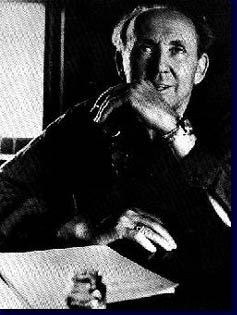
    Carl Sandburg was the recipient of three Pulitzer Prizes: two for his poetry, and a third for his biography of Abraham Lincoln. He was also known for his 1927 anthology “The American Songbag,” espousing our native folk song and anticipating the folk song revivals the 1940s and ‘60s. On top of everything else, he was awarded a Grammy for his recording of Aaron Copland’s “Lincoln Portrait.” When Sandburg died in 1967, at the age of 89, Lyndon Johnson observed that “Carl Sandburg was more than the voice of America, more than the poet of its strength and genius. He WAS America.”

    This week on “The Lost Chord,” we’ll hear music inspired by this popular – and populist – figure, with two works especially appropriate for Memorial Day and, in between, a piece after a poem evocative of the American heartland.

    Philadelphia composer Romeo Cascarino (1922-2002), who had served in the U.S. Army, composed a plaintive elegy, “Blades of Grass,” in 1945, just after World War II. He expressed a preference, on several occasions, that Sandburg’s poem “Grass” be read before performances. You’re probably familiar with it:

    Pile the bodies high at Austerlitz and Waterloo.
    Shovel them under and let me work—
    I am the grass; I cover all.

    And pile them high at Gettysburg
    And pile them high at Ypres and Verdun.
    Shovel them under and let me work.
    Two years, ten years, and passengers ask the conductor:
    What place is this?
    Where are we now?

    I am the grass.
    Let me work.

    Leo Sowerby (1895-1968) was born in Grand Rapids, MI, and spent much of his career in the Midwest. Sometimes referred to as the “Dean of American church music,” he was the recipient of the Pulitzer Prize for Music in 1946 for his cantata, “The Canticle of the Sun.”

    The published score of his symphonic poem after Sandburg, titled “Prairie,” from 1929, bears the following lines:

    “Have you seen a red sunset drip over one of my cornfields, the shore of night stars, the wave lines of dawn up a wheat valley?

    “Have you heard my threshing crews yelling in the chaff of a strawpile and the running wheat of the wagonboards, my cornhuskers, my harvest hands hauling crops, singing dreams of women, worlds, horizons?”

    Last, but certainly not least, Roy Harris, who shared Lincoln’s birthday (though born 89 years later), was reared in a log cabin in Lincoln County, OK, only adding to his sense of destiny. Indeed, he went on to become one of America’s greatest composers.

    Harris’ Symphony No. 6 is subtitled “Gettysburg.” It’s one of a number of works the composer wrote with a Lincoln connection. Each movement of the symphony bears a superscription taken from the Gettysburg Address: the first, “Awakening (‘Fourscore and seven years ago…’);” the second, “Conflict (‘Now we are engaged in a great civil war…’);” the third, “Dedication (‘We are met on a great battlefield of that war…’);” and the fourth, “Affirmation (‘…that we here highly resolve that these dead shall not have died in vain…’).”

    Prior to composing the work, Harris read – you guessed it – Sandburg’s biography of Lincoln.

    I hope you’ll join me for “Lincoln Logger,” an hour of music inspired by Carl Sandburg, on “The Lost Chord,” now in syndication on KWAX, the radio station of the University of Oregon!


    Clip and save the start times for all three of my recorded shows:

    PICTURE PERFECT, the movie music show – Friday at 8:00 PM EDT/5:00 PM PDT

    SWEETNESS AND LIGHT, the light music program – Saturday at 11:00 AM EDT/8:00 AM PDT

    THE LOST CHORD, unusual and neglected rep – Saturday at 7:00 PM EDT/4:00 PM PDT

    Stream them, wherever you are, at the link!

    https://kwax.uoregon.edu/


    Although not on today’s show, here, as an added bonus, is Sandburg narrating Aaron Copland’s “Lincoln Portrait”:

  • Memorial Day Picnic on Sweetness and Light

    Memorial Day Picnic on Sweetness and Light

    For many, Memorial Day marks the unofficial start of summer, as people take advantage of the three-day weekend, and the hopefully mild weather, to celebrate.

    Of course, Memorial Day itself is a rather solemn holiday, as we’re meant to honor the sacrifice of those who laid down their lives in defense of our country.

    That said, this morning on “Sweetness and Light,” since there’s little “sweet” or “light” about war, I figured rather we’d take the hour to enjoy a little Memorial Day picnic, if you will.

    I hope you’ll join me for an outdoor overture, a barbecue divertimento, a carousel waltz, some gazebo dances, a pickle-and-pepper rag, a teddy bear’s picnic, and, yes, even a musical moment of reflection for the fallen.

    The first of the summer’s patriotic holidays is upon us. Wrap yourself in the flag and everything else in bacon, this morning on “Sweetness and Light.” The three-legged races and pie-eating contests commence at 11:00 EDT/8:00 EDT, exclusively on KWAX, the radio station of the University of Oregon!

    Stream it, wherever you are, at the link:

    https://kwax.uoregon.edu/

  • WWII Movie Music for Memorial Day

    WWII Movie Music for Memorial Day

    While you’re sitting in traffic heading into your three-day weekend, take a moment to consider that you’ve got it easy compared to what Allied soldiers went through in Europe, the Pacific, and North Africa to keep the world free from tyranny.

    This week on “Picture Perfect,” we’ll have music from two films of the World War II era that exemplify Hollywood’s morale-boosting approach. “Sahara” (1943) pits Humphrey Bogart as a tank commander who defends a watering hole against a superior force of parched Nazis. “Objective: Burma!” (1945) drops Errol Flynn behind enemy lines to take out a Japanese radar station.

    Neither film shuns the reality that war is hell (with some particularly suggestive gruesomeness in the latter), yet the filmmakers rose above the kind of nihilistic edge that underscores so many movies made today. When all was said and done, war movies in the 1940s sold America on hope and sacrifice and the promise of final victory.

    The conflict cast a long shadow, and in the 1950s and ‘60s Hollywood continued to churn out WWII films at an impressive rate, selling tickets to the generation that had “been there.” “The Guns of Navarone” (1961) features Gregory Peck (exempt from service during the actual war because Martha Graham injured his back), David Niven (Lieutenant Colonel in the British Commandos at Normandy) and Anthony Quinn (born in Mexico and not naturalized until 1947) as a special unit of Allied military specialists on a mission to blow up some big Nazi guns trained over the Aegean Sea.

    Efforts to get “Patton” (1970) off the ground had been in motion since 1953! The filmmakers wanted access to Patton’s diaries, but displayed horrible timing in approaching the late general’s family the day after the death of his widow. Not surprisingly, the family was completely turned off and withheld its cooperation. In the end Franklin J. Schaffner directed from a script by Francis Ford Coppola and Edmund H. North. Patton’s colleague, Omar Bradley, served as an advisor on the film. (He’s played on screen by Karl Malden.)

    “Patton” likely would have been a knockout on any level (Rod Steiger turned down the lead, much to his later regret), but it is really George C. Scott that pushes it over the top. And how much more over the top can it get than that opening monologue, assembled from Patton’s speech to the Third Army, delivered in front of an enormous American flag? Only a larger-than-life actor such as Scott could have done it justice and not been dwarfed by both the subject and the iconography. Scott won a much-deserved Academy Award for his performance – which he famously refused to accept.

    I hope you can join me for equally outsized music by Miklós Rózsa (“Sahara”), Franz Waxman (“Objective: Burma!”), Dimitri Tiomkin (“The Guns of Navarone”) and Jerry Goldsmith (“Patton”), as we look forward to Memorial Day with classic films set during World War II, on Picture Perfect, music for the movies, now in syndication on KWAX, the radio station of the University of Oregon!


    Clip and save the start times for all three of my recorded shows:

    PICTURE PERFECT, the movie music show – Friday at 8:00 PM EDT/5:00 PM PDT

    SWEETNESS AND LIGHT, the light music program – Saturday at 11:00 AM EDT/8:00 AM PDT

    THE LOST CHORD, unusual and neglected rep – Saturday at 7:00 PM EDT/4:00 PM PDT

    Stream them, wherever you are, at the link!

    https://kwax.uoregon.edu/

  • Wagner Yannick and Tristan A Mixed Reaction

    May 22. Richard Wagner’s birthday. Anyone else looking forward to this endurance test with the Philadelphia Orchestra? 4 and ½ blissful hours of blood clot-inducing “Tristan und Isolde.”

    This tongue-in-cheek teaser has been receiving a mixed reaction. I happen to think it’s very funny, but on message boards, music chats, and social media, it’s been getting more than its share of vitriol. Evidently, there are some real Yannick haters out there. And I am sorry to have to admit, classical music still does have its stuffed shirts.

    Thankfully, I spend as little time around them as I can. In fact, I’m not sure how close I am to any of them in real life. But you know how it is. These guys can come across as the most unassuming, mildest-mannered people, but give them the anonymity of the internet and they all turn into monsters.

    It’s okay to have opinions – I’ve got plenty of them myself, and by no means am I satisfied with everything Yannick conducts, strictly from an interpretive standpoint – but lighten up. It’s just a teaser, and it’s supposed to be fun!

    This “Tristan” is unlikely to be on a level of Wilhelm Furtwängler’s or Victor de Sabata’s, but it is an opportunity to hear one of the world’s great orchestras play Wagner’s hypnotic, narcotic, viscerally intense, revolutionary score without the distraction of the seemingly-inevitable, nihilistic Regietheater nonsense productions you’re likely to encounter these days at virtually any opera house that’s going to attempt a staging.

    The Everest of “Tristan” is littered with the literal corpses of those who have attempted the climb. Not only have singers destroyed their voices, but conductors have actually died. Felix Mottl and Joseph Keilberth both dropped dead while conducting the second act. The very first Tristan, heldentenor Ludwig Schnorr von Carolsfeld, died suddenly at the age of 29, after only four performances.

    In an interview given shortly before his death, Giuseppe Verdi said that he “stood in wonder and terror” before Wagner’s “Tristan.” Is it any wonder that Yannick is getting himself into shape?

  • Bernard Garfield, Philadelphia Orchestra Bassoon, RIP

    Bernard Garfield, Philadelphia Orchestra Bassoon, RIP

    Old news perhaps, but I’m just learning of it. Long-time principal bassoonist of the Philadelphia Orchestra Bernard Garfield has died at a venerable age.

    Garfield served as Philadelphia’s principal for 43 years, from 1957 to 2000, which means I saw and heard him perform many times, in the latter part of his career (from 1984 forward), including as soloist in Strauss’ Duet-Concertino, with Anthony Gigliotti taking the clarinet part. In 1949, and until he moved to Philadelphia, he was principal bassoonist of the Little Orchestra Society of New York. He was offered his position in Philly by Eugene Ormandy without audition.

    Garfield, who as an undergraduate studied NOT music, but English literature (at New York University), also received a master’s degree (from Columbia) in composition. I recall airing a bassoon quartet of his when I used to host the radio broadcasts of “Music from Marlboro.” Earlier, he did obtain an associate diploma from the Royal College of Music and, much later, an honorary doctorate from the Curtis Institute of Music, where he taught from 1976 to 2008. He also taught at Temple University from 1957 to 2004.

    Garfield was a member of the New York Woodwind Quintet, which in fact he organized, from 1946 to 1957. Later, he performed in the Philadelphia Woodwind Quintet (replacing Sol Schoenbach), made up of principal players of the Philadelphia Orchestra. Garfield’s recordings as soloist in Philadelphia include works by Mozart, Haydn, and Weber.

    Garfield served in the U.S. Army during World War II. He was married for nearly 70 years. He died on April 29, closer to his 101st birthday than not. (He was born on May 27, 1924.)

    R.I.P.


    Period instruments be damned! Garfield plays the Mozart concerto:

    Original compositions by Bernard Garfield, including his Bassoon Quartet No. 1


    PHOTO: On stage at Philadelphia’s Academy of Music in 1960

Tag Cloud

Aaron Copland (93) Beethoven (95) Composer (114) Film Music (124) Film Score (143) Film Scores (255) Halloween (94) John Williams (188) KWAX (229) Leonard Bernstein (101) Marlboro Music Festival (125) Movie Music (139) Opera (202) Philadelphia Orchestra (89) Picture Perfect (174) Princeton Symphony Orchestra (106) Radio (87) Ralph Vaughan Williams (85) Ross Amico (244) Roy's Tie-Dye Sci-Fi Corner (290) The Classical Network (101) The Lost Chord (268) Vaughan Williams (103) WPRB (396) WWFM (881)

DON’T MISS A BEAT

Receive a weekly digest every Sunday at noon by signing up here


RECENT POSTS