With the Kentucky Derby drawing near, it’s all about horses and horseraces on “Sweetness and Light.”
We’ll hear William Bolcom’s ballet “Seattle Slew;” a concert piece arranged from one of John Williams’ breakout film scores, for Mark Rydell’s “The Reivers,” adapted from William Faulkner’s coming-of-age novel about a boy swept up in automobile theft and illicit horseracing; and of course Stephen Foster’s “Old Kentucky Home.”
In addition, there will be Derby and thoroughbred-related works by Robert Farnon, Louis Moreau Gottschalk, William Schuman, and Leroy Anderson.
Meet me at the starting gate. It will be an hour of jockeys and juleps on “Sweetness and Light,” this Saturday morning at 11:00 EDT/8:00 PDT, exclusively on KWAX Classical Oregon!
Stream it, wherever you are, at the link:
https://kwax.uoregon.edu/
——–
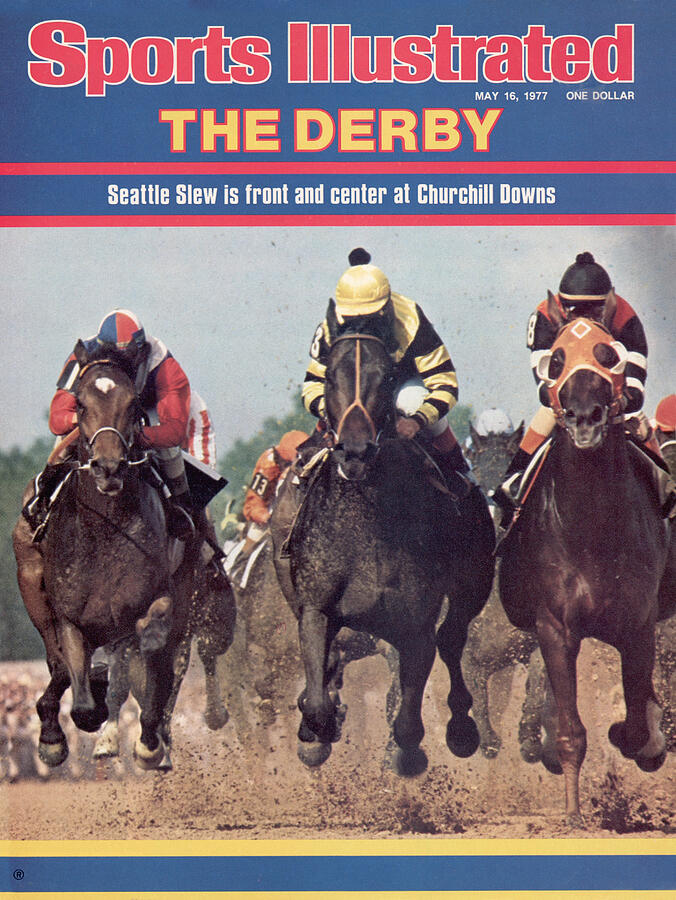
I had this Sports Illustrated in 1977. I wonder if I have it still? I don’t know why, but I was crazy about Seattle Slew. But then, everyone was. The kind of media attention focused on the race back then would be baffling to anyone who grew up in the internet age. I was 10 years old in May 1977. I named my hermit crab Seattle Slew.
-
Jockeys and Juleps on “Sweetness and Light”
by
-
Fantasy Quests on “Picture Perfect”
by
8 responses
This week on “Picture Perfect,” we’re on a quest for fantasy.
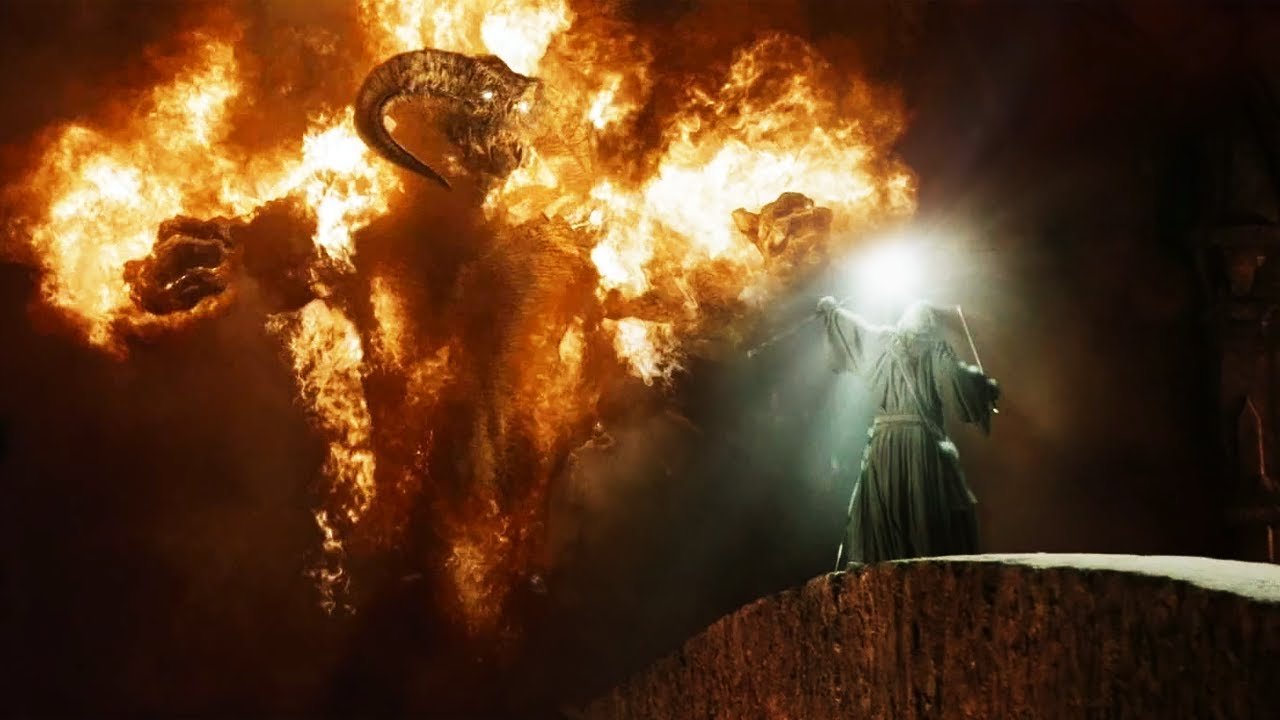
For decades, “The Lord of the Rings” had been a kind of Holy Grail for genre fans, and anticipation ran high in regard to when exactly there would be a decent live action adaptation of J.R.R. Tolkien’s magnum opus. Alas, either filmmakers couldn’t acquire the rights, or they were hampered by technological limitations. Though the realization of Tolkien’s richly-imagined world of hobbits, orcs, and balrogs eluded many, fantasy films of a derivative nature were thick on the ground. Some were good, some not so good. But many of them had outstanding scores.
“The Dark Crystal” (1982), though produced by Jim Henson and company, was a long way from Big Bird and Ernie & Burt, with some pretty dark scenes. The score by Trevor Jones is first rate, given the full romantic treatment and recorded by the London Symphony Orchestra, augmented by Fairlight and Synclavier synthesizers, as well as the occasional period instrument.
“Willow” (1988) allegedly grew out of George Lucas’ desire to film “The Hobbit.” Rather than fork over a sizeable portion of his earnings to the Tolkien estate, he opted instead to take the “Star Wars” approach of synthesizing archetypal images, from the Old Testament through Ray Harryhausen films, to create his own original story. Except the influences weren’t so cleverly assimilated this time. Composer James Horner followed suit, with a score rich in allusions to Schumann, Wagner, Grieg, Tchaikovsky, Rachmaninoff, and especially Prokofiev.
The first feature-length adaptation of “The Lord of the Rings” (1978) was literally rendered in animation. The film manages to cover only the first book-and-a-half of the trilogy, and the last half hour or so is probably incomprehensible to anyone who hasn’t read it. It had been director Ralph Bakshi’s plan to divide the trilogy into two parts – already a concession to the studio – but the first film’s modest performance meant there was no funding for a second.
Two-time Academy Award winner Leonard Rosenman was engaged to write the score. Rosenman composed the music for the James Dean classics “East of Eden” and “Rebel Without a Cause.” Bakshi had originally wanted to use Led Zepplin songs. He later expressed his dislike for Rosenman’s score, which he found to be too conventional – somewhat ironic in that Rosenman, a pupil of Arnold Schoenberg, Roger Sessions, and Luigi Dallapiccola, was known for writing some of the most challenging scores in film history, including the uncompromising music for “Fantastic Voyage.”
It would be over two decades before another feature film based upon Tolkien’s source material was mounted. Peter Jackson’s “The Fellowship of the Ring” (2001) is brimful of state-of-the-art special effects, so much so that a great many important details from Tolkien’s novel are lost in the shuffle. Still, Jackson’s trilogy went on to garner 30 Academy Award nominations, of which it won 17. Howard Shore’s music was recognized with Oscars for the first and third installments. The third, “The Return of the King,” inexplicably went on to become one of the most decorated films of all time.
Prophecies must be fulfilled, order restored, and the land made whole! We’re on a quest for fantasy music, on “Picture Perfect,” music for the movies, now in syndication on KWAX Classical Oregon!
——–
Clip and save the start times for all three of my recorded shows:
PICTURE PERFECT, the movie music show – Friday at 8:00 PM EDT/5:00 PM PDT
SWEETNESS AND LIGHT, the light music program – Saturday at 11:00 AM EDT/8:00 AM PDT
THE LOST CHORD, unusual and neglected rep – Saturday at 7:00 PM EDT/4:00 PM PDT
Stream them, wherever you are, at the link!
https://kwax.uoregon.edu
-
May Is for Music at the Raritan River Music Festival

by
4 responses
Somewhere between the return of Catbird and the reopening of the public pool comes the 37th Raritan River Music Festival. The festival, curated by Laura Oltman and Michael Newman of the Newman & Oltman Guitar Duo, gets a jump on the festival-heavy summer months with a series of May programs that honor, in one way or another, the 250th anniversary of the founding of our nation. These will be presented over four concerts in historic venues located in New Jersey’s Hunterdon and Warren Counties.
Since it’s been a very busy week – chockful of everything except sleep, apparently – and I’m running on fumes right now, I’m going to turn it over to this encapsulation from the Raritan River Music website:
“This season RRM celebrates the 250th anniversary of the founding of our nation. Many of our festival venues pre-date the American Revolution. The congregations of our churches were founded by people who were among the first European settlers in North America.
“So far from anything they had ever known, they fashioned a government and a culture separate from their origins, whose modern global appeal surely derives from the multiplicity of those who created it. A core mission of Raritan River Music is to embrace the creation and performance of new music from the New World and to build a recorded archive of these musical compositions – music that is as original, dynamic, and aspirational as our nation.”
Now back to me:
Duo Jalal will return to the festival with works for the striking (and bowed) combination of viola and percussion. The program, “Threads of Sound: Voices of American Composers,” will consist of new music by Kenji Bunch, Caroline Shaw, Dafnis Prieto, Kurt Rhode, and Dawn Avery. The concert will be performed at Historic Hunterdon County Court House, 71 Main St., in Flemington, on May 2 at 7:30 p.m.
Pulitzer Prize-winner Caroline Shaw’s music will also be represented on a concert by Trio Ondata, alongside works by Shostakovich, Haydn, and Chicago-born composer of Indian and Western classical music Reena Esmail. “American Mycelium: Explorations of the New World” will take place at Old Greenwich Presbyterian Church, 17 Greenwich Church Rd., in Stewartsville, on May 9 at 7:30 p.m.
Newman & Oltman will bring the “Greatest Hits of 1776,” as works by Haydn, Rossini, and Yankee tunesmith William Billings share a program with Early American-related works by Gaspare Spontini, Fernando Sor, and Stephen Jenks, along with an RRM commission, “Raritan Triptych,” by another Pulitzer Prize-winner, Paul Moravec. The concert will be held at Bethlehem Presbyterian Church, 2 Race St., in Pittstown, on May 16 at 7:30 p.m.
The series will conclude with “Two by Two: Harpsichord Duets Across the Centuries” – music performed on two harpsichords by ARTEK, Gwendolyn Toth and Peter Sykes, with an emphasis on composers for the virginal, clavichord, harpsichord, and chamber organ in the late 1500s/early 1600s, the peak period of English exploration of the New World. The program will be given at Stanton Reformed Church, 1 Stanton Mountain Rd., in Stanton, on May 23 at 7:30 p.m.
Concerts will also be available for streaming.
Stick a feather in your cap, call it macaroni, and visit https://www.raritanrivermusic.org/!
-
Princeton Pro Musica to Revive Frank Lewin’s Kennedy Requiem at Princeton University Chapel
by
As teased in yesterday’s post, here’s my article in the Princeton weekly U.S. 1, out today.
I really wanted to write about Princeton composer Frank Lewin and his “Mass for the Dead (Requiem for Robert F. Kennedy).” The work will be revived by Princeton Pro Musica at Princeton University Chapel on Saturday, May 9, at 4 p.m., as part of an all-American concert, which will also include Leonard Bernstein’s “Chichester Psalms.” The Requiem was first heard there 57 years ago, during a memorial service for RFK, in 1969.
As an added bonus for me, I got to interview the composer’s daughters, radio host Naomi Lewin, whose syndicated show, “Classics for Kids,” follows my light music show “Sweetness and Light,” Saturday mornings on KWAX; and her sister, documentary filmmaker Miriam Lewin, who once worked at the Opera Company of Philadelphia, where I briefly interned in the ‘90s (after she had already left), and who has the distinction of having introduced supertitles to opera.
I must say, this is the quickest turnaround, from submission to publication of a piece, I ever experienced. Usually, arts writers are requested to get their work in days in advance. For U.S. 1, I think it’s usually about a week. But this an interim editor. Once production hits a bump or I exceed my quota by a million words, maybe the deadline will get pushed up. As it stands, I’m pretty happy with it.
Physical editions of the paper are available in vending machines and at local businesses through next Tuesday. But if you just can’t wait, you can always access the article here:
https://www.communitynews.org/princetoninfo/artsandentertainment/princeton-pro-musica-revives-frank-lewin-s-requiem-for-rfk/article_c6c148b4-1539-4ced-b932-109339bf7b26.html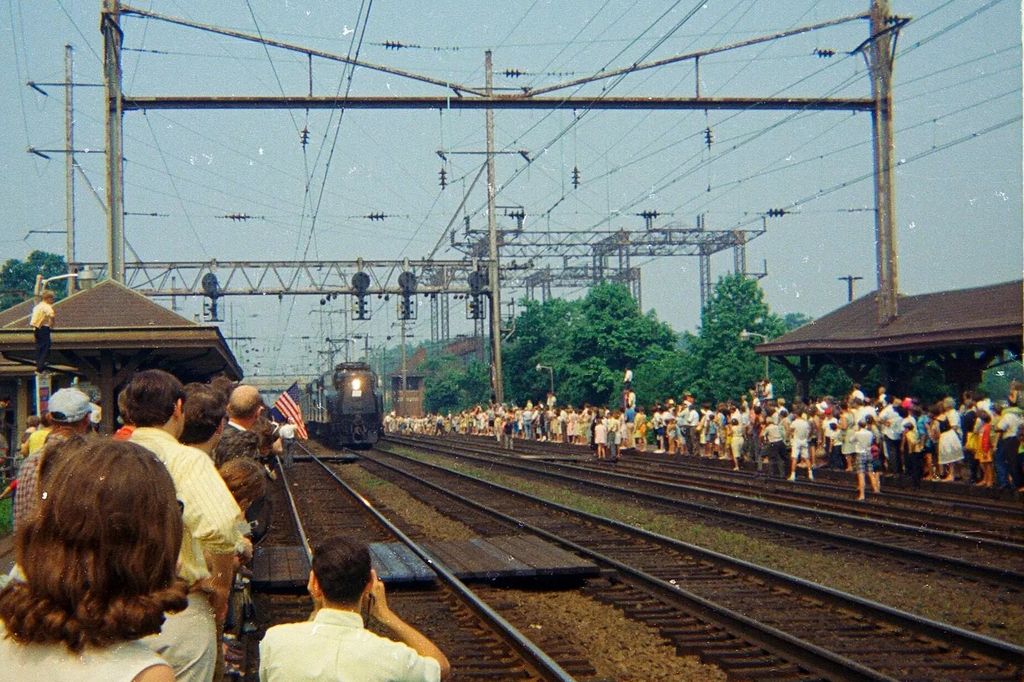
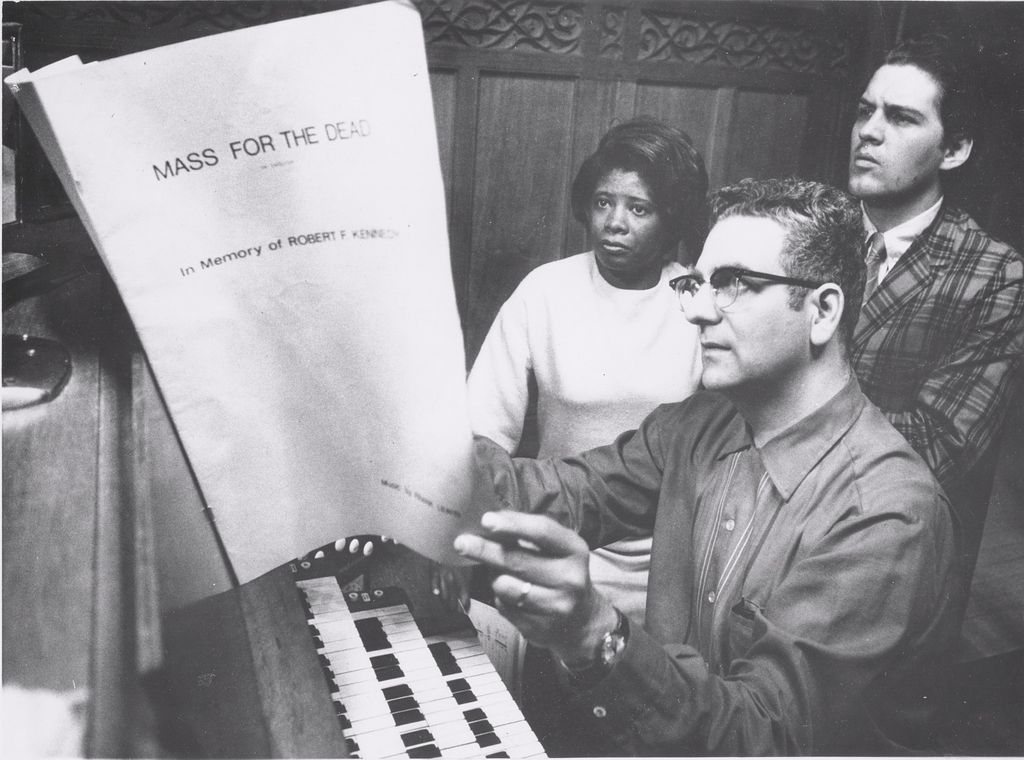
PHOTOS: Frank Lewin (seated) prepares his Kennedy Mass with soprano Sylvia Jones and tenor Leo Goeke; RFK funeral train passes through Princeton Junction on June 8, 1968
-
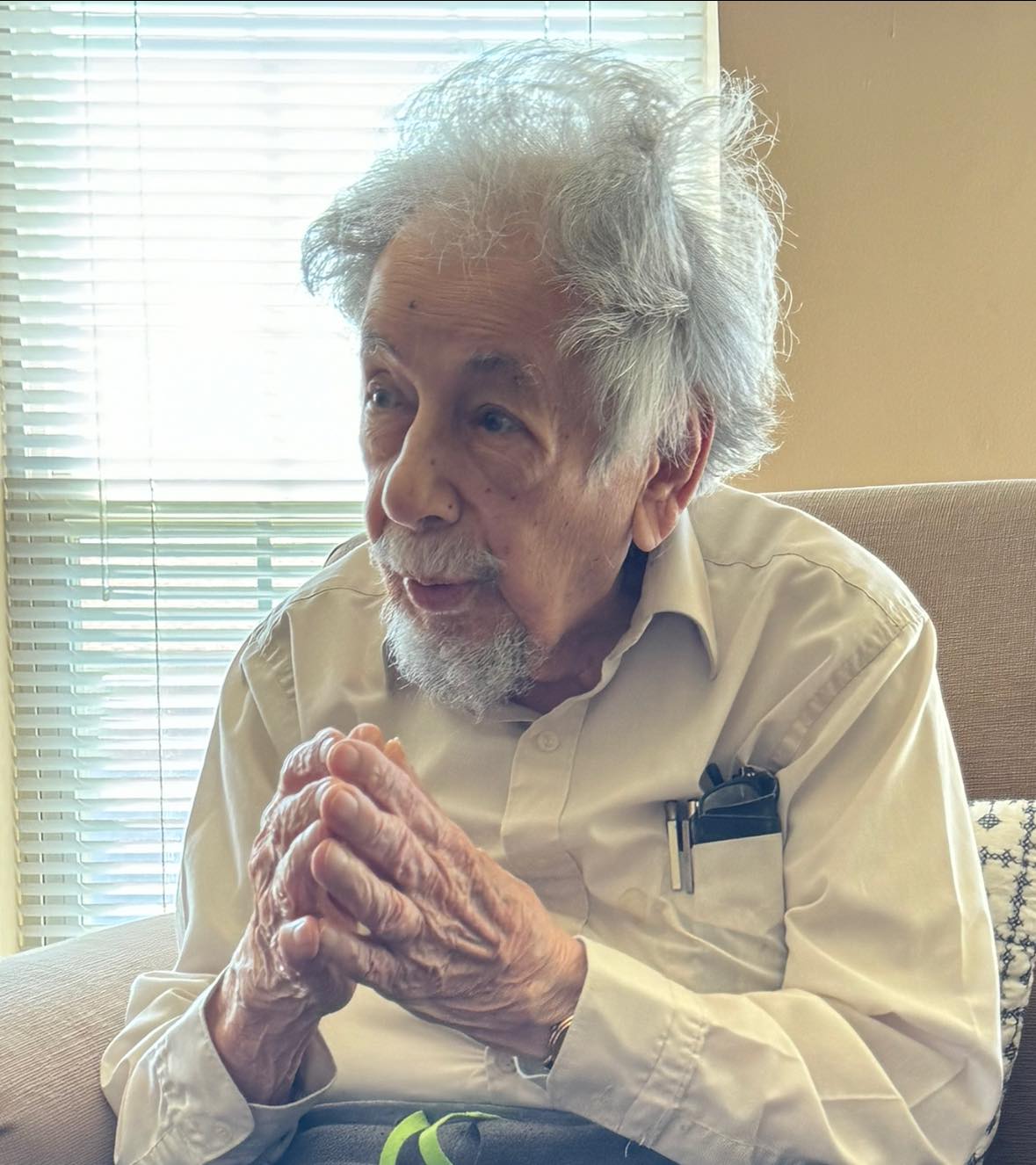
Venerable Trenton-Princeton Conductor and Music Educator Matteo Giammario Has Died
by
I am very sorry to learn that conductor and music educator Matteo Giammario has died. Among his other achievements, Giammario founded the Greater Princeton Youth Orchestra. He devoted much of his life to inspiring young people. His contagious love of music made the world a better place. Happily, he lived to a venerable age. Giammario died on March 9, just days shy of his 101st birthday. Here’s a bio extracted from an article I wrote about the organization in 2024:
Born to parents who immigrated from Italy’s Apulia region – the heel of the “boot,” as it were – he developed an early fascination with music from the Neapolitan songs he overheard growing up in Trenton’s Little Italy. His mother steered him from the guitar to the violin, which started him on the path of his life’s passion, which has been for music education and performance.
Following service in the U.S. Navy during World War II, Giammario used his G.I. Bill benefits to attend NYU, where he received his bachelor’s degree. He earned his master’s from Columbia University and a doctorate from the University of Arizona. Further training was undertaken at the Santa Cecilia Conservatory in Rome.
Most of Giammario’s teaching career was spent in the Trenton school district, where he served first as a music educator, then as director of music education. In 1960, he was invited by the American Federation of Musicians, Local 62, to conduct the Mercer County Symphonic Orchestra. The orchestra originally performed mainly at the Trenton War Memorial and, according to an article in the digital archive of the New York Times, was intended as a sort of training ground for future members of the Greater Trenton Symphony. From the start, its personnel consisted of local high school and regional college musicians.
The orchestra became a resident ensemble of the Lawrenceville School. Another article in the Times announces a benefit concert at the school in 1975 to be conducted by the internationally beloved pianist and humorist Victor Borge. The orchestra, it notes, “is composed of approximately 70 musicians from public and private junior and senior high schools and few community colleges within the Delaware Valley.”
At the time, Giammario was also conductor of the Bucks County Youth Orchestra and the Ars Nova Chamber Orchestra.
Later still, Giammario oversaw the board during a period of transition that yielded the orchestra’s rebranding as the GPYO, offering even greater breadth to the student musician experience.
“He is so dedicated to the concept of music, music education, music performance,” [board chair of the Greater Princeton Youth Orchestra David] DeFreese says. “He’s a true piece of history and a legend in the Trenton-Princeton community.”
In retirement, Giammario continues to compose and arrange, and of course share his rich history and that of the orchestra he founded. The concerto competition, named for him, is one of the many ways in which the GPYO has committed to honor his legacy.
———
I only just learned of his passing from an article that ran in last week’s edition of the Princeton weekly, U.S. 1.
https://www.communitynews.org/princetoninfo/business/fastlane/gpyo-founder-matteo-giammario-dies-at-age-100/article_d255dae1-b822-4b15-b218-f0d972114b0d.html
R.I.P.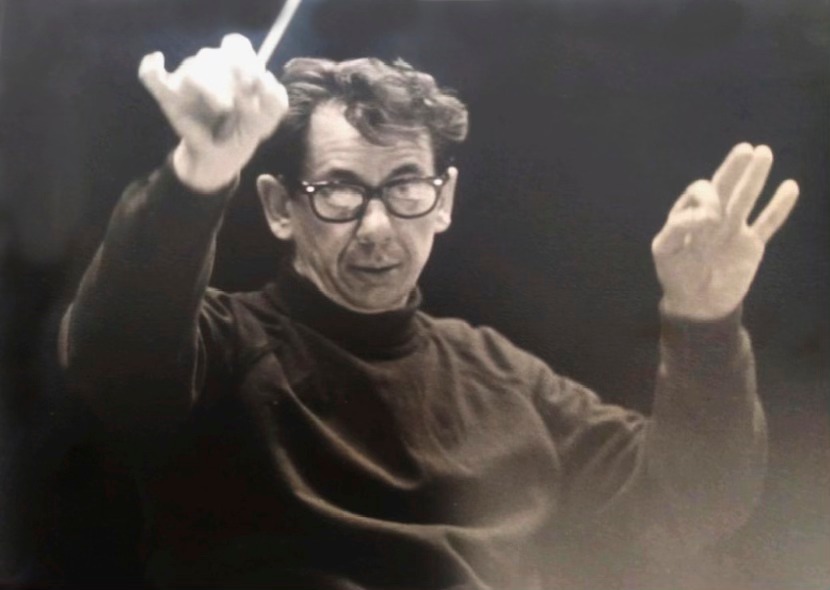
Tag Cloud
Aaron Copland (93) Beethoven (95) Composer (114) Film Music (144) Film Score (143) Film Scores (255) Halloween (94) John Williams (195) KWAX (229) Leonard Bernstein (104) Marlboro Music Festival (125) Movie Music (159) Mozart (91) Opera (212) Philadelphia Orchestra (89) Picture Perfect (174) Princeton Symphony Orchestra (109) Radio (88) Ross Amico (244) Roy's Tie-Dye Sci-Fi Corner (290) The Classical Network (101) The Lost Chord (269) Vaughan Williams (105) WPRB (397) WWFM (881)
One response