• Life of (Havergal) Brian

    Life of (Havergal) Brian

    by 

    in
    5 responses

    According to the Guinness Book of World Records, Havergal Brian’s Symphony No. 1, the “Gothic Symphony,” composed between 1919 and 1927, is the longest symphony ever written.

    It’s certainly one of the largest, requiring multiple choirs and orchestras. The work calls for vocal soloists, two double choruses, brass bands, and a much-enlarged symphony orchestra, including 32 woodwinds, 24 brass, two timpani, assorted other percussion (requiring 17 players), celesta, two harps, organ, and a greatly expanded string section. In addition, two horns, two trumpets, two tubas, and one set of timpani combine in each of the four brass bands – a total of nearly 200 players. And that’s before factoring in the singers!

    The composer had to paste multiple sheets together in the writing of the piece in order to accommodate its titanic demands. Brian dedicated the work to Richard Strauss, who declared it magnificent.

    A contemporary of Ralph Vaughan Williams and Gustav Holst, Brian dropped out of school at the age of 12 and went to work in a coal mine. He also worked for timber firms and as a carpenter’s apprentice, the whole while nursing a secret desire to write music.

    Though attracting early admiration from the likes of Sir Edward Elgar, Sir Thomas Beecham, and Sir Donald Francis Tovey, Brian was destined always to be a cult figure. But there were and are enough people out there who believe strongly enough in his music that most of his major works have been recorded.

    Among them are 32 symphonies – 20 of them composed after the age of 80 and the last at the age of 93. Brian died in 1972, the result of a fall, two months shy of his 97th birthday.

    The “Gothic” falls into two parts, subdivided into three movements each. Part One was inspired by Goethe’s “Faust,” and Part Two is a gargantuan setting of the “Te Deum” – combined they present a symphonic vision of the Gothic Age, a period of incalculable expansion in human knowledge. The music in Part Two is essentially modeled on Gothic architecture. It’s literally Brian’s conception of a cathedral in sound.

    Have a couple of hours to spare? Check out Havergal Brian’s “Gothic Symphony,” on this, the 150th anniversary of the composer’s birth.

    ——–

    IMAGE: “Medieval City on a River” (1815), by Karl Friedrich Schinkel


  • Belated Goodbyes

    Belated Goodbyes

    by 

    in
    3 responses

    There’s been so much to occupy my attention these past weeks that I’ve neglected to pay tribute to three artists who enriched my life for decades through their recordings. In yet another attempt to avoid posting about the slow-motion collapse of the flabbergastingly politicized Kennedy Center (most recently given the eff you by Philip Glass), I thought now might be a good opportunity to remember them.

    The Virginia-born Isaiah Jackson died on Christmas Eve at the age of 80. Jackson held music directorships with London’s Royal Ballet and Boston’s Pro Arte Chamber Orchestra. As a child of two, he fell on a milk bottle, severing the tendons in his wrist. His father, an orthopedic surgeon, prescribed music lessons as therapy, which he began at the age of 4. Jackson studied Russian history and literature at Harvard, from which he graduated cum laude. While there, he conducted Mozart’s “Cosi fan tutte,” an experience that decided him, once and for all, on a career in music. He pursued further studies at Stanford and Juilliard. In between, he was a pupil of the celebrated pedagogue Nadia Boulanger.

    Among Jackson’s other, numerous posts, he was assistant to Leopold Stokowski at the American Symphony Orchestra, associate conductor of the Baltimore Symphony and Rochester Philharmonic Orchestras, and music director of the Flint Symphony and Dayton Philharmonic Orchestras. He was a respected teacher, who served on the faculty of Berklee College of Music, and guest conducted, among others, the New York Philharmonic, the Cleveland Orchestra, the Detroit Symphony Orchestra, the Los Angeles Philharmonic, the San Francisco Symphony, the Boston Pops, the Toronto Symphony, the Helsinki Philharmonic, and L’Orchestre de la Suisse Romande. Hearing loss caused him to retire from the podium in 2006.

    Three recordings of his of which I am especially fond are those of “Danzas de Panama” by William Grant Still, from an album devoted to the composer’s works; the Sinfonietta for String Orchestra and Timpani by Franz Waxman, better known for his film scores; and the Harp Concerto of Welsh composer William Mathias, with Ann Hobson Pilot the soloist, my preferred recording of the piece, which is a gem. All three of them were released on the Koch International Classics label.

    https://www.youtube.com/watch?v=MiHN4lXshrA

    John Wallace died on January 11 at the age of 76. Wallace was principal trumpet of the Philharmonia Orchestra from 1976 to 1995 and later served as principal of the Royal Conservatoire of Scotland. As a soloist, he introduced new works by Malcolm Arnold, Peter Maxwell Davies, Gunther Schuller, and James MacMillan. But perhaps he achieved his greatest fame through a series of recordings he made with the ensemble he founded, the Wallace Collection, which aired frequently during the good old days on classical radio. Of course, it didn’t detract from his celebrity that Wallace also played at the wedding of Prince Charles and Lady Diana. Here’s a Concerto for 7 Trumpets by Johann Ernst Altenburg.

    https://www.youtube.com/watch?v=ed2Ctagmzxw

    Finally, the Japanese guitarist and prolific recording artist Kazuhito Yamashita died on January 25 at the age of 64. Yamashita was an early competition winner who achieved international recognition and performed with top artists, including James Galway, Michala Petri, and the Tokyo String Quartet. Quixotically, he chose to transcribe some of the most brilliantly orchestrated works in the repertoire, including Rimsky-Korsakov’s “Scheherazade” and Stravinsky’s “The Firebird,” for his instrument. He also gave first performances of over 60 new compositions. I owe Yamashita a great debt for introducing me, through this RCA release conducted by Leonard Slatkin, to Mario Castelnuovo-Tedesco’s heartwarming guitar concertos. The slow movements are gorgeous. That for the First begins at 5:40 at the link.

    https://www.youtube.com/watch?v=7Y0cxGjGG4A

    Thank you, gentlemen, and godspeed.


  • Bergman’s Enchanting “The Magic Flute”

    Bergman’s Enchanting “The Magic Flute”

    by 


    From time to time, I guess even Ingmar Bergman needed a break from existential dread. How else to explain his delightful adaptation of “The Magic Flute?” Originally intended for television, Bergman’s playful and inventive 1975 film of Mozart’s 1791 singspiel had a lot to do with setting me on the path to become an opera lover.

    The conceit, to set the action as a live performance in the historic Drottningholm Palace Theater (a reproduction, since there were concerns about the actual theater safely accommodating a film crew), is disarming and inspired. All the stagecraft is laid bare. The scenery is evidently painted plywood, the animals are all people in suits, and the characters pause from time to time to hold up little signs with moralistic aphorisms on them as they sing their arias.

    Bergman’s film begins outside the actual theater and then enters the hall during the overture to register the facial expressions of a audience members as they anticipate the curtain rising. Most especially the camera lingers on the eager face of an impressionable young girl. It’s evident that the director would like us to experience it all from her perspective, through a lens of innocence.

    By contrast, we’re also taken backstage, to glimpse Papageno, fallen asleep and nearly missing a cue, Sarastro between acts studying the score to “Parsifal,” and one of Monostatos’ minions reading a Donald Duck comic book.

    Sure, there are moments of despair even here, as a couple of the characters contemplate suicide (we also get a memorable vision of hellfire), but it’s all dispelled in a decisive victory of good over evil, an endorsement of universal brotherhood, and a resolution of unalloyed joy.

    It was Mozart’s librettist, Emanuel Schikaneder, who suggested during rehearsals that Papageno stammer in excitement at the recognition of his desired Papagena, in their famous duet. Here’s what Bergman does with it.

    On Mozart’s birthday anniversary, I think it’s time to revisit this film.

    Behold! Here it is on YouTube.


  • Farewell, Uncle Floyd

    Farewell, Uncle Floyd

    by 

    in
    14 responses

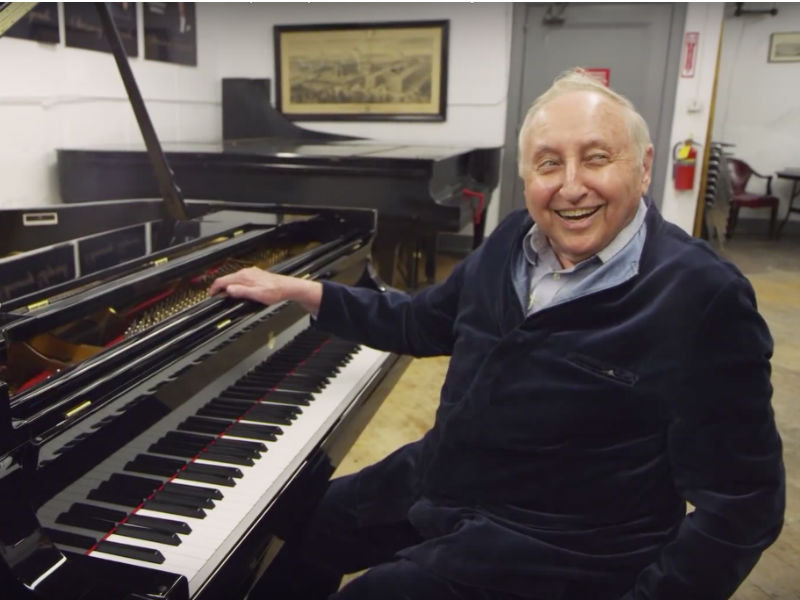
    When somebody like Uncle Floyd goes, it really stirs up memories of a certain era of my life.

    If you don’t know, Uncle Floyd – born Floyd Vivino – was a homegrown, under-the-radar Jersey icon. If that seems paradoxical, you have to understand, for decades he hosted a comedy-variety show that drifted around UHF and local cable outlets in Philadelphia and New Jersey. The budget for each episode must have been about $1.98 – it had all the visual allure of public-access – so I was surprised to learn the show was eventually picked up for “national” syndication, gaining further exposure in Chicago, Boston, and Hartford. I’d always assumed Floyd was as inextricably part of regional lore as the Philadelphia Mummers. Tastykake, and Taylor Ham.

    When you turned on “The Uncle Floyd Show,” you knew you were in for a half hour of burlesque, under-rehearsed (if at all) sketch comedy, in-jokes at the expense of cast and crew (he got a lot of mileage out of Scott Gordon’s weight and Netto having gone to jail), their colleagues invariably busting up off-camera (often funnier than the show). It was also a showcase for Floyd’s nimble fingers, which played across the keyboard of a jangly upright with all the dexterity of Chico Marx.

    Presented in the style of a kids show, it had a touch of Soupy Sales (Floyd was always interacting with puppets and slipping in jokes only adults would get). It was also a living museum of a bygone era, of vaudeville, the burlesque house, and the golden age of novelty songs. There were plenty of groaners among the jokes. A lot of the gags had whiskers. But I always say there are two kinds of comedy: the kind that delights because the pay-off is totally unexpected, and the kind where you see the punchline coming from miles away, but the delivery sticks its landing so well you can’t help but laugh. “The Uncle Floyd Show” was a showcase for the latter.

    Floyd was a cult figure who somehow attracted fans like John Lennon and David Bowie, who both tuned in from New York. Also, like David Letterman in his early days on “Late Night,” he would introduce acts on the show that you would swear were put-ons, only to discover after not too long that their careers would explode. I remember seeing Cyndi Lauper on there for the first time, and I thought there’s no way she’s real. Is she?

    Occasionally, he would have on a top act, and you’d wonder how the hell did Floyd get Blue Öyster Cult? Then he would gently razz them by cutting to a photo of one of their early gigs, playing a bar mitzvah in Long Island.

    Everyone was a pretty good sport, except Joe Franklin, another low-rent cult media icon. If you lived beyond the New York broadcast area, back in the day, you probably have no idea who I’m talking about. Franklin interviewed faded movie stars and other people in the entertainment industry, notably up-and-coming actors who hadn’t quite hit. It was another entertaining show, but also very cheap and very, very quirky. Franklin was offended when Floyd appeared on-camera as Joe Frankfurter, with a garbage can over his head and talking over his guests. Franklin, notoriously thin-skinned, sued him for libel to the tune of $35 million dollars. Naturally, the suit went nowhere.

    There was also a recurring sketch featuring “The Dull Family” of Easton, PA (my hometown, but I didn’t sue).

    On weeknights, after dinner, my stepfather, my best friend, and I would often retire to the living room to enjoy the half-hour show. You never knew what kind of double-entendre was going to sail out of the tube. Often the material and/or execution was so lame, it was hilarious, and everyone involved was in on the joke. Floyd himself, however, was a consummate performer, with innate timing, and a virtuoso of his kind.

    A staple of every show was a send-up of a ventriloquism act, in which Floyd would engage in some repartee with a puppet sidekick – only the camera would never show Floyd’s lips when the puppet spoke. The best known of these was Oogie, a diminutive clown with Larry Fine hair protruding from beneath a paddy cap, and a London Fog coat. Also Bones Boy, a skeleton who randomly exclaimed, “Snap it!” And Hugo, who was, well, a Hugo doll. (Look it up.)

    What Floyd didn’t have was fashion sense – a blind spot he cultivated – and he proudly showed up at his gigs in trademark hat, bow tie, and jacket, all with clashing patterns.

    I was surprised to see him break into bit parts in the movies, credited under his birth name. He’s quite visible throughout “Good Morning, Vietnam.” He also had other parts on mainstream television, appearing on “Law & Order,” “Cosby,” and others.

    In the early spring of 2020, I learned that Floyd was scheduled to appear at an Italian-American event being held at a restaurant a half-mile from my parents’ house – the very house at which we had viewed so many episodes of the show. How could I not go? So I made the trip home to catch Floyd’s act, again in the company of my stepfather and my best friend. It’s hard to believe, the better part of 40 years had passed.

    Floyd came out and entertained the crowd with well-timed jokes that all stuck their landings. He also had a keyboard with him so that he could share the kind of music he had championed his entire career. Yes, he had the hat and the jacket and a bow tie (black, because of the solemn occasion?).

    We went back and talked to him after the set. He seemed fairly low-key, but he warmed considerably as it became obvious that we really remembered so much about the show and knew so many of the songs. My friend had his ukulele with him to illustrate. We got a couple of pictures taken, and he gave us an autograph. Floyd seemed genuine, but I could tell he was tired at the end of a gig. His eyes wandered around the room as he waited for his paycheck. When the bearer appeared, he excused himself, saying he had to get back to Jersey.

    My friend and I were already in the car when we saw Floyd exit the building. I rolled down the windows, and my friend began singing and playing “Deep in the Heart of Jersey” as we pulled away like a couple of crazy kids, now in their 50s. I could see Floyd was genuinely amused.

    Afterward, on my way back to Princeton, I was heading down Route 31, when I stopped at a light in Flemington. As I waited, I noticed an electronic bulletin board outside the Elks Lodge, advertising who should be scheduled to appear the next week, but Uncle Floyd! I thought how amusing it would be if my friend and I arranged to be there, so soon after the Easton appearance.

    We probably wouldn’t have followed through on it (my friend, who doesn’t drive, would have had to come up from Philadelphia), but in the event, the show was cancelled anyway, as Floyd’s visit to Easton would be the last live entertainment any of us would experience for well over a year. The next week, the Elks Lodge and everything else was shut down as COVID-19 swept New Jersey.

    “The Uncle Floyd Show” ran from 1974 to 2001. After the show went off the air, Floyd continued to appear solo and in comedy revues around the area. He also took his schtick to radio.

    Floyd was 74 years-old at the time of his death on January 22. He made countless people smile and forget their troubles. It was a life better spent than perhaps he ever knew.

    R.I.P.

    ——-

    Uncle Floyd as Julia Step-Child

    https://www.youtube.com/watch?v=af-QDOPNNkE

    An entire Oogie bit built around in-jokes about staffers Mugsy and Scott Gordon

    https://www.youtube.com/watch?v=Qjx_n2VB0kY

    Floyd tickling the ivories

    https://www.youtube.com/watch?v=4nnnnzfJ0P8

    “Josephina Please No Leana on the Bell”

    https://www.youtube.com/watch?v=Ki6q6bTaZR4

    Floyd, before an appreciative crowd at the Capitol Theatre of Passaic, performing “Deep in the Heart of Jersey”

    https://www.youtube.com/watch?v=mm8ZOQkzyFc&t

    Floyd entered the Guinness Book of World Records in 1999 after playing the piano for 24 hours and 15 minutes, to raise money for a local family to cover medical bills for their son with cystic fibrosis.


  • Diane Wittry to Wrap It Up in Allentown, PA

    Diane Wittry to Wrap It Up in Allentown, PA

    by 

    in
    5 responses

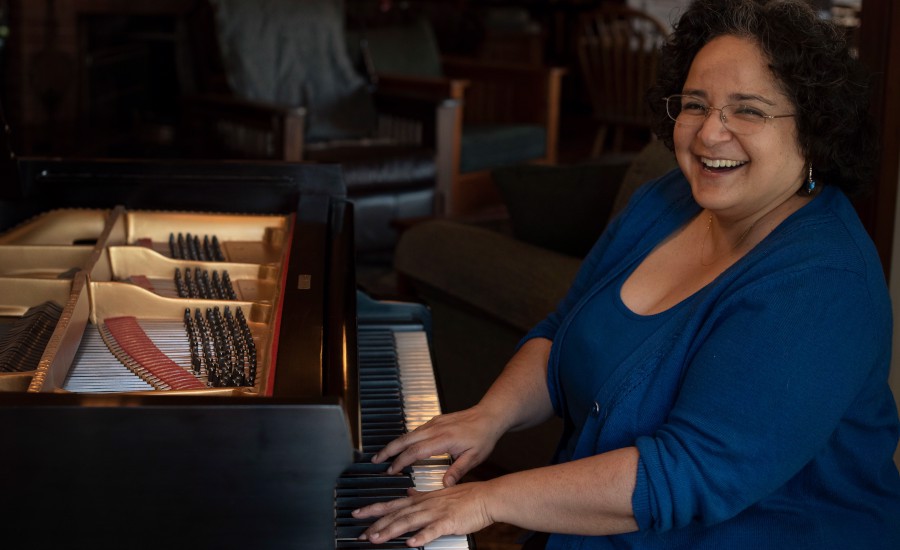
    Diane Wittry will be stepping down as music director of the Allentown Symphony Orchestra in 2028. Wittry will have served in that capacity for 33 years – surpassing the tenure of the ensemble’s founding music director, Donald Vorhees, who led the orchestra from 1951 to 1983. In between, the position was held by William Smith, associate conductor of the Philadelphia Orchestra, whose engagements were curtailed by his final illness in 1993.

    Wittry will conduct her last concert as music director in the fall of 2027. For further details and a broader sense of her accomplishments, see the organization’s press release, shared below.

    For as often as I do it, I don’t really relish writing concert reviews, as they always become more involved than I anticipate. My thoughts begin to stampede, and it’s all I can do to get them into the corral. Later, I’ll go back and look at them, and I’m seldom satisfied – all I can see is the sweat – and then nobody reads them. If I post one, I’ll get maybe 5 or 6 likes. Facebook is not the forum for a “slog through the bog.”

    Of course, you can always check out whatever I write at my website (ever under construction, but all my posts are there) at rossamico.com. That said, in my experience, lengthy reviews are so much more pleasurable to read in actual print.

    I worked pretty hard at a review of Wittry conducting Vaughan Williams’ “Dona nobis pacem” last season, but never smoothed it out. Perhaps in tribute to her, I’ll search for it, brush it down, and feed it some sweet grass, with the intention of exhibiting this prize cow in the near future. Or maybe I’ll take one look at it and my soul will leave my body.

    Either way, big thanks to Diane Wittry. It’s a solid orchestra she’s built, and I’ve enjoyed the programs I’ve been able to attend.

    —–

    DIANE WITTRY ANNOUNCES PLANS TO CONCLUDE TENURE AS MUSIC DIRECTOR AND CONDUCTOR IN 2028

    ALLENTOWN, PA — (January 22, 2026) — The Allentown Symphony Association (ASA) announced today that Diane Wittry has decided to step down as Music Director and Conductor in 2028, which will conclude an extraordinary 33-year tenure leading the Allentown Symphony Orchestra. Wittry will conduct her final concert in the fall of 2027 but will continue to serve as Music Director through May 2028, working closely with the Board of Directors and staff to ensure a smooth and successful artistic leadership transition.

    The ASA Board of Directors has begun forming a search committee to lead a national search for the orchestra’s next Music Director and Conductor.

    Wittry’s tenure will be the longest in the orchestra’s history, surpassing that of Donald Voorhees, who served as Music Director and Conductor for 32 years from its founding in 1951 to 1983.

    Wittry leaves a deep and enduring legacy of artistic excellence, innovation, and growth. Since the start of her tenure in 1995, she has championed adventurous programming that paired underperformed masterworks with new and contemporary compositions. From the outset, she raised artistic standards by challenging the orchestra musically and increasing rehearsal and preparation expectations, attracting highly accomplished musicians to audition from across the region, including New York, New Jersey, Maryland, and Delaware.

    An early adopter of immersive concert experiences, Wittry expanded the orchestra’s creative reach by integrating lighting, visual design, video, actors, dancers, and vocalists into performances—broadening audience engagement while reimagining the orchestral concert experience.

    In the 1996–97 season, following a major bequest from brothers Leigh and Edwin Schadt, Wittry helped establish the National Schadt String Competition, now widely recognized as one of the premier string competitions in the United States. Under her leadership, the orchestra experienced sustained expansion, including expanding the Classical concerts to double performances, the addition of Pops Concerts, Family Concerts, and a landmark partnership with the Repertory Dance Theatre to present The Nutcracker annually each December. Many of these performances were led by the Symphony’s Associate/Pops Conductor Emeritus Ronald Demkee who himself retired from the Orchestra in 2024.

    Additional milestones during Wittry’s tenure include the formal re-establishment of the Allentown Symphony Chorus in 2014 and the launch of the Holiday Pops concert in 2021, which has virtually sold out every year since its inception.

    A passionate advocate for new music, Wittry led the Orchestra in commissioning and performing more than 36 world premieres, including four of her own compositions. In 2020, she helped launch both the Composer-in-Residence program and the Composer Collaborative, further reinforcing the orchestra’s commitment to living composers and contemporary voices.

    Education and community engagement have remained central to Wittry’s vision. She introduced the “Meet the Artist” luncheon series, launched the Conducting Fellows program in 2010, and spearheaded El Sistema Lehigh Valley in 2011—an intensive music education initiative that now serves approximately 150 students from more than 20 schools throughout the region. In 2024, the ASA formed its Latin Leadership Committee to deepen engagement with Allentown’s growing Latin community and hired its first Musician-in-Residence, who is required to be a bilingual in Spanish and English, in 2025.

    Among the most ambitious and far-reaching projects of her tenure was a landmark Beethoven’s Ninth Symphony initiative that extended orchestral performance well beyond the concert hall. Beethoven’s Ninth was presented in two distinct performances at Miller Symphony Hall—one recorded for a regional broadcast in partnership with PBS39, and a second recorded to create Become a Musician: Beethoven’s Ninth Finale, an immersive interactive exhibit launched in January 2026 at the Da Vinci Science Center. Together, these performances transformed a single artistic vision into lasting public resources, introducing thousands of people to orchestral music through broadcast, education, and hands-on participation in a manner believed to be the first permanent orchestral exhibit of its kind in the United States.

    Reflecting on her decision, Wittry said, “After many years of heartfelt music making, I have decided to retire from my position as Music Director and Conductor of the Allentown Symphony in the spring of 2028. Together, we have built an orchestra of exceptional professional quality, expanded our concert offerings, championed new music, and deepened our partnerships throughout the Lehigh Valley. I am profoundly proud of what we have accomplished and grateful for the unwavering support of the musicians, board, staff, and community. I remain fully committed to working closely with the Board during this transition, and I look forward to the inspiring music we will continue to make together in the seasons ahead.”

    “Diane Wittry’s impact on the Allentown Symphony Orchestra is both profound and lasting,” said Jack Bury, President of the Allentown Symphony Association Board of Directors. “For more than three decades, she has led with extraordinary artistic vision, integrity, and commitment—raising the orchestra to the highest professional standards while expanding its reach through education, new music, and deep community engagement. With the formation of a search committee now underway, we are grateful for Diane’s partnership in ensuring a thoughtful transition and are confident the orchestra is well positioned for continued artistic excellence and growth.”

    Al Jacobsen, Executive Director of the Allentown Symphony Association, added, “Working alongside Diane Wittry has been one of the great privileges of my professional life. Her artistic leadership has elevated the Allentown Symphony Orchestra in every dimension—from performance quality and innovative programming to education, community partnerships, and national recognition. Diane has built not only an exceptional orchestra, but a culture of excellence, collaboration, and service. We are deeply grateful for her leadership and for her continued partnership as we thoughtfully prepare for the orchestra’s next chapter.”

    Today, Wittry is internationally respected as both a conductor and educator. She has conducted performances in more than eleven countries, including Russia, China, Japan, Bosnia, Slovakia, Italy, and Canada. She is the author of two award-winning books published by Oxford University Press—Beyond the Baton: What Every Conductor Needs to Know and Baton Basics: Communicating Music through Gesture—both considered foundational texts in the conducting profession. In 2015, she was named one of Musical America’s Top 30 Professionals in Music.

    Under Diane Wittry’s leadership, the Allentown Symphony Orchestra has become one of the Lehigh Valley’s leading cultural institutions, recognized for artistic excellence, educational impact, and deep community connection. Her extended transition timeline allows the organization to honor her legacy while positioning the orchestra for continued success in its next chapter.


Tag Cloud

Aaron Copland (93) Beethoven (95) Composer (114) Film Music (125) Film Score (143) Film Scores (255) Halloween (94) John Williams (189) KWAX (229) Leonard Bernstein (101) Marlboro Music Festival (125) Movie Music (140) Opera (202) Philadelphia Orchestra (89) Picture Perfect (174) Princeton Symphony Orchestra (106) Radio (87) Ralph Vaughan Williams (85) Ross Amico (244) Roy's Tie-Dye Sci-Fi Corner (290) The Classical Network (101) The Lost Chord (268) Vaughan Williams (103) WPRB (396) WWFM (881)

DON’T MISS A BEAT

Receive a weekly digest every Sunday at noon by signing up here


RECENT POSTS