• If You Can’t Beat ‘Em, Close It

    If You Can’t Beat ‘Em, Close It

    by 

    in
    16 responses

    More territorial wolf urine sprays around Washington, as it was announced Sunday night, via social media, that the Kennedy Center will be shut down for two years for extensive renovations and remodeling. The proclamation comes at a time of escalating artist cancellations and dwindling ticket sales, spurred by the flabbergasting politicization and illegitimate renaming of the performing arts institution. According to the statement, funding is already in place for the upheaval, even though the plan and budget have yet to be authorized by Congress.

    The timing is especially precarious for the National Symphony Orchestra, which makes the Kennedy Center its home, falling as it does at a time when orchestras are already in the process of announcing their 2026-27 seasons. Hopefully the organization hasn’t already printed and mailed out its brochures. In the scheme of things, it would actually be the least of its worries, as the NSO is now poised to go down with the ship unless it can find a life raft – alternative performance venues – pronto.

    Such an announcement might be regarded as impulsive and reactionary, coming as it does on a Sunday evening on social media. The text is full of serpentine sentences and random capitalizations. It appears following a month of high-profile artist cancellations, including most recently that of Philip Glass, perhaps America’s most-recognized living composer of music in the classical tradition, who elected to withdraw his Symphony No. 15 from its scheduled premiere. The work was inspired by writings of Abraham Lincoln. Glass joins Renée Fleming, Béla Fleck, and Stephen Schwartz, among those who stepped away in recent weeks. Next season, cancellation will no longer be an option, because the center will be closed.

    An unfortunate lack of notice for such a major disruption might lead some to question whether the decision was made out of thoughtlessness, at best, or perhaps to save face, or more troublingly, out of retribution or with intent to sabotage. The timing – construction set to begin on July 4th, the 250th anniversary of the founding of our nation – is convenient for no one save those embarrassed by the institution’s recent virtual collapse.

    In the meantime, the White House is torn apart, the East Wing demolished (without going through proper channels) to prepare for the construction of a 90,000 square-foot ballroom, the Oval Office is gilded, the Lincoln Bathroom a marbled tomb.

    Yet to come: a proposed 250-foot triumphal arch (for a sense of scale, the Capitol building is 288 feet), to be erected at Memorial Circle in Arlington, VA. The structure would overlook the Potomac River at the solemn site of the Arlington Memorial Bridge. The bridge was conceived to symbolically link North and South following the American Civil War. For generations, memorials to Lincoln and Robert E. Lee have been visible from either side of the bridge. Going forward, they may have to communicate like Pyramus and Thisbe, through a chink in the arch.

    “I have determined that The Trump Kennedy Center [sic], if temporarily closed for Construction, Revitalization, and Complete Rebuilding, can be, without question, the finest Performing Arts Facility of its kind, anywhere in the World,” the announcement says. (Note random capitalization.) The proclamation fails to mention that the Kennedy Center underwent a $250 million renovation and expansion in 2019.

    The John F. Kennedy Center for the Performing Arts opened in 1971. Intended as a living memorial to the fallen U.S. president, for over half a century, the venue has presented countless musical, theatrical, and educational events, to honor Kennedy’s legacy in contributing to a better, more hopeful, and enlightened citizenry, country, and world. The structure encompasses three principal auditoriums – the Concert Hall, the Opera House, and the Eisenhower Theater – and a dozen other performing arts spaces.

    This news preempts my annual, apolitical post celebrating the dual birthdays of Jascha Heifetz and Fritz Kreisler. Somebody wake me when we’re great again.


  • “The Choral” Misses Its High Notes

    “The Choral” Misses Its High Notes

    by 

    The trailer for Ralph Fiennes’ new film, “The Choral,” which I’ve been seeing over the past month or so, whenever I go to the movies, has proved to be a bit of a bait and switch. An English period piece set during World War I, it appeared, from the marketing, it would be an inspirational story about the power of music.

    Yeah, the war was a bad time, lives were destroyed, and the flower of England’s youth mowed down at the Somme. But the trailer features just enough humor to make it seem like something it’s not. I caution you not to go into it expecting a charming story of idiosyncratic British resourcefulness in the tradition of “The Full Monty,” “Kinky Boots,” or “Calendar Girls.” I’d have been happy had it been “Chariots of Fire” meets “Brassed Off.” (The latter is about England’s colliery brass bands; “The Choral” is about its amateur choral societies.)

    Primarily, I got the impression that the film was going to explore musical performance as a kind of therapy for damaged soldiers returning from the front, but it really does nothing of the sort, beyond the suggestion being made in one scene, and then it’s never revisited.

    Fiennes is excellent as always, as the displaced, disgraced choral director forced back to England from a satisfying career in Germany, on account of the war. His scrupulous German allusions and quotations from passages of Goethe and the “St Matthew Passion” (which the English of course sing in English) do nothing to endear him to the locals, who view his foreign connections with suspicion. After a rock comes crashing through a window during a rehearsal, it is suggested perhaps the choir should sing something else. It is to the choristers’ collective dismay that they realize that every composer they offer happens to be German – even honorary Londoner George Frideric Handel.

    This is when “The Choral” pulls its rabbit out of the hat, and we discover that the rest of the film will center on an amateur performance of Elgar’s “The Dream of Gerontius.” What a very happy surprise!

    Alas, the happiness is short-lived. Naturally because of the war, budgetary constraints, and not least the varied ability of the singers, concessions have to be made. The result is a “bold” reimagining of the oratorio that seems about as edgy as something out of “Dead Poets Society.”

    Inevitably, Elgar shows up, and both his character and the casting (he’s played by the estimable Simon Russell Beale) are totally wrong. Nothing I have ever seen or read about Elgar leads me to believe he was squat, portly, and petty. Couldn’t the filmmakers even have given him a decent push broom mustache?

    Perhaps it won’t bother viewers who aren’t so close to the subject, but for me it kills the movie. My guess is that the marketers kept the “Gerontius”/Elgar angle out of the trailer, because there are about five people in the U.S. who would have any idea who or what they are, much less want to see a movie about them.

    More broadly, the screenplay by playwright Alan Bennett (“The Madness of George III,” “The History Boys”) is a mess, with few of the many dramatic ideas introduced in the first act (war trauma, suspicion of espionage, wounded vanity and squabbles among the singers, betrayal in love, an interracial romance that never raises an eyebrow, the plight of the homosexual and the conscientious objector in 1916) are ever satisfactorily resolved.

    Like real life, then? I think it was just weak. Still, hats off to Bennett for writing another screenplay at the age of 90!

    Bennett is clearly interested in English music. He wrote a play, “The Habit of Art,” about the relationship between W.H. Auden and Benjamin Britten. Ursula Vaughan Williams (Ralph’s widow) was a personal friend and appears as a character in “Lady in the Van.” So I am especially sorry that this late attempt to dramatize the import of Elgar and his music is a swing and a miss. Perhaps with a different actor. If only C. Aubrey Smith were still with us!

    “The Choral” is not a bad movie. As a classical music lover, I would desperately like a film of this sort to succeed. However, if like Fiennes’ choral director I’m to be brutally honesty, I must acknowledge that it fails to hit any of the high notes.

    ——–

    View the trailer here:


  • Music of the Spheres on “The Lost Chord”

    Music of the Spheres on “The Lost Chord”

    by 

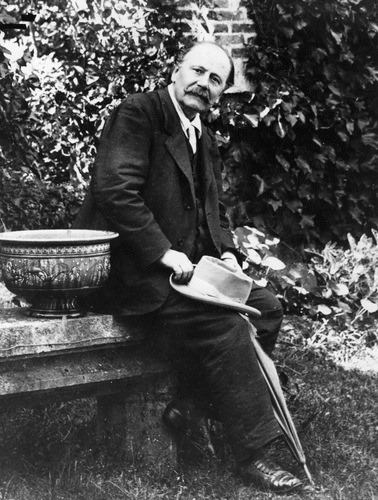
    Even by composer standards, Rued Langgaard (1893-1952) was a little bit of a strange bird. Despite a promising start – born to musical parents, a precocious childhood, meetings with major conductors, and a symphony performed by the Berlin Philharmonic – his personal and creative eccentricities worked against him.

    Langgaard followed his personal muse deep into the realm of late Romanticism at a time when most of the musical world was exploring modernist territory. Though he was given a state grant at 30, he failed to secure a permanent job until the age of 46, as an organist at the cathedral in Ribe, the oldest town in Denmark – which somehow seems appropriate for this most anachronistic of Danish outsiders.

    An eccentric, shabby figure with wild hair, Laangaard died in Ribe 13 years later, in 1952, just shy of his 59th birthday, still largely unrecognized as a composer.

    His reputation would not begin to gain traction for another 16 years. In all, he composed over 400 works, including 16 symphonies – which bear evocative titles such as “Yon Hall of Thunder” and “Deluge of the Sun” – and an opera, “Antikrist.”

    It was in 1968 that no less a personage than György Ligeti found himself on a jury alongside Danish composer Per Nørgård. In this capacity, he examined a large number of new scores by Scandinavian composers. Unbeknownst to his fellow jurors, Nørgård had slipped in the score of Langgaard’s “Music of the Spheres.” Ligeti became captivated by what he found. When the ruse was revealed, he exclaimed, with a twinkle in his eye, “Gentlemen, I have just discovered that I am a Langgaard epigone!”

    Langgaard had anticipated some of the technical aspects – tone clusters, layers, and so forth – which would appear in Ligeti’s avant garde experiments of the 1960s, in works such as “Atmosphères.”

    I hope you’ll join me for “Rued Awakenings,” an hour of Rued Langgaard, including “Music of the Spheres,” on “The Lost Chord,” now in syndication on KWAX Classical Oregon!

    ——–

    Clip and save the start times for all three of my recorded shows:

    PICTURE PERFECT, the movie music show – Friday at 8:00 PM EST/5:00 PM PST

    SWEETNESS AND LIGHT, the light music program – Saturday at 11:00 AM EST/8:00 AM PST

    THE LOST CHORD, unusual and neglected rep – Saturday at 7:00 PM EST/4:00 PM PST

    Stream them, wherever you are, at the link!

    https://kwax.uoregon.edu


  • Sherbet for Schubert on “Sweetness and Light”

    Sherbet for Schubert on “Sweetness and Light”

    by 

    Franz Schubert’s birthday. A day to vacillate between smiles and tears. Is there any other composer whose music so perfectly reflects the delicacy and transience of feelings? It is the language of poetry and yearning.

    Personally, I prefer my Schubert bittersweet. Nevertheless, this week on “Sweetness and Light,” most of the music will be of an extroverted, even buoyant character. Okay, maybe it’s impossible for me get through the hour without a touch of emotional ambiguity. I’ll sneak in one of my favorite lieder around the midpoint. Otherwise, it’s a potpourri of ballet music, transcriptions, and some high-spirited marches for piano four-hands.

    It’s sherbet for Schubert on “Sweetness and Light,” this Saturday morning at 11:00 EST/8:00 PST, exclusively on KWAX Classical Oregon!

    Stream it, wherever you are, at the link:

    https://kwax.uoregon.edu/

    ———-

    IMAGE: Always refreshing: orange Schubert

  • Film Composers Think Inside the Box on “Picture Perfect”

    Film Composers Think Inside the Box on “Picture Perfect”

    by 

    Before “Harry Potter.” Before “Jurassic Park.” Before “E.T.” Before “Raiders of the Lost Ark.” Before “Superman.” Before “Close Encounters of the Third Kind.” Before “Star Wars.” Before “Jaws.” Before even John Williams… there was Johnny Williams.

    Well before Williams became America’s most famous living composer, he was busy honing his craft as an orchestrator, an arranger, a session pianist, and a composer in the bush league of television. This week on “Picture Perfect,” we’ll hear some of “Johnny” Williams’ music for “Lost in Space.”

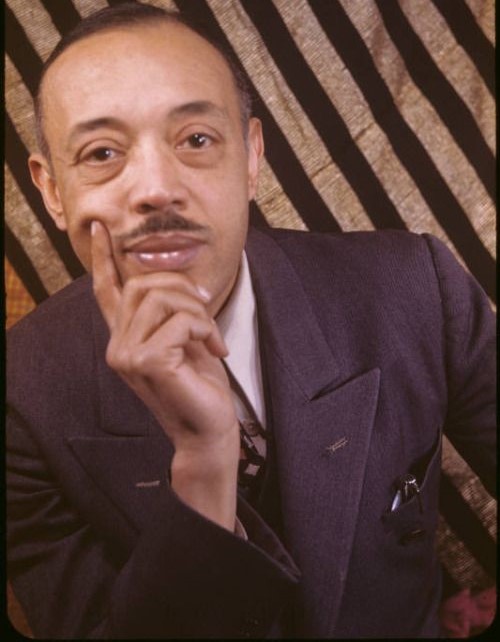
    Also on the program will be selections from “The Alfred Hitchcock Hour” by Bernard Herrmann, the theme from “Wagon Train” by Jerome Moross, and a medley of well-known television music by Jerry Goldsmith.

    Don’t touch that dial! Movie composers think inside the box, on “Picture Perfect,” music for the movies (and television), now in syndication on KWAX Classical Oregon!

    ——–

    Clip and save the start times for all three of my recorded shows:

    PICTURE PERFECT, the movie music show – Friday at 8:00 PM EST/5:00 PM PST

    SWEETNESS AND LIGHT, the light music program – Saturday at 11:00 AM EST/8:00 AM PST

    THE LOST CHORD, unusual and neglected rep – Saturday at 7:00 PM EST/4:00 PM PST

    Stream them, wherever you are, at the link!

    https://kwax.uoregon.edu

Tag Cloud

Aaron Copland (93) Beethoven (95) Composer (114) Film Music (125) Film Score (143) Film Scores (255) Halloween (94) John Williams (189) KWAX (229) Leonard Bernstein (101) Marlboro Music Festival (125) Movie Music (140) Opera (202) Philadelphia Orchestra (89) Picture Perfect (174) Princeton Symphony Orchestra (106) Radio (87) Ralph Vaughan Williams (85) Ross Amico (244) Roy's Tie-Dye Sci-Fi Corner (290) The Classical Network (101) The Lost Chord (268) Vaughan Williams (103) WPRB (396) WWFM (881)

DON’T MISS A BEAT

Receive a weekly digest every Sunday at noon by signing up here


RECENT POSTS