Because you asked for it: “Night of the Living Dead”… THE OPERA.
The composer is Todd Goodman and the librettist Stephen Catanzarite, adapting from the screenplay by John Russo and George A. Romero.
Act I
Act II
The opera is sung in English, but there are no subtitles. I don’t think there’s any mistaking the action or most of the words. Still, I’m not going to discourage you from refamiliarizing yourself with “the ‘Citizen Kane’ of zombie movies.” The film is in the public domain, so it’s available for free streaming everywhere. There’s a pretty good transfer of it on the “Night of the Living Dead” Wikipedia page.
Go ahead and gorge yourself on opera and offal. And don’t forget, Roy and I will discuss this undying classic on Roy’s Tie-Dye Sci-Fi Corner, when we livestream (or “Dead”-stream, as it were) on Facebook, Twitter, and YouTube, tonight at 7:30 EDT!
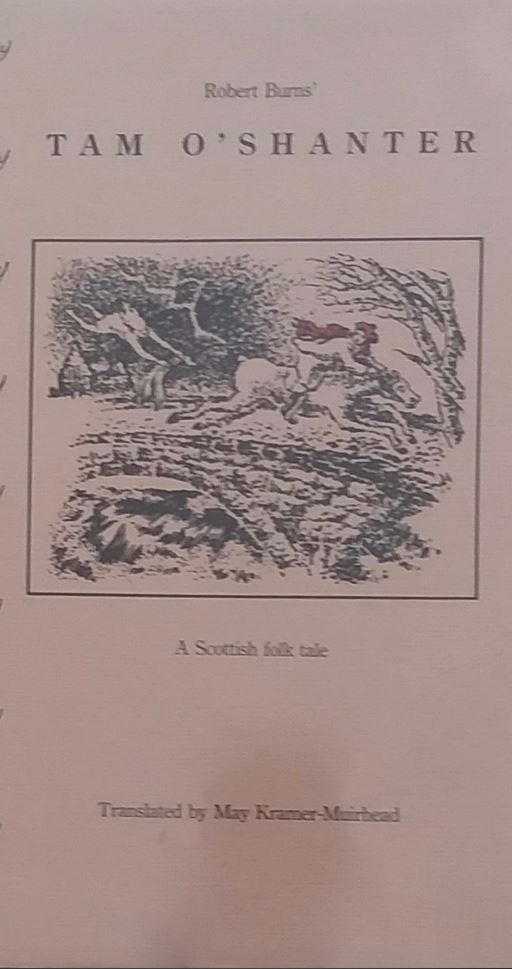
At my bedside this year, as part of my Halloween reading,* is this edition from 1984 of Robert Burns’ “Tam O’Shanter.” It’s a bidialectal edition, the poem given in English translation (by May Kramer-Miurhead), followed by the original, in Burns’ Lowland Scots. I’ve always found Chris Riker’s illustrations amusing. Nothing menacing about them (in keeping with Burns’ tongue-in-cheek tone). In any case, how could I not love that bagpipe-playing devil?
Burns writes of Tam:
“…[T]hou was a skellum,
A blethering, blustering, drunken blellum;
That frae November till October,
Ae market-dae thou was na sober.”
The tone of disapprobation could just as well have applied to composer Sir Malcolm Arnold. Both men were, more or less, fond of the bottle and also driven by demons.
Arnold was born on this date in 1921. He was hired as a trumpeter with the London Philharmonic Orchestra and promoted to principal in 1943.
During World War II, he registered as a conscientious objector. However, following the death of his brother, a pilot in the RAF, he had a change of heart. At least for a time. Though he never saw action beyond service in a military band, he quite literally shot himself in the foot in order to be able to get back to civilian life.
In 1948, he retired from orchestral playing to devote himself exclusively to composition. He had an attractive melodic gift, to be sure, which served him well in the writing of light music and film scores. He won an Academy Award in 1957 for his work on “The Bridge on the River Kwai.”
However, Arnold also had his dark side, as can be detected in passages of his symphonies. He was frequently cantankerous, often inebriated, and also highly promiscuous. He tried to kill himself at least twice. He was treated for depression and alcoholism, overcoming both, but then in the early 1980s he was given only a year to live. He actually survived another 22, during which he completed his Symphony No. 9, among other works.
Arnold died in 2006, one month shy of his 85th birthday. He was a brilliant composer of great facility. After Malcolm Williamson was appointed Master of the Queen’s Music in 1975, Sir William Walton remarked that they had given the job to the “wrong Malcolm.” For a man with so many personal demons, he wrote reams of positively delightful music.
A good example, and one of my favorite Halloween pieces, is the descriptive overture “Tam O’Shanter” (1955), in which Burns’ antihero tarries at a pub, in defiance of his wife, then staggers out into the night. Under ominous skies, he detects the sound of bagpipes emanating from the ruins of an old church. Pressing his face to a chink he espies “Auld Nick,” the Devil himself, “in shape o’ beast,” presiding over a coven of high-stepping witches and warlocks.
When an unusually comely witch catches Tam’s eye, he, in his drunkenness, roars, “Weel done, Cutty-sark!” (in reference to her short skirt). This brings the forces of darkness down upon him, and there is a hell-for-leather sprint by horseback for a nearby river, since spirits are said not be able to cross running water.
If you’re interested in the rest, you can read for yourself here:
Prior to “Night of the Living Dead” (1968), cinematic zombies were eerie, but mostly harmless. Generally, they did the bidding of Bela Lugosi or wandered like somnambulists through Val Lewton films. But that all changed overnight when filmmaker George A. Romero turned them into flesh-eating “ghouls” (as he called them; the word zombie is never uttered). Now, it seems, the zombie apocalypse is here to stay.
However, few films in the genre are so well executed. Romero’s lean and mean thriller has the simplest of premises and the lowest of budgets, yet good writing, editing, and direction, and a matter-of-fact tone make this one of the most convincing horror movies ever made. Especially since, as would always be the case throughout Romero’s zombie cycle (he made six “Dead” films in all), the chills are informed by real-world social and political subtexts.
“Night of the Living Dead” serves as both the last gasp of 1950s B-movie drive-in fodder and the dawn of contemporary horror. And people were indeed horrified. The film opened a month before the MPAA ratings system was implemented, and it was distributed to theaters as typical Saturday matinee fare. Critics were appalled and children were scarred for life.
We’ve become so desensitized, yet there’s a power to this film that will never die. Roy and I discuss George A. Romero’s implacable classic on the next Roy’s Tie-Dye Sci-Fi Corner. Wander glazed in the comments section. Our intestinal fortitude will be on display as human flesh is on the menu, when we livestream on Facebook (and Twitter and YouTube), this Friday evening at 7:30 EDT!
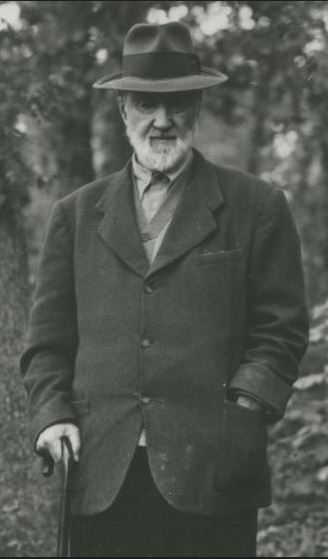
On Charles Ives’ birthday, I’m remembering my visit to the composer’s studio, meticulously recreated on the third floor of the American Academy of Arts and Letters in New York City – right down to the pencil shavings on his desk. The room includes such Ives totems as his battered felt hat, his wooden cane, and his dad’s cornet. On a music stand sits a printed score of “The Unanswered Question.”
The sensation is like dropping in on the composer’s home in West Redding, Connecticut. Ives worked in the ground-floor studio there for the last 40 years of his life.
A concert was presented as part of the studio’s dedication on April 13, 2014. Violinist Wendy Sharp and pianist Melvin Chen played the Violin Sonata No. 2, with its three movements “Autumn,” “In the Barn,” and “Revival.” Vintage Ives in high nostalgia mode, with plentiful allusions to hymns, fiddle tunes, and patriotic melodies.
That was followed by the JACK Quartet in the String Quartet No. 2. The composer characterized the musicians as four people who “converse, discuss, argue (in re ‘Politick’), fight, shake hands, shut up – then walk up the mountain side to view the firmament.”
Finally, Gilbert Kalish brought all his authority to bear on the Piano Sonata No. 2, “Concord.” I originally got to know the piece from Kalish’s Nonesuch LP, issued all the way back in 1977. Carol Wincenc played the flute line in the sonata’s Thoreau-inspired fourth movement. Luxury casting indeed!
The program notes were by Vivian Perlis.
There was also a reception, at which attendees were offered a bag of Ives souvenir cookies.
The Academy’s mission is to foster, assist, and sustain excellence in American literature, music, and art. Ives was elected to the Academy in 1946. In 1969, his widow, Harmony, bequeathed to the Academy the royalties to his music. The royalty income has funded over 250 scholarships and fellowships in music composition.
The studio is open during gallery hours for the Academy’s two annual exhibitions in the spring, and by special appointment throughout the year during business hours. Learn more about it and view a slide show with more photos here:
Kalish performs Ives’ “Concord Sonata” (1904-15), four movements posted separately
An orchestration by Henry Brant
Leonard Bernstein’s remarks on the Symphony No. 2 (1897-1902)
My preferred recording of the symphony, so beautiful (though not always entirely accurate, in regard to Ives’ intentions), with Bernstein and the New York Philharmonic in 1960.
Violin Sonata No. 2 (1917?)
“The Yale-Princeton Football Game” (1898)
“Hallowe’en” (1914)
“The Fourth of July” (1912)
Ives sings!
“When you hear strong masculine music like this, get up and USE YOUR EARS LIKE A MAN!” – Charles Ives
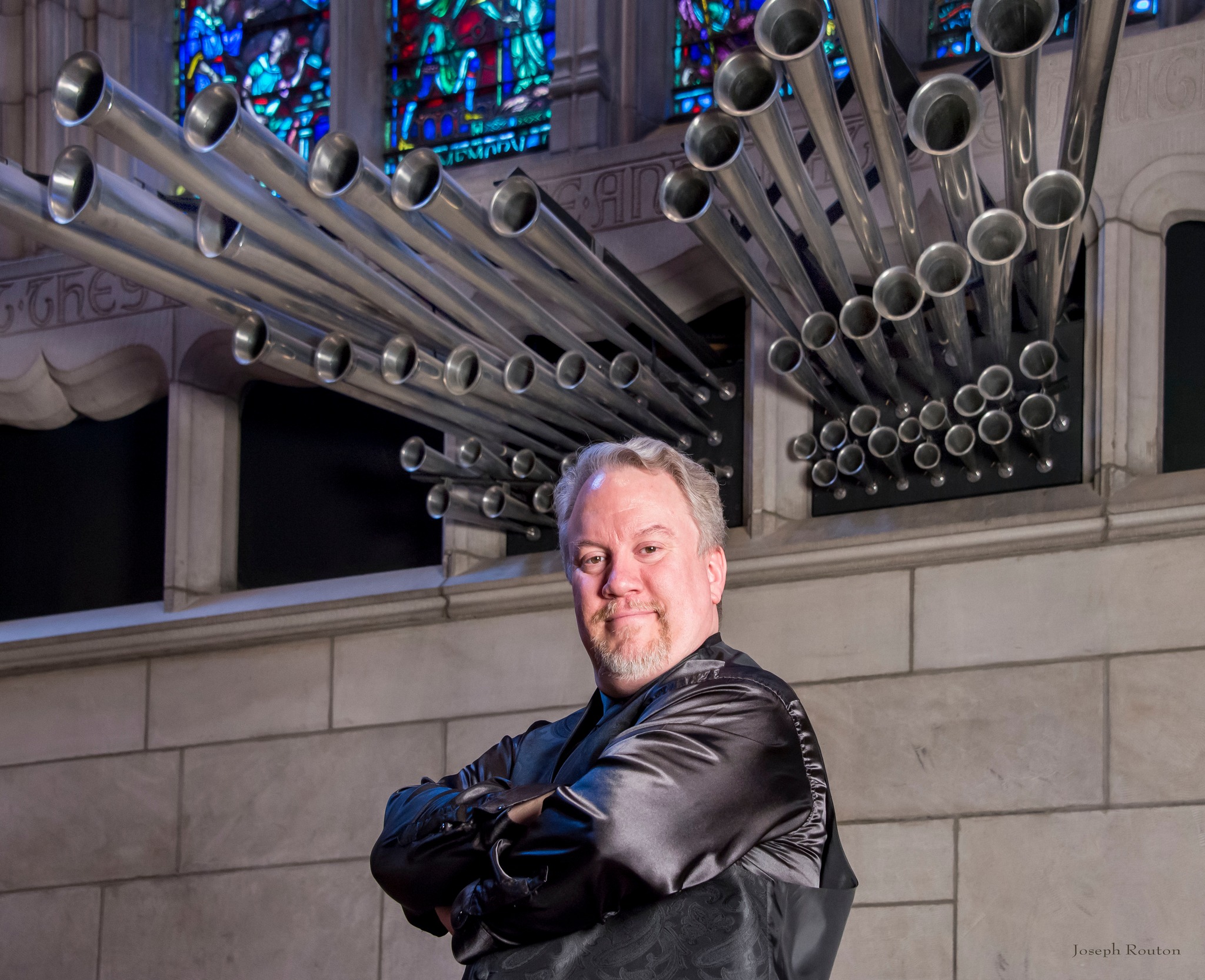
If there’s a keyboard to be played in Princeton, especially if it happens to be on an organ console, then there’s a good chance Eric Plutz is in the building. Now in his 18th year as University Organist of Princeton University, Plutz has begun another very full season.
Read my profile of this remarkable musician, make plans to attend a few concerts (including those on the free “After Noon Concert Series,” at Princeton University Chapel, Thursdays at 12:30 p.m., and Princeton Pro Musica’s performance of Brahms’ “Ein Deutsches Requiem,” at Richardson Auditorium this Sunday at 4 p.m.), and, by all means, consider adding Eric’s new recording, “Vierne: The Complete Organ Symphonies,” to your collection.
The article appears in this week’s edition of U.S. 1 Newspaper – PrincetonInfo, online and in area vending machines today.


4 responses